★ 4,6
What does swelling on a follow-up MRI mean after a hamstring injury?

“Nordbelt kolayca bağlanıyor ve sağlam hissettiriyor.”
You can jog through the warm-up again, yet the report still mentions swelling. Take both scan reports and an example from training to your next appointment.
ÜCRETSİZ 10 HAFTALIK ANTRENMAN PROGRAMIÜcretsiz programımı gönder ↓Oedema on a follow-up hamstring MRI means an area in the muscle still looks bright on images that show fluid. Athletes who have been examined and cleared to return to sport can still have this finding. That single word cannot tell you when to play your next match. Take both reports to your sports doctor and explain how your last training session went. If you felt a sharp pain again when accelerating, discuss it before you sprint again. Reurink et al., 2014 and Paton et al., 2023
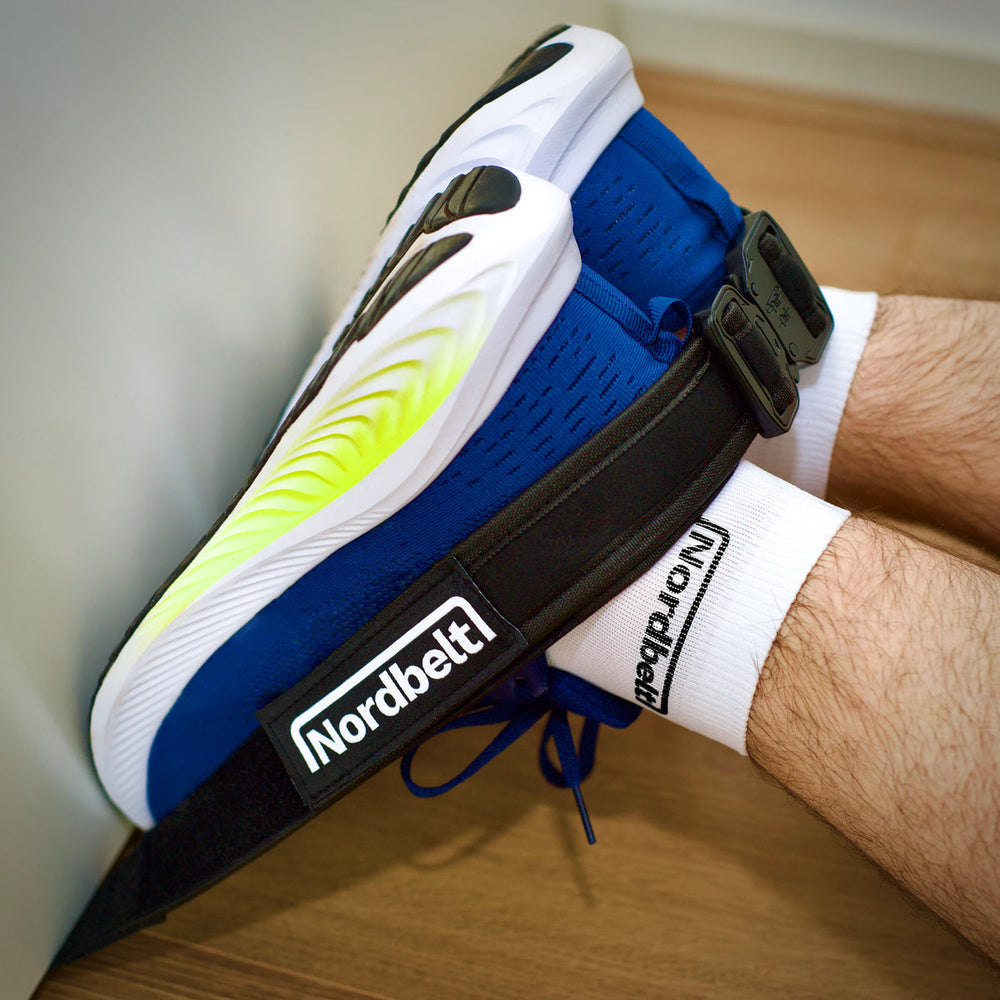
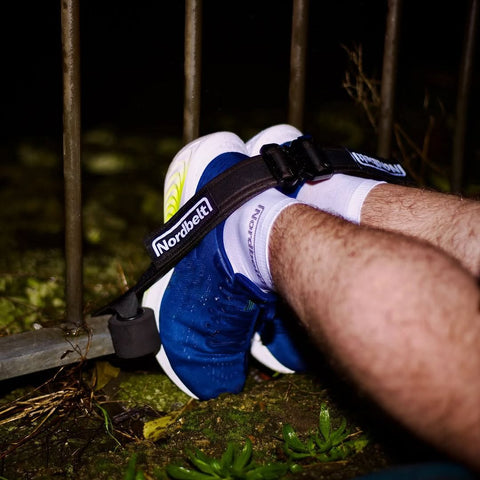
Suppose you can jog comfortably and your physio later adds Nordic curls to your home programme. A teammate can hold your ankles at training, but at home you may be on your own. See how the Nordbelt strap secures your ankles to a fixed support to work out whether you have a suitable place for the exercise you agreed on. Your symptoms and what you can do in training guide the conversation about load.
What exactly does the follow-up report say?
Put the first report next to the new one. Look for the sentence where the radiologist compares the two scans. “Oedema persists” tells you there is still something to see. “Reduced since the previous scan” also tells you what has changed. If there is no comparison, flag the two dates and ask your doctor to look at them together. You do not need to find or measure a bright patch on the images yourself.
Ask which part the report refers to. Is it the muscle, the tendon running through it, or the point where the tendon attaches to bone? Ask your doctor to show you the location and explain whether it changes your training plan. The guide to ultrasound and MRI for a new hamstring injury covers the choice of an initial test. With a follow-up scan, you already have an earlier picture to compare.

Why can a bright patch still be visible?
Reurink and colleagues scanned 53 athletes with grade 1 or 2 hamstring injuries shortly after injury and again around their return to sport. All had been judged clinically recovered. In 47, there was still an area of higher signal within the muscle on fluid-sensitive images. The researchers counted how common this was in athletes who had already been assessed. They did not establish a way to calculate your match date from two reports. Reurink et al., 2014
Another study used a 3-tesla scanner. Its athletes had also been assessed and cleared to return to sport. Around that time, 55 of the 58 still had higher signal in the muscle. Three reinjuries were recorded over the following year. With so few events, the size or brightness of one patch cannot give you reliable personal odds. Ask which change on your own scans matters for your training. Zein et al., 2025
What should you say about your last session?
“It feels better” might mean you can walk downstairs comfortably. Your coach might hear that and assume you have already tried some fast running. Give one example of what you actually did. Write down the movement, the point when you felt something and what you did next. Add what you have yet to try.

For example, “I joined Tuesday's warm-up. The easy lap felt fine. I felt a pull in the back of my thigh on the first acceleration and stopped. On Wednesday I noticed it again on the stairs.” Skipping the acceleration because it was outside your programme tells a different story from starting it and having to pull up. If this keeps happening in the same place, the guide to recurring hamstring symptoms explains which details from earlier sessions are worth noting.
Bring three questions. Which area is the radiologist describing, and what has changed since the first MRI? Which part of today's examination or of my last training session matters for my next step? What should I watch for during and after it, and when should I get back in touch? Leave with an agreement you can explain to your coach, such as which part of the warm-up to join and what to sit out.
Nordic curl'de ilk tekrardan 10. haftaya ilerleyin.
Acele etmeden, hafta hafta ilerlemenizi sağlayan 7 sayfalık pratik bir plan.
PDF7 sayfaDoğrudan e-posta kutunuza
- 01Hafta hafta açık bir plan
- 02Teknik ve kaçınılması gereken hatalar
- 03Pratik bir antrenman günlüğü

İndirme sayfasını yeniden açın veya gönderdiğimiz e-postayı kontrol edin.
İndirme sayfasını aç ↗≤ %51
✓Araştırmalara dayalı
Van Dyk ve diğerleri, 2019: NHE içeren programların meta-analizi. Nordbelt veya bu program için yapılmış bir etki değerlendirmesi değildir.
Is fibrosis the same as oedema?
In these reports, oedema refers to higher signal on fluid-sensitive images. With fibrosis, the researchers looked for an area of low signal that can be consistent with scar tissue. If the report mentions both, ask which part of the muscle each one refers to. They describe different appearances on the scan. Zein et al., 2025
Researchers followed 108 athletes with grade 1 or 2 injuries for a year after their return to sport. Of the 41 with a finding suggestive of fibrosis, 10 had a reinjury. Of the 67 without it, 16 had a reinjury. That rounds to 24 per cent in each group. The study found no statistical association in this group. An individual's risk is still uncertain, and the comparison concerned fibrosis. You cannot use these figures to calculate risk for someone whose report mentions oedema. Reurink et al., 2015
What might a later home exercise look like?
If you and your physio agree on a Nordic curl, ask them to show you how far to lean and how to catch yourself. Kneel with padding under your knees. Keep the ankles anchored and let your thighs and trunk tip forward together through the range you have practised. Testing strength at the clinic answers a different question. The guide to testing the hamstrings at two knee angles explains what changing the knee position tells the clinician.

Choose a door that stays shut under load, a stable bench or a fixed fence. Follow the setup guide for a door, bench or fence, close the buckle and adjust the length with the hook-and-loop fastening. Before the set, pull in the same direction as the exercise. If the bench slides or the fence moves, choose another support. That check tells you whether the setup holds. Your plan with your physio determines whether the exercise fits today.
Frequently asked questions
Does the swelling have to disappear before I rejoin the team?
Many athletes who had been cleared to return still had higher signal. Ask which parts of team training fit your examination and your last session. A gentle warm-up and racing an opponent to the ball make different demands. Reurink et al., 2014
Can the report tell me how many weeks I still need?
These studies scanned athletes around the time they were cleared to return. They give no personal countdown for someone reading a report today. Take the scan dates and your training notes so your doctor can put the finding in context. Zein et al., 2025
What if the report says the tendon has pulled completely off the bone?
Ask the doctor treating the tear what the finding means for loading and follow-up. The study of 53 athletes involved grade 1 and 2 muscle injuries. Its figures cannot give you a return date after a complete tendon avulsion. Reurink et al., 2014
What can I do before the appointment?
Have both reports ready. Write down one movement that went well and one that was difficult or has yet to feature in your programme. Bring the coach's proposed session so you can ask something as specific as “Can I join just the warm-up on Thursday?”