★ 4,6
Knee pain during Nordic curls: when should you stop?

“Nordbelt kolayca bağlanıyor ve sağlam hissettiriyor.”
Knee pain during Nordic curls is a reason to stop the painful exercise. Separate warning signs and assessment from later decisions about mats and anchors.
Stop the painful exercise if you develop knee pain during Nordic curls. Pressure from kneeling may play a part, but the location or a thicker mat cannot tell you the cause. Unable to bear weight after an accident, or a warm, swollen knee with fever? Contact a doctor urgently. Have persistent or recurring symptoms assessed before exercising again (Bunt et al., 2018).
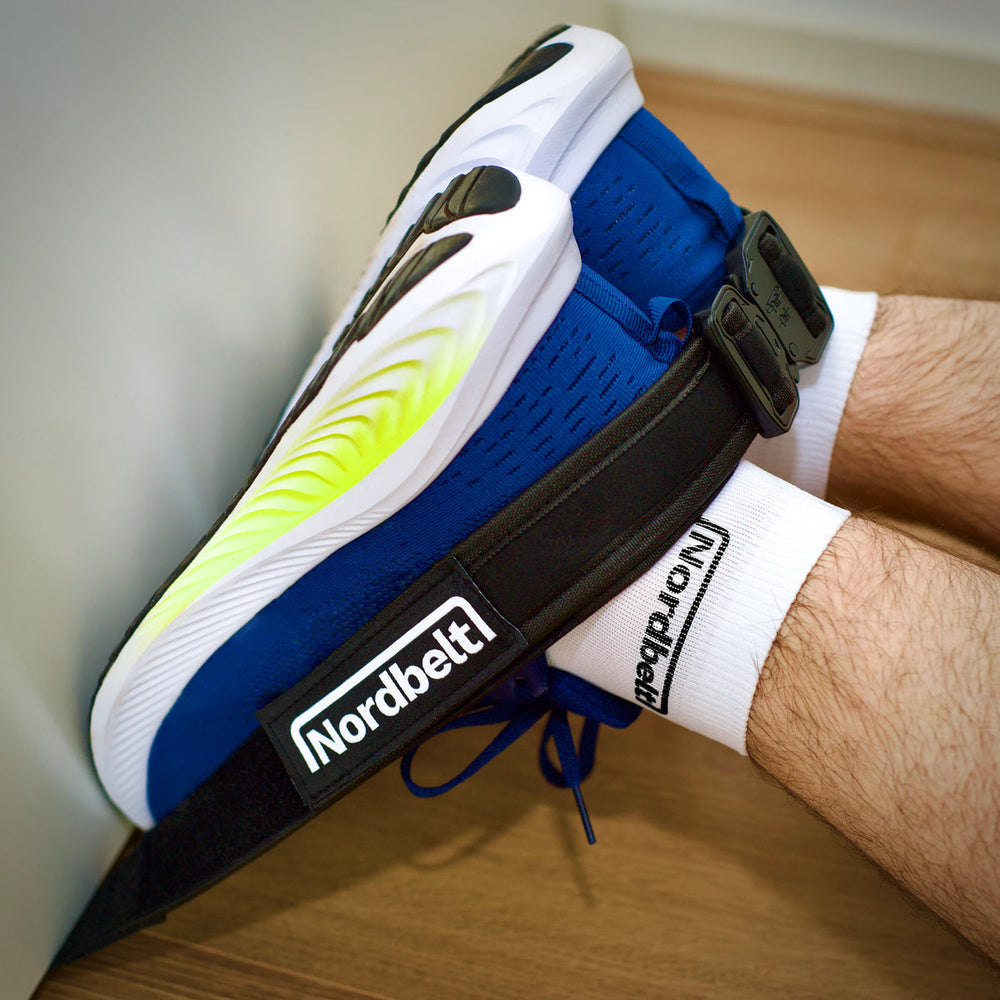
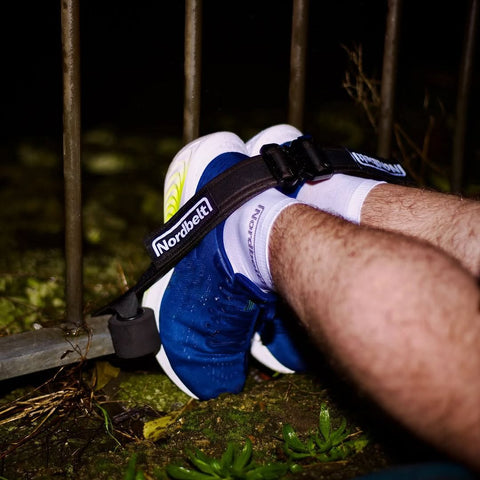
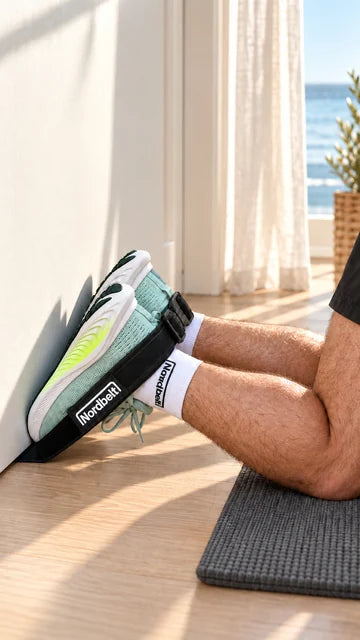
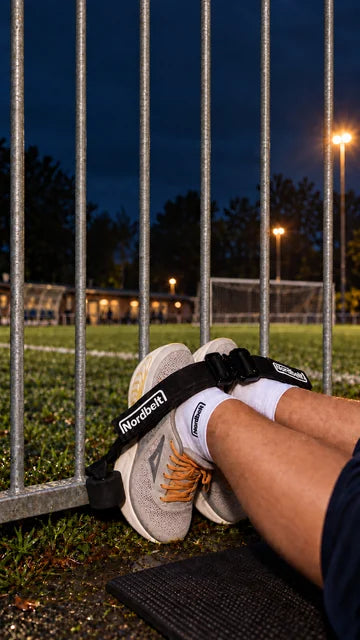
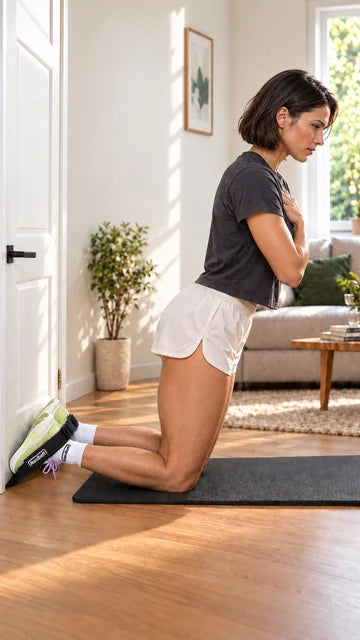
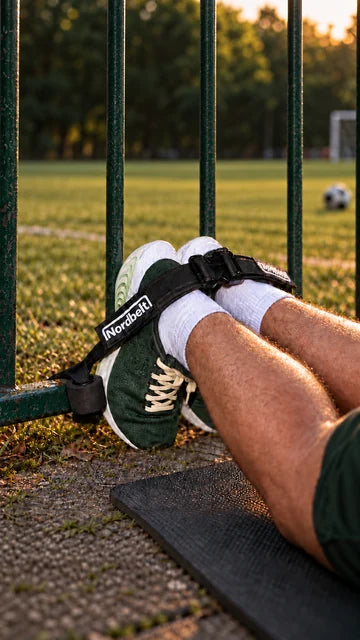
Only when Nordic curls suit your situation again does the setup become relevant. See how Nordbelt works for Nordic curls at home: it secures your ankles to a suitable anchor without a training partner or a large machine. It is neither treatment nor knee protection, and cannot make a painful knee or unsuitable anchor ready for training. You do not need to buy anything to address the symptom itself.
Why can kneeling hurt the front of your knee?
In a Nordic curl, you support yourself on your knees with your ankles secured. You lean forwards from the knees and use your hamstrings to slow the movement. The point of contact with the floor is separate from the muscles at the back of your thigh. Pain at that contact point should therefore not automatically be described as a normal hamstring training stimulus.
Repeated pressure from kneeling is a recognised factor in irritation of a superficial bursa in front of the kneecap. However, swelling and pain can have other causes, including infection. Clinical assessment therefore considers more than whether you were on a hard floor. This review concerns superficial bursitis in general; it does not establish that your Nordic curl caused the problem (Khodaee, 2017).
Do not diagnose a tender knee as bursitis yourself. Even if symptoms are noticeable only while kneeling, the cause remains uncertain without assessment. Do not press harder on the knee or kneel repeatedly to try to prove a diagnosis.

When should you stop and have your knee assessed?
End the session as soon as the exercise causes knee pain. Seek urgent medical care for severe pain, rapid swelling or instability after an accident, especially if you cannot bear weight. A red, warm, swollen knee with fever or clearly restricted movement also needs prompt assessment. These are general warning signs for knee problems, not a specific test for Nordic curls (Bunt et al., 2018).
Arrange an appointment if pain repeatedly returns with kneeling, persists outside the exercise or limits everyday movement. A doctor or physiotherapist can review the history and examine movement; suspected infection requires medical assessment first. Absence of fever alone does not prove that training is safe.
Is the pain mainly behind your knee rather than at the contact point? That is a different question. The guide to pain behind the knee covers that region. A different pain location is not a reason to push ahead with these setup suggestions.
What should you explain at an appointment?
A precise description helps the conversation. Record where the pain is, when it began, whether there was a fall or twisting incident and whether swelling appeared. Pain outside training and previous knee problems also belong in the history. These details form part of the usual initial assessment of knee pain (Bunt et al., 2018).
For example, make this short note without provoking the pain again:
- Symptoms began when kneeling down, during the forward lowering phase or only afterwards.
- This was the floor, mat and ankle fixation used.
- This is what I noticed during normal walking and other everyday movements.
- There was or was not visible swelling, redness or an accident.
- These are the things I have changed or avoided since symptoms began.
This is practical preparation for a conversation, not a validated questionnaire or self-test. You do not need to film a painful repetition before asking for help.
Illustrative context image of note-taking, not a medical assessment or an actual patient case.
Nordic curl'de ilk tekrardan 10. haftaya ilerleyin.
Acele etmeden, hafta hafta ilerlemenizi sağlayan 7 sayfalık pratik bir plan.
- 01Hafta hafta açık bir plan
- 02Teknik ve kaçınılması gereken hatalar
- 03Pratik bir antrenman günlüğü

≤ %51
✓Araştırmalara dayalı
Van Dyk ve diğerleri, 2019: NHE içeren programların meta-analizi. Nordbelt veya bu program için yapılmış bir etki değerlendirmesi değildir.
İndirme sayfasını yeniden açın veya gönderdiğimiz e-postayı kontrol edin.
İndirme sayfasını aç ↗Which setup questions come afterwards?
When returning is appropriate, consider the support surface and anchor separately. A more comfortable contact point does not prove that the knee is ready for loading. The general clinical sources above do not investigate an ideal mat thickness or safe pain threshold for Nordic curls. There is therefore no universal measurement or pain score here that you need to achieve.
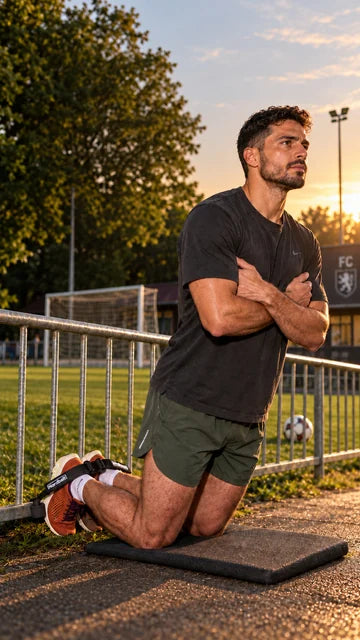
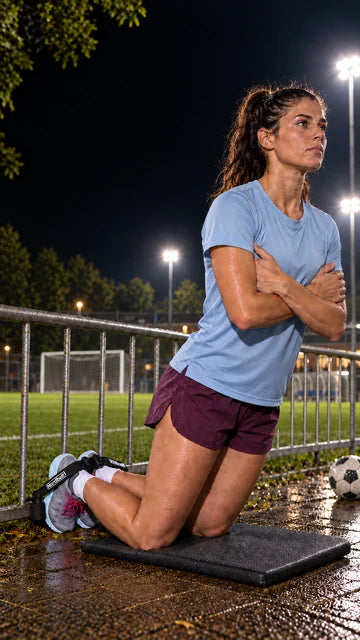
Check the empty setup before kneeling. The mat should lie flat without sliding; leave enough clear space in front for your hands and upper body. Do not stack loose cushions into an unstable tower. If kneeling itself remains painful, do not keep looking for a softer layer: stop and discuss it at the assessment.
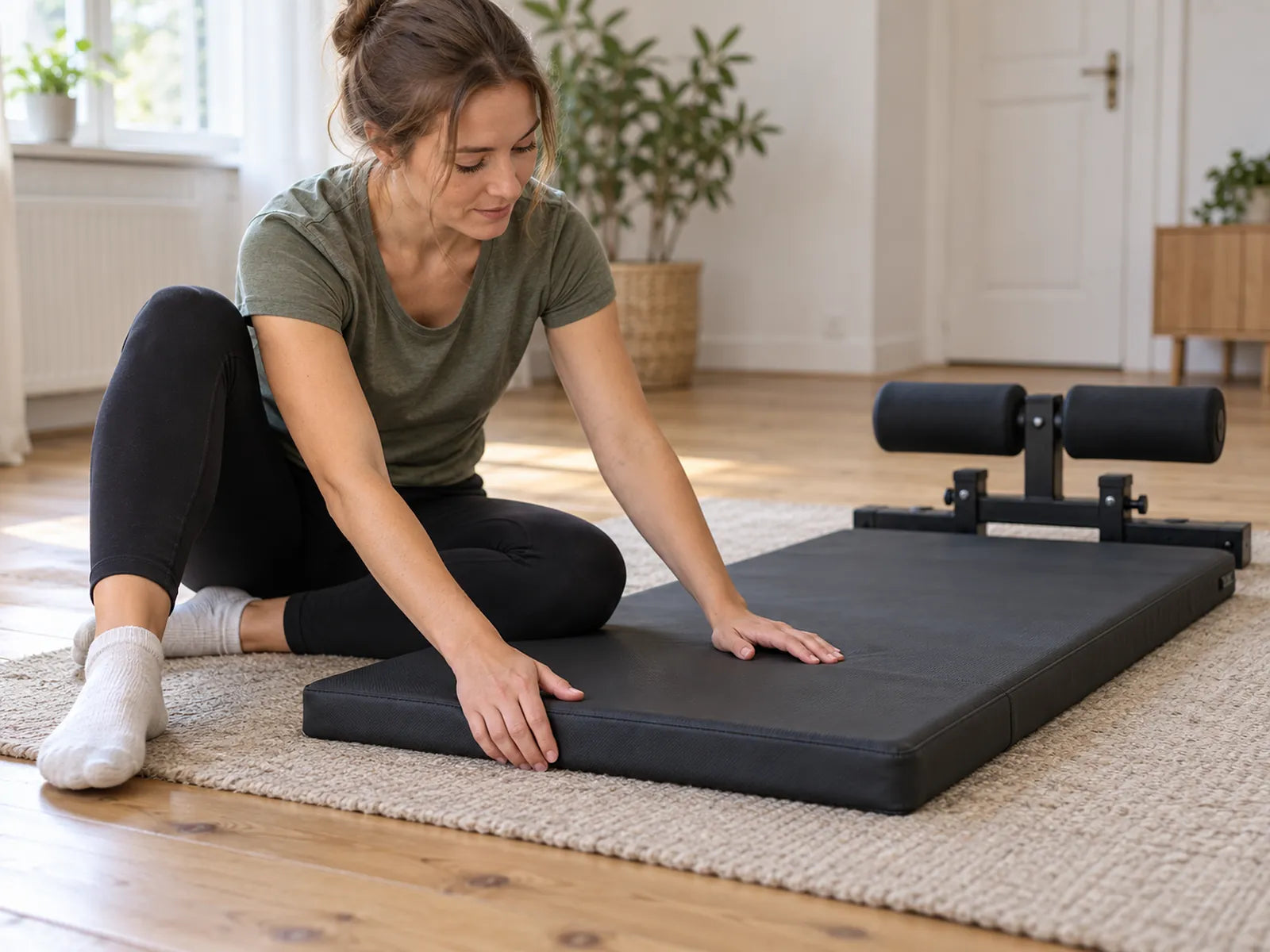
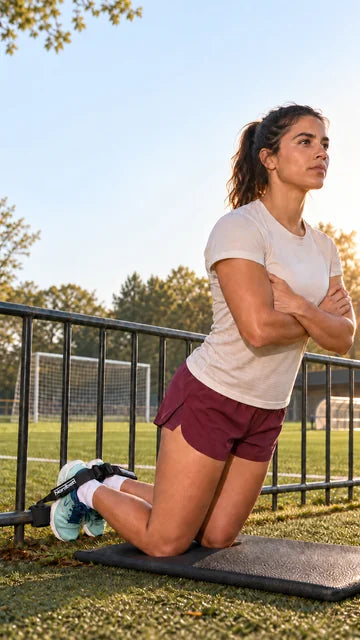
Preparation context: this mat and anchor do not demonstrate a safe or pain-free exercise and do not show a Nordbelt product.
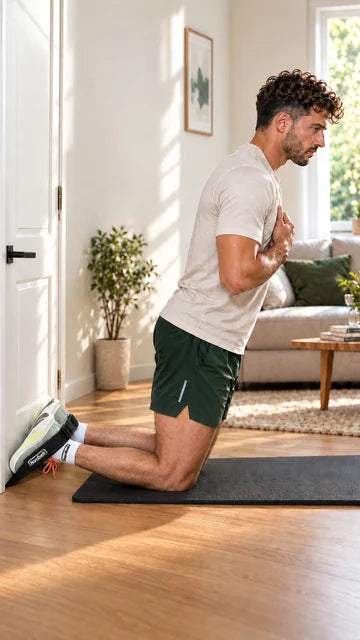
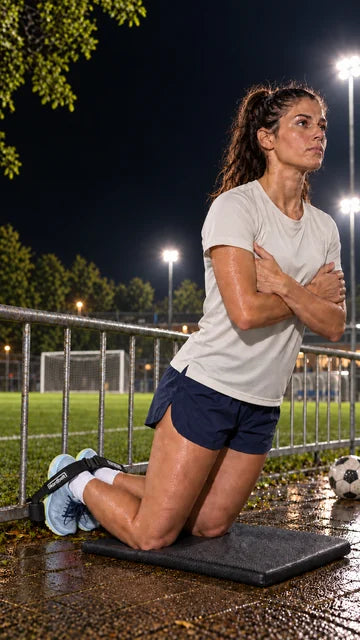
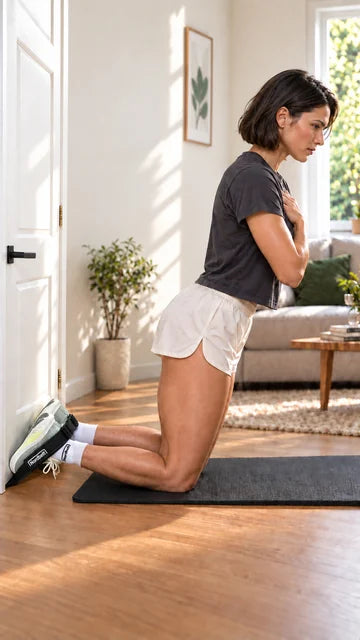
A door must suit the attachment method and must not be able to open under the pulling force. A bench must not slide or tip. A fence or beam must be fixed securely, with no loose parts or sharp edges near the strap. If you cannot establish this, do not use the setup. The guide to a stable Nordic setup at home covers anchor selection in more detail.
During the movement, keep your hands ready to provide support early and choose only a range you can control. This is technique context for a suitable later training stage, not an exercise prescription for a painful knee. The existing article on common Nordic curl mistakes explains technique further. More repetitions or lowering farther is not a solution to the symptom discussed here.
Frequently asked questions
Is knee pain during Nordic curls simply pressure from the floor?
Location alone cannot tell you. Kneeling can load the superficial tissues in front of the knee, but similar symptoms can have different causes. Stop the painful exercise and have recurring or persistent symptoms assessed; do not diagnose bursitis yourself (Khodaee, 2017).
How thick should my mat be if my knees hurt?
The clinical sources used here do not establish a tested ideal mat thickness for Nordic curls. Do not treat a measurement as medical clearance. A stable contact surface is part of the setup, while pain on kneeling is a reason to stop and seek assessment when needed.
Can I continue if a thicker mat reduces the pain?
Less pain after a change does not explain the cause or prove that continuing is safe. Do not use the mat as a self-test. For persistent or recurring symptoms, discuss first whether and how returning is appropriate; warning signs require urgent medical help.
Does ankle fixation help knee pain during the exercise?
Ankle fixation keeps the feet in place during a Nordic curl. It does not diagnose or treat a knee problem and cannot replace knee support or professional assessment. Do not turn a painful exercise into a purchase decision: first decide what the symptom needs.