★ 4,6
What does a difference between your legs mean in a Nordic curl?

“Nordbelt kolayca bağlanıyor ve sağlam hissettiriyor.”
Your coach turns the screen towards you and both numbers go up. Two sample readings show how the gap between your legs can stay the same.
ÜCRETSİZ 10 HAFTALIK ANTRENMAN PROGRAMIÜcretsiz programımı gönder ↓If your left and right legs score differently in a Nordic curl, ask your coach for the peak force on each side and whether you could see the screen during that attempt. Watching the lines can affect how much force you produce. Both peaks can go up while the gap in newtons stays the same. At your next test, compare attempts made with the same instructions.
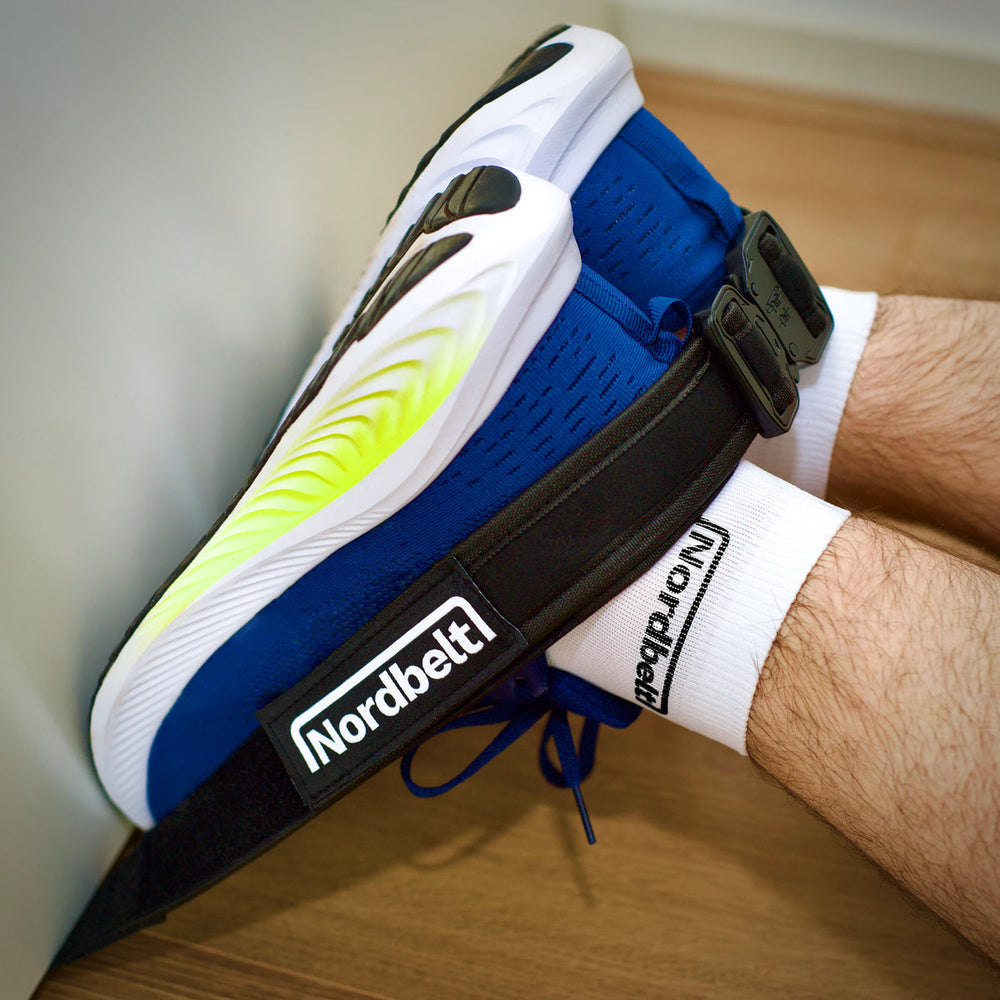
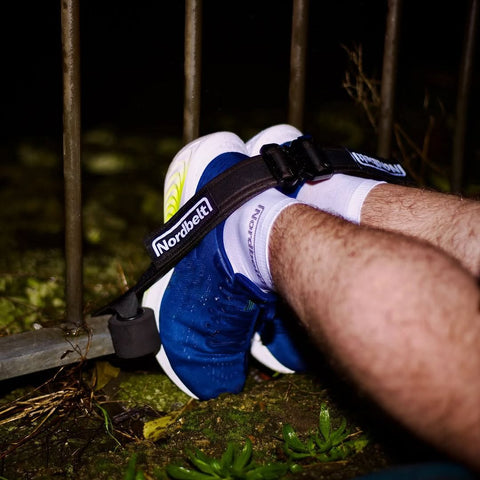
At the club, a sensor at each ankle measures the force you apply to its support. At home you can practise controlling the descent. If your heels lift as you lean forward when training alone, an adjustable strap can hold both ankles at the anchor. The Nordbelt videos on securing your ankles show how to close the buckle and adjust the length. For separate force readings you need the measuring equipment at the club.
What do the two lines on the screen show?
You kneel on the device with your ankles secured and lean forwards from the knees. As you slow the movement, each ankle exerts force on its support. The device plots how that force changes on each side throughout the repetition. Check the key to see which colour represents your left leg. The highest reading on that line is its peak force. An N beside the number stands for newtons.
Suppose the screen shows 240 N on the left and 260 N on the right. Your right leg reached a peak 20 N higher on that repetition. On the next attempt you watch the screen and get 260 N on the left and 280 N on the right. Both peaks have risen by 20 N. The gap is still exactly 20 N. These are made-up figures to help you read a display, rather than targets to aim for.
Notice when each line reaches its highest point, too. If the right side peaks a little later, the two peak values alone cannot tell you which leg was producing more force at a particular instant. If you want to know what happened as you started to tip forwards, ask your coach to point out both lines at that point. A photo of the final scores leaves out that part of the repetition.
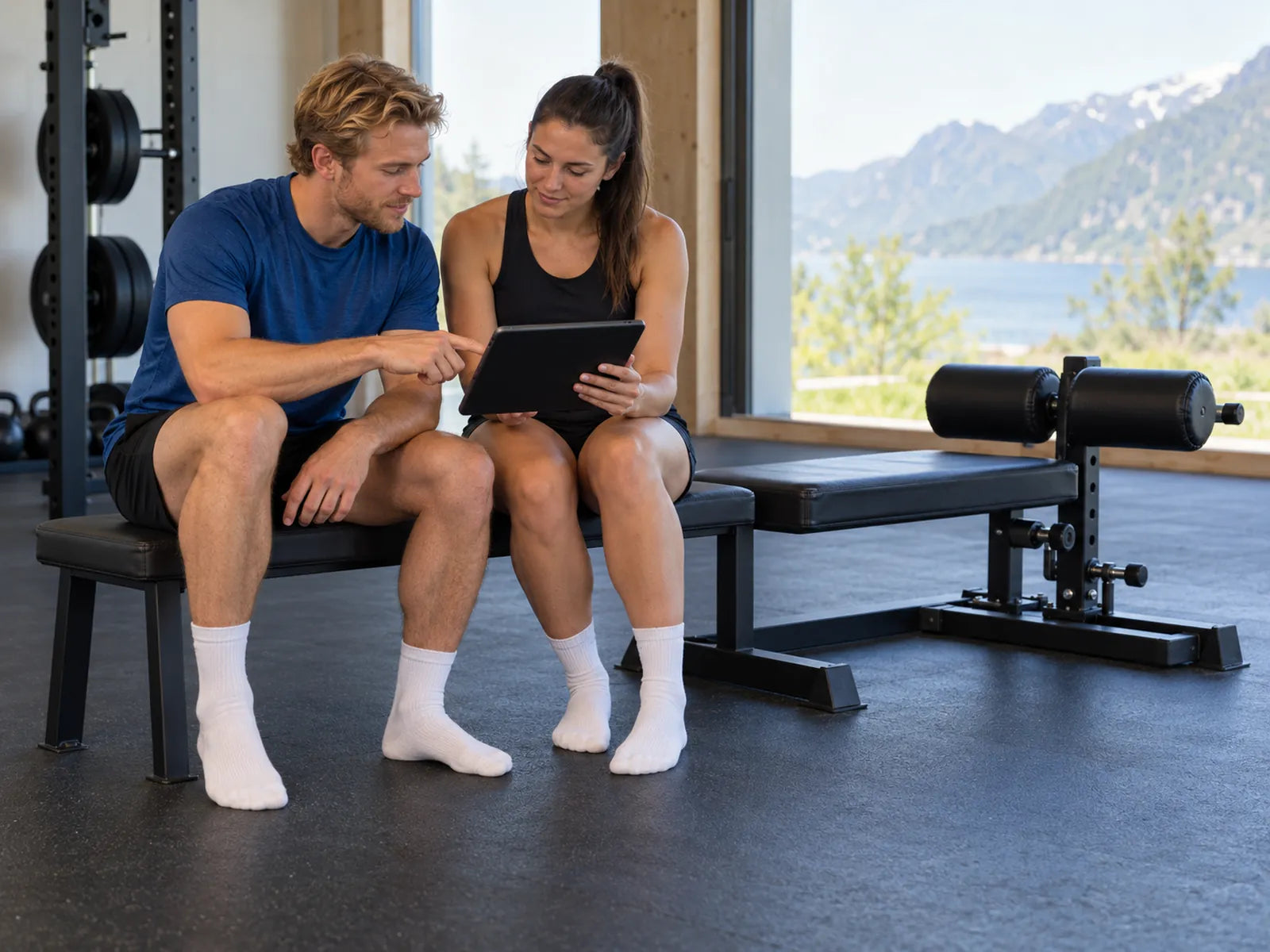

What changes when your coach turns the screen towards you?
On your first attempt you look at the floor. On the second you can see both lines, and your coach asks you to bring them closer together. Now you have something to react to as you move. It is worth writing “screen visible” beside the result even if the ankle supports and the rest of the setup stayed exactly where they were.
Researchers asked 44 male cricketers who were free of injury to take the same Nordic test on two days. The order varied. In one condition the players could see their force traces and were asked to minimise the difference. Their mean peak force was 21.7 N higher in that condition. The study found no clear change in the difference between legs. It measured what the players produced during those tests. It did not track strength gains over weeks of practice. Chalker et al., 2018.
Ask what the display was showing. Two traces of leg force give you a different task from following a moving target that tells you how slowly to lower yourself. If your coach calls out “keep that pace”, write down the cue you actually heard. That gives you something specific to ask for at the next appointment, especially if someone else runs it.
Which figures can you compare at your next test?
Start with the same leg, unit and scoring method. Some reports show the best peak from a set. Others take the average of the peaks from all repetitions. Both columns might say “left” even though one describes your best effort and the other describes a whole set. When you take a photo of your own results, include the heading above the column.
The method matters. In a study of 25 volunteers, researchers compared a Nordic setup with a machine that controlled the speed of knee movement. The measured difference between the legs depended on the test. Side-to-side differences also proved less reliable across repeated measurements than a precise-looking number might suggest. Using the same setup gives you a better starting point for your own comparison. Wiesinger et al., 2020.
Does the second sheet say Nm? A newton metre describes the turning effect around the knee. It accounts for the distance from the knee to the point where the force acts. Keep it separate from a column measured in newtons. If you see N/kg, the figure takes body mass into account. The guide to Nordic force per kilo on a test sheet shows how that calculation works.
A useful note might read “left 240 N, right 260 N, first repetition, screen turned away, coach asked me to lower slowly”. Add the date and which device you used. Before the next attempt, ask the tester to give you the same instructions. Then you will know whether you could see the lines on both occasions.
Nordic curl'de ilk tekrardan 10. haftaya ilerleyin.
Acele etmeden, hafta hafta ilerlemenizi sağlayan 7 sayfalık pratik bir plan.
PDF7 sayfaDoğrudan e-posta kutunuza
- 01Hafta hafta açık bir plan
- 02Teknik ve kaçınılması gereken hatalar
- 03Pratik bir antrenman günlüğü

İndirme sayfasını yeniden açın veya gönderdiğimiz e-postayı kontrol edin.
İndirme sayfasını aç ↗≤ %51
✓Araştırmalara dayalı
Van Dyk ve diğerleri, 2019: NHE içeren programların meta-analizi. Nordbelt veya bu program için yapılmış bir etki değerlendirmesi değildir.
What can you check at home?
A video taken from the side can show how far you control the descent. You may also spot your hips moving back as you try to reach further. The guide to the break-point angle in a Nordic curl explains that point in the movement. A side view cannot tell you the separate forces at your left and right ankles.
To practise at home, use a sturdy door as shown in the instructions, a stable training bench or a fixed railing that will take the strap. Fasten the buckle, adjust the length and give the anchor a short pull before leaning forwards. If the bench slides or the strap rides up, come back onto your knees and change the setup. For a first solo session, the guide to Nordic curls without a partner shows ways to support yourself. The guide to the three anchoring options lets you check the setup that fits your space.

Frequently asked questions
One side peaks later. Is that my weaker leg?
The timing of a peak and its height are separate readings. Check which line belongs to which leg and compare their heights. If the delay caught your eye, ask to replay the repetition. The timing alone cannot identify a weaker side.
My screen only gives a percentage. What should I ask for?
Ask for the left and right peak forces, the unit and how the device works out its percentage. The difference between 240 N and 260 N is 20 N. Dividing that difference by 260 gives a different percentage from dividing it by 240. The original numbers also tell you which side came out higher.
Should I skip the second attempt if I first tested without the screen?
You can use it to practise with the traces. Give it its own line on your test sheet. To compare the first attempt a month later, arrange to start without seeing the display again. To see how you do with the cue, go back to the entry that records it.
Can an ordinary ankle strap measure the difference between my legs?
A strap holds your ankles in place as you lower yourself. It gives no separate readings for the two sides. If one heel felt as though it pulled harder, tell your coach which repetition it was. Ask to see the force trace for that side when you next use the club's equipment.