Hamstring pain that eases as you warm up: keep training?

“Nordbelt kolayca bağlanıyor ve sağlam hissettiriyor.”
Hamstring pain that eases as you warm up does not, by itself, mean you can keep training. Consider how it started, how you move, and the response later that day and the next morning. Stop with sudden sharp pain; seek prompt assessment after a pop, substantial bruising, clear weakness or difficulty walking. Discuss recurring symptoms with a doctor or physiotherapist, even if warming up feels comfortable.
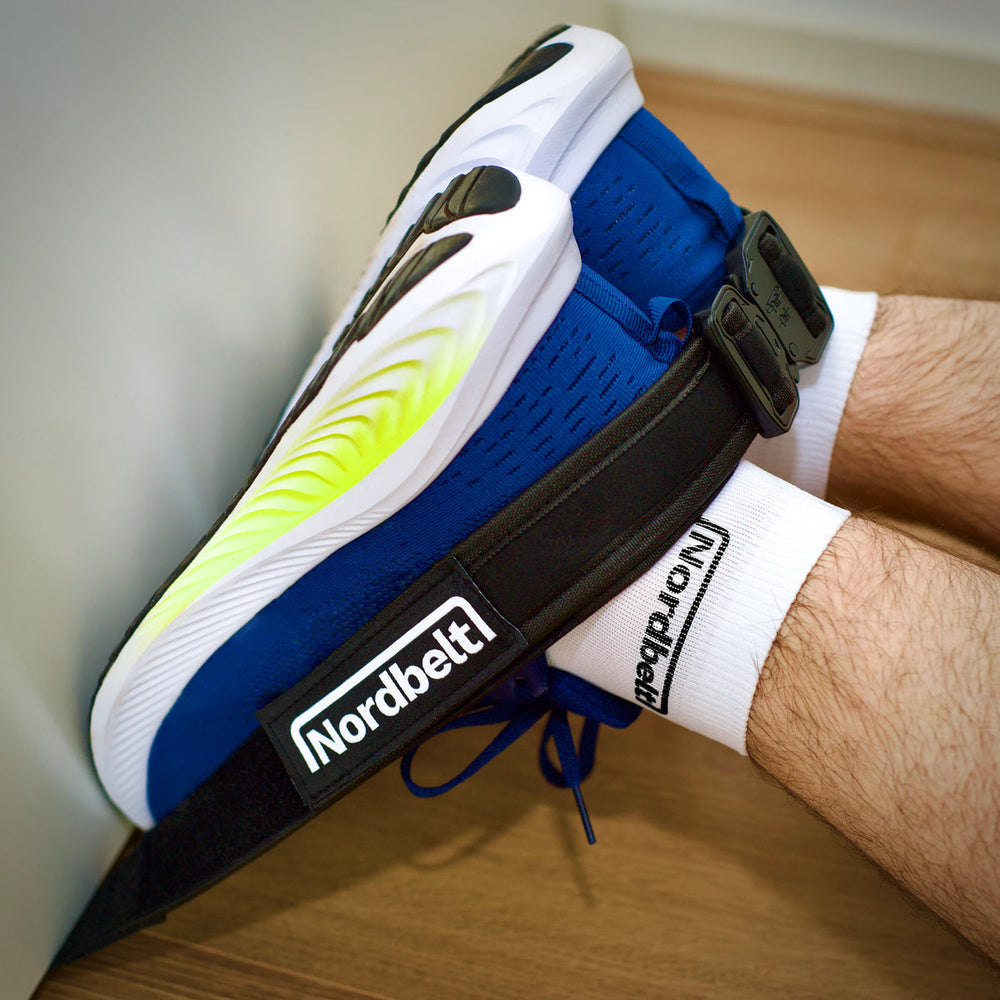
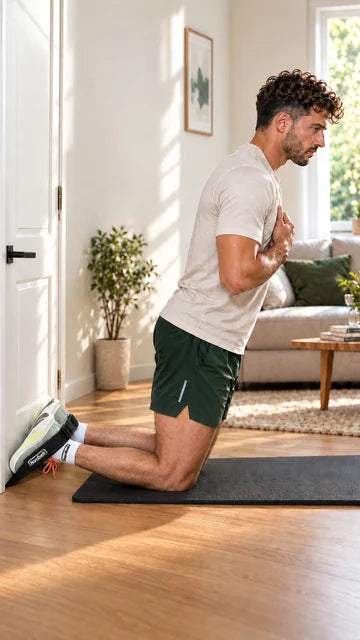
If Nordic curls later become part of a suitable strength progression, the Nordbelt homepage explains ankle fixation for training at home without a partner. This is only a later training option: the tool does not assess or treat pain, and securing an ankle does not prepare a painful hamstring for heavy loading.
What does less pain during warm-up tell you?
It tells you the symptom changes during that particular activity. Record it, but do not turn it into a diagnosis. This pattern alone cannot identify a muscle, tendon or another cause, or establish how much speed, force or repetition your leg can tolerate. Examination and appropriate loading progression belong in hamstring injury assessment (Hickey et al., 2022).
Separate “Does gentle movement feel easier now?” from “Am I ready for the planned session?” A comfortable easy start answers only the first question. Do not turn warming up into progressively faster trials to reassure yourself. If recurring pain already makes you uncertain before training, an agreed plan is more useful than one successful final acceleration.
For pain high beneath the buttock or when sitting, read about hamstring tendinopathy and loading progression. This explains one possible cause; it does not confirm a tendon problem from your warm-up symptoms.

Why a pain snapshot is not a recovery test
A randomised study of 43 men with an acute hamstring injury compared standardised rehabilitation within pain-free limits with rehabilitation allowing a defined pain threshold. Time to clearance to play did not differ significantly, although some strength and muscle architecture outcomes did. This examined supervised rehabilitation after a diagnosed injury, not a warm-up self-test or permission to train through unexplained pain (Hickey et al., 2019).
In another study, certain clinical findings shortly after returning to sport were associated with a subsequent hamstring injury among 64 athletes analysed. These included local tenderness and deficits in strength and movement testing. They were associations within that group, not an individual risk calculator. Do not copy the tests yourself to decide whether you are cleared for sport (De Vos et al., 2014).
The practical conclusion is limited: describe both pain and what you can do, and have them assessed together. Feeling less pain does not establish greater loading capacity. These studies provide no universal pain score or warm-up duration that lets everyone continue safely.
Turn the pattern into useful notes
Use this structure to prepare for a conversation. It is a recording aid, not a tested treatment protocol or a clearance checklist. You need not provoke a new movement: record what happens during ordinary or already agreed activities.
| When | What to record | What not to conclude |
|---|---|---|
| Before moving | Location, onset, previous loading and effect on normal walking | “It is only stiffness.” |
| During an easy start | Activity, duration, change in pain and any altered movement | “Once it eases, anything goes.” |
| Later that day | Returning symptoms and changes during daily activities | “A good warm-up cancels the later response.” |
| Next morning | Differences from normal function and the previous morning | “One quiet morning proves full recovery.” |
For example, tell your clinician: “My first steps hurt at the back of my right thigh. It eases during my agreed gentle activity, but comes back on the stairs later.” Add what you actually did. This gives more context than “It goes away after ten minutes.” The example makes no diagnosis and sets no training duration.

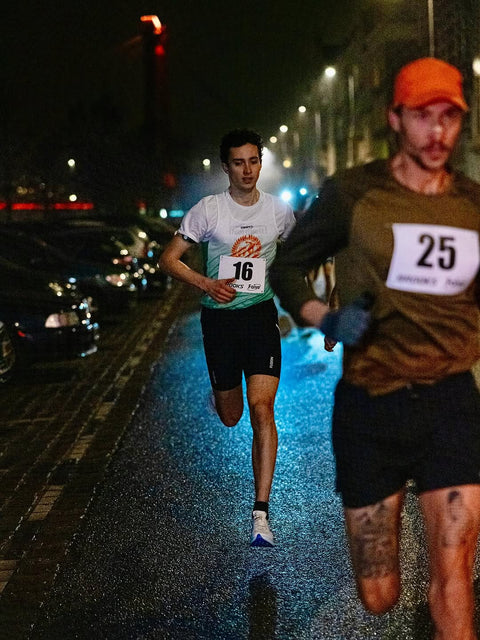
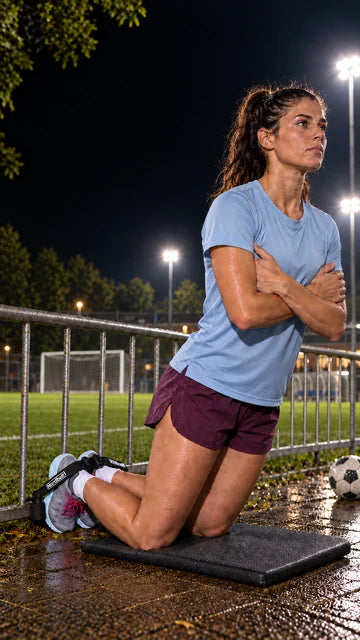
Context image: recording loading and symptoms; no medical assessment is shown.
Nordic curl'de ilk tekrardan 10. haftaya ilerleyin.
Acele etmeden, hafta hafta ilerlemenizi sağlayan 7 sayfalık pratik bir plan.
- 01Hafta hafta açık bir plan
- 02Teknik ve kaçınılması gereken hatalar
- 03Pratik bir antrenman günlüğü

≤ %51
✓Araştırmalara dayalı
Van Dyk ve diğerleri, 2019: NHE içeren programların meta-analizi. Nordbelt veya bu program için yapılmış bir etki değerlendirmesi değildir.
İndirme sayfasını yeniden açın veya gönderdiğimiz e-postayı kontrol edin.
İndirme sayfasını aç ↗What should you discuss before the next session?
Ask which activities currently fit, which response should make you stop and what to do if pain returns later. Clarify how strength work and faster sporting activity will progress separately. A personally agreed pain threshold differs from general internet advice. Do not change an existing rehabilitation plan because one warm-up felt good.
Without a clear plan, you need not finish an intense session just to gather information. Stop the painful sporting activity if pain rises sharply or your gait changes, and discuss the next step. For general exercise choices, see hamstring exercises with pain. For returning to running speed, use the existing guide to running after a hamstring injury.
Have unexplained, persistent or recurring pain assessed. Seek help sooner after substantial injury, obvious loss of function or a new change in sensation. Warming up is no reason to postpone these signs. A new acute injury needs assessment of that situation before returning to an old training programme.
Where might Nordic curls fit later?
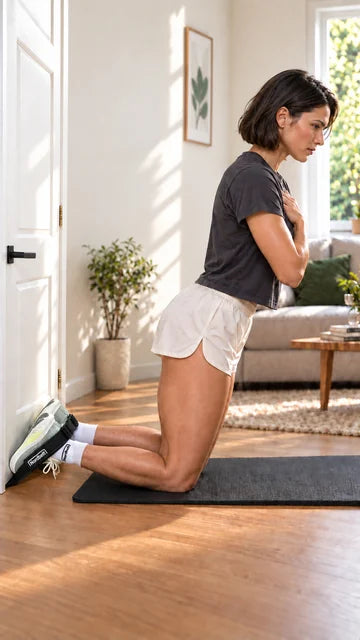
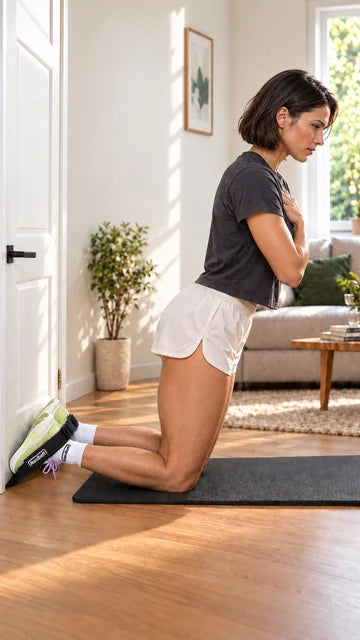
A Nordic curl uses the knee flexors to brake a forward descent from kneeling while the ankles stay fixed. It is not a test of whether pain has gone. Exercise choice, range and load must fit the assessed situation; rehabilitation research does not make one exercise a universal solution (Hickey et al., 2022).
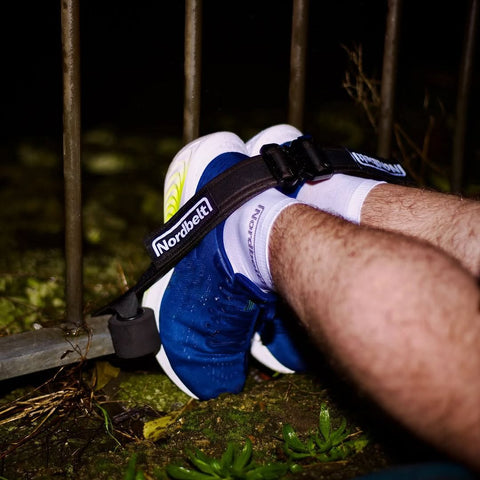
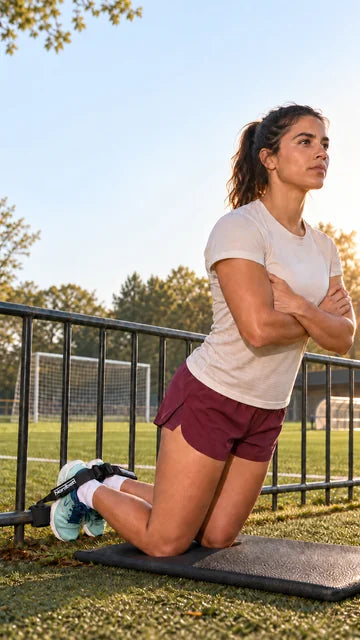
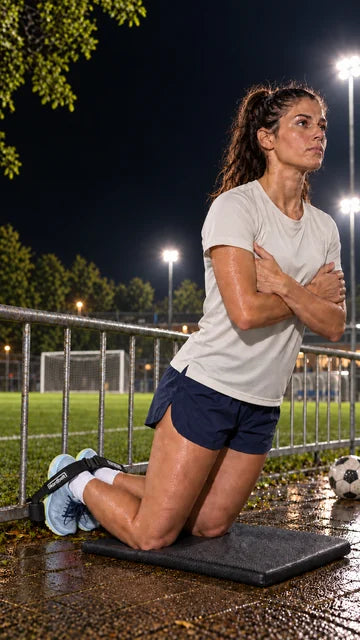
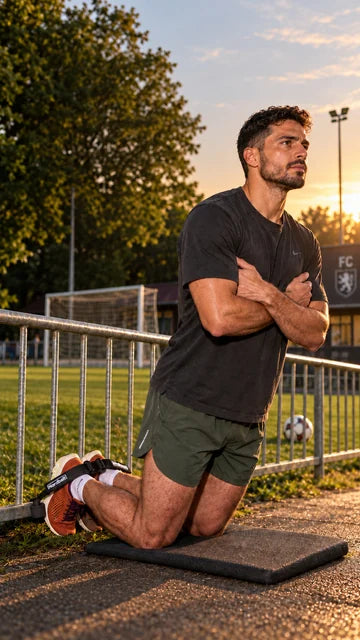
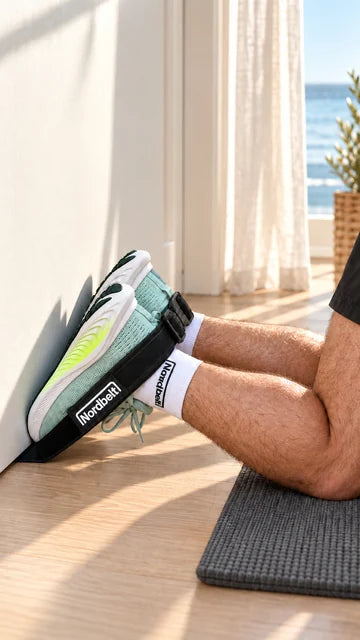
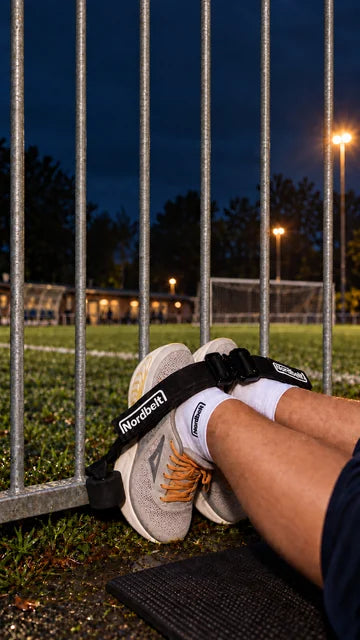
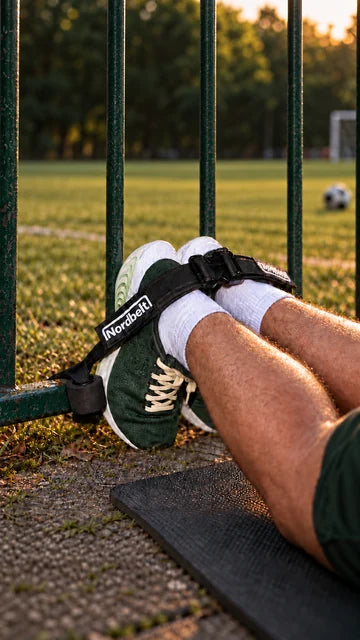
If this exercise is agreed later, first check a suitable setup: a solid door, bench or low fence structure following the fitting instructions, even fixation, knee support and room for your hands. A light chair or sliding bench is unsuitable as an anchor. Descend only as far as you can control, using the agreed assistance. The bench detail pictured shows equipment only; it does not prove a safe load for your leg.

Setup detail: ankle fixation on an exercise bench, not a performed exercise or treatment advice.
Frequently asked questions
Can I keep training if hamstring pain disappears after warming up?
Not on that fact alone. Follow a suitable agreed plan and include function and the later response. Stop painful sporting activity with sharp pain or altered walking. Recurring symptoms deserve assessment.
Does pain that eases mean I have a tendon problem?
No. The pattern alone cannot diagnose the cause. Describe where it hurts, how it began, which activities provoke it and what happens afterwards. A doctor or physiotherapist can assess the possibilities.
Should I warm up longer until I feel nothing?
Do not use a longer warm-up to override recurring pain or make an intense session possible. Record the pattern and discuss loading. There is no universal warm-up duration here that provides clearance for sport.
Can Nordic curls check whether my hamstring has recovered?
No. A demanding exercise is not a home recovery test. Nordic curls may fit later strength progression, with suitable loading, controlled movement and reliable ankle fixation. Unexplained pain needs assessment first.