★ 4.6
Foam rolling after Nordic curls: what does it do for recovery?

“Nordbeltは簡単に固定でき、安定感があります。”
Foam rolling may improve flexibility after Nordic curls. That does not establish faster strength recovery. Keep the measured outcomes separate.
無料10週間トレーニングプロトコル無料プランを受け取る ↓A foam roller for your hamstrings may improve range of motion after Nordic curls, but faster strength recovery has not been established. One small study found no significant advantage for measured muscle stiffness, pressure pain threshold, jumping or isometric strength, immediately or after 48 hours. Moving more freely does not clear you for heavy training. Have sharp pain, bruising or clear weakness assessed by a doctor or physiotherapist instead of rolling over it. The research context and limits follow below (Rodoplu et al., 2025; Heiderscheit et al., 2010).
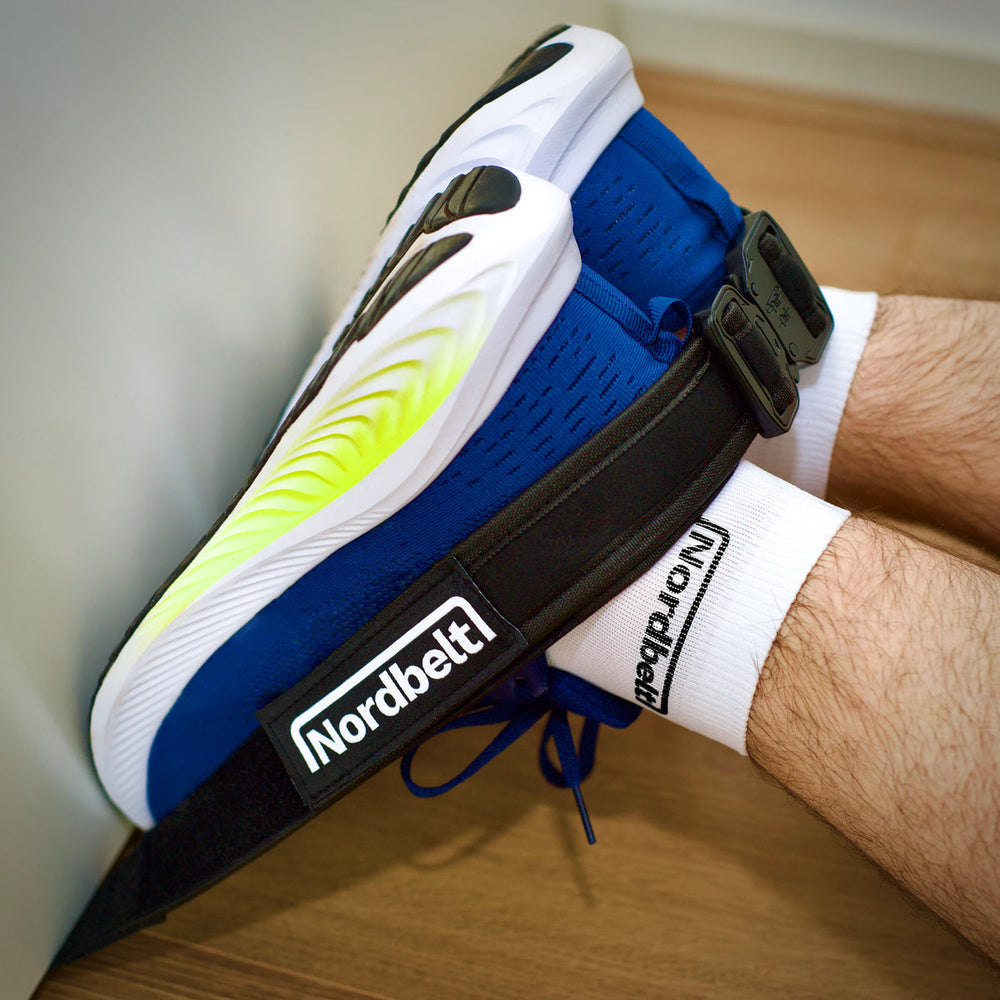
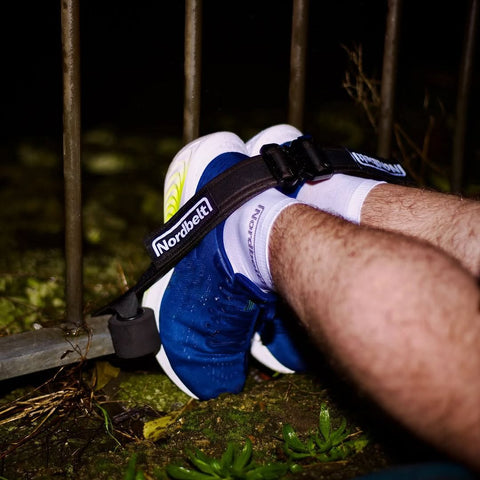
If you later want to perform Nordic curls at home, Nordbelt for stable ankle fixation shows how to set up that exercise without a training partner. This is separate from rolling: the strap is not a recovery aid or treatment and does not decide when you can train heavily again.
What do you mean by recovery after Nordic curls?
After training, several questions can become mixed together: can you move easily again, is the back of your thigh tender, and can you produce the same force? These are different outcomes. Researchers measure them separately. More range of motion therefore does not establish that strength, pressure pain threshold or jumping performance has also recovered.
First choose your goal. Do you want a little more movement, or are you deciding about your next demanding session? For the second question, an easier forward bend is not a complete answer. This distinction follows directly from the different results after rolling; it is not a home test for ruling out an injury (Rodoplu et al., 2025).

What did research on rolling after Nordics find?
Rodoplu and colleagues divided 32 active men between foam rolling and passive recovery. Both groups first performed three sets of ten Nordic hamstring repetitions. Measurements were taken before training, immediately afterwards and after 48 hours. This was one training bout, not a recovery programme lasting months (Rodoplu et al., 2025).
Use the findings as a recovery record with separate boxes:
- Flexibility: rolling produced a more favourable sit-and-reach result immediately and helped retain flexibility at 48 hours.
- Measured muscle stiffness: no significant advantage over passive recovery.
- Pressure pain threshold: no significant advantage; this laboratory measure is also different from all the soreness you experience.
- Jumping: no significant advantage for measured jump height.
- Isometric strength: no significant advantage for measured maximal knee-flexion force.
This entire comparison belongs to the same small study in men. No significant difference means that an advantage was not demonstrated there; it does not prove that every possible effect is exactly zero in everyone. A better sit-and-reach result also does not establish faster muscle-tissue healing (Rodoplu et al., 2025).
Should you roll your hamstrings longer or harder?
Another study included 40 symptom-free students aged 18 to 30. Researchers compared 30 seconds with two minutes of rolling, measuring immediately before and after. Range of motion increased; no effect was found for pressure pain threshold or isometric knee-flexion strength. This was not a study of recovery after Nordic curls or injured muscles (Nehring et al., 2021).
You cannot turn these durations into an optimal recovery dose for your training. The abstract also provides no basis for progressively increasing pressure or continuing longer through pain. If you are healthy and find rolling pleasant, it can be an optional part of your routine. These two studies do not provide an exact prescription for pressure, duration and frequency. Do not use rolling to force a painful area to loosen up.
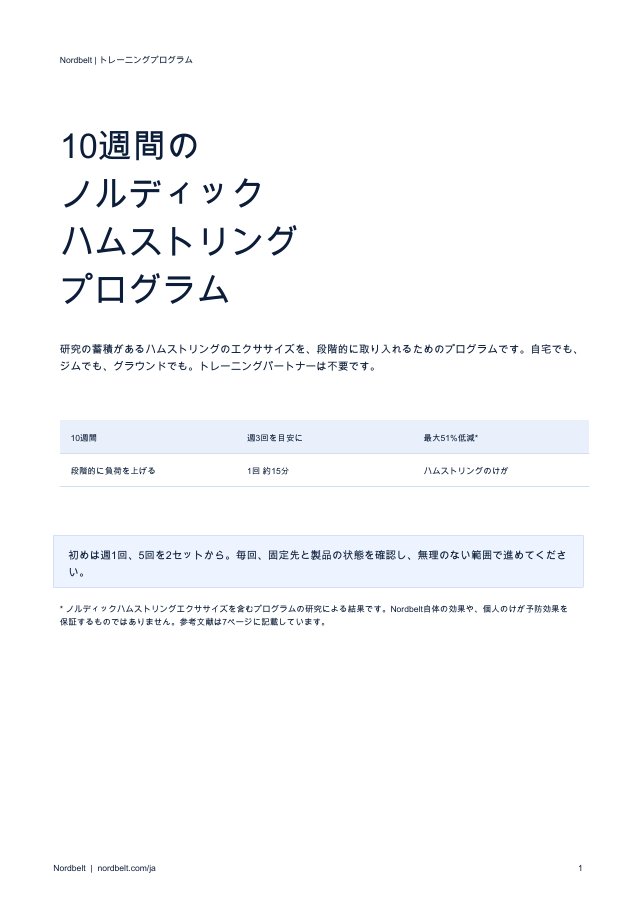
ノルディックカールの最初の1回から 10週目まで。
全7ページの実践的なプログラム。無理をせず、週ごとに段階を進められます。
PDF7ページメールで直接お届け
- 01週ごとの段階的なトレーニングプラン
- 02テクニックと避けるべき間違い
- 03実際に使えるシンプルなログ
ダウンロードページを再度開くか、送信したメールをご確認ください。
ダウンロードページを開く ↗≤ 51%
✓研究に基づく内容
Van Dykら(2019):NHEを含むプログラムのメタ分析。Nordbeltや本プログラム自体の効果を測定したものではありません。
How do you keep the next training decision separate?
Briefly record what you did: the Nordic variation, repetitions, range and any assistance. Then separately note what you notice during ordinary movement and whether symptoms limit everyday function. This helps prevent one judgement, such as more movement, from quietly filling every other box in the recovery record.
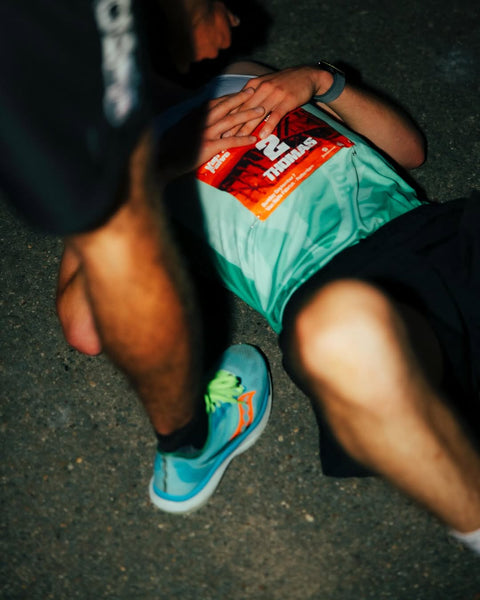
A training discussion shown for context. The photo shows no strength measurement, medical assessment or foam-rolling demonstration.
This training log is a practical example, not a validated recovery protocol. With new pain or concern about injury, consult the explanation of soreness or a hamstring injury after training. Have persistent or unexplained symptoms assessed. A return decision after injury requires more than a feeling of flexibility (Heiderscheit et al., 2010).
When training is appropriate, consider loading and execution in their own right. The article on how many Nordic curls per week covers that dosage question; a roller does not choose your repetitions.
Keep Nordic setup and rolling separate
For a Nordic, kneel with the ankles fixed low and brake your forward lean from the knees. Leave room for your hands, use suitable knee cushioning and catch yourself in time. Choose a movement you can control; lowering farther is not a goal in itself.

Starting position in a Nordic setup. This is neither a foam-rolling demonstration nor evidence of recovery.
A suitable sturdy door, stable bench or fixed fence can serve as an anchor only when the anchor and attachment are appropriate and do not move under load. A loose chair, moving door or unreliable fence is not an alternative. Fixation solves only the setup task; it does not automatically make a demanding exercise appropriate after pain or fatigue.
Are you mainly deciding between rolling and stretching? These studies do not compare them directly. For the separate stretching question, see stretching for tight hamstrings. Rolling, stretching and strength training do not have to form a compulsory sequence.
Frequently asked questions
Does foam rolling after Nordic curls restore strength faster?
That was not demonstrated in the small direct comparison. Flexibility followed a more favourable course, but measured isometric strength did not. Keep these outcomes separate and do not use freer movement as clearance for a heavy session (Rodoplu et al., 2025).
Does less tenderness mean less muscle damage?
No; you cannot infer tissue recovery from it. The direct Nordic study found no significant advantage for pressure pain threshold and did not investigate healing of a muscle tear. Experienced tenderness, a laboratory measurement and clinical recovery are different things (Rodoplu et al., 2025).
Are two minutes of rolling better than thirty seconds?
The student study provides no generally optimal recovery advice. Both durations were associated with increased range; no effect was found for strength or pressure pain threshold. Participants had no symptoms and measurements were taken only immediately after rolling (Nehring et al., 2021).
Should I roll instead of stretching my hamstrings?
The two studies discussed do not answer that comparison. Choose according to your goal and tolerance, without treating either as a necessary recovery tool. With a possible injury, assessment comes before a new rolling, stretching or training plan; feeling better is not a diagnosis (Heiderscheit et al., 2010).