★ 4.6
How many Nordic curls per week? Low versus high volume

“Nordbeltは簡単に固定でき、安定感があります。”
More repetitions are not automatically better. Compare two Nordic volume studies and record only repetitions you actually performed under comparable conditions.
無料10週間トレーニングプロトコル無料プランを受け取る ↓There is no single answer to how many Nordic curls per week you need. More repetitions are not automatically better: lower-volume training also produced adaptations in two studies. First consider your goal, what you actually perform and whether you are comparing the same exercise variation. These studies do not establish your personal optimal dose. The research context and limits are explained below (Presland et al., 2018; Amundsen et al., 2022).
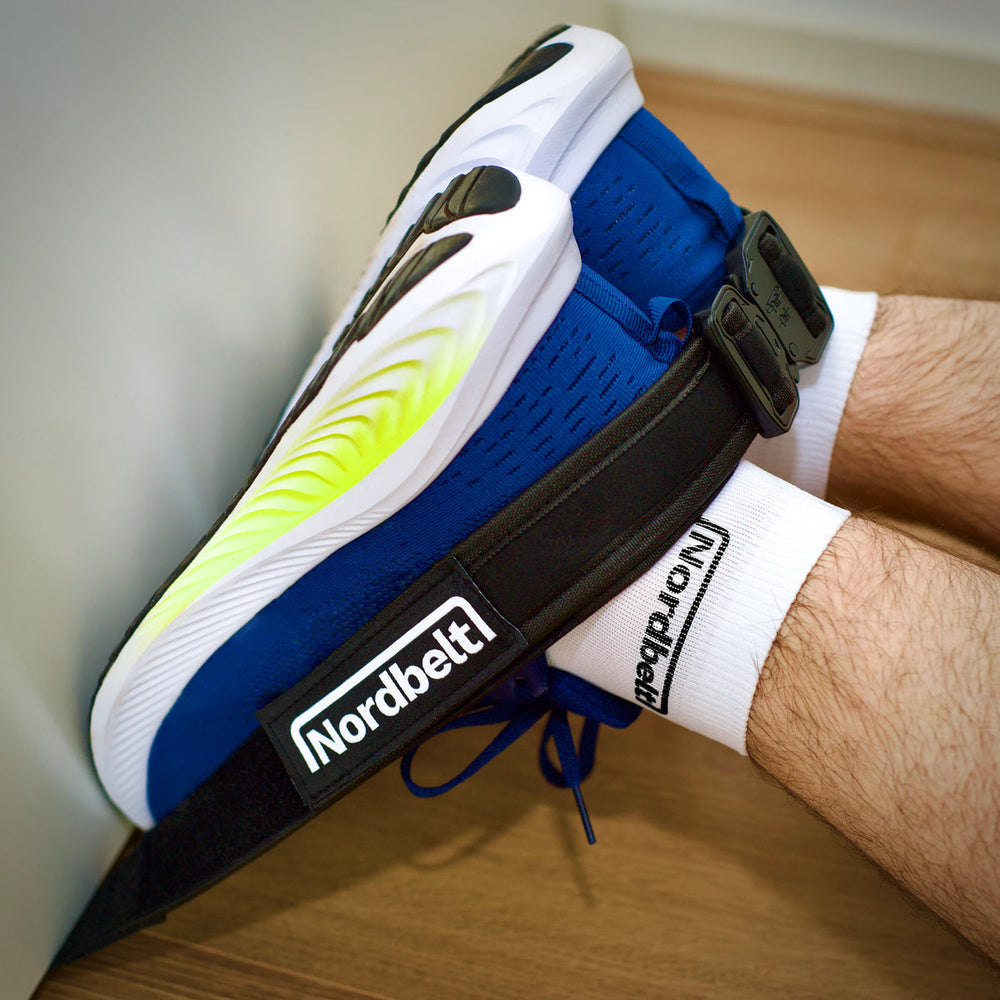
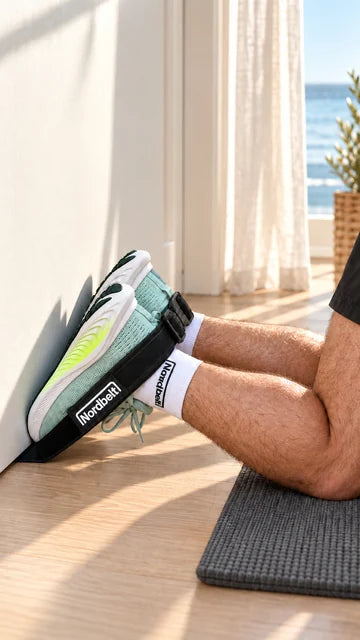
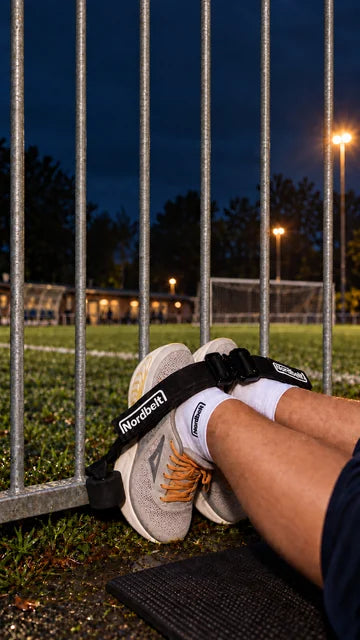
Would you also like to add Nordic curls at home? You need reliable ankle fixation for that exercise. With Nordbelt for Nordic curls at home, you can secure your ankles without a training partner or large machine, provided the anchor is suitable and you check the setup. The tool does not determine your training dose or make an excessively demanding exercise appropriate.
Count what you actually do first
Frequency, sets and repetitions describe different things. Frequency means how often you perform the exercise. Sets divide the work within a session. The total number of Nordic repetitions actually completed describes your volume. None of these figures tells you, on its own, how demanding each repetition was.
Record the same assistance, range of motion and execution as well. A short movement with substantial hand support is not automatically comparable to a longer, less assisted descent. Do not add repetitions of another hamstring exercise as though they represented the same Nordic dose. A total without execution context can create a misleading comparison.

What do low- and high-volume studies show?
Presland and colleagues studied twenty recreationally active men. Two shared introductory weeks were followed by four weeks of low- or high-volume Nordic training. Both groups improved measured eccentric knee-flexor strength and fascicle length in the long head of the biceps femoris. This was a small, specific sample using these particular programmes; it establishes neither a universal minimum nor an injury-prevention effect (Presland et al., 2018).
Amundsen and colleagues randomised 45 female football players to two preseason programmes. The high-volume programme involved 21 sessions and 538 repetitions in total; the low-volume programme involved ten sessions and 144 repetitions over eight weeks. Higher volume produced no detectable greater effect on the outcomes studied. This does not prove that every smaller programme is sufficient or that extra work is harmful (Amundsen et al., 2022).
Pay attention to what was measured: both groups improved maximal eccentric force in the Nordic-specific test. Eccentric torque measured in another test, jump height and sprint performance did not change detectably. Force and torque are different outcomes. A favourable test change therefore does not promise faster sprinting or fewer injuries (Amundsen et al., 2022).
Duration also needs context. In that football study, the change in Nordic-specific force was statistically detectable after six weeks but not after four. Do not turn this into a general rule that everyone needs at least six weeks. The finding belongs to that study's participants, measurement times and two programmes (Amundsen et al., 2022).
Record a session before adding volume
After your session, write one line recording the variation, assistance, sets and repetitions completed, range of motion and reason for stopping. Also note any other demanding training that day. This describes your training; it is not a medical score or a guarantee of progress. Write down what you want the comparison to tell you. A question about greater control in the same movement requires different information from a question about your overall plan alongside football training.
Then compare only records describing the same task. If execution changed, mark that as a different comparison. This prevents more repetitions with more assistance from automatically being counted as a better performance. Leave an uncompleted session blank or record that it was missed; do not log planned work as completed work.
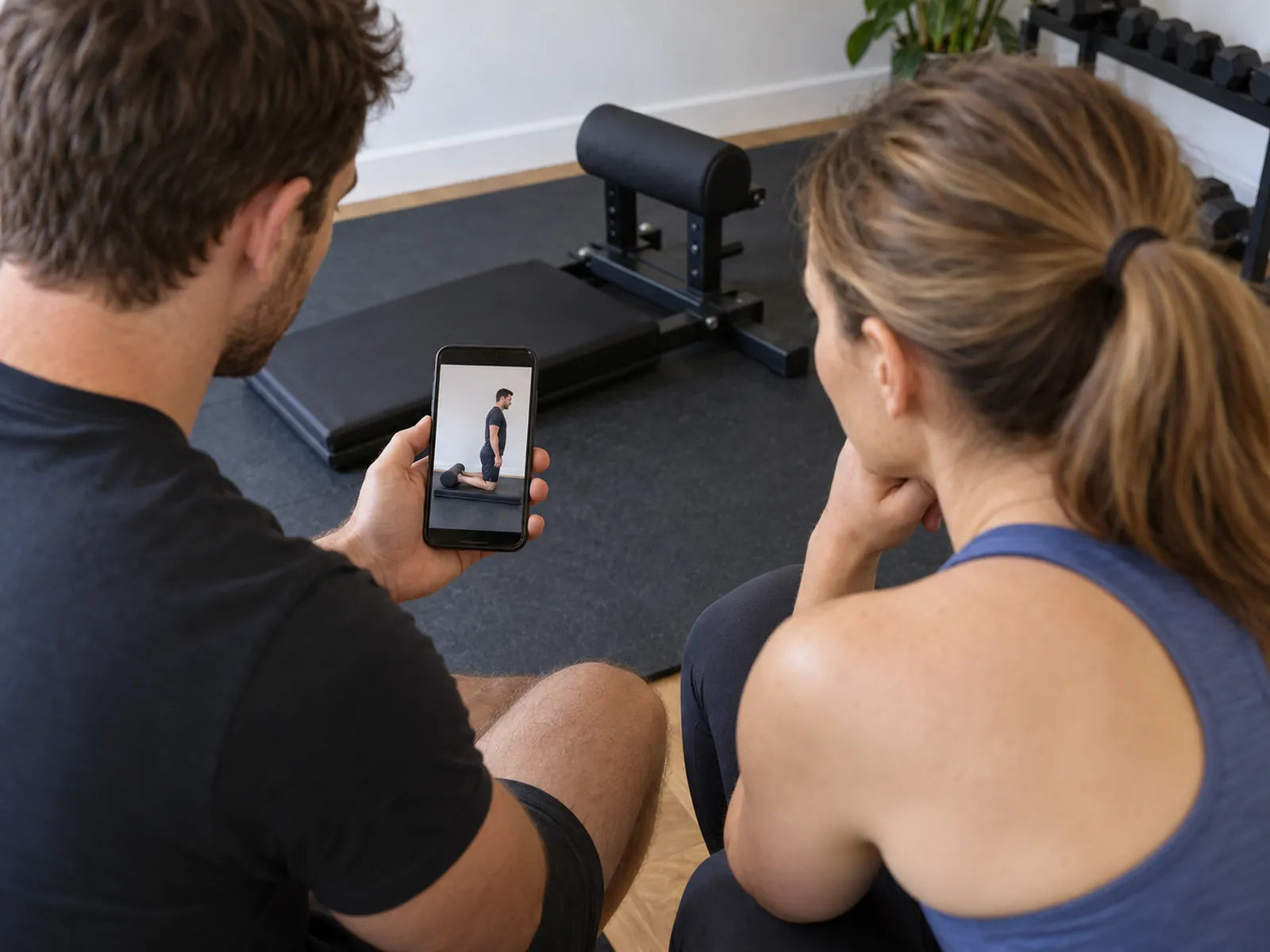
Illustration of reviewing a movement; a phone image does not measure force or prove a training result.
This approach helps you ask a focused question: did my execution change, my volume, or both? For a practical football-week plan, the existing Nordic hamstring curl schedule for football remains the separate guide. This page explains how to interpret volume evidence; it is not a new seasonal schedule.
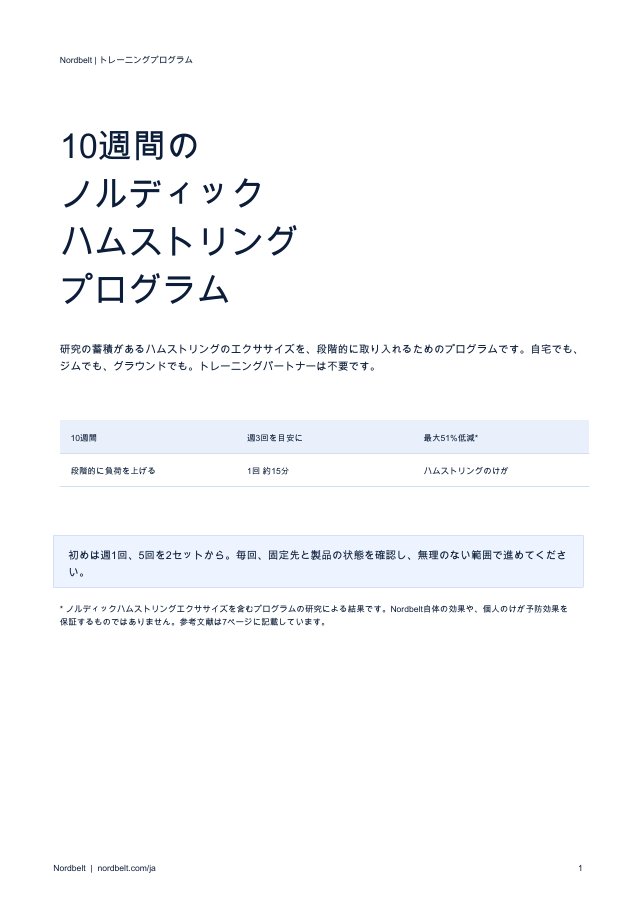
ノルディックカールの最初の1回から 10週目まで。
全7ページの実践的なプログラム。無理をせず、週ごとに段階を進められます。
PDF7ページメールで直接お届け
- 01週ごとの段階的なトレーニングプラン
- 02テクニックと避けるべき間違い
- 03実際に使えるシンプルなログ
ダウンロードページを再度開くか、送信したメールをご確認ください。
ダウンロードページを開く ↗≤ 51%
✓研究に基づく内容
Van Dykら(2019):NHEを含むプログラムのメタ分析。Nordbeltや本プログラム自体の効果を測定したものではありません。
Keep the setup comparable
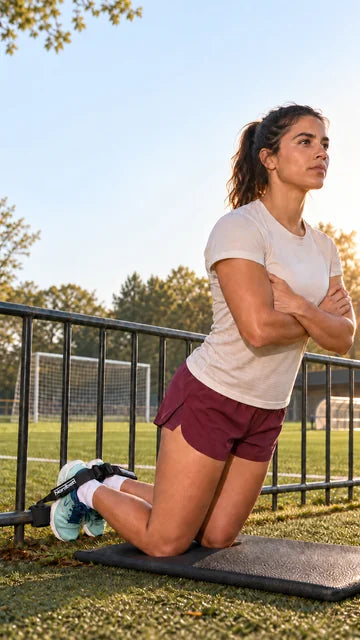
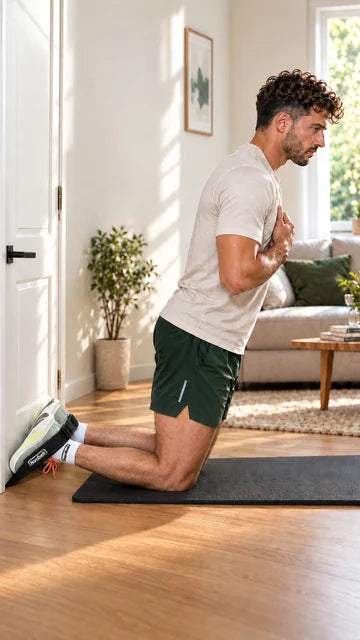
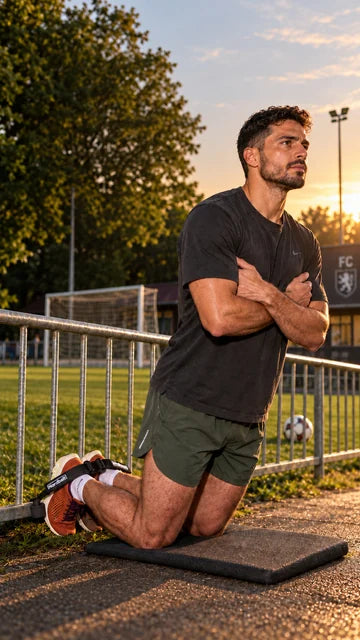
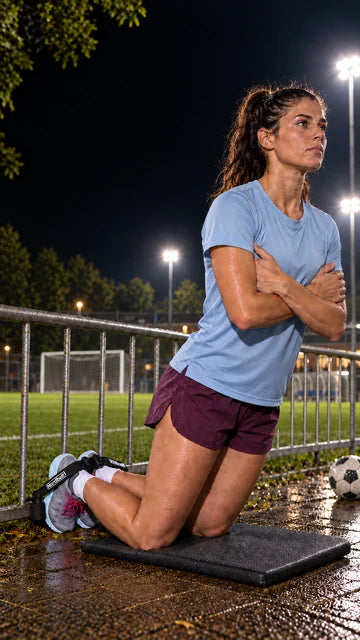
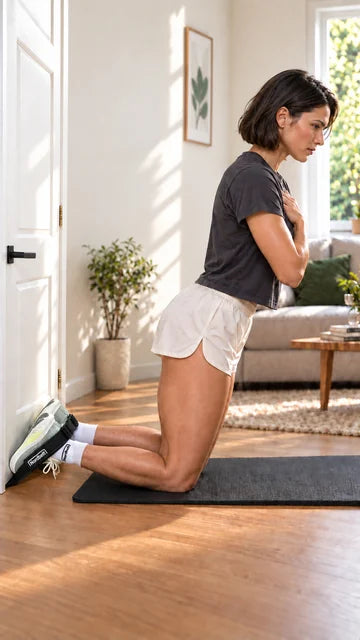
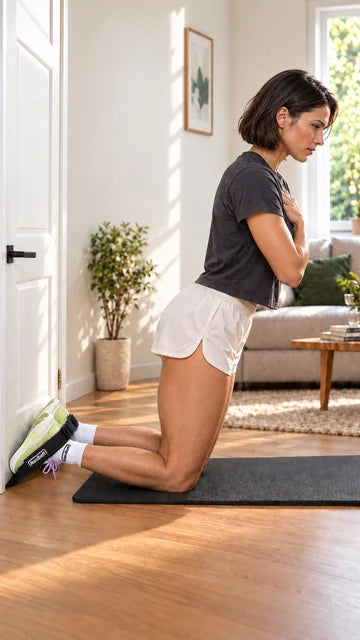
For a Nordic curl, kneel with your ankles fixed low and symmetrically. Lower your body forwards from the knees under control, keeping your hips and torso in line. Keep your hands ready to catch yourself. Choose a range you can brake; an uncontrolled fall is not another successful repetition.
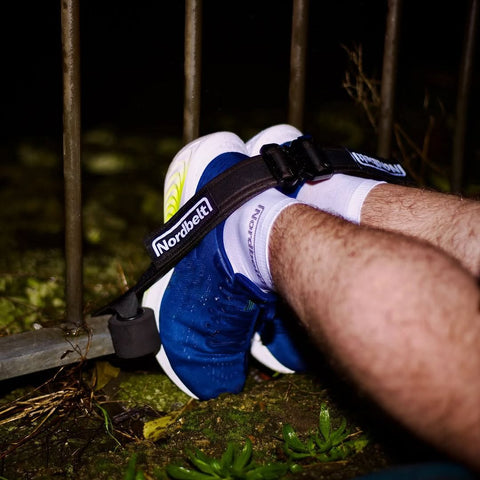
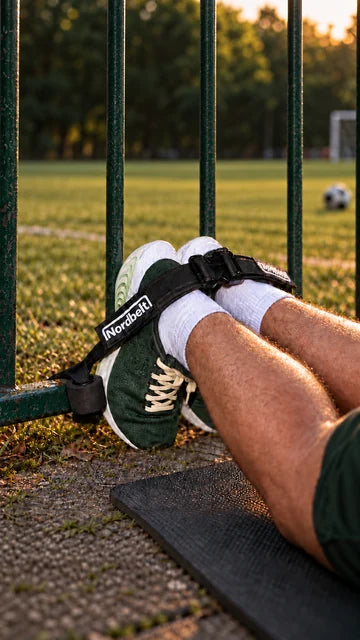
Use only a solid door, bench or fence structure suitable for the attachment according to the instructions. Before every session, check stability, strap position, fastening, knee space and clear landing space. Test the fixation gently first. A loose bench, moving fence or unsuitable door is not a usable anchor. The instructions for Nordic curls at home cover assembly; they do not establish an optimal weekly dose.

The photo shows a starting position, not a full repetition or a check of the railing's load capacity.
For full movement instructions, see the guide to the Nordic hamstring curl. To decide what to measure first, read the comparison of strength and muscle growth with Nordic curls at home. Choosing a goal and comparing doses are different decisions.
Stop if you experience sharp pain, unexpected loss of strength or a shifting anchor. Have new, severe or persistent symptoms assessed by an appropriate healthcare professional. With an existing injury, a general volume study does not determine which exercise or load is suitable.
Frequently asked questions
Is more Nordic volume always better?
No. Higher volume produced no greater effect on the strength, jump and sprint outcomes studied in female football players. This does not make low volume optimal for everyone or establish the effect of every possible programme (Amundsen et al., 2022).
Can I take my ideal sets and repetitions from these studies?
No. The studies compare complete programmes in specific groups. Use the figures to understand the comparison, not as a personal prescription. First record what you actually perform, then discuss the dose in the context of your goal, execution and other training demands.
Does a better Nordic force test prove that I sprint faster?
No. In the female football study, the Nordic-specific force measurement improved while sprint performance, jump height and eccentric torque did not change detectably. Keep those test outcomes separate (Amundsen et al., 2022).
Does ankle fixation determine how many repetitions I need?
No. Suitable, checked fixation is part of the setup. It chooses neither a training goal nor weekly volume. Even with a fixed setup, you still need to consider whether the variation, assistance and overall training demands suit your situation.