★ 4.6
Shockwave therapy or exercise for high hamstring tendon pain?

「Nordbeltは簡単に取り付けられて、運動中も安定感があります」
If your physio offers shockwave therapy or an exercise programme, start with what you want to get back to. Two trials help explain what each option can offer.
無料10週間トレーニングプロトコル無料プランを受け取る ↓Choosing between shockwave therapy and exercise for a painful high hamstring tendon? In the largest direct trial in people with a confirmed, longstanding tendon problem, neither treatment showed a clear advantage for perceived recovery or everyday function. Tell your physiotherapist what you want to get back to and ask what support comes with each option. If the pain came on suddenly during a sprint, have that injury assessed first. The people in this trial had persistent symptoms. Rich et al., 2025
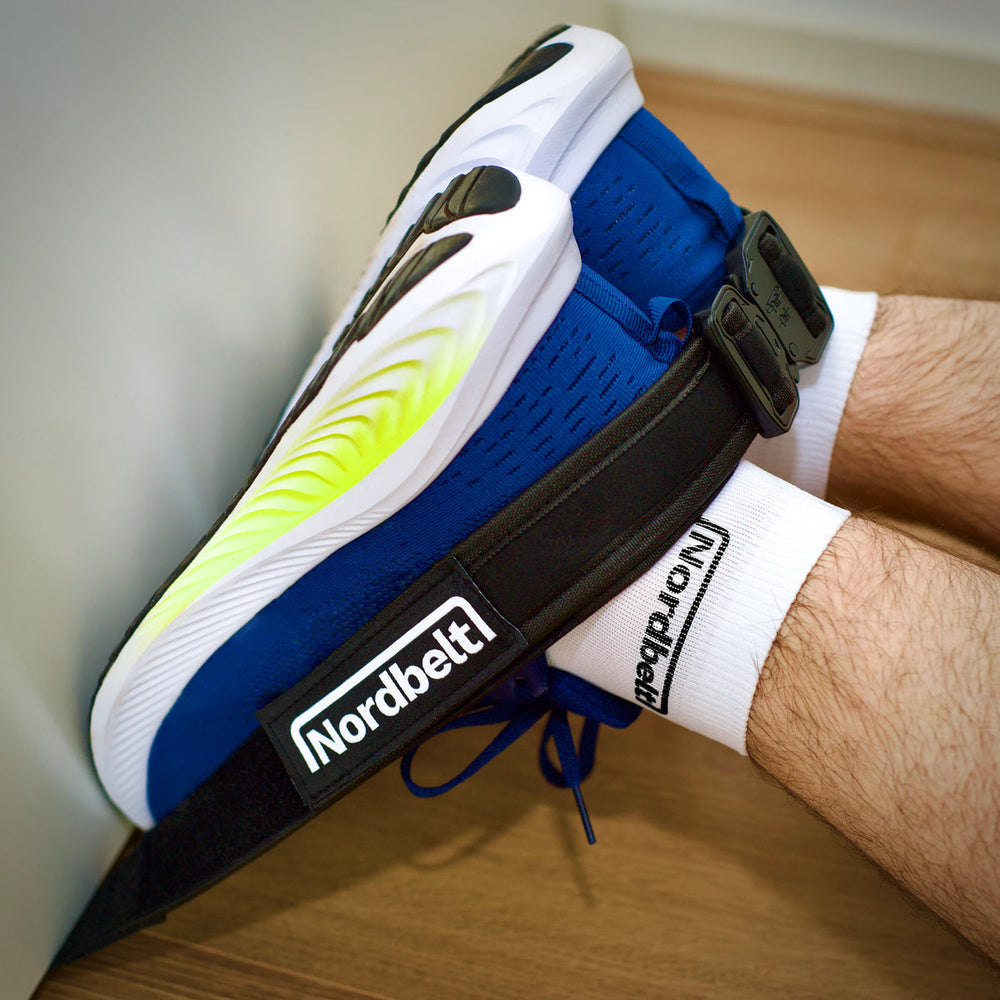
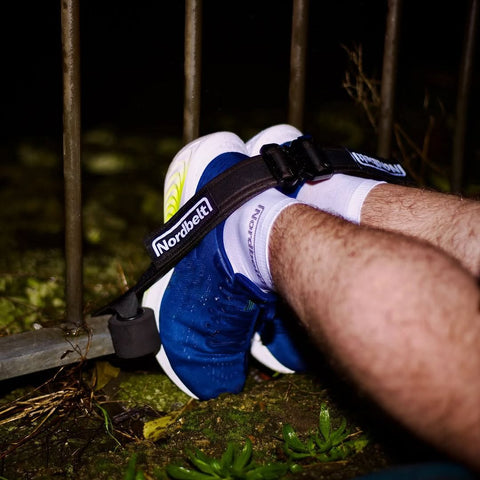
You don't need any equipment to choose a treatment. If your physio later recommends Nordic curls and you train alone, see how to secure your own ankles with Nordbelt. The strap holds your ankles down as you lean forwards, so you can train without a partner holding your heels. Ask your physio separately whether the exercise suits your tendon at this stage.
What would you like to be able to do after work?
Say you take a half-hour train ride to the running track every Wednesday. You spend the last ten minutes standing by the doors because sitting has become uncomfortable. Once you reach the track, an easy lap feels quite manageable. If you only tell your physio about the run, they miss the hardest part of your afternoon. Describe what happened on the train and why you stood up.
Turn that journey into a question for your appointment. What would you both recognise as progress? You may want to stay seated without constantly shifting your weight. Or perhaps you can sit comfortably again, but you're still avoiding a hill on your usual run. Pick what matters to you. There is no need to provoke pain to have something to report. An ordinary day will usually give you an example.

What exactly did the researchers compare?
At ten physiotherapy practices in Australia, 100 people with high hamstring tendon pain were randomly assigned to individual physiotherapy including exercises, or to shockwave therapy. Both groups had six appointments and received education and advice. These were two supported programmes. Picking a few exercises online is a different experience from what participants in the physiotherapy group received. Rich et al., 2025
At four, twelve, twenty-six and fifty-two weeks the researchers asked participants how much change they felt. A second measure looked at their tendon symptoms and what they could do. Neither group had a statistically clear advantage on either main outcome at any follow-up. Individual experiences can still vary. The results won't tell you which option will make your train ride easier first. Rich et al., 2025
At twenty-six weeks, the shockwave group reported greater satisfaction with treatment. Feeling happy with your care and getting back to training are different outcomes. Think about what you mean when you say a treatment works for you. Good support, sitting more comfortably and rejoining your running group can all matter. Rich et al., 2025
Why have you also heard that shockwave works better?
An earlier trial followed forty professional athletes with longstanding problems in the same tendon. Half received shockwave therapy. The others had a treatment package that included anti-inflammatory medication, physiotherapy and hamstring exercises. After three months, the shockwave group had a lower pain score on a scale of zero to ten. The authors reported two points versus five, from a starting score of seven in both groups. Cacchio et al., 2011
That result helps explain the headlines about shockwave and professional athletes. Look at the treatment it was compared with. The programme in the older trial differed from the individual physiotherapy in the newer one. Professional athletes were also a small, specific group. You can't take that three-point gap as the extra pain relief you'd personally get over the programme your own physio offers. Cacchio et al., 2011 · Rich et al., 2025
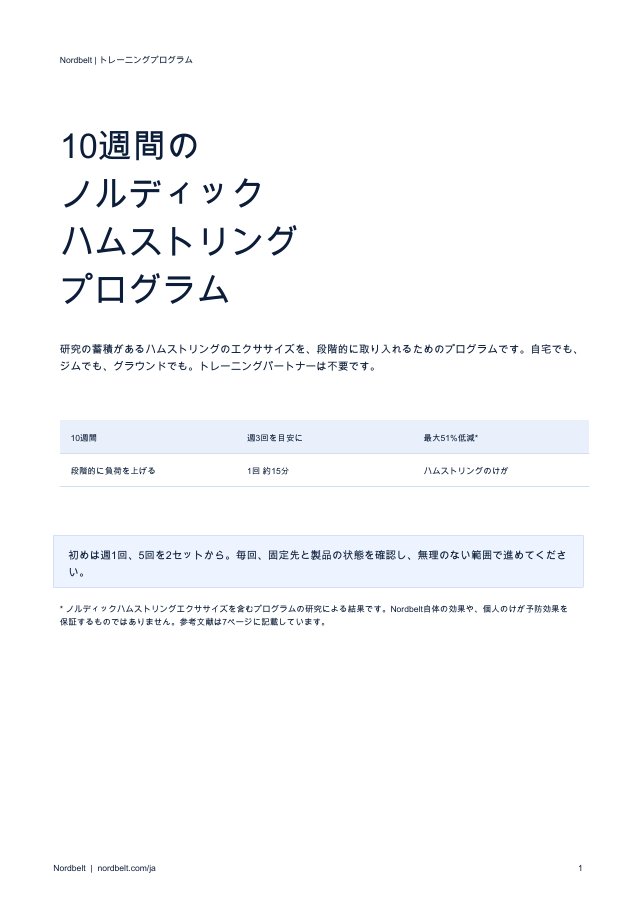
ノルディックカールの最初の1回から 10週目まで。
全7ページの実践的なプログラム。無理をせず、週ごとに段階を進められます。
PDF7ページメールで直接お届け
- 01週ごとの段階的なトレーニングプラン
- 02テクニックと避けるべき間違い
- 03実際に使えるシンプルなログ
ダウンロードページを再度開くか、送信したメールをご確認ください。
ダウンロードページを開く ↗≤ 51%
✓研究に基づく内容
Van Dykら(2019):NHEを含むプログラムのメタ分析。Nordbeltや本プログラム自体の効果を測定したものではありません。
What could you jot down before your appointment?
Choose one activity you find difficult. Note what you did, when you changed something and what happened next. For instance, “On the way there I stood up after twenty minutes. On the way back I had an aisle seat and could walk about.” Your physio can see straight away what was different. “It felt better today” is harder to compare with next week.

Ask the same practical questions about both options. Who will help you decide how much training to do this week? What will you be doing between visits? Who can you contact if running gets easier but sitting is still difficult? For exercise therapy, ask how the physio would adapt an exercise around a working day. For shockwave, ask what advice and support you'll receive alongside the sessions.
Agree when to revisit your example. If you experienced less pain because you were on holiday and spent very little time sitting, say so. The opposite is worth mentioning as well. You may now be able to sit for the whole train journey with about the same discomfort that used to make you stand up halfway. That gives you something specific to discuss when deciding whether the change matters to you.
When does strength training at home come into it?
First ask which movement suits the goal you have now. To find out what changing the load can involve, read about building up the load on a sensitive hamstring tendon. If you don't yet know why sitting is uncomfortable, start with pain at the back of the thigh when sitting.
If a kneeling Nordic curl becomes part of your programme, have someone show you how far you can lower yourself under control. Training alone? The guide to door, bench and fence setups shows how the strap attaches in each setting. With the bench setup, the strap holds your ankles against the bench. Before leaning forwards, check that the bench is stable and the strap stays put. The photo shows the attachment.

Frequently asked questions
Should I try shockwave before I start exercising?
The trial does not establish a set order. Participants were assigned to one of two programmes. There was no group that started with shockwave and then moved on to exercise therapy. Ask why your physio suggests a particular sequence and what you can do about your usual training during the first stage. Rich et al., 2025
Are six appointments enough to get back to running?
Six was the number of appointments in the trial. It wasn't a point at which everybody was ready to run again. Talk about what you mean by running. An easy lap alone is different from joining in a fast finish at club training. Ask your physio how you'll both know when you're ready for that particular step. Rich et al., 2025
Can pain when sitting tell me which treatment to choose?
It tells you when you feel the problem, but it doesn't pick the treatment. If you feel it near your sitting bone and the cause is unclear, read about symptoms below the buttock to discuss with your physio. Get the cause assessed before choosing a treatment. Once you have a diagnosis, use the same sitting situation at your next appointment to discuss whether everyday life is getting easier.