★ 4.6
Nordic curl on an inclined lower-leg support: what changes?

“Nordbeltは簡単に固定でき、安定感があります。”
An inclined lower-leg support changes the Nordic task. See what two laboratory studies measured, why peak and final-phase activity differ, and what remains unproven.
無料10週間トレーニングプロトコル無料プランを受け取る ↓A Nordic curl on an inclined lower-leg support changes the exercise's starting geometry. You may therefore see a different range of motion and different acute muscle activity than with a flat support, without that alone proving extra strength. Two small laboratory studies help explain the difference. They establish no best home angle, construction plan or evidence that the inclined version prevents more injuries. Compare the setup and measured outcome before judging the conclusion (Šarabon et al., 2019; Soga et al., 2021).
If you separately want to perform ordinary Nordic curls at home, see how Nordbelt secures your ankles without a training partner. You still need a suitable anchor and a manageable movement. The strap is not an inclined lower-leg platform and does not make a modified construction suitable.
Which support is actually inclined?
In a usual Nordic, you kneel with your ankles secured and brake your body's forward movement from the knees. An inclined lower-leg support changes the orientation of the surface beneath your lower legs. That differs from placing your hands higher, bending at the hips or simply raising the ankle attachment.
The two studies compared flat support with support slopes of 20 and 40 degrees under controlled conditions. These are research settings, not mounting advice. One study used a specially adjustable setup; in the other, an examiner held the ankles against the support (Šarabon et al., 2019; Soga et al., 2021).
When watching a demonstration, first ask which part is inclined. A sloping line in a photograph does not establish whether it represents the lower-leg support, upper-body position or camera angle. For the separate question of deliberate versus unintended hip bending, read the explanation of Nordic curls with hip flexion.

What do the two studies show?
Šarabon and colleagues studied eighteen healthy adults with resistance-training experience and little Nordic experience: thirteen men and five women. With a steeper support, peak torque occurred with a more extended knee, without a statistically detectable difference in peak torques between support slopes. Peak measured muscle activity generally decreased. This was a comparison during one visit, not a training study of progress (Šarabon et al., 2019).
Soga and colleagues studied fifteen young resistance-trained men with no previous hamstring strain. They examined muscle activity within separate parts of the knee movement. With a greater slope, the break point occurred nearer knee extension and hamstring activity was higher in the final phase. This is an acute finding in that setup and participant group, not a demonstrated rehabilitation or prevention effect (Soga et al., 2021).
Both studies therefore concern measurements during execution. They compare no months-long training programmes and test no homemade incline or Nordbelt attachment. Do not adopt their settings as a personal programme or evidence that your modified setup is suitable (Šarabon et al., 2019; Soga et al., 2021).
How can a lower peak accompany more activity at the end?
A peak and a movement phase answer different questions. The peak describes the highest measured level within the chosen analysis. A phase comparison asks what happens within a particular part of the movement. A lower peak in the first study and more activity near knee extension in the second therefore do not automatically contradict each other. The studies also used different participants and measurement procedures (Šarabon et al., 2019; Soga et al., 2021).
Think of two routes with different highest hills and different final sections. The highest point does not describe the whole route. This analogy explains the measurement concept; it does not explain a muscle mechanism. When reading a research statement, check whether it concerns a peak, a particular phase, a joint torque or range of motion.
This distinction also prevents you from combining everything into a verdict such as “more hamstrings”. Here, an EMG signal measures electrical muscle activity. It is no direct score for later muscle growth, injury probability or the best exercise for you; those long-term outcomes were not compared (Šarabon et al., 2019; Soga et al., 2021).
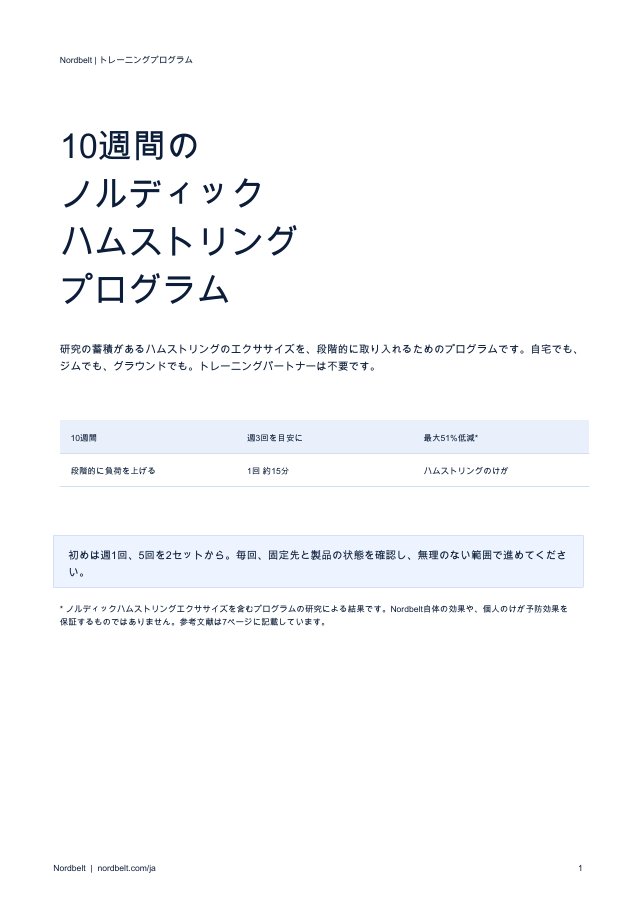
ノルディックカールの最初の1回から 10週目まで。
全7ページの実践的なプログラム。無理をせず、週ごとに段階を進められます。
PDF7ページメールで直接お届け
- 01週ごとの段階的なトレーニングプラン
- 02テクニックと避けるべき間違い
- 03実際に使えるシンプルなログ
ダウンロードページを再度開くか、送信したメールをご確認ください。
ダウンロードページを開く ↗≤ 51%
✓研究に基づく内容
Van Dykら(2019):NHEを含むプログラムのメタ分析。Nordbeltや本プログラム自体の効果を測定したものではありません。
Compare setup, movement and conclusion separately
Use the comparison below as a reading guide for an explanation or demonstration. It is an editorial aid, not a validated test or an instruction to try an inclined version yourself.
| What is shown? | What needs to be clear? | What conclusion does not yet follow? |
|---|---|---|
| A different lower-leg support | Which surface slopes and which other settings remain unchanged. | That simply raising the ankle anchor creates the same task. |
| Moving farther | Starting position, assistance and the movement section described. | That the same person has demonstrably become stronger. |
| More measured muscle activity | Which muscle, movement phase and measurement method. | That the variation produces more muscle growth or fewer injuries. |
| An impressive demonstration | What the full execution and setup actually show. | That the construction also suits your space or body. |
Suppose someone places two videos side by side: flat support on the left, inclined support on the right. In the second recording, the body moves farther forwards. The first correct observation is that the task differs. Without matching conditions and an appropriate measurement, “I have become stronger” is an additional, unproven conclusion. The separate explanation of the Nordic curl break-point angle addresses the limits of such measurement claims.
First describe what is visible: the support surface, any assistance and the part of the movement the speaker is discussing. Leave unknown settings unknown. You do not need to guess a precise angle from an unclear recording to recognise an excessive conclusion.

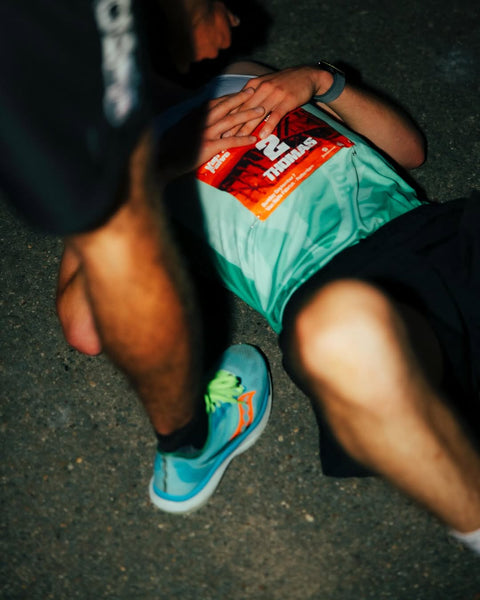
Context image for describing a setup; not a research measurement or personal training advice.
What does this mean for your ordinary home setup?
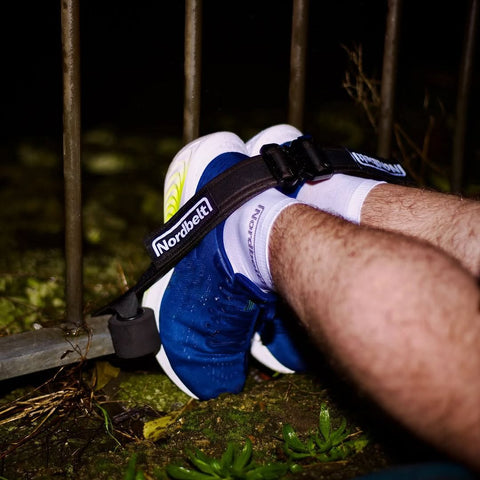
You do not need to recreate a research setup to practise the ordinary Nordic curl. Keep the attachment within its intended use. A suitable door is fully closed and cannot open unexpectedly; a bench or fence must withstand the load at the attachment point without sliding or tipping. Check the anchor beforehand, use comfortable knee padding and keep the space ahead clear. The guide to a stable Nordic setup at home explains those ordinary checks further.
An inclined lower-leg support, a higher ankle anchor and a different hip position are different changes. Do not combine them on the basis of a single research photograph. Ask a qualified person to explain the intended exercise if you are offered a special setup. This article chooses no incline, sets, repetitions or rehabilitation load for you.

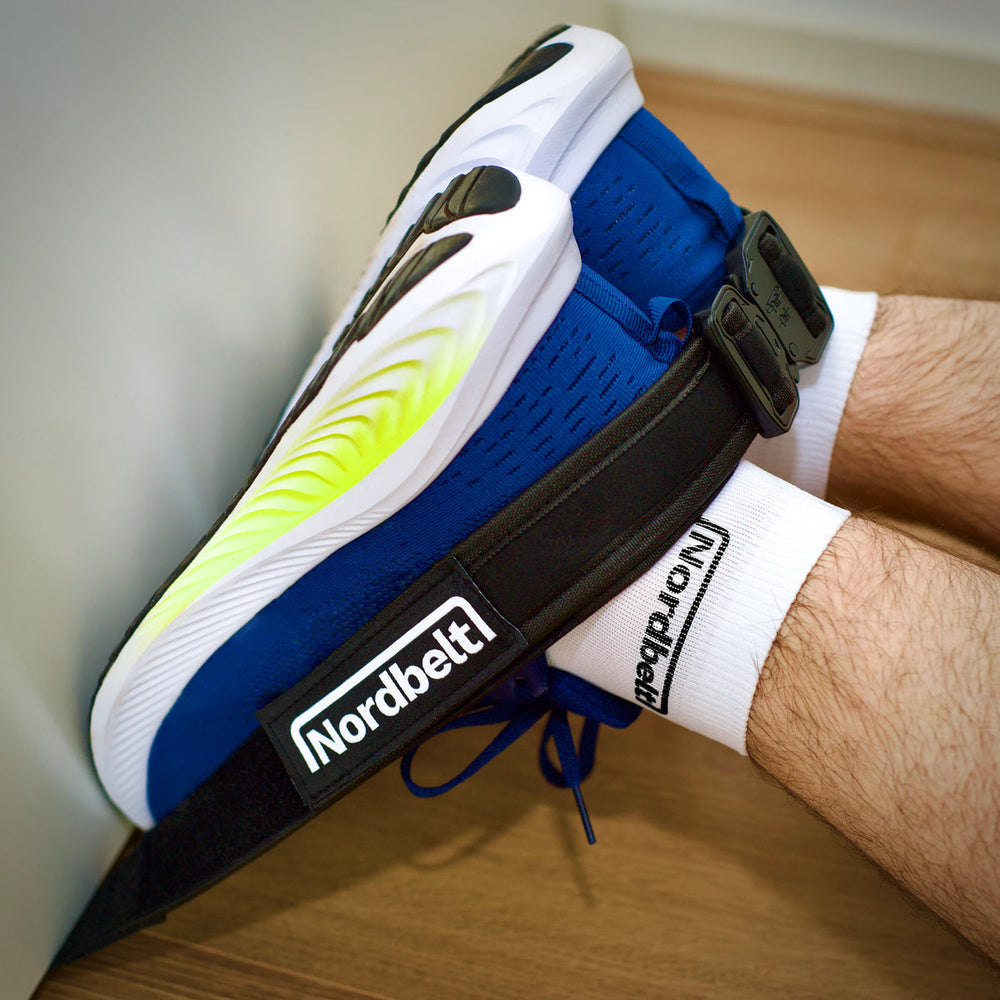
Detail of a starting setup; the crop shows neither an inclined platform nor a complete repetition.
Stop for pain, shifting fixation or a movement you can no longer catch. Discuss persistent or unexplained symptoms with a doctor or physiotherapist. After a recent injury, load and exercise-variation choices belong within your personal care; a laboratory angle does not provide clearance to return to sport.
Frequently asked questions
Is a higher ankle anchor the same as an inclined lower-leg support?
No. Raising only the attachment point says nothing about the surface supporting the lower legs. The studies changed a controlled support setup. Do not interpret their results as an instruction to mount a door anchor, bench or strap differently (Šarabon et al., 2019; Soga et al., 2021).
Which angle should I use at home?
These two acute studies provide no personal home angle recommendation. The tested settings describe the experiments, not a universal choice. Do not alter your ordinary attachment to imitate the research setup. Seek guidance if a specific variation needs to become part of your training.
Does lowering farther mean my hamstrings are stronger?
This comparison cannot establish that. You may be comparing a different task. First record which setup, body position and assistance changed. A strength claim requires an appropriate measurement and comparable conditions; a more impressive final image is insufficient.
Do these studies prove more muscle growth or fewer injuries?
No. These studies measured acute movement and muscle activity, and the first also measured joint torques. They compared no long-term muscle growth or injury counts. Training suggestions in a discussion are not outcomes already demonstrated (Šarabon et al., 2019; Soga et al., 2021).