Sore hamstrings or an injury after strength training?

“Nordbelt si fissa facilmente e rimane stabile.”
Sore hamstrings or an injury after strength training? Soreness that develops later can follow unfamiliar loading, but timing alone does not rule out injury. Consider how it began, where it hurts and what you can still do. Stop with sudden sharp pain; have a pop, extensive bruising, obvious weakness or difficulty walking assessed promptly by a doctor. Do not test the hamstring with sprinting or forceful stretching. (Heiderscheit et al., 2010)
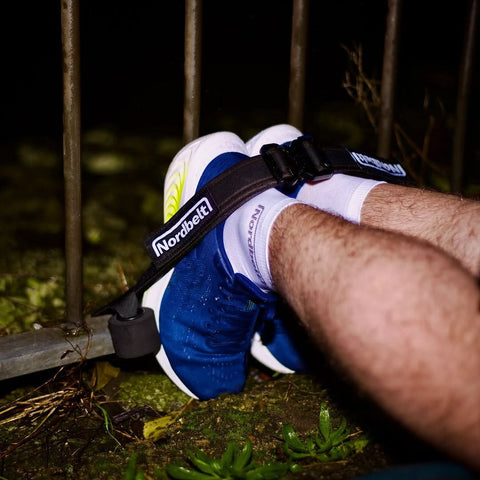
First consider whether your symptoms need assessment. If Nordic curls later suit your progression, the Nordbelt homepage shows how to fix both ankles for that exercise. This is a practical training setup; the product does not determine whether you have soreness and does not treat an injury. Do not buy or assemble equipment to test a painful hamstring.
Why the day after training does not tell the whole story
Tenderness can become more noticeable after a first or heavier training stimulus. This is often called delayed-onset muscle soreness, or DOMS. A small study of thirteen trained men monitored strength, range of motion and soreness after 24 Nordic repetitions. Soreness increased on days two and three; measured strength and range of motion did not follow exactly the same recovery pattern. This was not a study for ruling out a tear at home. (Coratella et al., 2025)
The familiar claim that soreness always peaks after two days is too definite. A reanalysis of data from distance runners and untrained participants doing a bench-stepping task found different time courses. The activity and the group studied matter. Do not use a clock as proof that pain is harmless, or as a fixed date for resuming heavy training. (Vickers, 2001)
Instead, record what actually changed: was this your first Nordic session, did you do more repetitions, lower farther, or add the exercise to a hard running session? This information helps you discuss your loading. It does not, by itself, establish a cause or a diagnosis.

Consider onset, changes and daily function together
Distinguish a recognisable moment during exercise from symptoms noticed only later. In a prospective study of 83 Australian Rules football players with posterior-thigh pain, many MRI-confirmed hamstring injuries began suddenly. There were exceptions. This selected sporting group therefore provides no individual probability estimate for someone with pain after a gym session. (Verrall et al., 2003)
Write down three brief observations:
- Onset: During which movement did you first notice something? Was there one clear sharp pain, or mainly tenderness noticed later?
- Changes: Is it settling, staying the same or increasing? Also note swelling or bruising that appears later.
- Function: Can you walk as usual, or are you changing your stride? What do you notice during an ordinary activity you already need to do?
This helps you give a complete account; it is not a home test with a result. Do not perform a maximal bridge, deep forward bend or Nordic to answer the third question. A pain score or left-to-right difference also cannot establish the tissue involved without assessment. Investigating a suspected hamstring injury requires both history and physical examination. (Verrall et al., 2003)
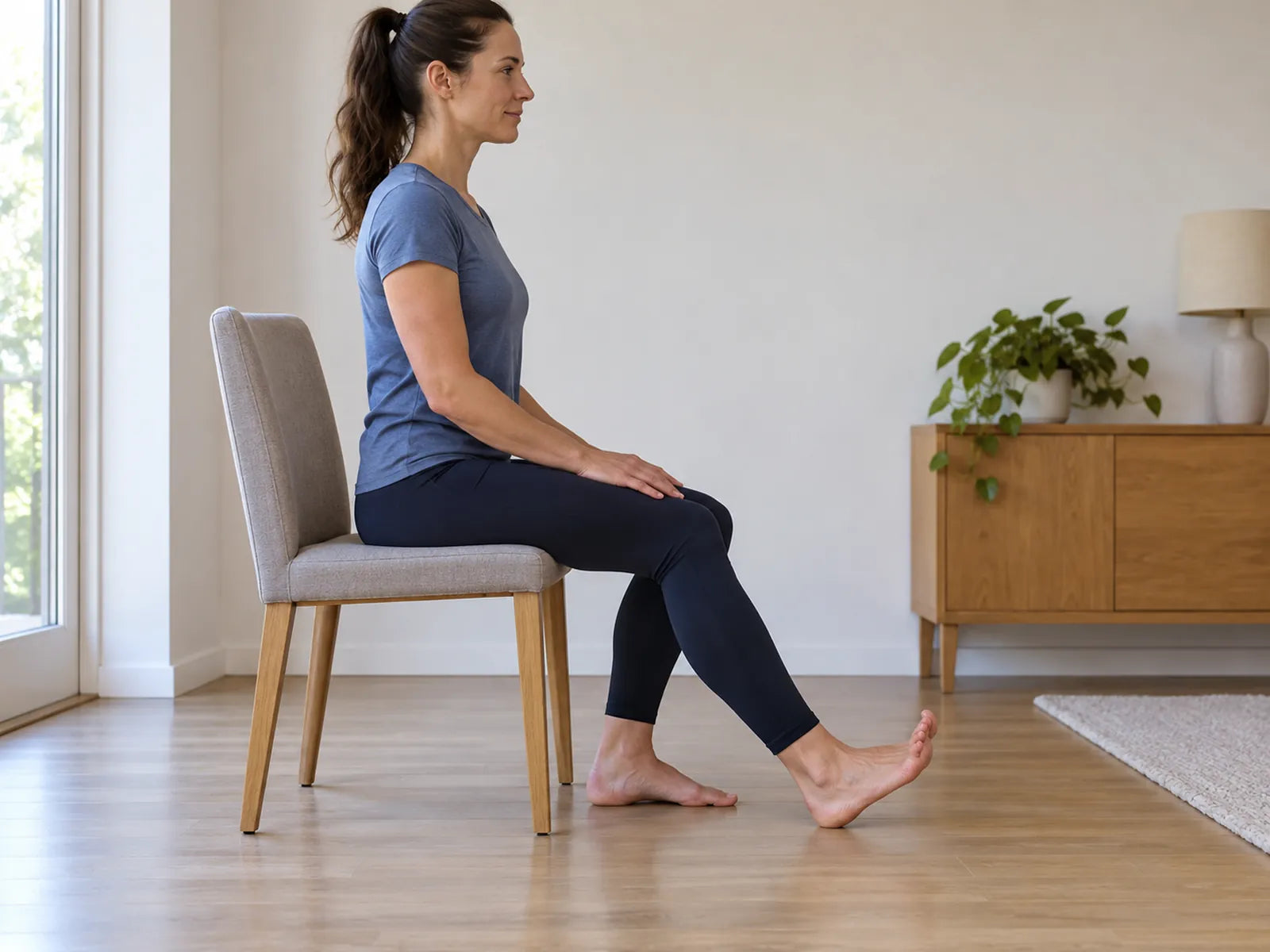
A quiet seated position shown for context; this position is not a test for soreness or injury.
Is your main concern longstanding tightness without a new injury moment? The article on exercises for tight hamstrings addresses that different question. Do not use its exercises to check whether new pain is safe.
When you should not keep waiting for ordinary soreness to pass
Have a sudden injury event with major loss of function, a pop, extensive bruising or obvious swelling assessed promptly by a doctor. Symptoms that keep increasing, recur or remain unexplained also deserve assessment. A physiotherapist can help assess persistent movement-related symptoms and suitable progression. Absence of bruising is not clearance to keep training. Clinical assessment considers several findings together. (Heiderscheit et al., 2010)
Seek immediate medical help for unusually severe muscle pain with dark, tea- or cola-coloured urine, especially with substantial weakness or swelling. This can be consistent with exertional muscle breakdown and does not belong in a wait-and-see soreness plan. Diagnosis requires medical assessment and, when indicated, blood and urine tests; urine colour alone does not establish it. (Nye et al., 2021)
Did you feel a clear sharp pain during sport? Read the focused explanation of the first 48 hours after a hamstring injury. This page about symptoms after training does not replace that acute-care route.
Porta il tuo Nordic curl dalla prima ripetizione fino alla settimana 10.
Un piano concreto di 7 pagine: progredisci settimana dopo settimana, senza strafare.
- 01Progressione chiara settimana dopo settimana
- 02Tecnica ed errori da evitare
- 03Un diario semplice da usare davvero

≤51%
✓Basato sulla ricerca
Van Dyk et al., 2019: metanalisi di programmi con NHE. Non valuta gli effetti di Nordbelt o di questo protocollo.
Riapri la pagina di download o controlla l’email che ti abbiamo inviato.
Apri la pagina di download ↗What to do about your next training session
You do not have to assign a diagnosis yourself to make a sensible choice. With warning signs or concern about injury, assessment comes before another heavy hamstring session. Without those signs, first consider how ordinary, gentle movement feels. Omit movements that clearly worsen symptoms. Do not turn a temporary reduction in training into a self-designed rehabilitation protocol; ongoing limitations call for individual advice. (Heiderscheit et al., 2010)
A useful training note records the previous load, current symptoms and what you will adjust next time. For example, your first session contained more Nordic repetitions than planned and your walking pattern then changed. That is not a good moment to add more repetitions to get used to it. Discuss the change in function first. This example is not a diagnosis and gives no universal number of rest days.
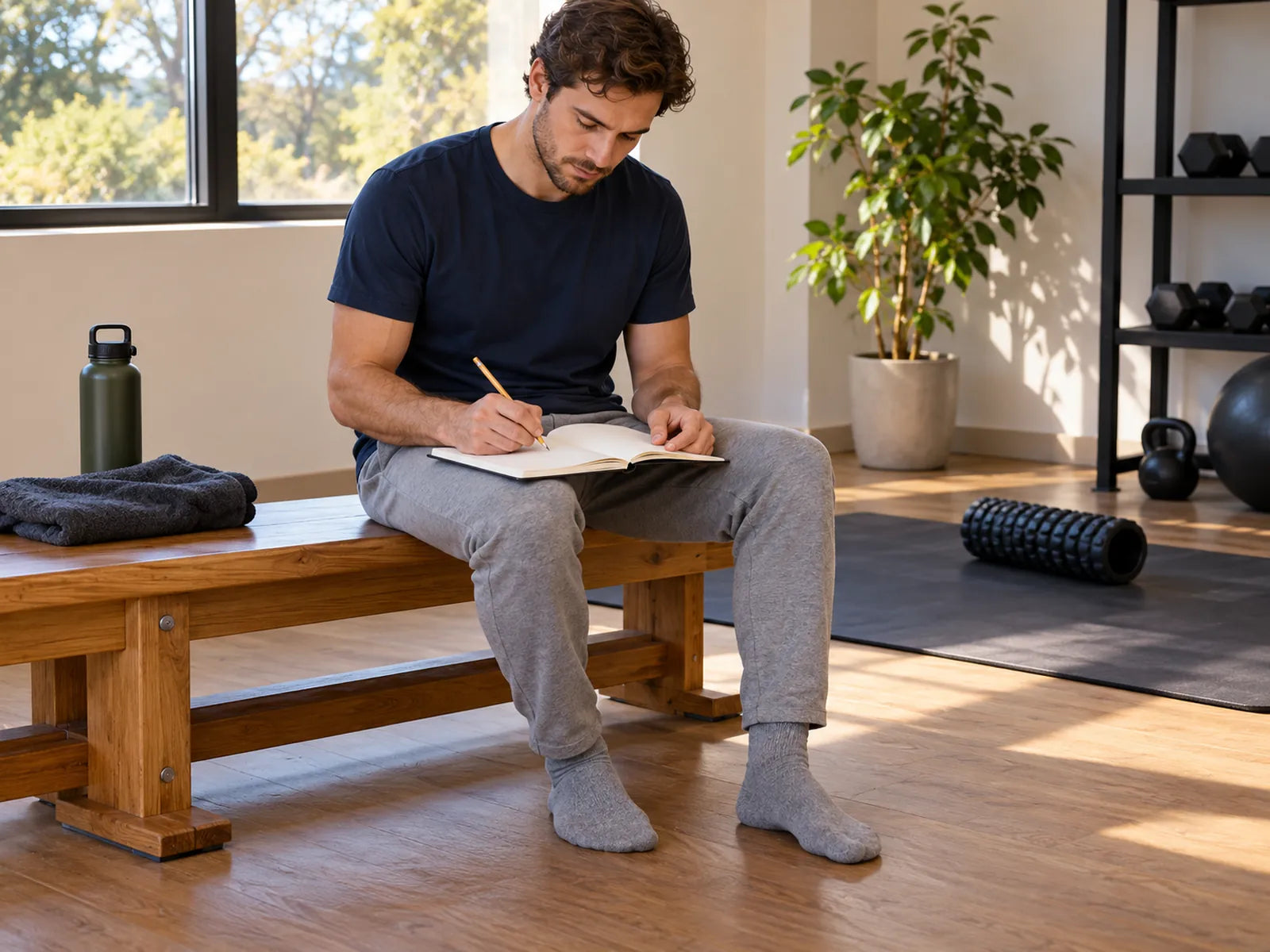
A training note shown for context; not a measurement of strength or tissue recovery.
A six-week study of forty healthy, active men also shows that more is not automatically better tolerated. Participants were assigned to four Nordic dosages. The group progressing to high volume reported more soreness and other pain than the other groups. The researchers did not formally diagnose that other pain. These results therefore do not identify your symptoms or establish how many repetitions are safe for you. (Behan et al., 2023)
Rebuild later without making soreness the training goal
Once symptoms have been adequately assessed and loading is appropriate again, make the next exercise deliberately repeatable: the same support, a manageable movement and an agreed dose. Do not change range, repetitions and difficulty simultaneously. This makes it easier to review what you did, without turning it into a medical measurement.
A Nordic is an exercise in which you kneel and resist the forward movement from the knees while the ankles remain fixed low. A suitable door, stable bench or securely fixed fence can serve as an anchor only if the attachment is suitable and does not move under load. Use knee cushioning, space for your hands and a manageable range. A loose chair or moving door is not a suitable substitute. The safe home setup for Nordic curls covers assembly separately.
A fixed setup only solves the attachment task. It does not automatically make a demanding exercise appropriate for pain, and says nothing about tissue recovery. If you are receiving care for an injury, follow the agreed progression rather than treating one pain-free repetition as clearance for sport. (Hickey et al., 2022)
Frequently asked questions
Is hamstring pain the day after training always soreness?
No. Timing is one part of the account. The type of exercise, any injury moment, symptom changes and loss of function also matter. Research on soreness also shows different time courses. Do not treat the following morning as automatic reassurance. (Vickers, 2001)
Can I use a Nordic to test whether my hamstring is injured?
No. A demanding repetition does not provide a reliable home diagnosis and is not a sensible test when injury is suspected. Instead, record the onset and daily limitations and have them assessed. A clinical diagnosis requires several findings. (Hickey et al., 2022)
Does less soreness mean my strength has fully recovered?
You cannot infer that. In the small Nordic study of trained men, soreness, strength and range of motion were measured separately and did not change in parallel. These measurements provide no individual return rule, but show why sensation alone is not a complete strength measurement. (Coratella et al., 2025)
How many days should I wait before training hard again?
There is no fixed answer that separates soreness from injury. Have warning signs or loss of function assessed first. With a confirmed injury, progression depends on assessment, capacity and the response to exercise. A calendar date alone is not permission for heavy Nordics or sprinting. (Hickey et al., 2022)