

Padel hamstring exercises: stronger starts, braking and turns


Padel hamstring exercises should match the way you actually move on court: a split step, a short start, a lateral push, braking before the ball, rotation through the stroke and another recovery step. That is different from a single relaxed jog or a long static stretch after training. A useful plan combines hip strength, eccentric control, assisted Nordics and short court drills. Start with movements you can repeat cleanly, keep heavy hamstring work away from match day and only increase speed when the next training day still feels normal.
Quick answer
Padel-specific injury papers point to muscle strains, tendon complaints, warm-up quality and playing load as practical issues to manage (Alhammad et al., 2025; Pérez et al., 2023). The sprint and Nordic evidence gives the training logic: expose the hamstrings to controlled speed, braking and eccentric strength instead of relying on stretching alone (Schache et al., 2012; van Dyk et al., 2019; Cuthbert et al., 2020).
The research findings apply to the programmes and participants studied. The exercise plan on this page has not itself been tested as an injury-prevention programme for this sport. Treat the suggested schedule as a practical example and adapt it to your training and recovery.
Padel loads the hamstrings when players react, accelerate, brake and rotate under fatigue. Sprint research shows high mechanical demand on the hamstrings at speed, especially when hip and knee positions change quickly (Schache et al., 2012). Use this article next to the broader hamstring exercises guide. Build control first, add eccentric strength second and bring speed in last.
The practical order matters. If you jump straight into hard Nordics or full-speed sprints while your court volume is already high, the exercise may be technically correct but poorly timed. Better padel hamstring training gives you repeatable tension first, then gradually teaches the hamstrings to tolerate braking and fast direction changes.
Why padel asks more from the hamstrings
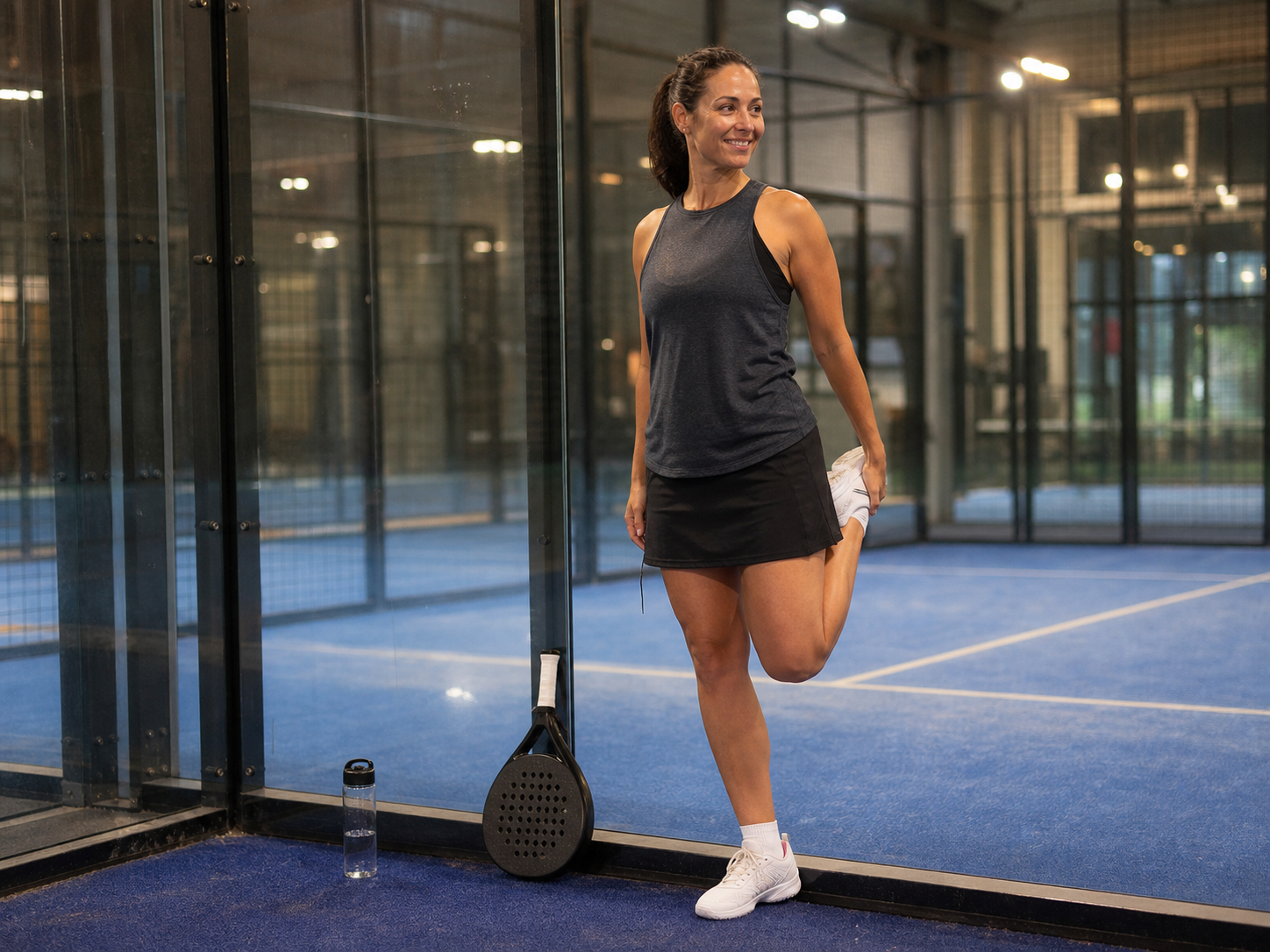
A padel sprint is rarely straight and relaxed. You react to the ball, split step, push off, brake in a few steps, rotate for the stroke and recover to the centre. That repeated switch makes sudden load jumps more important than one isolated exercise. Good padel hamstring exercises should train the back of the thigh and the braking phase. That is why eccentric hamstring exercises are a useful layer for players who accelerate and decelerate often.
Three moments devolley extra attention: the first push after the split step, the last two braking steps before contact and the recovery turn after the stroke. If your hamstrings are only trained in slow straight-line movements, those moments can feel underprepared. The goal is not to make every drill maximal. It is to make the hamstrings familiar with the shapes and speeds that padel keeps asking for.
Which exercises should you start with?
Choose the first exercise by control, not by difficulty. If your pelvis drops, your lower back takes over or you cannot slow the movement down, the step is too heavy. A sensible sequence is:
- glute bridge with gentle heel pressure;
- hamstring walkouts;
- sliding leg curls;
- Romanian deadlifts;
- assisted Nordic hamstring curls;
- short start-and-brake drills.
This order is not a rule, but it prevents a common mistake: using the hardest exercise as the entry point. Padel players often already carry fatigue from volleys, lunges and repeated court coverage. The right exercise is the one you can recover from while still playing well.
The 6 best padel hamstring exercises
1. Glute bridge with heel pressure
Lie on your back, place the heels slightly farther from the hips and lift the pelvis calmly. Pull the heels lightly toward you without letting them slide. Hold for two seconds and lower under control. This teaches tension without high speed.
2. Hamstring walkout
Start in a bridge and take small steps forward with the heels. The farther the heels move away, the stronger the hamstring demand becomes. Keep the pelvis level and stop before the lower back arches.
3. Sliding leg curl
Use sliders or towels on a smooth floor. Pull the heels in, lift the hips and let the feet slide away slowly. This is a useful bridge between basic strength and heavier eccentric work.

4. Romanian deadlift
A Romanian deadlift trains the hamstrings and glutes through a hip hinge. Keep the back quiet, move from the hips and feel the tension at the back of the thigh. Start light if the week already includes intense court sessions.
5. Assisted Nordic hamstring curl
Lower slowly while using the hands, a band or a shorter range so you stay in control. A clean assisted rep is more useful than a full Nordic that turns into a fast drop.
6. Start-and-brake drill
Sprint 5 to 10 metres at 70 to 85 percent, brake in a few controlled steps and walk back. Start with planned directions before adding reactive ball work.
Nordics for padel: when and how heavy?
Nordic hamstring training can fit padel when it is introduced as a controlled eccentric stimulus, not a weekly test. Evidence syntheses link Nordic work with lower hamstring injury risk and useful low-volume strength adaptations, but padel players still need gradual loading around match play (van Dyk et al., 2019; Cuthbert et al., 2020).
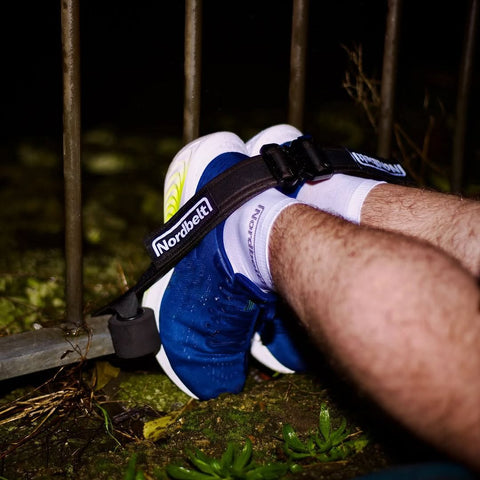
Begin with assisted repetitions and a small range. For example, use 2 sets of 3 assisted reps for two weeks, then 2 sets of 4 or 5 if the next day feels normal. Add range or repetitions, not both at once. The Nordic hamstring curl schedule is a useful comparison for sets and timing. Nordbelt can help fix the ankles consistently without a partner or large machine. Check the how-to guide before treating the Nordic as a heavy strength exercise.
Weekly planning for padel players
Place the main hamstring session early in the week. With a weekend match, Tuesday is usually better than Friday. A simple in-season week might use a light bridge or walkout session after recovery day, one strength session with sliders or assisted Nordics, and one short court session that includes planned braking. Keep the day before a match calmer.
During the season, one maintenance session can be enough. Outside the season you can add more strength volume. Reviews suggest Nordic work can improve eccentric strength and muscle architecture, but the stimulus remains heavy and needs consistent progression (Cuthbert et al., 2020). For solo training, Nordbelt can make assisted Nordics and controlled progressions easier to repeat. Treat it as a setup tool, not a reason to progress faster than your hamstrings can tolerate.
Lowering hamstring injury risk without forcing it
Lowering hamstring injury risk in padel is about predictable loading: gradual sprint exposure, technical braking, recovery and sensible placement of Nordics. Big jumps in match volume, new strength exercises, deeper lunges and extra sprint work in the same week can stack quickly. The broader hamstring injury prevention guide covers similar principles for team sport, but keep this page as the guide for padel-specific exercise choice.
Stop if pain is sharp, power drops or a clear pull occurs. After symptoms, rebuild control before testing maximum speed. Mild muscle soreness after a new eccentric drill can happen, but it should not change how you run, lunge or recover to the middle of the court.
Progression rules
Progress one variable at a time. Add a little range, a little volume or a little speed, but do not change all three in the same week. If padel training already includes many starts and direction changes, keep the strength session shorter. If the hamstrings feel heavy for more than 24 to 48 hours, repeat the same level instead of progressing.
FAQ
Which padel hamstring exercises matter most?
Sliding leg curls, Romanian deadlifts, assisted Nordics and start-brake drills are the main choices. Bridges and walkouts are useful base exercises.
Does the Nordic hamstring curl fit padel?
Yes, when it is introduced gradually. It should not be the first heavy drill in a busy match week.
How often should padel players train hamstrings?
One or two focused sessions per week is enough for most players. In season, use smaller maintenance work.
Can hamstring injuries be fully prevented?
No. You can reduce risk, but not remove it. Consistency, sprint progression and recovery matter as much as exercise choice.