

Eccentric hamstring exercises: 5 options and safe progression


“Nordbelt is easy to secure and feels stable.”
Eccentric hamstring exercises are movements where the hamstrings produce force while lengthening. That happens when you lower slowly in a Nordic hamstring curl, control the descent of a Romanian deadlift, or let your heels slide away during a hamstring curl. The best choice depends on the goal: rebuilding tolerance, getting stronger, preparing for sprinting, or reducing injury risk. Start lighter than expected, earn control first, and use heavy Nordics only when the base work is well tolerated.
In brief
Eccentric work matters because sprinting and deceleration load the hamstrings in a lengthened position. Football trials found lower hamstring injury rates when Nordic hamstring programmes were added, but the useful effect depends on gradual progression and long-term adherence (Petersen et al., 2011; van der Horst et al., 2015). Use this page as a specific decision guide alongside the broader hamstring exercises guide.
What eccentric hamstring training means
A concentric muscle action shortens under load. An eccentric action controls load while the muscle lengthens. For the hamstrings, that is important because sprinting, braking, hinging and reaching forward often ask for tension, timing and length at the same time.
That does not mean every session should be maximal. A light eccentric stimulus can be a slow sliding leg curl. A heavy one can be a full Nordic hamstring curl. The target is not soreness. The target is better control during the lowering or braking phase, with a dose the athlete can repeat.

Which eccentric hamstring exercise should you choose?
Choose by tolerance first. If you are returning from symptoms, pick a version that is easy to stop and easy to scale. If you are already sprinting or playing field sport, the exercise can become more specific and heavier. If pain is part of the picture, start with the guide on hamstring exercises with pain before increasing range or load.
- Sliding leg curl for low-threshold control.
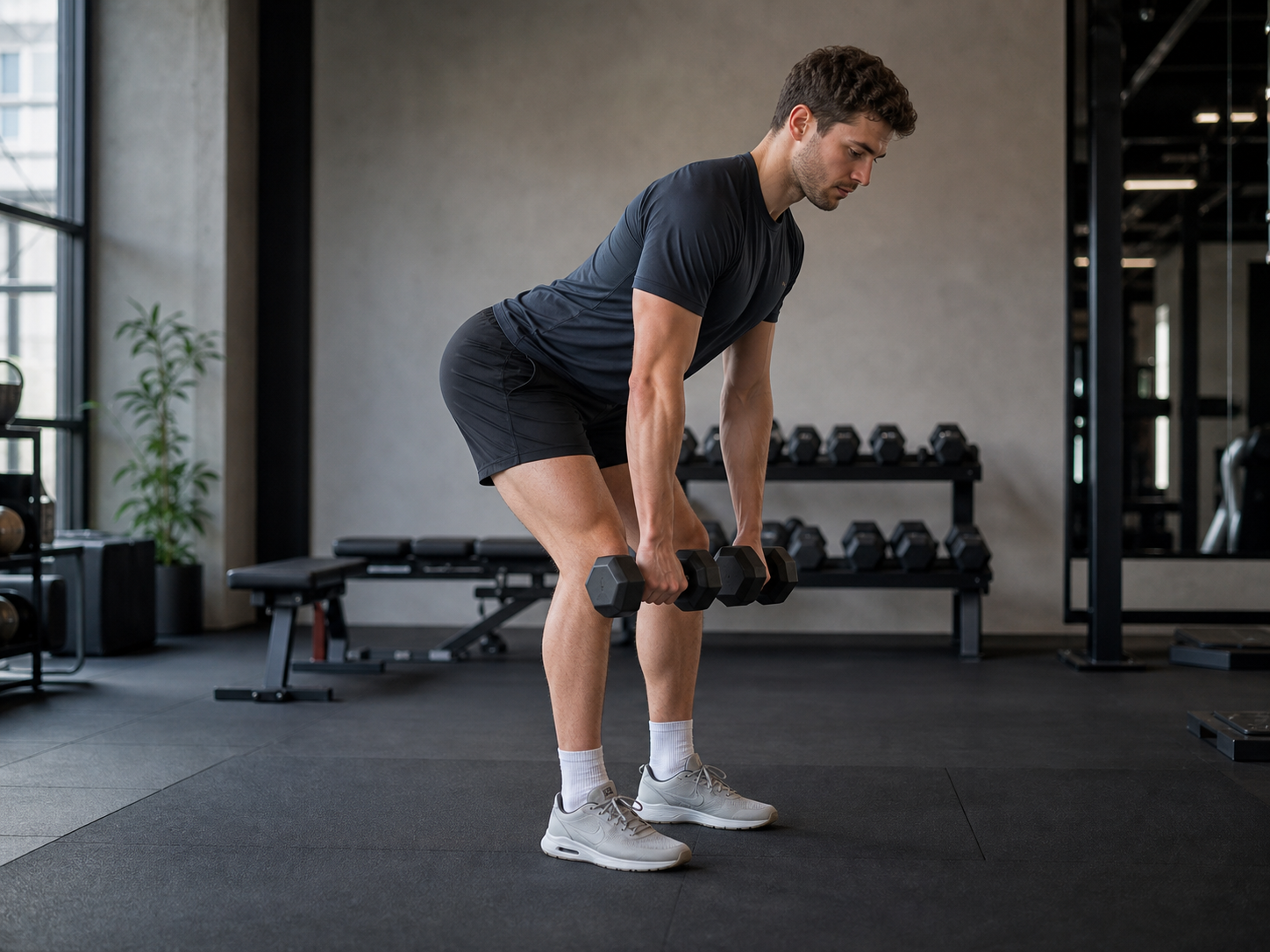
- Hip hinge or Romanian deadlift for hip-dominant strength.
- Assisted Nordic for technique and braking control.
- Full Nordic hamstring curl for a high eccentric stimulus.
- Planned sprint exposure for sport-specific loading.
Take your Nordic curl from the first rep to week 10.
A concrete 7-page plan: build up week by week, without pushing too fast.
- 01A clear week-by-week progression
- 02Technique and the mistakes to avoid
- 03A simple log you will actually use

≤51%
✓Backed by research
Meta-analysis of randomised trials of the Nordic Hamstring Exercise.
Open the download page again or check the email we sent you.
Open the download page ↗The 5 best eccentric hamstring exercises
1. Sliding leg curl
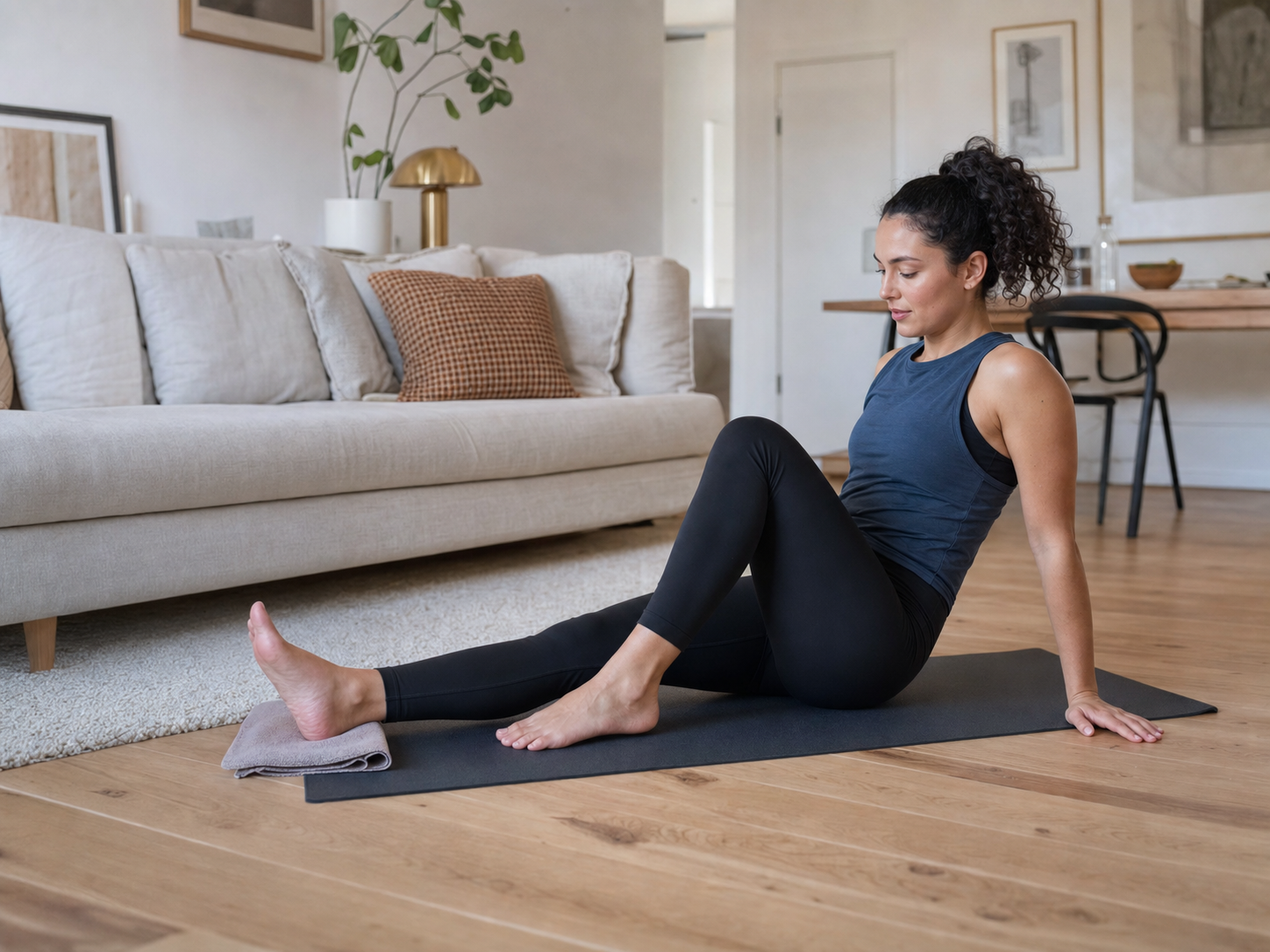
Lie on your back with heels on sliders, towels or a smooth surface. Lift the hips, pull the heels in, then let them slide away slowly. This is a good starting point because the athlete can reduce range immediately when control drops.
2. Romanian deadlift
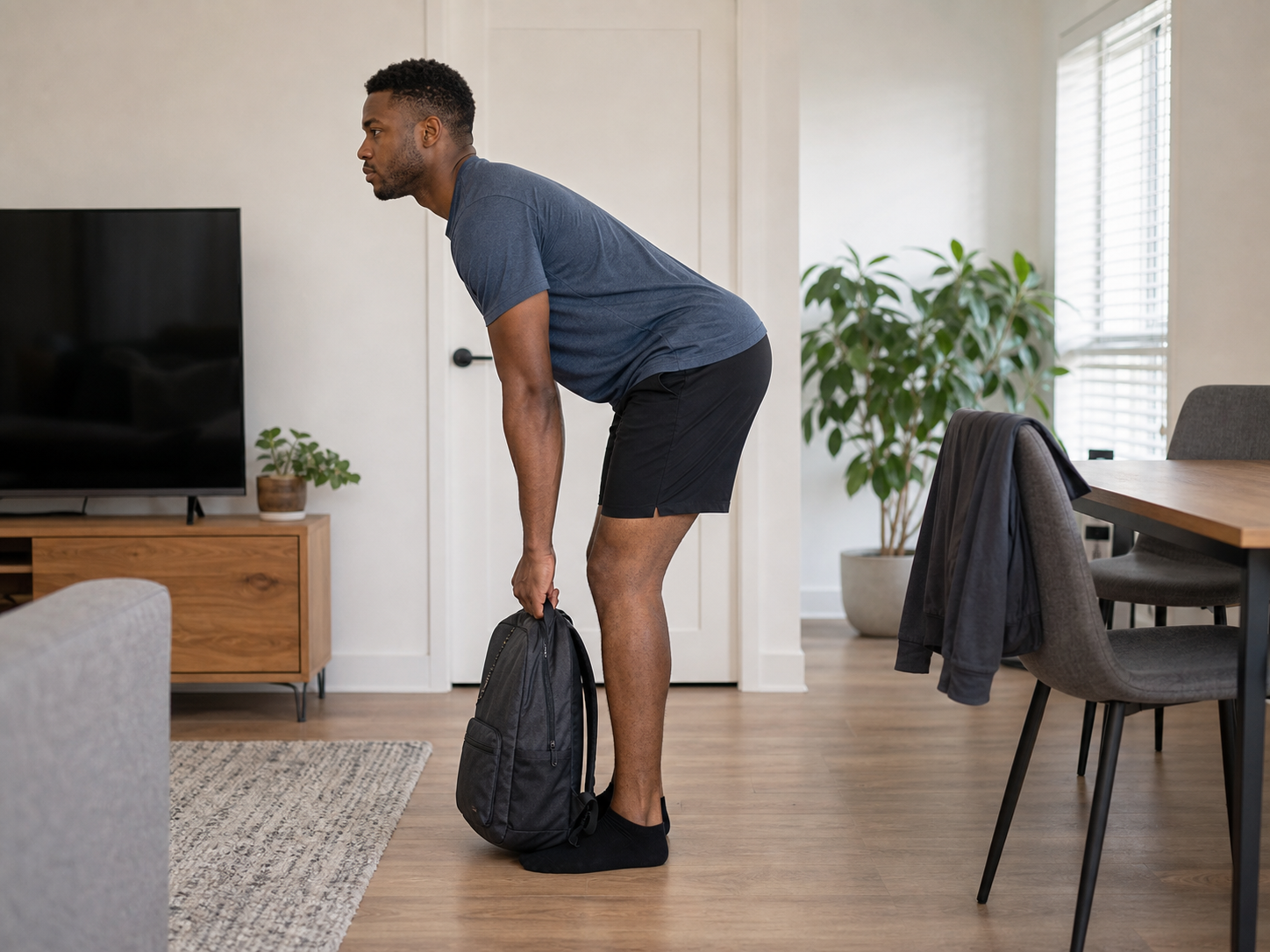
A Romanian deadlift trains the hamstrings through a hip hinge. Keep the back quiet, move from the hips and stop before the lower back takes over. It is useful for general strength and for learning to control length under load.
3. Assisted Nordic hamstring curl
An assisted Nordic uses the hands, a band or a shorter range so the lowering phase stays controlled. It is often the best bridge between lighter hamstring work and the full Nordic. The main Nordic hamstring curl guide covers technique and common mistakes.
4. Full Nordic hamstring curl
The full Nordic is demanding because the body moves forward as a long lever. Reviews show that Nordic training can improve eccentric knee-flexor strength and muscle architecture such as fascicle length (Medeiros et al., 2020). Use it after the assisted version is repeatable.
5. Controlled sprint progression
Sprinting is not a gym exercise, but it is the sport-specific test for hamstrings. Build it separately: submaximal runs first, then faster efforts, then changes of direction or match-like actions. For football context, pair this with preventing hamstring injuries in football.
How to progress without forcing it
Use one or two eccentric sessions per week, depending on the rest of the training week. In the first two weeks, two to three sets of five slow repetitions are enough for lighter options. With Nordics, two sets of three controlled reps can already be plenty.
- Do not increase range, volume and speed at the same time.
- Do not place heavy eccentric work right before a match or sprint test.
- Step back when the hamstrings feel clearly worse the next day.
Systematic reviews support eccentric hamstring training as part of injury prevention and risk-factor management, but they also show that context and compliance matter (Rudisill et al., 2023; Ripley et al., 2021).
When to use Nordics
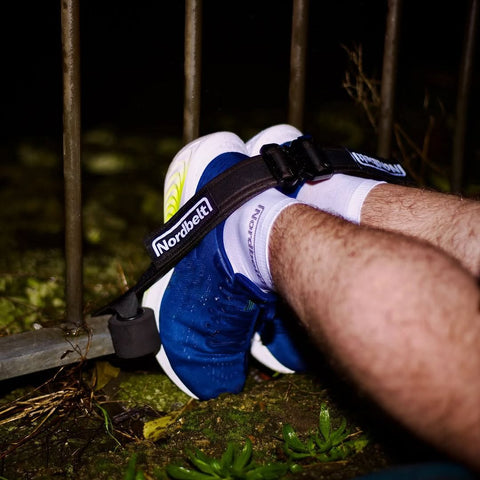
Nordics fit best when the athlete already has basic control and needs a stronger eccentric stimulus. They are useful for athletes who sprint, play football, run fast or are preparing for higher-speed work again. They are less suitable as the first exercise for sharp pain, a fresh strain or fear around loading. Nordbelt helps by making low ankle fixation repeatable without a large machine or partner. Use the how-to guide to test the setup safely, but keep the progression gradual.
Common mistakes
The first mistake is treating eccentric training as maximal training. A controlled three-second lowering phase is more valuable than a repetition that collapses. The second mistake is accepting too much soreness. Mild soreness can happen, but training should not make running or field sessions worse for several days. The third mistake is doing only Nordics. Hamstrings also need hip-dominant strength, sprint exposure and recovery rules.
FAQ
What are eccentric hamstring exercises?
They are exercises where the hamstrings produce force while lengthening. Examples include sliding leg curls, Romanian deadlifts and Nordic hamstring curls.
Which eccentric hamstring exercise is best?
There is no single best option. Beginners or athletes with symptoms often start with sliders or light hip hinges. Stronger athletes can use assisted or full Nordics.
How often should I train eccentric hamstrings?
Once or twice per week is enough for most athletes. Heavy Nordics may only need one session per week in season.
Can I train eccentrically with hamstring pain?
Sometimes, but not when pain is sharp or increasing. Use light, controllable options and seek assessment when symptoms return during sprinting.
How quickly can I progress to full Nordics?
Progress after you can control sliders, hip hinges and assisted Nordics without a next-day setback. If the lowering phase collapses, the full version is too early.