

Preventing hamstring injuries in football: what actually works?


Preventing a hamstring injury in football is not a matter of doing a few stretches before training. Players need a repeatable system: controlled sprint exposure, strong hamstrings, enough recovery and a weekly plan that respects match load. The hamstrings are stressed most during sprinting, braking, turning and shooting, so prevention works best when it is built into normal training rather than added as a random exercise.
The short version
The strongest plan combines three things: dose sprint exposure, train eccentric hamstring strength and avoid stacking heavy stimuli too close together. Nordic hamstring training has a clear role in football research, but only when players keep doing it and progress gradually (Petersen et al., 2011; Rudisill et al., 2023).
Why football needs different prevention than steady running
Football is unpredictable. A player accelerates suddenly, brakes hard, turns away from pressure and often shoots when tired. That load is different from an easy run, even when the total distance is lower.
The useful question is not only which exercises to choose. It is which hamstring demands are already present this week, and which quality is missing. Mobility without sprint exposure or strength leaves a gap.
For the broader why-and-return context, read hamstring injury in football. This article focuses on prevention.
The three pillars: sprint exposure, strength and recovery
1. Build sprint exposure consistently
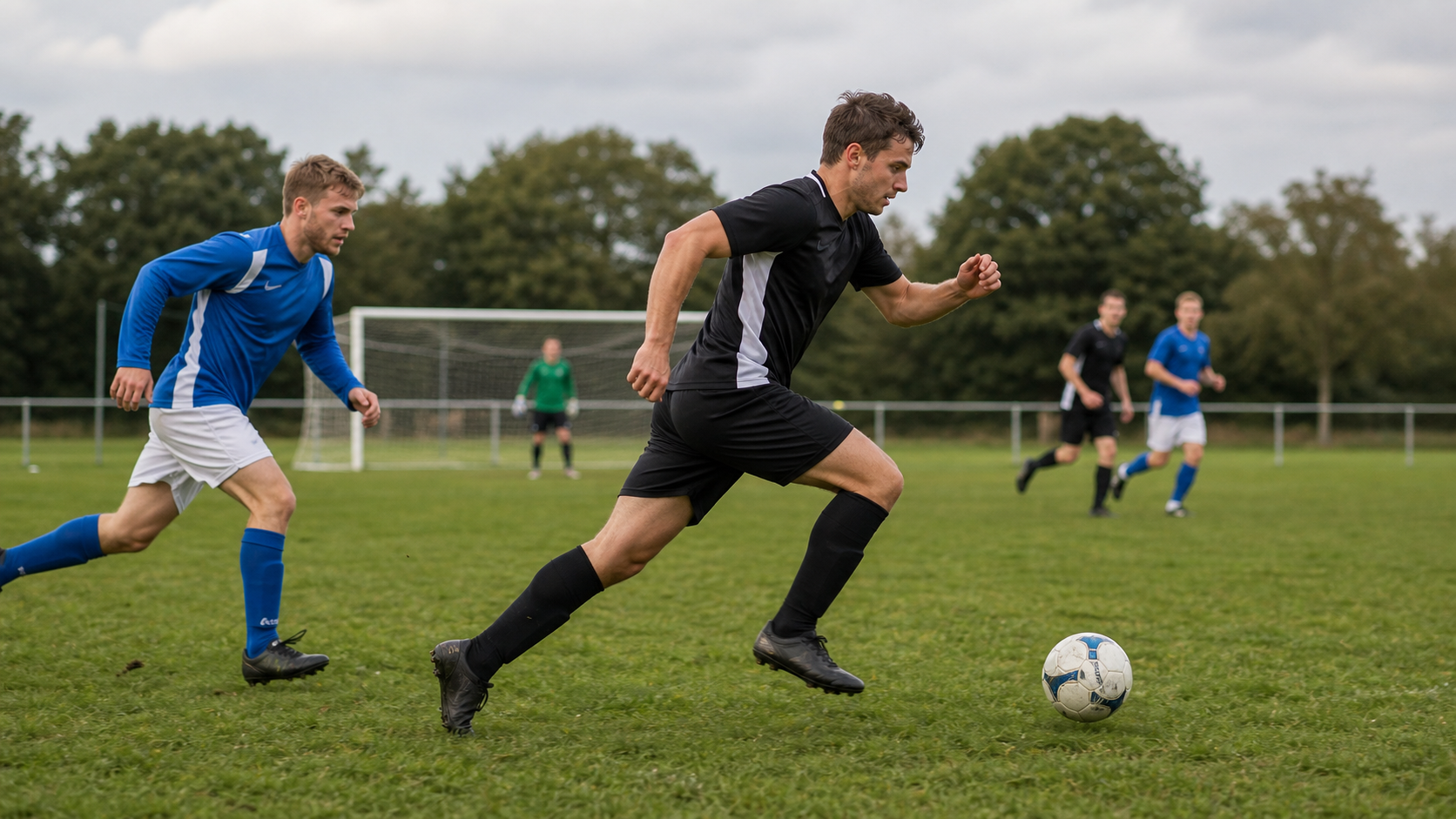
A player who barely sprints for weeks and then plays a match is underprepared. Short, controlled sprint moments belong in training before match day, not only after symptoms appear.
2. Train eccentric hamstring strength
The hamstrings must brake movement as well as produce force. That is why eccentric work is so relevant. Studies on the Nordic hamstring exercise show effects on injury risk and on factors such as eccentric strength and muscle adaptation (Hasebe et al., 2020; Medeiros et al., 2020).
3. Spread heavy stimuli
Strength work, sprinting and match play all add load. Heavy hamstring work is usually better early in the week than just before a match, especially while players are still adapting.
Where the Nordic hamstring curl fits
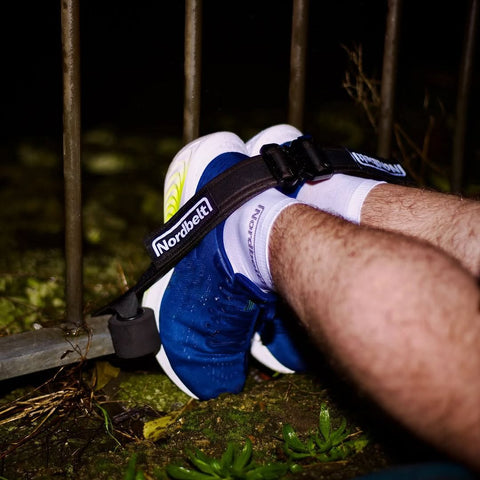
The Nordic hamstring curl belongs mainly in the strength pillar. It trains controlled braking, but it is also intense. Do not start with maximal volume if the player is new to it.
- start with one session per week
- use 2 sets of 3 to 5 controlled reps
- keep the hands ready to catch the body
- shorten the range if full reps are too heavy
- leave at least 48 hours before the hardest sprint or match load
To learn the movement first, use the main Nordic hamstring curl guide. For setup details, use the how-to guide.

How to fit prevention into a football week
Match on Saturday
Place the heaviest hamstring strength early in the week, often Monday or Tuesday. Thursday can be lighter activation. Friday is not the time to introduce hard Nordic sets.
Two training sessions and one match
Do not stack sprint work and strength automatically. If Tuesday already contains many sprints and small-sided games, keep strength short. If training is technical and calm, a small strength block can fit.
After a quiet period
After illness, holiday or winter break, build sprinting and strength separately first. Prevention often fails because the jump is too big, not because motivation is low.
Common mistakes
The first mistake is assuming stretching is enough. Stretching may help preparation, but it does not replace sprint exposure or strength.
Prevention programmes containing core-strengthening exercises reduced hamstring injuries in the football groups studied. This does not isolate the effect of one exercise or prove that one seasonal schedule is best. (Al Attar & Husain, 2023) A broader review also evaluates several training programmes and risk factors. (Rudisill et al., 2023)
The third mistake is starting too late. Do not wait until pain appears, especially with fast players, previous hamstring problems or a return after a quiet block.
When extra guidance is sensible
Guidance is sensible after a previous hamstring injury, repeated tightness after sprinting, pain high under the buttock, or uncertainty about combining strength and field load.
With a fresh injury, start with what to do in the first 48 hours after a hamstring injury and seek assessment for sharp, severe or recurring symptoms.
For a broader explanation, use the full hamstring injury guide.
FAQ
What is the best exercise for preventing hamstring injuries in football?
There is no single exercise that solves everything. The Nordic hamstring curl is well studied, but prevention also needs sprint exposure, recovery and weekly planning.
How often should football players do Nordic hamstring curls?
One session per week is a sensible start for many players. Later, one to two sessions may fit, depending on match load and recovery.
Does stretching prevent hamstring injuries?
Stretching can be part of preparation, but it is rarely enough on its own. Football requires hamstrings that tolerate high speed, braking and repeated efforts.
When should preventive hamstring training be placed?
Heavy strength usually fits early enough before the match to recover. With a Saturday match, Monday or Tuesday is often more logical than Thursday or Friday.
Can hamstring injuries be prevented completely?
No. Risk can be reduced but not removed. Football still includes sprints, duels, fatigue and unexpected actions.