

Resistance band hamstring curl: technique, mistakes and plan


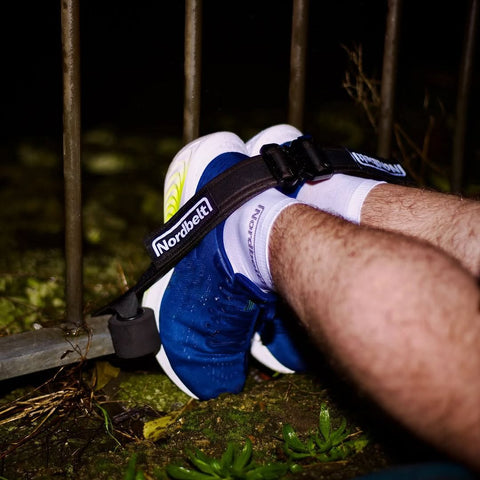
“Nordbelt is easy to secure and feels stable.”
A resistance band hamstring curl is a simple way to train knee flexion without a leg-curl machine. Anchor the band low, keep your hips quiet and bend the knee against the resistance with control. Start with short sets where the return phase stays smooth, not with the heaviest band you can find. The exercise works well for basic control, compact training sessions and as a step toward sliders or assisted Nordic hamstring curls.
Quick summary
The band hamstring curl is useful when you want a light, repeatable knee-dominant hamstring exercise. You can do it lying, seated or standing. The lying version is closest to a classic leg curl: your foot pulls the band toward you while the thigh and hip stay still. Use a band that creates tension without changing your technique.
For a broader overview, start with the guide to hamstring exercises. For a full no-machine session, use the hamstring exercise plan. This article stays narrow: how to use a band specifically for hamstring curls.
Why a band hamstring curl is useful
A curl trains the hamstrings differently from a Romanian deadlift or bridge. Deadlifts are mostly hip-dominant. A curl is mostly knee-dominant. Both patterns can matter because the hamstrings help with hip extension and knee flexion.
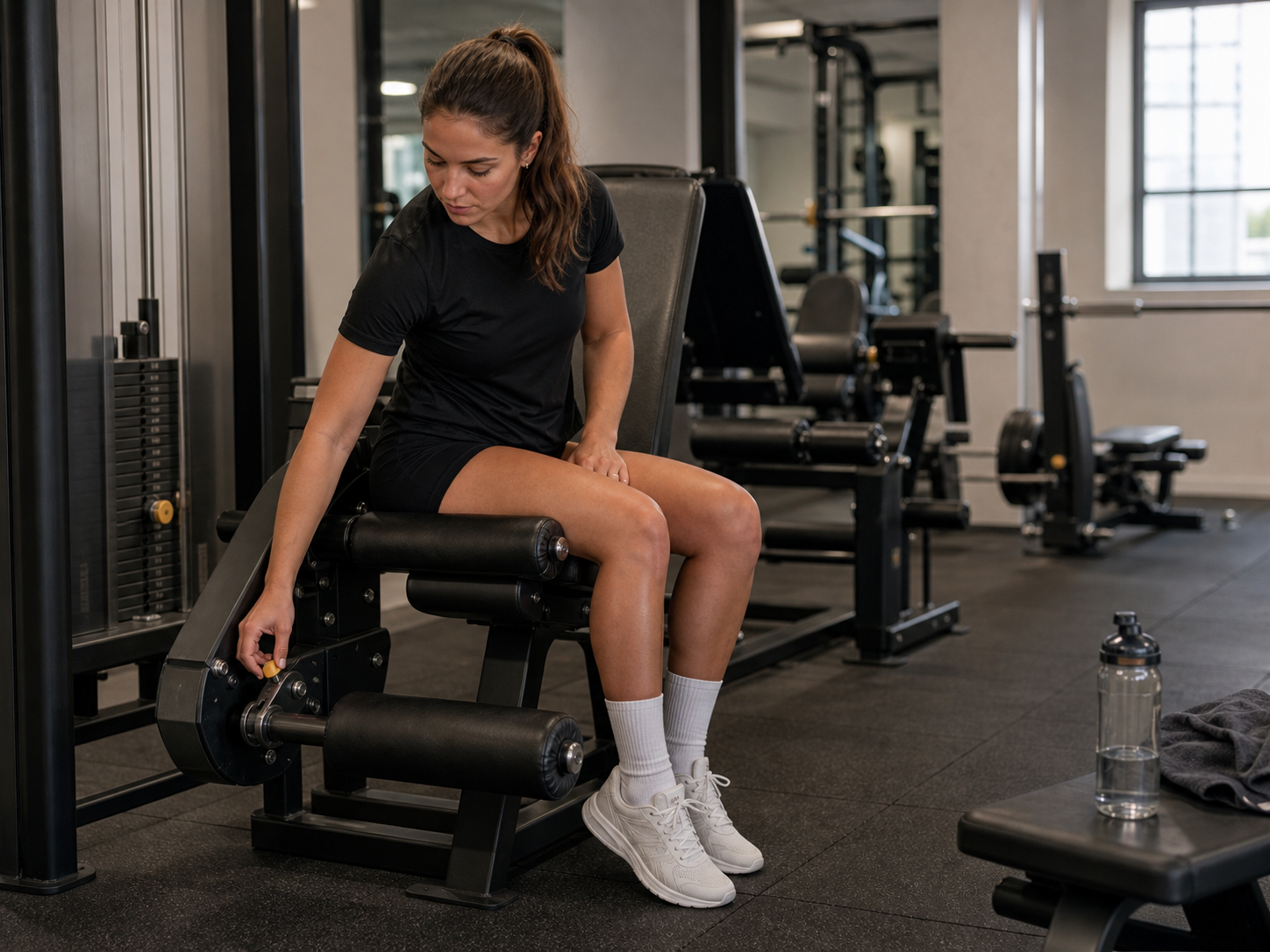
The advantage of a band is that you can start small. You can change resistance by moving farther from the anchor point or choosing a lighter band. An EMG study comparing machine curls with elastic resistance found that both can create high hamstring activity when the exercise is set up well (Jakobsen et al., 2014).

How to set up the lying band curl
Use a low, solid anchor point. Lie on your front with your feet toward the anchor. Attach the band around the ankle or foot, bend one knee and pull the heel toward you without lifting the front of the pelvis. Move in a steady rhythm: one to two seconds in, a short pause, then two to three seconds back.
Start with 2 to 3 sets of 8 to 12 reps per side. If cramp appears immediately, shorten the range or choose less tension. The curl does not need to reach maximum knee bend to be useful.
Take your Nordic curl from the first rep to week 10.
A concrete 7-page plan: build up week by week, without pushing too fast.
- 01A clear week-by-week progression
- 02Technique and the mistakes to avoid
- 03A simple log you will actually use

≤51%
✓Backed by research
Meta-analysis of randomised trials of the Nordic Hamstring Exercise.
Open the download page again or check the email we sent you.
Open the download page ↗Three band curl variants
1. Lying band curl
This is the clearest first choice. It is easy to compare left and right and to notice whether the hip starts moving.
2. Seated band curl
Sit on a bench or chair and anchor the band in front of you. Pull the heel back under the seat. This version can feel calmer if lying on the floor is awkward.
3. Standing band curl
Stand tall and hold a wall or rack for balance. Bend one knee against the band without swinging the thigh forward. Keep this version light because it is easier to compensate.
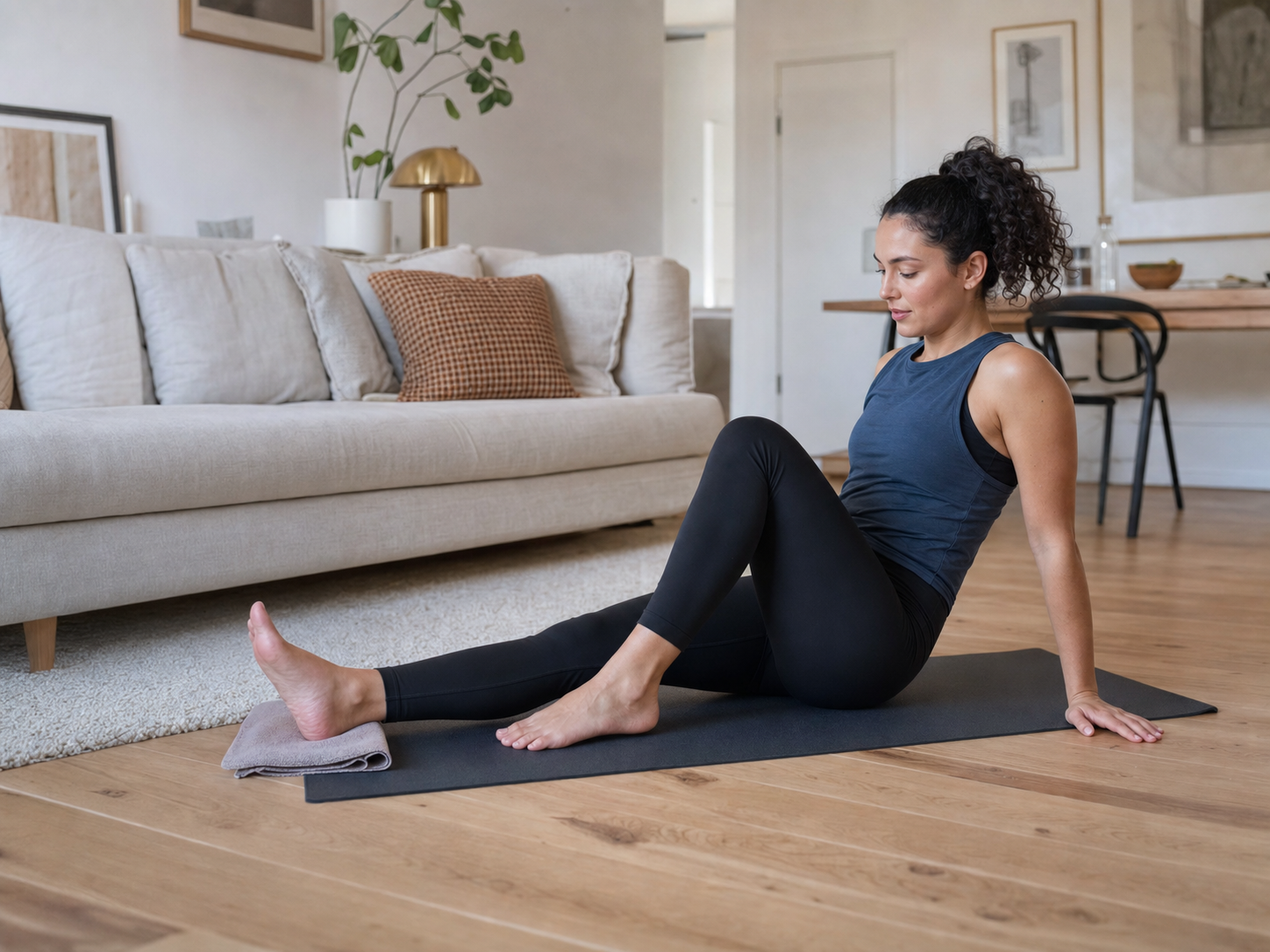
If you want a harder bodyweight step later, the separate guide to hamstring slider exercises is the next logical read.
Progress without forcing it
Use the band curl as a building block. In week one, try 2 sets of 10 reps per side. In week two, add a third set. In week three, use a little more tension or a slower return. In week four, add a second variant. Change only one thing at a time.
Exercise-specific hamstring research shows that different knee-flexion and eccentric exercises do not create exactly the same training stimulus, so progression should match the goal instead of simply chasing the hardest option (Maeo et al., 2024). For heavier braking work, read the guide to eccentric hamstring exercises.
From band curls to sliders or Nordic curls
Once the band curl feels controlled, choose the next step: more reps for control, more band tension for strength, sliders for bodyweight loading, or assisted Nordics for heavier eccentric work.
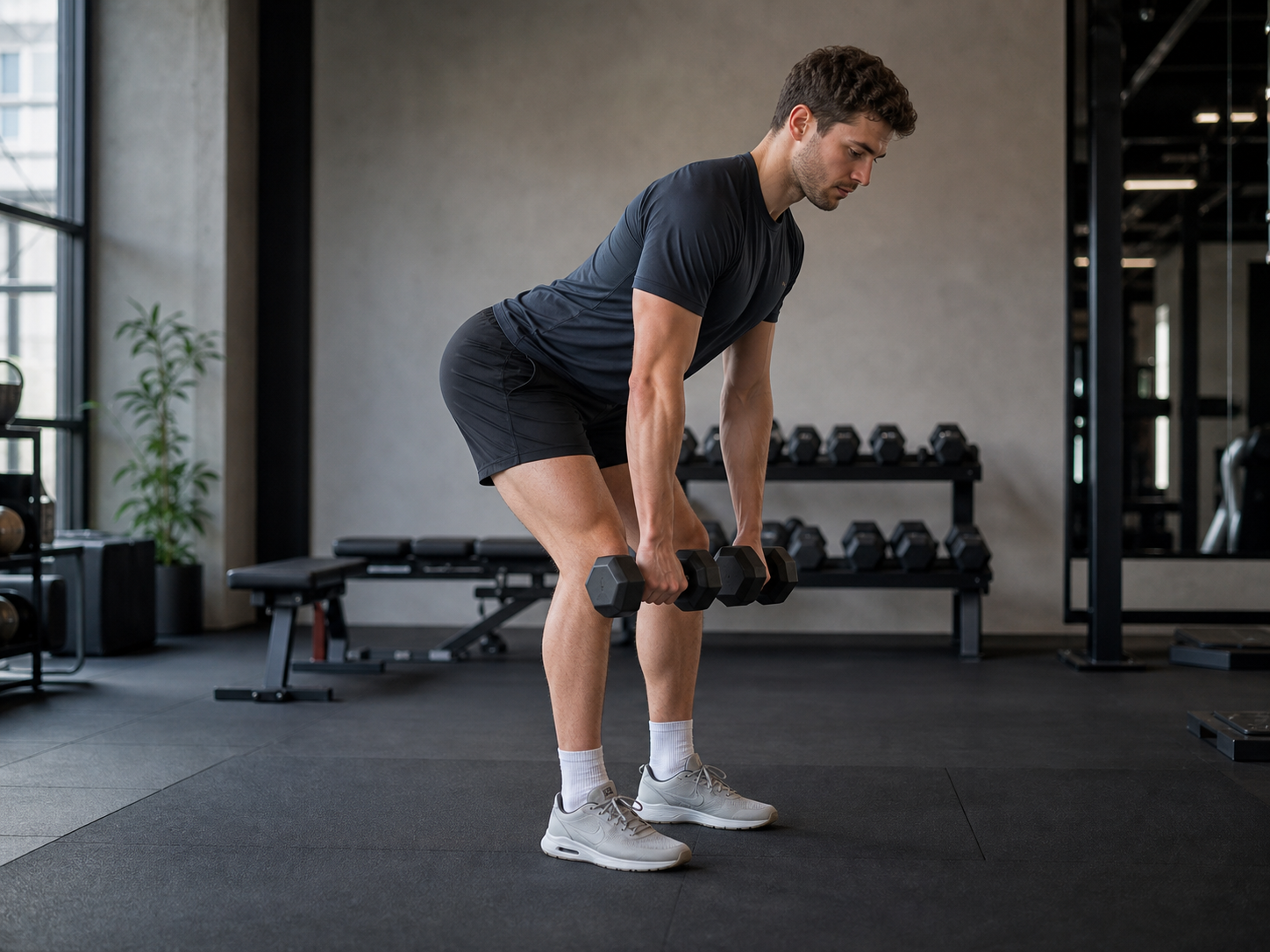
The Nordic hamstring curl is a demanding progression. Reviews show that Nordic training can improve eccentric knee-flexor strength and muscle architecture, and programs that include Nordic exercises are linked with fewer hamstring injuries in sport populations (Medeiros et al., 2020; van Dyk et al., 2019). Learn the movement in the Nordic hamstring curl guide and use the how-to guide before loading it harder. Nordbelt is relevant when you want a repeatable low ankle fixation for sliders, assisted Nordics and further eccentric progression.
FAQ
Is a resistance band hamstring curl effective?
Yes, when the band is aligned well and the return phase stays controlled. It is best as a light to moderate knee-flexion exercise alongside bridges, hinges, sliders and later heavier eccentric work.
Can I do it without a machine?
Yes. You need a band, enough space and a stable low anchor point. Test the anchor with your hands first and do not rely on loose furniture that can slide.
How often should I train band curls?
For most people, twice per week is enough. Use 2 to 3 sets per side and leave at least a day between harder hamstring sessions.
Which band curl version should I start with?
The lying band curl is usually the cleanest first option. The seated version is useful when floor work is inconvenient. The standing version is practical but easier to cheat.
When should I move to harder exercises?
Move on when you can repeat clean sets for a few weeks and feel normal the next day. Start with sliders or walkouts before assisted Nordics.