

Taking a Nordic curl setup on a trip: anchor check and plan B


“Nordbelt is easy to secure and feels stable.”
Taking a Nordic curl setup on a trip only makes sense if you know what you need beforehand and accept that the destination may be unsuitable. Pack only a compact, complete set, check the anchor, floor and clear movement path after arrival, and never use a repetition as a location test. A hotel door, bed frame, balcony railing or weight bench is not automatically suitable. If you cannot find a stable, permitted setup, use a preselected plan B without ankle fixation.
In brief
A portable setup only reduces friction when you have already made the decisions at home. Before departure, check what the carrier permits, pack the strap, attachment and knee mat so you can inspect them, and note the minimum space you need. Photos of a hotel room are only an initial indication; they do not prove that a door, bench or other point may be loaded.
Treat every new location as a new setup. Test the anchor with your hands, lay the mat flat, plan an early hand catch and increase the range of motion only if everything remains still. The Nordic hamstring curl requires substantial eccentric control; research programmes build load and range of motion gradually instead of starting with a maximum repetition (Medeiros et al., 2020; Petersen et al., 2011). That principle does not change while travelling, but your surroundings are less predictable.
Portable Nordic curl while travelling: what should you bring?
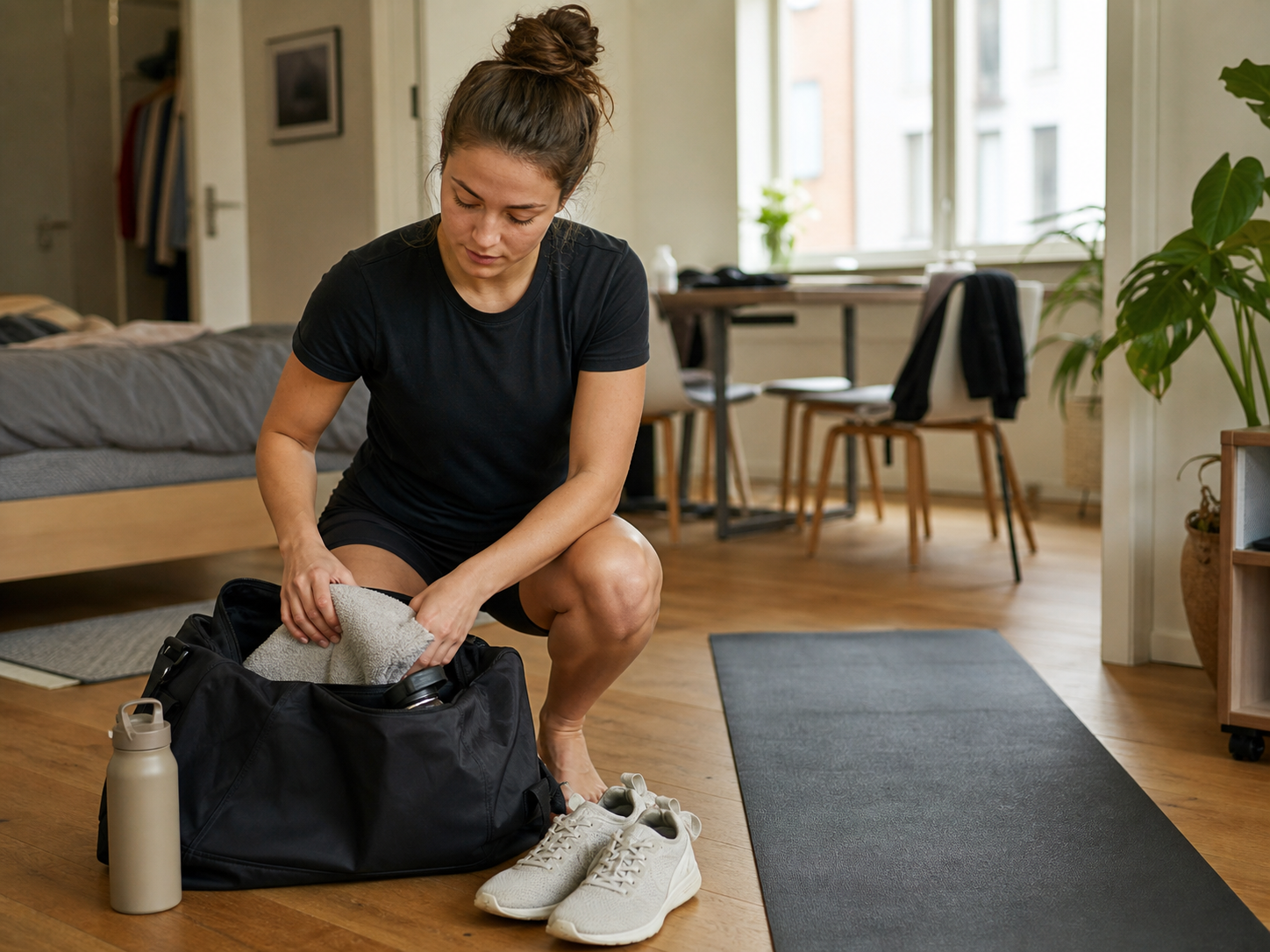
Start with the parts that actually make the setup complete. Bring the strap and attachment, plus a knee mat large enough for your knees and the first hand catch. Pack small components together in one closable compartment and keep the equipment dry, visible and accessible. A towel, pillow or full bag is not a substitute for a flat mat or a stable anchor.
Write down your minimum conditions as well. How much straight space do you need from the anchor to your hand placement? Can the attachment be fitted low and without a sharp edge? Can you inspect the door, bench or structure yourself, and do you have permission to use it? The measuring method in the guide to a Nordic curl setup for a small space helps you define these zones before departure.
A weight bench may be an option at some locations, but only if it is structurally stable, the attachment fits according to the instructions and you can keep the surrounding area clear. Do not move or improvise with hotel furniture to compensate for a missing anchor. If you cannot verify the setup, it stays in the bag.

What setup do you need for a stable Nordic hamstring curl?
The primary job of Nordbelt is to make Nordic curls practical at home with stable ankle fixation, without a training partner or large fitness machine. Portability is a secondary benefit when travelling: you can bring the same familiar parts, but use them only when the temporary anchor, surface and catch area are suitable. The limitation remains decisive. The product does not make a weak hotel door, loose item of furniture, slippery floor or cramped room suitable, and it does not replace technique, anchor checks or gradual progression.
The broader choice between a door, bench and other fixed points is covered in the existing guide to a Nordic hamstring curl at home. This travel article starts after that decision: what should you bring, how do you assess the destination and when do you choose plan B without hesitation?
Take your Nordic curl from the first rep to week 10.
A concrete 7-page plan: build up week by week, without pushing too fast.
- 01A clear week-by-week progression
- 02Technique and the mistakes to avoid
- 03A simple log you will actually use

≤51%
✓Backed by research
Meta-analysis of randomised trials of the Nordic Hamstring Exercise.
Open the download page again or check the email we sent you.
Open the download page ↗Nordic curl in a hotel: check the room first
Assess the room from the anchor to the catch area. Do not merely look at whether a door appears sturdy. Check that the door closes completely, does not open automatically, has no visible damage and cannot move in the direction of the load. A light interior door, sliding door, cupboard door or door with a gap underneath may be unsuitable. Do not use anything that requires you to ignore hotel rules, equipment instructions or property boundaries.
Next, check the floor. Loose rugs, slippery laminate, tile edges and a mat that partly disappears under a bed make the hand catch unpredictable. Do not move a heavy bed or desk to create space. Find a straight path in which your knees, torso and hands remain on the same level and nobody has to walk through the setup unexpectedly.
Test the selected point without kneeling:
- inspect the door, hinges, latch and contact surface for damage or play;
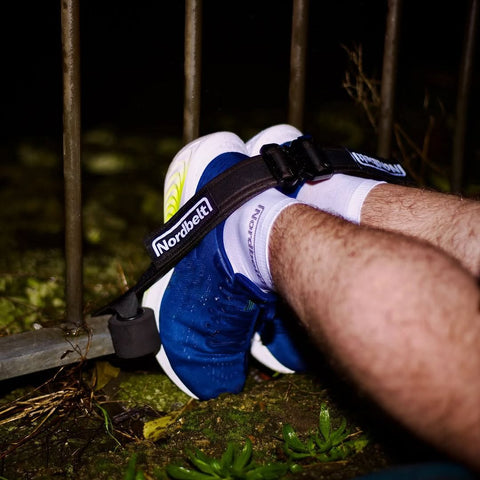
- place the attachment only as specified in the instructions;
- pull gradually with both hands in the direction of the later load;
- stop immediately if there is movement, deformation, noise or abrasion;
- remove the setup when you leave the room or when someone needs the door.
A room that is too small cannot be fixed by placing your hands later. The catch path is part of the exercise. Use the existing checklist for common Nordic curl mistakes if you are unsure about the starting position, hip control or hand placement.
Packing a Nordic curl setup in a sports bag: compact but complete
It is best to pack a Nordic curl setup in a sports bag in a fixed order. Keep the clean, dry strap in a separate compartment, protect attachment parts from sharp luggage edges and roll up the mat without a hard fold. Do not add improvised hooks, tie-down straps or carabiners that are not part of the intended setup. Compact does not mean that critical parts become optional.
Air travel, train travel and luggage lockers are subject to the carrier's and location's conditions. Check dimensions and permitted contents beforehand; do not assume the same rules apply to the return journey. Do not claim that a carrier will always accept an item.
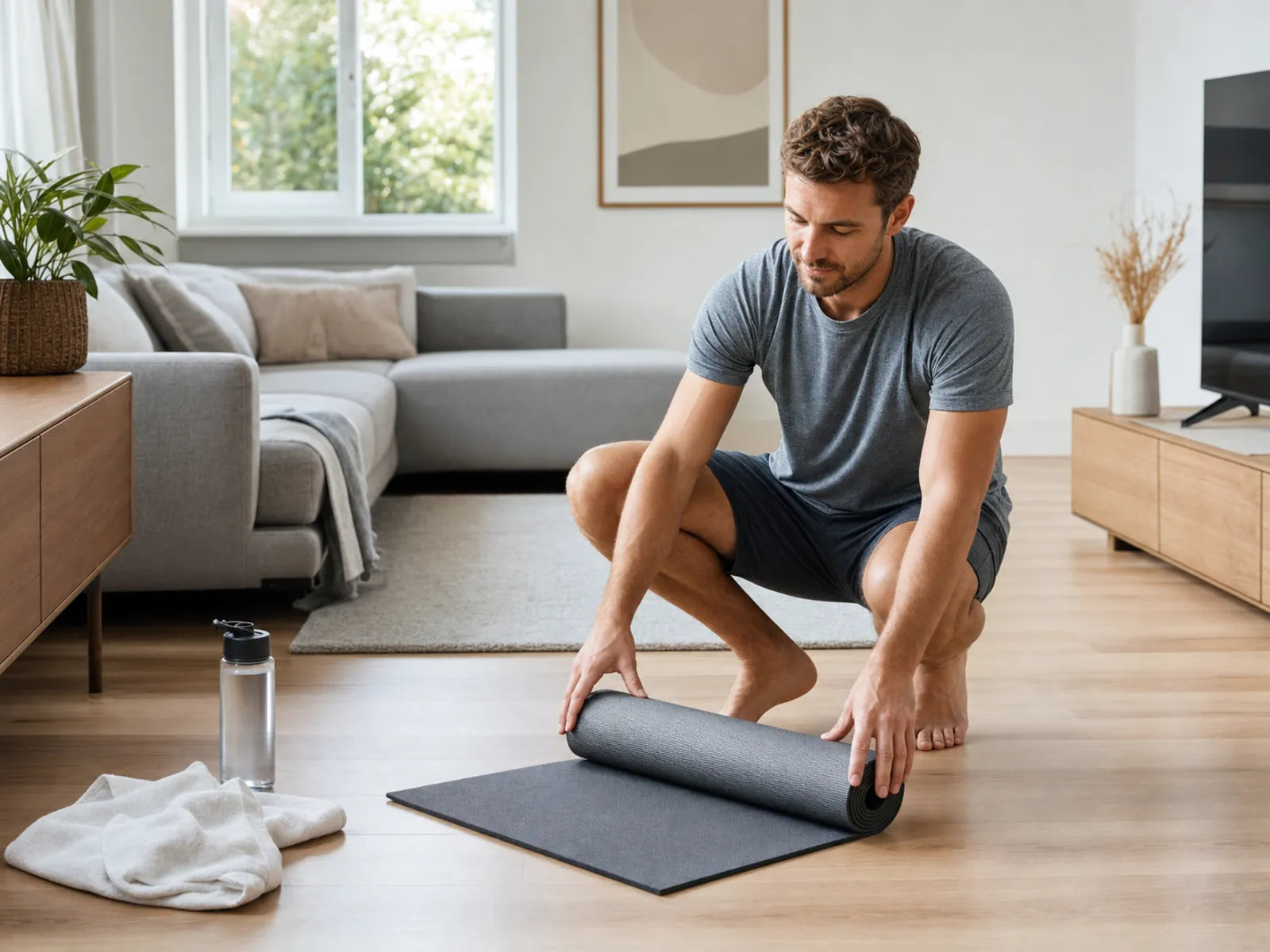
Also bring a short training list: regression, intended short range, maximum planned volume and plan B. This prevents time pressure or enthusiasm from replacing the location check. A feasible routine is more valuable than one isolated heavy set. Research on the use of Nordic programmes shows that feasibility and adherence are important practical conditions alongside the exercise prescription itself (Goode et al., 2015; Ripley et al., 2021).
Testing a mobile Nordic curl setup in five steps
Use the same short sequence at every destination:
- inspect the anchor and first load it gradually with your hands;
- lay the mat completely flat and mark where your hands will land early;
- adjust both ankles equally and check that your feet and knees are aligned;
- lean forward a few centimetres and catch yourself immediately with your hands;
- increase the range only if the anchor, mat and floor remain unchanged.
Stop after any shift and start the check again. Never compensate with speed, a later hand catch or extra tension on the attachment. At an outdoor location, the surface, weather and permission also matter; use the separate checklist for an outdoor Nordic curl setup.
Training Nordic curls on holiday: plan A and plan B
Plan A is the familiar short Nordic progression, but only after a fully successful location check. Keep the first session shorter than at home: you are assessing not only your training, but also a new floor, different anchor and altered routine. Start with a regression you can comfortably control and stop if the setup feels different from the hand test.
Plan B is decided before departure and does not use an unsuitable anchor. Consider a controlled unweighted hip hinge, a glute bridge, a slider variation on a demonstrably suitable floor, or simply a planned rest day. Choose only exercises you already know and that suit the available space. The general guide to Nordic curls and regressions helps you choose a lighter substitute without turning the travel day into an improvisation session.
For assembly, components and the usual home routine, use the Nordbelt how-to guide. Those instructions do not automatically make a new location suitable; the destination must still pass your own anchor, floor and space checks.
Cleaning and storing after the trip
Do not leave used parts packed while damp or dirty for an extended period. Clean contact surfaces according to the care instructions, let the strap and mat dry completely, and check for wear, deformation or damage before returning everything to its usual place at home. Keep a part separate if it feels different from before the trip.
After returning home, lay out the complete set in the same order again. That way, taking it with you remains a deliberate exception. Note why a location did or did not work, without treating photos or room types as a compatibility guarantee.
Common mistakes while travelling
Declaring the hotel door suitable in advance
A photo, room type or brand says nothing about the construction of the individual door. Assess the actual room after arrival and accept that the answer may be no.
Bringing only the strap
Without a suitable mat, attachment and space check, you do not have a complete setup. Pack the entire chain and do not add arbitrary replacement parts.
Planning a heavy travel session
A new location is not the right moment to test range or volume. Keep the first session short and use only a regression you already know.
Improvising with furniture as an anchor
A bed frame, chair, table or loose bench is not suitable merely because it looks heavy. Use only a permitted, stable and verifiable point that matches the setup instructions.
Having no plan B
Without an alternative, you may feel pressure to use a questionable location anyway. Choose the fallback before departure and regard skipping the session as a valid training decision.
Frequently asked questions
Can you take a Nordic curl setup on a plane?
That depends on the dimensions, components and current rules of the airline, airport and destination. Check hand luggage and checked baggage separately and account for the return journey. Being able to transport the equipment says nothing about whether a suitable setup is available at your destination.
Is every hotel door suitable as an anchor?
No. Light, damaged, sliding or incompletely closing doors may be unsuitable, as may doors needed as an escape route or used by others. Inspect the actual door, follow house rules and equipment instructions, and stop at any movement, deformation or doubt.
What should you do if there is no suitable anchor?
Use your preselected plan B without ankle fixation or skip the session. Do not move heavy furniture or make an improvised connection with unfamiliar hooks or straps. Missing one Nordic set is better than training with a setup you cannot assess reliably.
How much space do you need in a hotel room?
You need a straight anchor, kneeling and catch zone where your hands can land early on the same level. The exact length depends on your height and chosen short range. Measure your own home setup beforehand and compare those measurements with the clear floor only after arrival.
How do you store the setup after the trip?
Clean and fully dry all parts, inspect the contact surfaces and roll straps without a sharp fold. Store the complete set in its usual place at home and keep damaged or unusual-feeling parts separate until you have assessed them according to the instructions.