

Hamstring exercises for runners: strength, control and progression


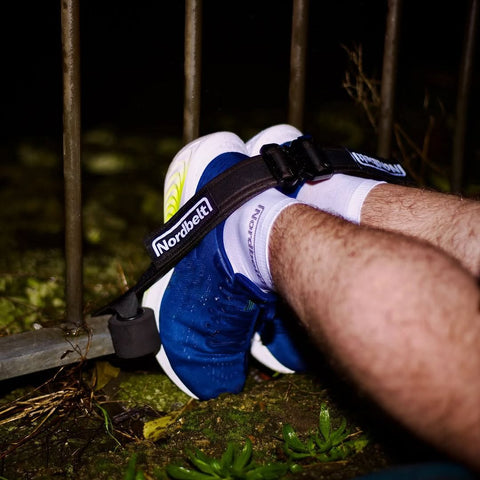
“Nordbelt is easy to secure and feels stable.”
Hamstring exercises for runners need to do more than make one muscle stronger. Running asks for repeated stride control, braking strength at higher speeds and enough tolerance for tempo work, hills and fatigue. A useful plan starts with control, then builds hip- and knee-dominant strength, and only later adds heavier eccentric work such as Nordic hamstring curls.
The short version
For runners, hamstring work is most useful when it matches the phase of running you are training for. Easy mileage is different from intervals, hills or sprint-like accelerations. Hamstring research highlights high-speed running, residual eccentric weakness and premature return to sport-specific load as important points to respect (Erickson and Sherry, 2017; Lee et al., 2009). Build from control to strength to speed.
Why runners need specific hamstring exercises
A runner uses the hamstrings with every step, but the hardest moments usually appear when stride length, speed, hills or fatigue increase. That is why someone may handle easy kilometres and still feel unsure as soon as pace work returns.
If you recently had a clear strain, start with the guide on hamstring injury in runners. This article is for runners who want to build strength and load tolerance in a more planned way.

Start with control before heavy loading
The first goal is not the hardest exercise. It is a predictable response. After a session you should know that the load was manageable and that the next day is still calm.

- control and low tension
- hip-dominant strength
- knee-dominant hamstring strength
- eccentric braking strength
- tempo and hills in running
If symptoms are still irritable, use the article on hamstring exercises with pain before adding harder work.
Take your Nordic curl from the first rep to week 10.
A concrete 7-page plan: build up week by week, without pushing too fast.
- 01A clear week-by-week progression
- 02Technique and the mistakes to avoid
- 03A simple log you will actually use

≤51%
✓Backed by research
Meta-analysis of randomised trials of the Nordic Hamstring Exercise.
Open the download page again or check the email we sent you.
Open the download page ↗Five hamstring exercises for runners
1. Hamstring bridge with heel pressure
Lie on your back, press through the heels and lift the hips without arching the lower back. Use it to create controlled tension without a large range of motion. Try 2 to 3 sets of 20 to 30 seconds or 8 to 12 slow reps.
2. Single-leg bridge
This is more runner-specific because each stride is a single-leg task. Keep the pelvis level. If cramp appears immediately, step back to the two-leg version.
3. Romanian deadlift or hip hinge
This trains hip-dominant hamstring strength. Start light, keep the back neutral and use the movement to learn tension through the posterior chain, not to chase load.
4. Slider hamstring curl
Slide the feet away and pull them back under control. This is a bridge between simple strength and heavier knee-dominant work.
5. Nordic hamstring curl later in the plan
The Nordic hamstring curl is powerful but demanding. Reviews show that Nordic training can improve eccentric strength and fascicle length, while programmes including Nordic work are associated with lower hamstring injury rates in sport populations (Medeiros et al., 2020; van Dyk et al., 2019).

Where the Nordic hamstring curl fits
Use the Nordic once basic control and running tolerance are stable. Start with one weekly session, 2 sets of 3 to 5 controlled reps, and keep your hands ready to catch the body. Learn the movement first in the Nordic hamstring curl guide. For setup details, use the how-to guide.
How to place strength around running
Heavy hamstring work needs recovery. Do not put a new strength stimulus directly before your hardest tempo, hill or long run.
- easy run day: light bridge or control work can fit
- interval day: avoid adding a new heavy hamstring session
- day after hard running: judge the response first
- strength block: place it with enough distance from pace work
For more variety, use the broader guide to hamstring exercises for home and gym.
Common mistakes
The first mistake is only stretching. Stretching can feel useful, but it does not replace strength, control or return to speed.
The second mistake is changing too many things in the same week: more kilometres, a new strength block and faster running at once.
The third mistake is stopping as soon as things feel better. Consistency matters; prevention research suggests that repeated use and compliance influence the effect of exercise programmes (Ripley et al., 2021).
Progression checkpoints for runners
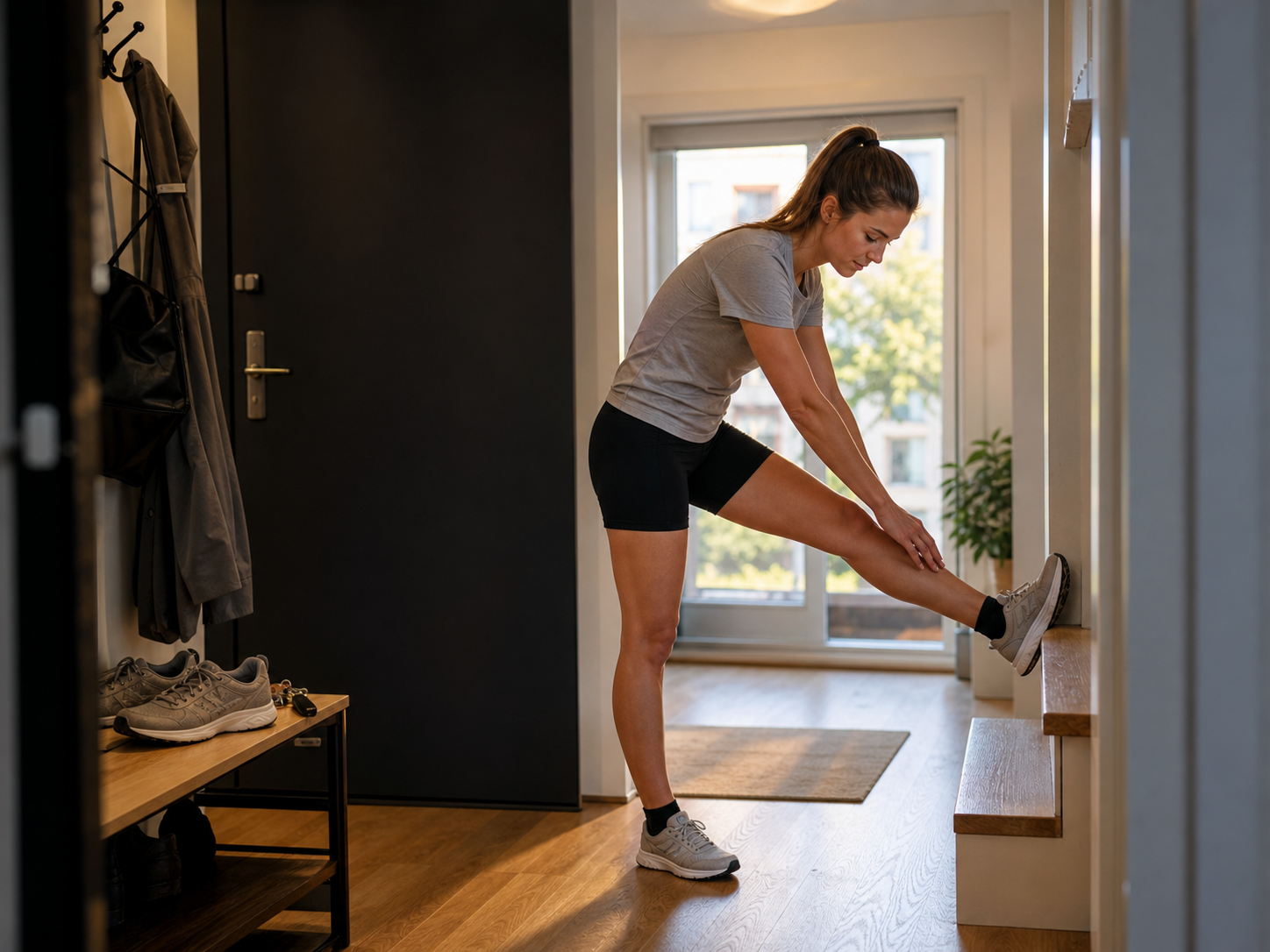
Before adding speed, check the next-day response, the quality of your stride and whether the exercise still feels controlled when tired. Progress only one variable at a time: range, load, volume or running intensity. If you increase two or three at once, it becomes hard to know what caused a reaction.
Keep the home setup repeatable as well. Use the same anchor point, foot position and stop rule each session. That makes your training notes useful and helps you decide whether to repeat, progress or step back.
FAQ
What is the best hamstring exercise for runners?
There is no single best exercise. Use bridges and hip hinges for control, slider curls for more knee-dominant strength and Nordic curls only when heavier eccentric work is appropriate.
Can I train hamstrings on a running day?
Yes, but avoid heavy hamstring strength directly before or after the hardest running session. Light control work fits better on easy days.
Are Nordic hamstring curls useful for runners?
Yes, especially for eccentric strength. They are still a progression, not the first step for every runner.
How often should runners train hamstrings?
For many runners, twice per week is enough: one lighter control stimulus and one stronger session. In a busy running week, one good maintenance session may be smarter.
What if exercises hurt?
Reduce range, reps or difficulty. Sharp pain, next-day flare-ups or repeated reactions are signs to choose an easier version or get assessed.