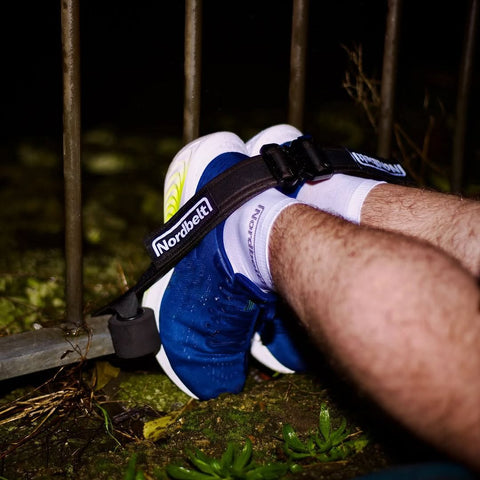


Hamstring exercises with pain: what can you still do?


Hamstring exercises with pain should match your current capacity. Choose a controllable movement and monitor symptoms during the session, afterwards and the next day. Avoid forcing a deep stretch or a heavy Nordic curl. Sudden severe pain, marked weakness or difficulty walking warrants assessment; these examples are not an individual rehabilitation plan.
In short
Reviews of hamstring rehabilitation describe assessment and progressive loading as important parts of care. They also report varied treatment approaches and inconsistent evidence; they do not establish one best exercise programme for every painful hamstring. ((Hickey et al., 2022); (Poursalehian et al., 2023)).
What makes an exercise sensible or not when you have pain?
An exercise is usually sensible when it builds tension without the symptoms clearly running away during the session or afterwards. That does not mean you must feel nothing at all, but the response should stay predictable.
An exercise is usually too early or too heavy when:
- the pain rises sharply during the set;
- you move clearly worse the next day;
- you start compensating through your lower back or hips;
- you are only doing the exercise to test whether you can already handle it again.
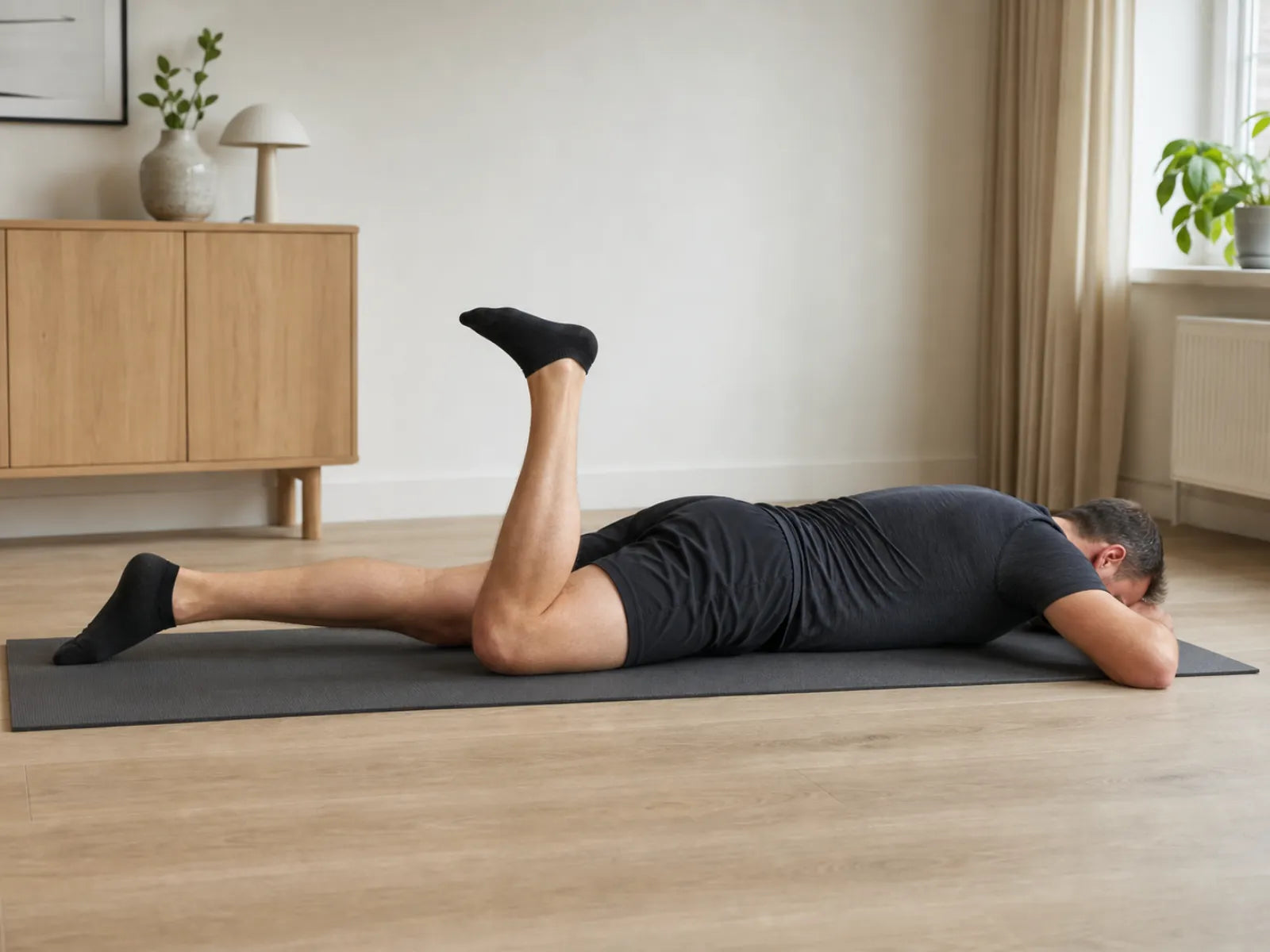
So the better question is not do I feel anything? but can I control and tolerate this load?
Three pain rules for hamstring exercises
1. Build up within a tolerable response
A mild response is often acceptable, but the symptoms should settle again. If an exercise makes the rest of your day or the next day clearly worse, the step was probably too big.
2. Never increase everything at once
Do not make an exercise heavier, longer and faster at the same time. Pick one variable: slightly more range, slightly more repetitions or slightly more tension.
3. Start with control, not ego
The heaviest exercise is rarely the smartest first exercise. That also applies to athletes who are normally strong. Your symptoms decide the starting point, not your old training level.
Comparisons of rehabilitation protocols include different programmes and participant groups. Their findings cannot determine a universal progression for every person with hamstring pain. ((Abdulridha et al., 2025)).
Which exercises are often a good starting point?
These are often logical first options, depending on your situation:
1. Isometric hamstring bridge
Useful when you want to rebuild tension without much movement. Especially sensible when dynamic loading still irritates the area quickly.
2. Glute bridge with heel drive
A simple way to let the back side work again without immediately jumping into a heavy knee-dominant hamstring exercise.

3. Short-range hamstring walkout
A good bridge between calm activation and more dynamic loading.
4. A light Romanian deadlift variation
For some athletes, a well-dosed hip-dominant exercise works earlier and better than aggressive stretching or immediate eccentric knee loading.
5. Controlled eccentric build-up later on
Eccentric training can form part of rehabilitation. The exercise, load and timing should match symptoms and function; a heavy Nordic curl is not automatically the starting point. ((Hickey et al., 2022)).
For a broader exercise library, continue with hamstring exercises for home and the older general hamstring exercise article.
When do you move on to heavier hamstring training?
That is usually only logical when:
- daily loading feels better;
- lighter exercises do not cause a clear flare-up;
- you feel more control and confidence;
- you can tolerate more range or movement again.
Then you can start thinking about heavier home build-up, more eccentric loading or later a more specific setup. At that point, the how-to guide becomes more relevant than in the early, sensitive phase.
What is better to avoid in the beginning?
These are usually the least sensible openers:
- deep static stretches when they make the symptoms feel sharper;
- sprints or quick tests;
- heavy full-range Nordics when you still cannot control the braking phase;
- random exercise choices without any build-up logic.
That does not mean these things are always wrong. It mainly means timing decides whether they help or just provoke the problem.
Frequently asked questions
Do I need to stop all hamstring exercises when I have pain?
Not necessarily. Some people can tolerate light, controlled exercise. Choose the starting load according to your symptoms and function, and seek assessment if the pain is severe, unclear or worsening.
Are eccentric exercises sensible straight away?
Not in every situation. Start with a load you can control and tolerate. Heavier eccentric exercises can be considered as symptoms and function improve.
Is stretching sensible when you have hamstring pain?
It depends on the cause and your response. Deep stretching can aggravate some symptoms. Do not force the range or use a temporary feeling of relief as proof that an injury has healed.
When can I train harder again?
Consider gradual progression when normal movement and lighter strength exercises are consistently tolerated. One pain-free repetition does not prove readiness for heavy training or sprinting.
If you need acute-phase guidance first, continue with what to do in the first 48 hours after a hamstring injury.
If symptoms keep changing or pain returns during heavier training, step back to easier control work and use the related Nordbelt guides before increasing load again.