

Leg press and hamstrings: does a high foot position replace curls?


Even if you use the leg press to train your hamstrings, placing your feet higher does not automatically replace a separate leg curl. Foot-position studies mostly measure what happens during the exercise; they do not establish that different movements are interchangeable. The hamstrings contribute, but the question is what task they perform. Keep the leg press as a pressing movement and separately consider whether you also want knee flexion or a hip hinge (Escamilla et al., 2001).
What do your hamstrings do during a leg press?
As you push the plate away, your knees and hips extend. During a leg curl, you bend your knee against resistance. That movement difference remains even if you can feel both exercises at the back of your thigh. A leg press is therefore not simply a leg curl under another name.
An acute study of ten experienced male lifters measured hamstring activity during several leg-press variations. The hamstrings were not switched off. The researchers also compared squats and found greater hamstring activity than in the leg-press variations tested. These were measurements taken during exercise, not a long-term comparison of muscle growth (Escamilla et al., 2001).
Start your choice with a concrete sentence: “I want to use this exercise for…” Judging a programme only by the label “legs”, or by where it burns, tells you little about the movement you actually want to practise.

Does a high or wide foot position target your hamstrings?
The popular promise is simple: move your feet higher and the leg press takes over your hamstring work. The research is narrower. Within the high foot position, a wide stance produced greater measured hamstring activity than a narrow stance. The changes in foot angle tested did not alter muscle activity. This establishes neither one universally best position nor that every high position is better than every low position (Escamilla et al., 2001).
Electromyography, usually shortened to EMG, records electrical signals from muscles. A higher signal during one exercise variation is not direct evidence of greater muscle growth after months of training. Interpretation also depends on the measurement method and comparison; a methodological review explains these limitations (Vigotsky et al., 2018).
Do not move your feet so high that you lose contact with the plate or support from the seat. Use the positions permitted by your machine. A photograph shows an example; it does not determine your stance width, depth or settings.
Leg press or leg curl: which task do you want to keep?
Use this task breakdown to choose a movement, not to declare a winner for muscle growth. The starting points are the movement and where resistance acts. You do not have to include every row in every workout.
| Choice | What do you do? | What remains a separate decision? |
|---|---|---|
| Leg press | Push a plate away and control its return. | Do you also want to train knee flexion explicitly? |
| Leg curl | Bend the knee against resistance from a machine or other suitable equipment. | Which variation and support suit you? |
| Hip hinge | Move mainly at the hips, for example while holding dumbbells. | Do you want to learn or specifically load this movement? |
A study of twenty healthy adults compared twelve weeks of seated and prone leg curls, with one variation assigned to each leg. The seated variation produced greater growth of the whole hamstring muscle group in that study. There was no leg-press group, so it cannot tell you how many leg-press sets replace a curl (Maeo et al., 2021).
If you choose a machine curl, use the separate guide to setting up a leg-curl machine. This keeps the movement choice separate from adjusting the equipment.
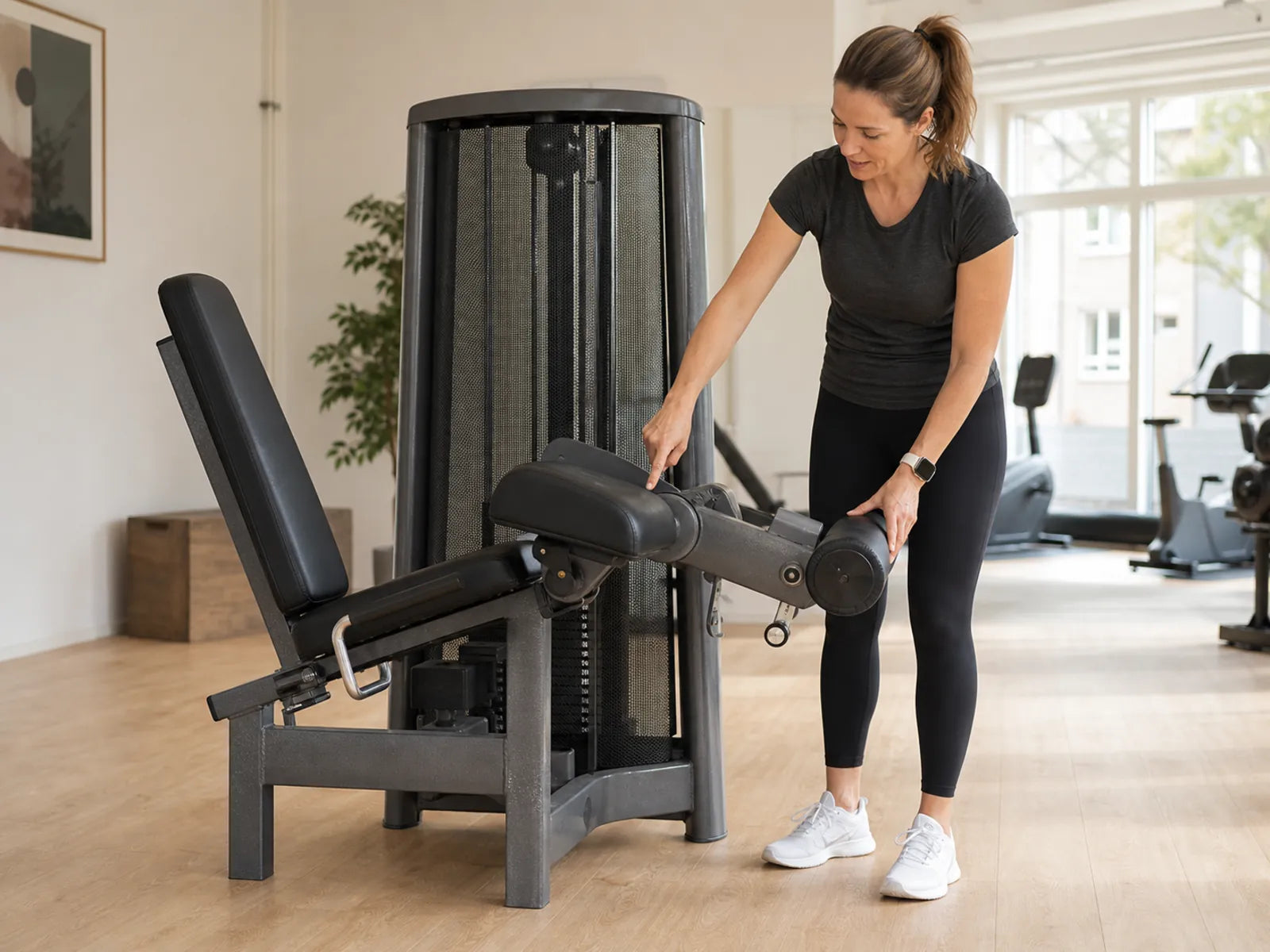
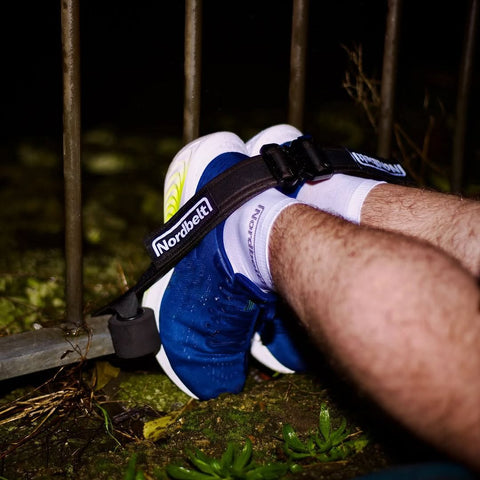
Context image of machine preparation; no leg curl is being performed.
Take your Nordic curl from the first rep to week 10.
A concrete 7-page plan: build up week by week, without pushing too fast.
- 01A clear week-by-week progression
- 02Technique and the mistakes to avoid
- 03A simple log you will actually use

≤51%
✓Backed by research
Van Dyk et al., 2019: meta-analysis of programmes with NHE. Not an effect test of Nordbelt or this protocol.
Open the download page again or check the email we sent you.
Open the download page ↗Which movement is missing alongside your leg press?
Look at your own exercise list. If it contains only pressing movements, you can consider a separate knee-flexion exercise when targeted hamstring training is your aim. If a suitable curl is already included, higher foot placement does not automatically call for another curl. If your priority is learning a hip hinge, start with that skill instead of trying to make the leg press perform it.
For the broader picture, the guide to posterior-chain exercises remains useful. For the hip movement itself, see the Romanian deadlift for hamstrings. Follow the question that is actually missing; collecting more exercises is not an aim in itself.
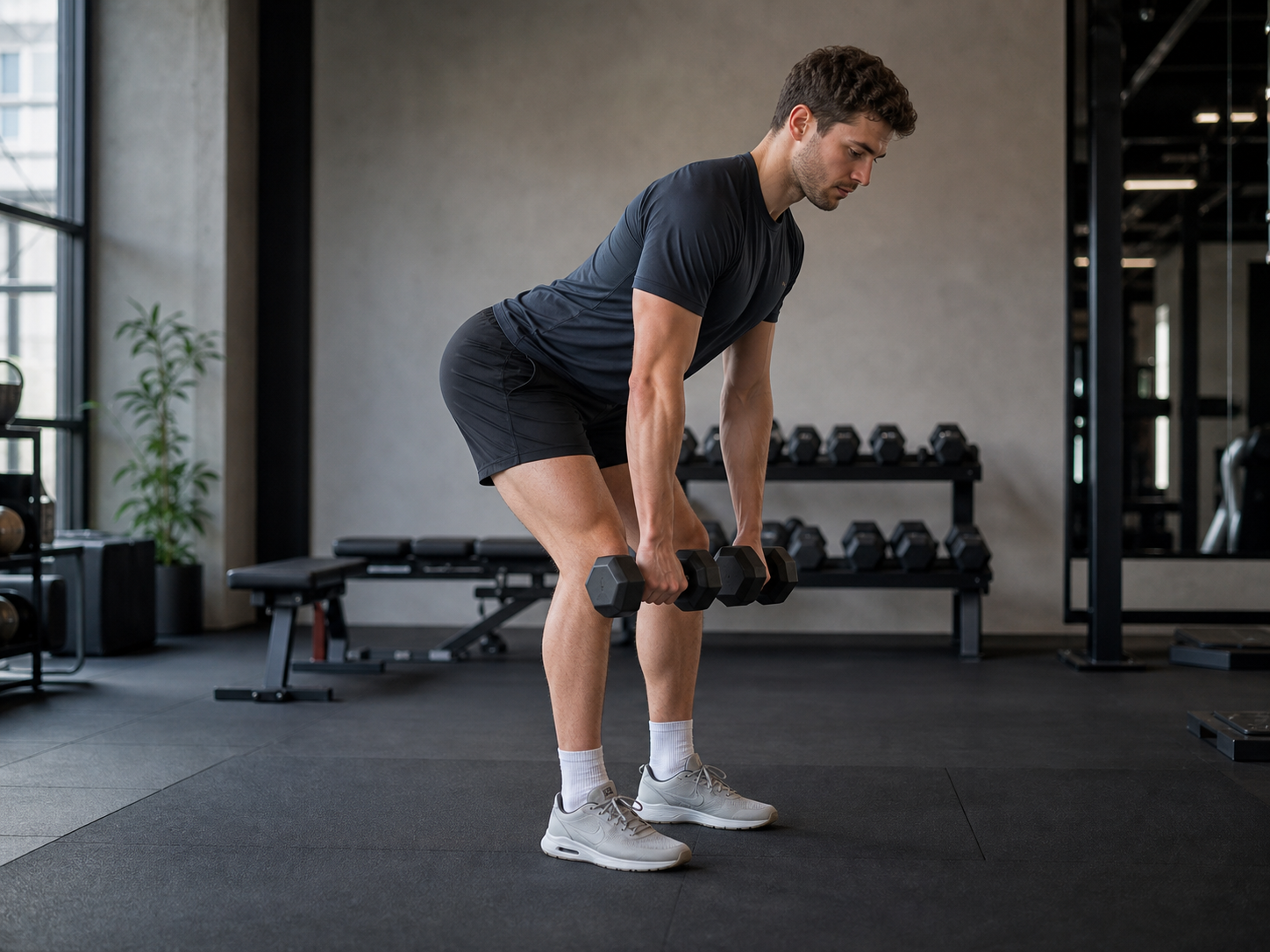
A dumbbell hip hinge is a different movement from a leg press.
Is any additional hamstring work still needed?
Would you also like to add Nordic curls at home? Your ankles stay anchored while you control your body's forward movement from a kneeling position. A suitable anchor point, enough clear space and comfortable knee support are still necessary. Nordbelt for Nordic curls at home provides stable ankle fixation without a training partner or large machine. It is not a leg-press accessory and does not make one exercise a replacement for the other.
Choose this step only if Nordic curls fit your training as a separate exercise. The Nordic hamstring curl guide covers the movement and ways to make it easier. You can fully answer the original leg-press question without buying extra equipment.
For a home setup you have chosen, also check the attachment and use instructions. Choosing equipment and learning an appropriate version of the exercise remain separate steps.
Make your next comparison useful
Do not change the machine, foot position, resistance and range of motion all at once. First record the machine and your current settings. Then choose one adjustment within its instructions and use a light, manageable load to assess whether you maintain support and control. This is a practical recording aid, not a test for muscle growth.
Write a specific observation: “Feet stayed on the plate and pelvis stayed supported” is more useful than “more hamstrings”. Also note why you are considering the change. Targeted knee flexion remains a different question from whether a new leg-press position feels comfortable.
Two fictional examples make the distinction clear. Someone already does leg presses and seated curls: a video about high feet does not create a need for another exercise. Someone does only leg presses and wants to train knee flexion: they can explore a suitable curl without discarding the leg press. These illustrate choices; they are not a tested training programme.
Frequently asked questions
Does the leg press do nothing for your hamstrings?
The hamstrings do contribute. Activity was measured during the leg press in the study of ten experienced male lifters. However, “there is activity” does not mean an exercise replaces every other hamstring task. The study measured acute biomechanics and muscle activity, not a complete programme's long-term development (Escamilla et al., 2001).
Should your feet be as high as possible on the plate?
No. “As high as possible” is not a useful universal setting. Follow the positions allowed by the machine and maintain contact with the plate and support for your body. Do not force an unmanageable stance for a presumed hamstring advantage. Ask an instructor to explain the equipment if its settings are unclear.
Can I remove leg curls if I feel my hamstrings working?
Sensation alone does not tell you whether you retain the same movement or training task. Even EMG measurements need careful interpretation and do not directly predict long-term muscle growth. First establish why the curl is in your programme and which task would remain if you removed it (Vigotsky et al., 2018).
How many leg-press sets replace one set of leg curls?
The studies discussed provide no conversion factor. The foot-position study compared acute variations; the longer curl study compared two curl positions without a leg press. A fixed ratio would imply precision the evidence does not offer. Keep exercise selection and training volume as separate decisions (Escamilla et al., 2001; Maeo et al., 2021).
What if a different foot position hurts?
Stop that variation and do not force the position. Pain is not evidence that you have found the right muscle. Have persistent or unexplained symptoms assessed by an appropriate healthcare professional. This article helps with exercise selection; it does not provide a diagnosis, treatment or personalised rehabilitation advice.