

Romanian deadlift hamstring exercise: technique, mistakes and plan


The Romanian deadlift hamstring exercise is mainly a hip hinge: you move from the hips, keep the spine neutral and let the hamstrings build tension as the hips travel back. Start light with bodyweight, a dowel, a backpack or two small dumbbells. It is useful only when you feel controlled tension through the back of the thigh, not when it becomes a lower-back test.
In brief
Good RDL hamstring technique has three anchors: hips back, knees softly bent and tension maintained through the whole range. If you want the broader exercise context first, start with hamstring exercises. For a complete home plan, use hamstring exercises at home as the wider schedule around this hinge drill.

Technique cues
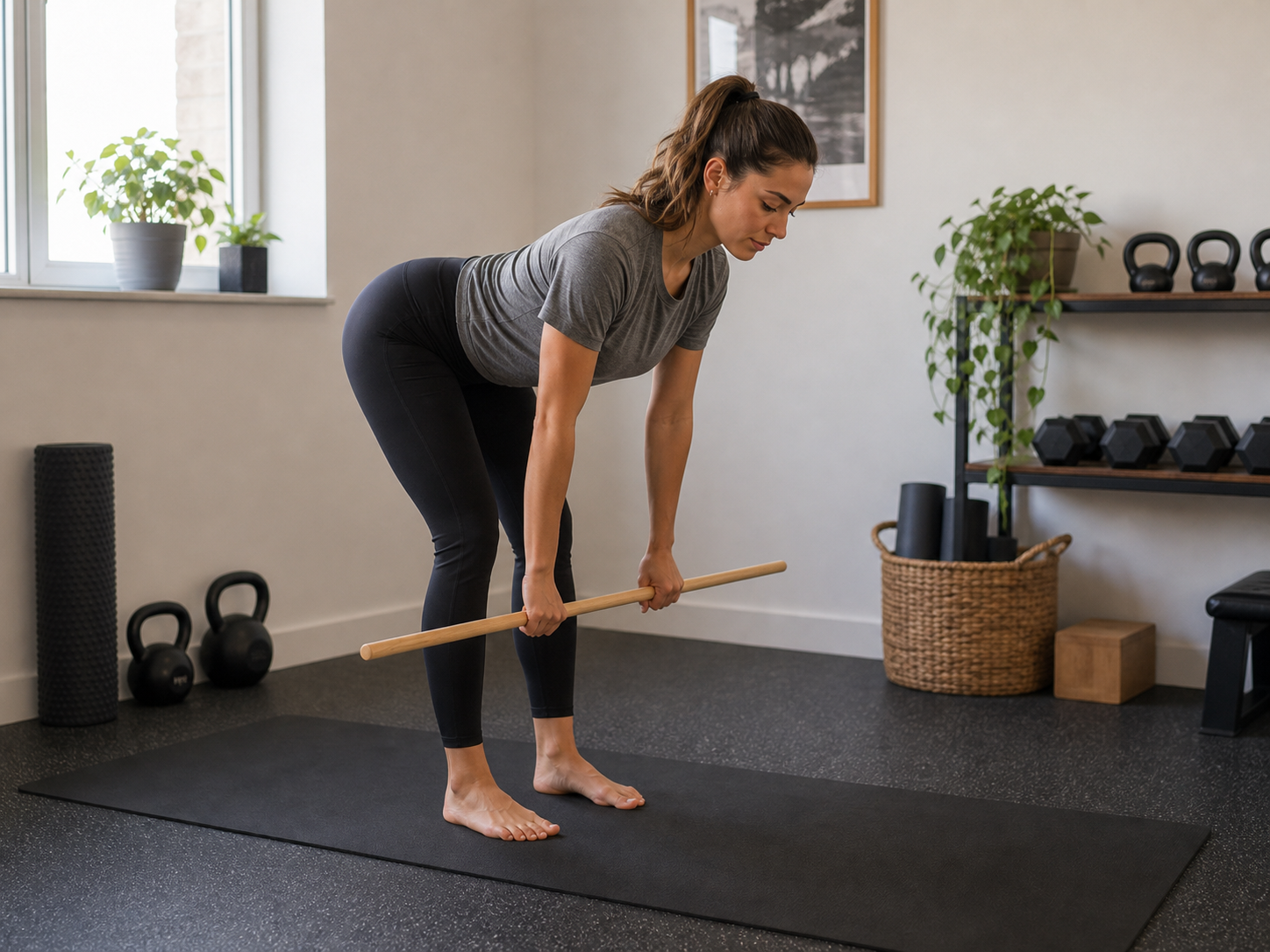
Stand tall, brace lightly and push the hips back as if closing a door behind you. Keep the weight close to the thighs, let the knees bend only a little, and stop when hamstring tension is clear while your back position stays quiet. Come up by driving the hips forward, not by shrugging or pulling from the low back.
The depth is individual. A flexible lifter may lower the weight past the knees while a beginner may stop much higher. Both can be correct if the hinge stays clean. Use the point where the hamstrings say “enough” as your bottom position. If you keep lowering after that point, the extra motion usually comes from the spine, not from more useful hamstring range.
Think of the movement as a controlled stretch under tension. The lowering phase should feel slow enough that you could stop at any moment. The return should feel like the hips are moving forward under the ribs. When the bar, dumbbells or hands drift away from the legs, the exercise becomes harder to control and often pulls the shoulders forward. Keep the load close and let the hips do the work.
Research comparing hamstring exercises shows that hinge choices such as Romanian deadlifts can produce meaningful hamstring activation, while different exercises stress the muscle group in different ways. Useful background includes Bourne et al. 2017 (PubMed), McAllister et al. 2014 (PubMed), Ebben 2009 (PubMed) and van den Tillaar et al. 2017 (PubMed).
Beginner plan
Use two or three sets of six to ten slow reps. Keep one to two reps in reserve and choose a load that lets every rep look the same. If you want extra loading options later, compare dumbbell hamstring training with kettlebell hamstring training.
For the first two weeks, the goal is repeatable positions rather than fatigue. Use a three-second lower, pause briefly at the bottom and stand up without bouncing. If the last reps become shorter or your knees start bending more, end the set there. A clean set of eight is more useful than twelve reps where the final four are a different exercise.
After two consistent weeks, choose one progression. You can add a little load, slow the lowering phase, add one set, or move to a staggered stance. Do not change all variables at once. The Romanian deadlift is easy to overload because it feels simple, but hamstrings often react better to small, repeatable steps than to one aggressive session followed by heavy soreness.

Take your Nordic curl from the first rep to week 10.
A concrete 7-page plan: build up week by week, without pushing too fast.
- 01A clear week-by-week progression
- 02Technique and the mistakes to avoid
- 03A simple log you will actually use

≤51%
✓Backed by research
Van Dyk et al., 2019: meta-analysis of programmes with NHE. Not an effect test of Nordbelt or this protocol.
Open the download page again or check the email we sent you.
Open the download page ↗Progressions and common mistakes
Progress only after the hinge feels stable: use a longer tempo, then a small weight increase, then a single-leg version. Do not chase depth by rounding the back. Do not lock the knees. Do not turn every set into maximum soreness. For a stronger eccentric phase, read eccentric hamstring exercises; for knee-flexion work, add the Nordic hamstring curl separately rather than replacing the hinge.
The single-leg RDL is a progression, not a starting requirement. It adds balance, hip control and foot pressure demands. If you wobble so much that hamstring tension disappears, return to the two-leg version or use a light fingertip support. A staggered stance can be the middle step: most of the weight stays on the front leg while the back foot acts as a kickstand.
The most common mistakes are predictable. Some people squat the movement by bending the knees too much. Others keep the knees too straight and turn the rep into an uncomfortable stretch. Some lower the weight until the back rounds because they think deeper is automatically better. A clean RDL sits between those extremes: soft knees, hips back, ribs controlled and a clear hamstring line.
How to fit it into a session
Place the Romanian deadlift early in a lower-body session, after a general warm-up and before high-fatigue finishers. If you train at home, pair it with bridges, light curls or sliders rather than adding every difficult hamstring exercise on the same day. If you run, sprint or play field sports, avoid adding hard RDL volume the day before a session that already asks the hamstrings to brake hard.
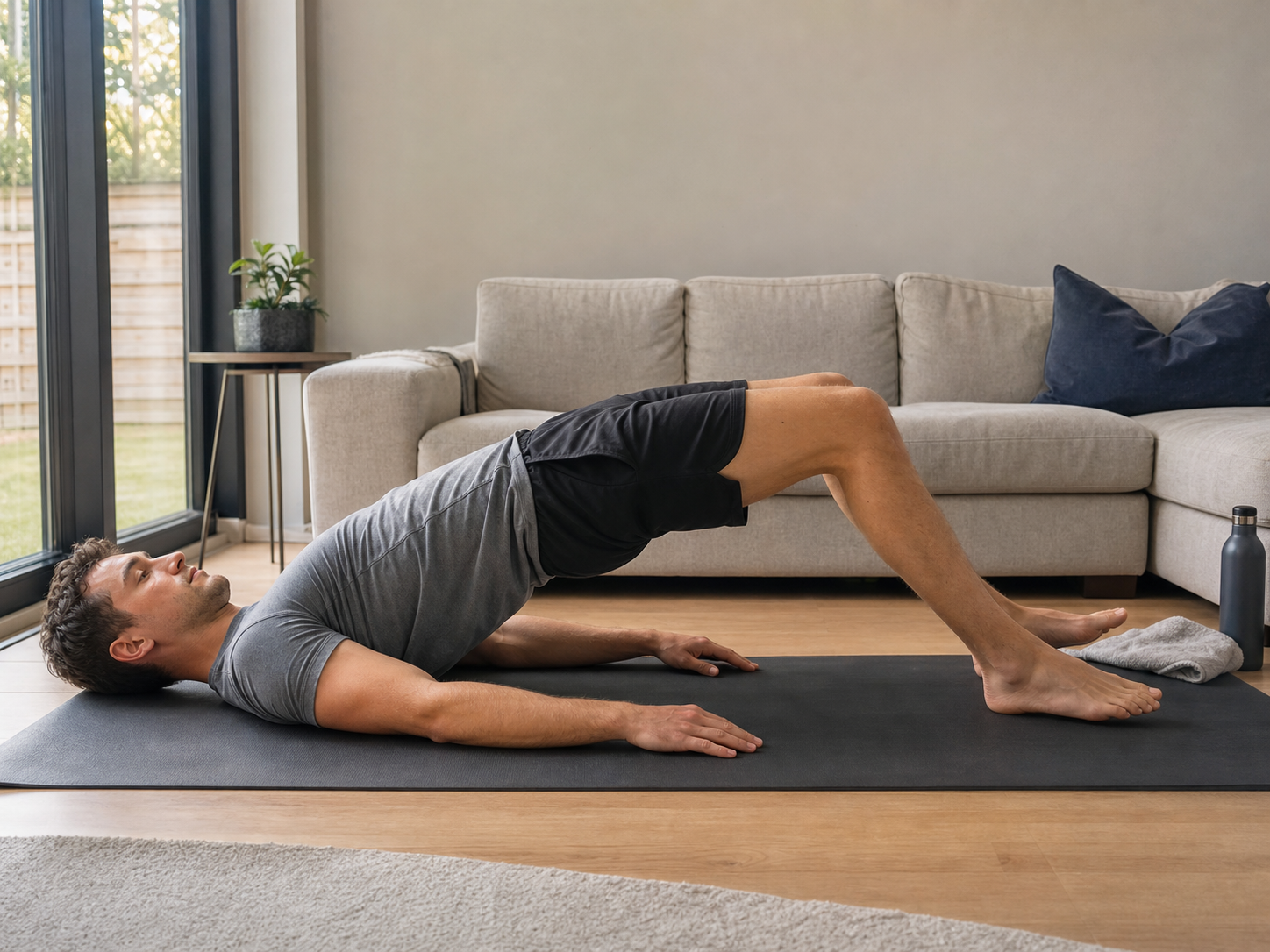
A practical session might use hip hinges first, then knee-flexion work, then core or calf work. The hinge builds control through the hip. Curl and Nordic patterns train the hamstrings from another angle. This mix is more useful than treating one exercise as the complete answer. Keep the weekly plan simple enough that you can repeat it and notice whether the hamstrings are adapting.
Troubleshooting sensations
If you only feel the lower back, reduce the range and rehearse the hip movement with a dowel along the spine. If you only feel the calves, soften the knees and keep the whole foot on the floor. If grip becomes the limiting factor before the hamstrings work, use lighter dumbbells or a backpack held close to the body. The right setup should make the hamstrings the obvious limiting muscle without sharp pain.
Post-session tightness can happen when you introduce slow eccentric work. Mild muscle soreness that fades over a day or two is different from sharp pulling, cramping that repeats immediately, or pain that changes your walking. In those cases, remove load, shorten the range and use easier hamstring work until normal movement feels calm again.
Explore this topic further: Nordic curl or Romanian deadlift for hamstrings at home?.
Using Nordbelt with hinge training
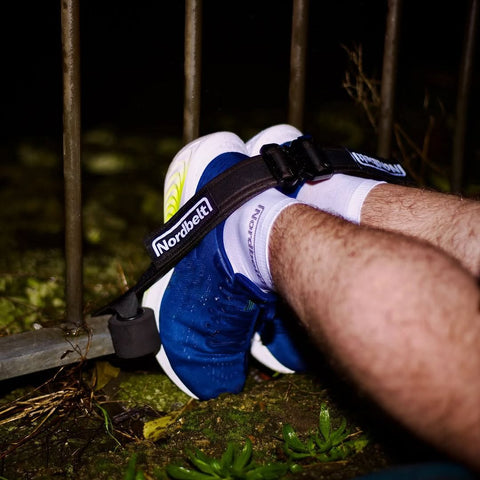
The RDL itself does not need ankle fixation, but a stable anchor can help when you add assisted Nordic curls or other fixed-feet drills later. Check the how-to guide before setting up, and use Nordbelt only on a solid bench or fixed support that does not shift.
FAQ
Should I feel the Romanian deadlift in my lower back?
A little trunk tension is normal, but the main training sensation should be in the hamstrings and glutes. Reduce load or range if the low back becomes the limiting factor.
How often should I train it?
One to three sessions per week is enough for most beginners, depending on the rest of the leg work and recovery.