

Hamstring exercises for older adults: maintain strength safely


“Nordbelt is easy to secure and feels stable.”
Hamstring exercises for older adults should be light enough to start safely and clear enough to build strength. Begin with controlled movements: hip hinges, bridges, short heel slides, gentle hamstring curls and only later heavier progressions. The goal is not to stretch hard or jump straight into a full Nordic. The goal is to maintain hamstring strength, walk with more confidence, stand up more easily and avoid a training dose that makes the back of the thigh feel worse the next day.
In brief
For seniors, a calm mix of mobility, light strength and consistent repetition usually beats a long heavy plan. Resistance training matters in older adults because strength, muscle mass and daily function can still respond when the dose is sensible (Fragala et al., 2019). For hamstrings, start small, keep it pain-free, progress gradually and leave recovery between real strength sessions.
For a broader list, use the main guide to hamstring exercises. If technique still feels uncertain, start with hamstring exercises for beginners. This article focuses on older adults: safe starting points, strength maintenance and when to make an exercise easier.
Why maintaining hamstring strength matters
The hamstrings help when you stand up from a chair, climb stairs, walk, bend forward and slow down when you correct a step. If the back of the thigh rarely receives a strength stimulus, the back, hip or knee often takes over. That can feel like reduced confidence rather than pain: shorter steps, avoiding low chairs or hesitating before bending.
Older age does not mean the hamstrings cannot improve. A large review on progressive resistance training in older people found improvements in strength and physical function when training was regular and gradual (Liu and Latham, 2009). That is why it makes sense to train strength, not only flexibility.

Safe hamstring exercises for older adults
Choose three exercises for the first week. Keep every repetition calm, controlled and pain-free.
1. Seated heel slide
Sit on a chair, place a towel under one foot and slowly slide the heel forward and back. Keep your trunk tall. Do 8 repetitions each side.
2. Standing hip hinge
Stand hip-width apart, soften the knees and move the hips back as if closing a cupboard with your hips. Return slowly. Do 2 sets of 8.
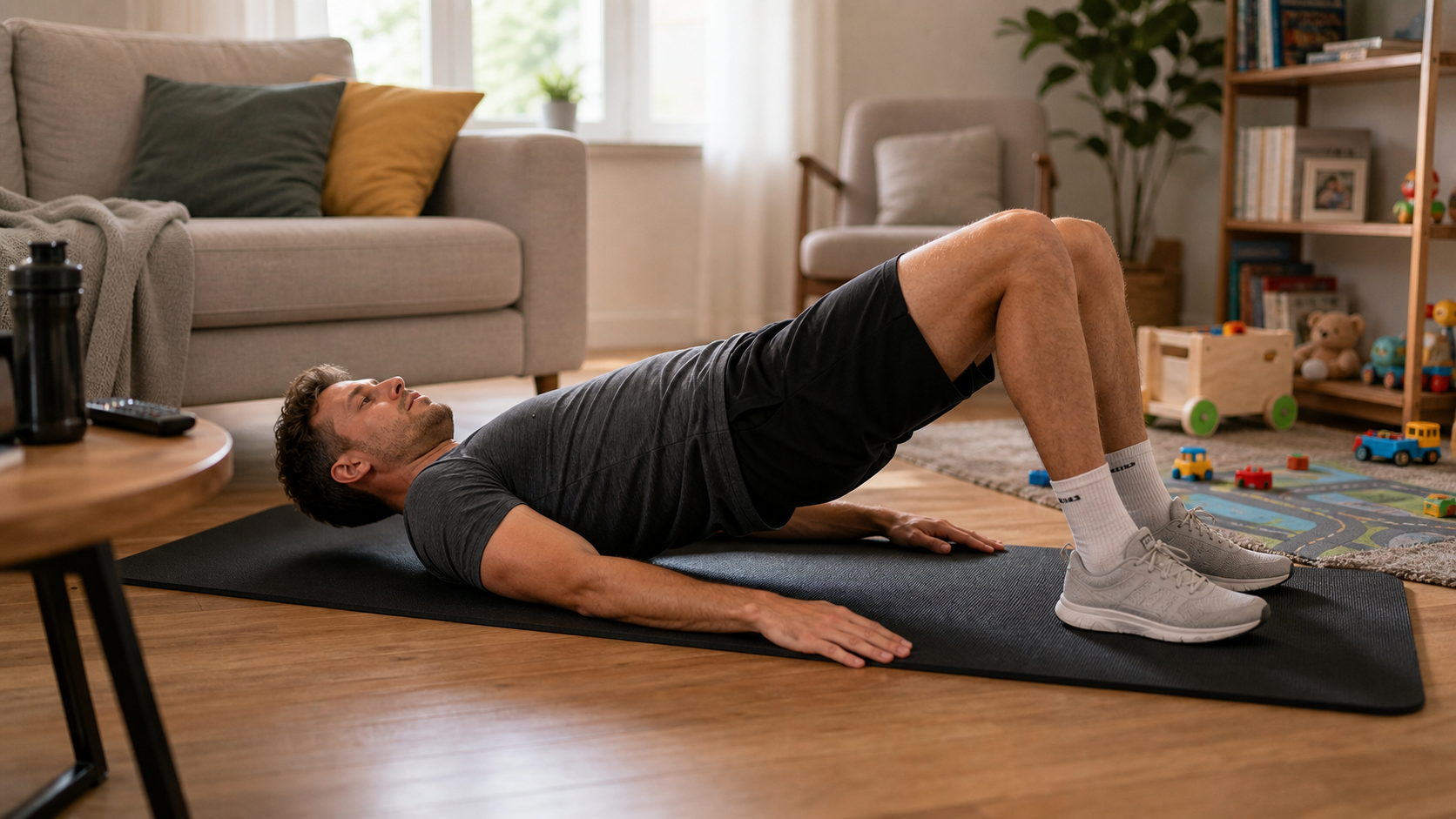
3. Glute bridge with heel pressure
Lie on your back with knees bent. Press through the heels, lift the hips a small distance and pause for two seconds. Do 2 sets of 6 to 8.
4. Standing hamstring curl
Hold a chair or kitchen counter. Bend one knee and bring the heel gently toward the buttock. Lower slowly. Do 8 repetitions each side.
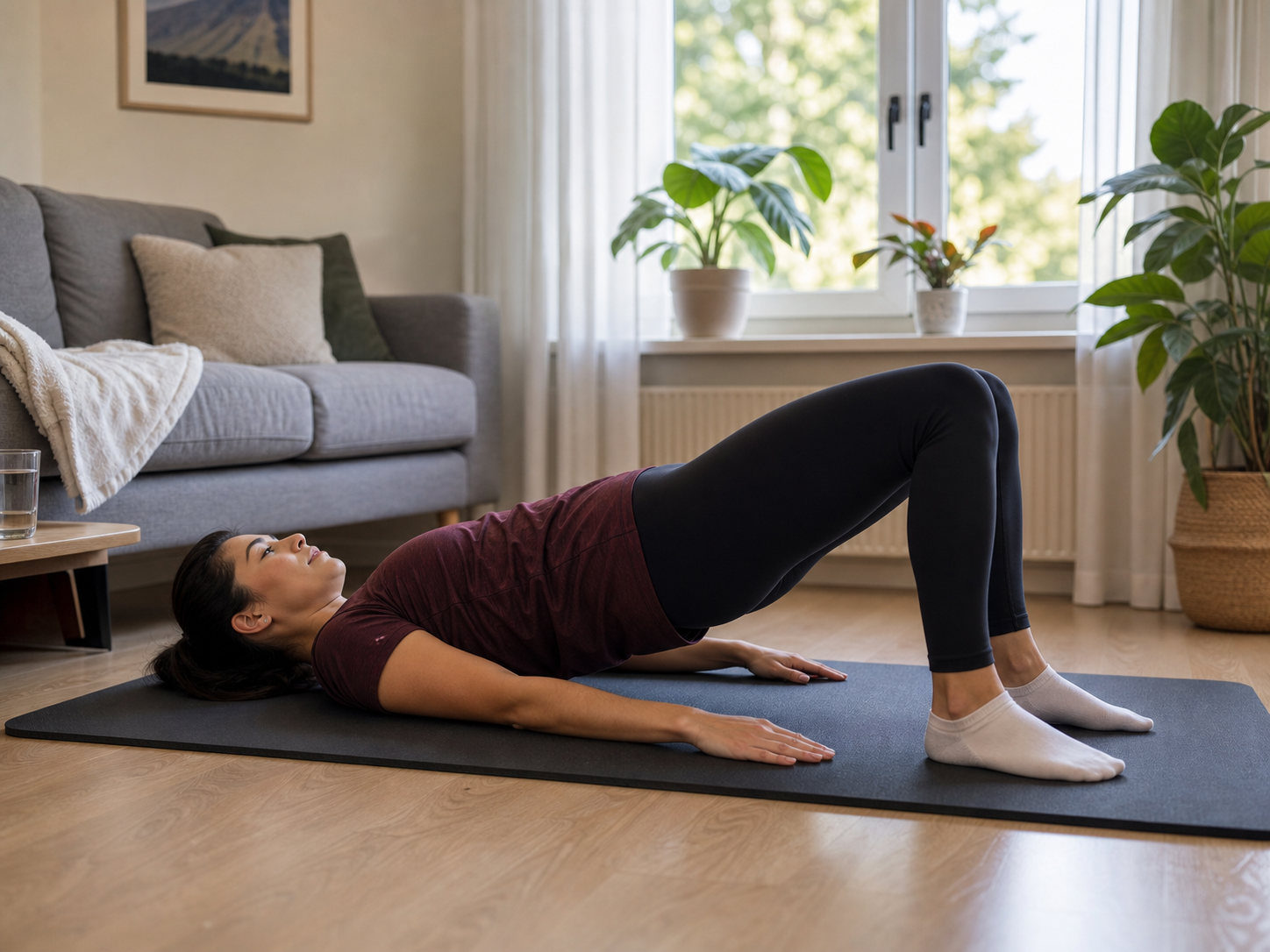
5. Short heel slide on the floor
Lie on your back with a towel under one heel. Keep the hips down at first. Slide the heel away a short distance and pull it back. Do 2 sets of 5 each side.
6. Assisted Nordic with short range
A Nordic hamstring curl is not the first exercise for most older adults. Add it only after bridges, hinges and heel slides feel easy. Use the hands, a high support or a very short range. Nordic training research shows that volume and progression affect eccentric strength and muscle adaptation, so dosage should stay gradual (Cuthbert et al., 2020).
Take your Nordic curl from the first rep to week 10.
A concrete 7-page plan: build up week by week, without pushing too fast.
- 01A clear week-by-week progression
- 02Technique and the mistakes to avoid
- 03A simple log you will actually use

≤51%
✓Backed by research
Meta-analysis of randomised trials of the Nordic Hamstring Exercise.
Open the download page again or check the email we sent you.
Open the download page ↗Building hamstring strength in older adults
Use a simple sequence: pain-free movement first, repeatability second, more range or resistance third. Change one variable at a time. Keep one or two repetitions in reserve, stop if the movement becomes sharp rather than heavy, and keep at least one day between harder strength blocks.
For more home structure, use the home hamstring exercise plan. If the hamstrings mainly feel tight, compare stretching and strengthening in the guide to hamstring exercises for tight hamstrings.
A 4-week light plan
Keep the plan deliberately modest at first: a routine that feels repeatable is more useful than a difficult session that you avoid the next week.
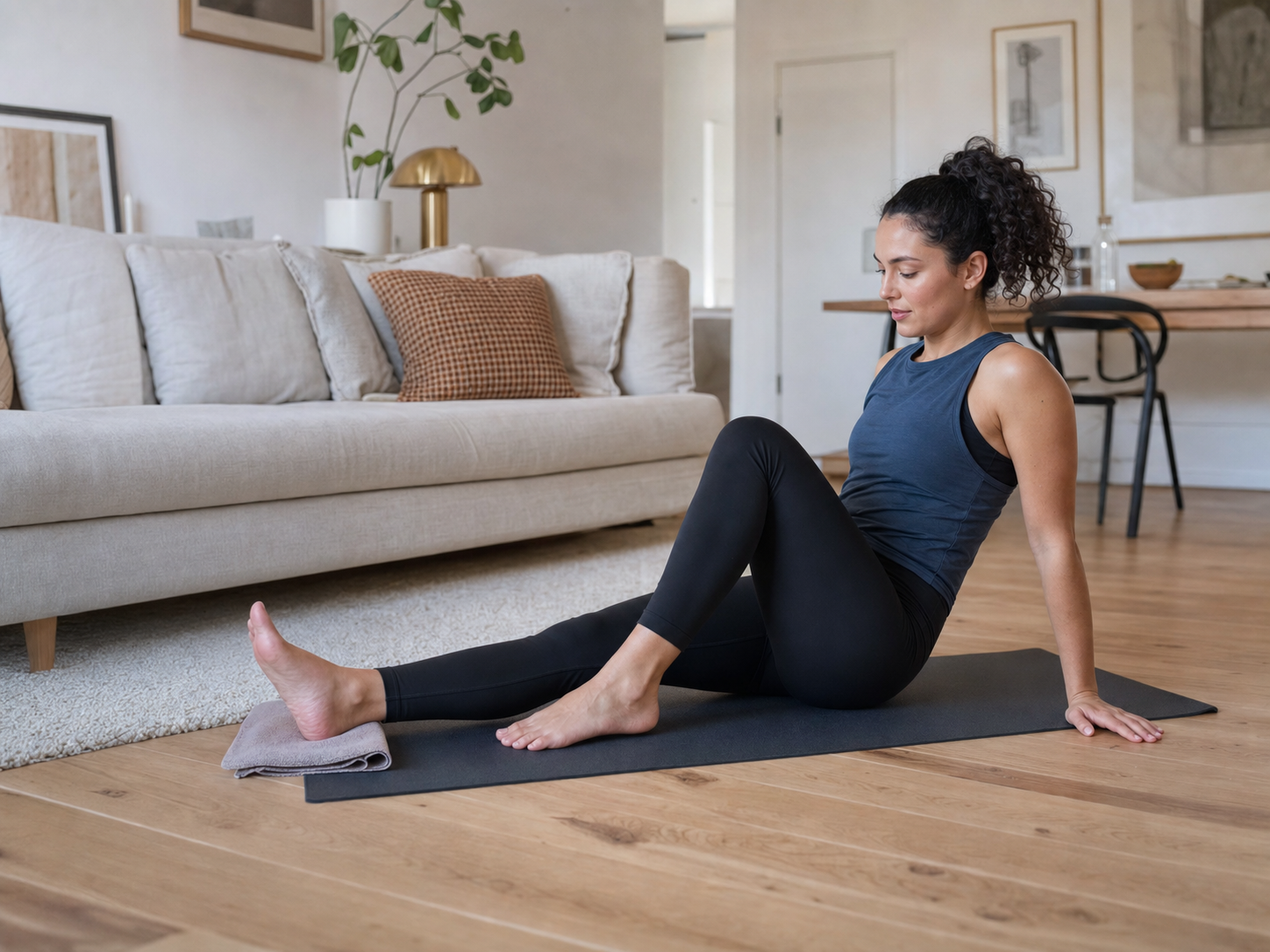
Week 1: three days with seated heel slides, hip hinges and bridges. Use 1 to 2 sets. Week 2: add standing hamstring curls and move toward 2 sets if the next day feels normal. Week 3: add short heel slides. Week 4: either keep the light routine for mobility or progress one exercise gently for strength.
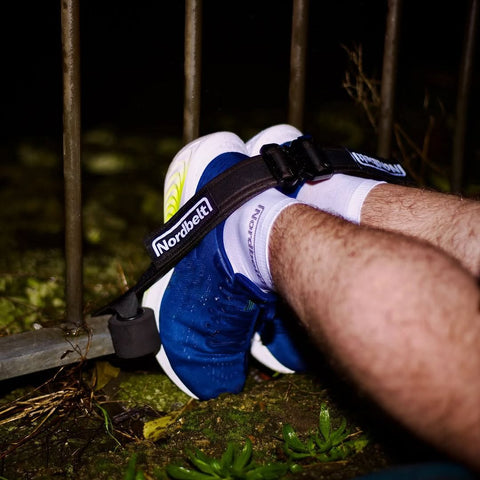
Stable ankle fixation can become useful later. Nordbelt is not required for light senior hamstring exercises, but it can help when assisted Nordics or controlled regressions need a fixed setup. View Nordbelt or first read the Nordic hamstring curl alternative.
When to scale back or ask for help
Scale back if you walk more stiffly the next day, stairs feel worse or you get cramp every time. Reduce sets first, then make the range smaller. Ask for personal advice after a recent fall, new sharp pain, tingling, numbness or clear loss of strength.
Frequently asked questions
Which hamstring exercises are safest for older adults?
Seated heel slides, standing hip hinges, glute bridges, standing hamstring curls and short heel slides are usually safest because they are easy to dose and easy to make smaller.
How often should seniors train hamstrings?
Light mobility can often be done more often, but real hamstring strength work usually fits 2 to 3 times per week with rest between heavier blocks.
Do older adults need a Nordic hamstring curl?
No. A Nordic is a later option, not the starting point. Build control with bridges, hinges and heel slides first.