

Pain behind the knee: causes and first steps


“Nordbelt is easy to secure and feels stable.”
Pain behind the knee often comes from a mix of the popliteal area, hamstring tendon insertions, calf, joint capsule and how the knee reacts to bending or walking. It is not a diagnosis by itself. First check for swelling, a palpable lump, sharp pain, calf symptoms and whether the pain mainly appears with bending, straightening, walking or sport.
Key points
Back-of-knee pain is tricky because many structures sit close together. Hamstring tendons, calf muscles, blood vessels, nerves, joint capsule and bursal tissue all pass through this region. The same spot can therefore become sensitive after a mild overload, a stiff knee after sport, a Baker cyst, a hamstring tendon irritation or another knee problem. Reviews on posterior knee pain stress that the differential diagnosis is broad and not only muscular (English and Perret, 2010).
Use this article as a practical first filter. Mild stiffness that improves with gentle movement is different from swelling, warmth, redness, locking, pain at rest or a recent trauma. Those signs should be assessed instead of trained through.
What is behind the knee?
The popliteal area is not empty space. On the inner side run the semimembranosus and semitendinosus tendons; on the outer side the biceps femoris tendon. Beneath them are the calf heads, capsule, nerves and blood vessels. That is why pain behind the knee can feel deep, tight with bending, sensitive while walking, or local on the inner or outer edge.
A familiar cause of pressure or pain behind the knee is a Baker cyst: a fluid-filled swelling that often relates to irritation inside the knee joint, such as meniscus or osteoarthritis changes (Frush and Noyes, 2015). But not every painful popliteal area is a cyst. Tendon, calf, meniscus, capsule and load reactions can feel similar. If the pain sits higher in the back of the thigh, also read about pain at the back of the thigh.
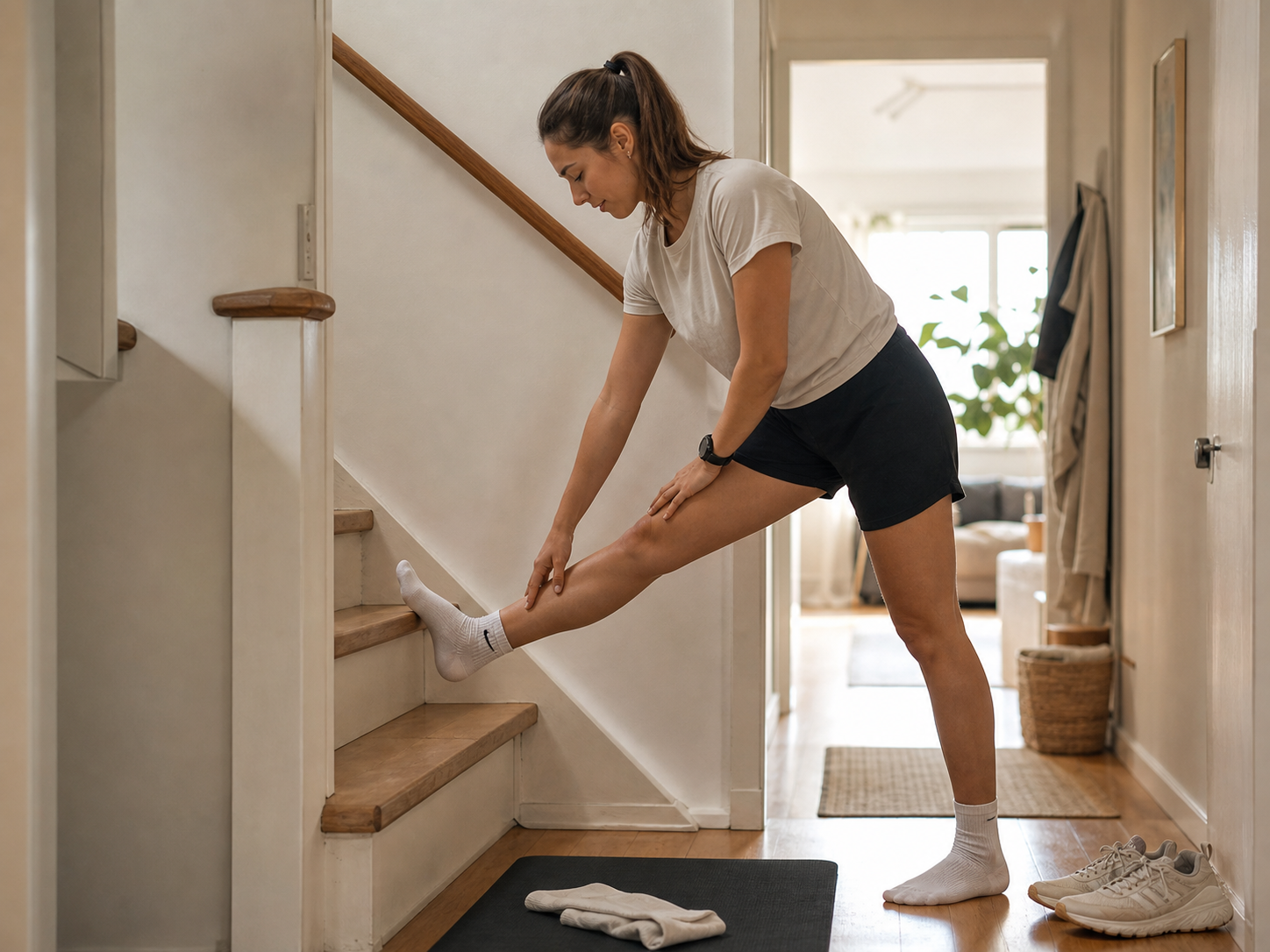

Pain behind the knee when bending
Pain behind the knee when bending tells you mainly about compression and stretch around the popliteal area. Deep squats, kneeling or folding the knee far reduce the space behind the knee, so a cyst, irritated capsule, meniscus issue or sensitive tendon may react sooner.
Avoid aggressive deep squat tests when the knee is already irritated. Start with three calm checks: bend and straighten the knee without weight within a comfortable range, walk for two minutes, and try a mild hamstring stretch with a slightly bent knee without pushing into sharp pain. If deep bending blocks or sharply worsens symptoms, stay out of that range and get assessed.
Take your Nordic curl from the first rep to week 10.
A concrete 7-page plan: build up week by week, without pushing too fast.
- 01A clear week-by-week progression
- 02Technique and the mistakes to avoid
- 03A simple log you will actually use

≤51%
✓Backed by research
Meta-analysis of randomised trials of the Nordic Hamstring Exercise.
Open the download page again or check the email we sent you.
Open the download page ↗Pain behind the knee while walking or during sport
Pain behind the knee while walking or training more often points to load. Ask when it appears: from the first steps, after a few kilometres, on hills, after sprinting or mostly the next day. That pattern matters more than one isolated sore point.
For mild irritation, a temporary step back is often enough. Choose flat walking, avoid sprints and deep knee bends, and use the next morning as your check. A stiff popliteal area after sport can also come from tired hamstrings and calves. If you recognise broader hamstring sensitivity, the article on hamstring pain will fit better.
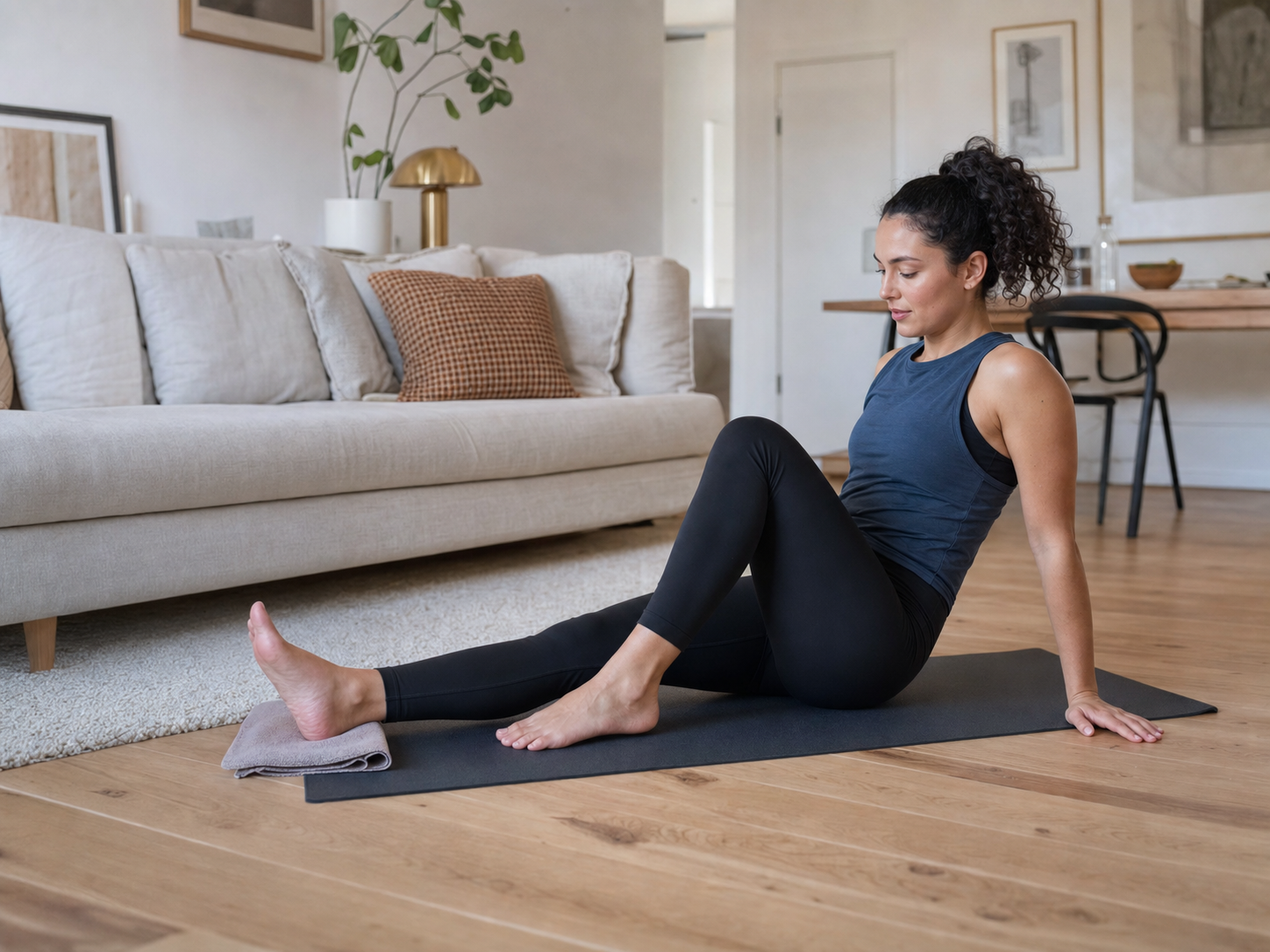
Hamstring tendon insertion pain near the knee
Hamstring tendon insertion pain is often felt on the inner or outer back corner of the knee rather than in the middle of the popliteal area. The semimembranosus tendon can produce posteromedial pain. Semimembranosus tendinopathy is described as a less commonly recognised cause of chronic posteromedial knee pain (Bylund and de Weber, 2010). A later narrative review also describes the distal semimembranosus tendon and nearby bursa as possible sources of medial knee pain, often after overload (Sederberg et al., 2022).
The practical answer is not to stretch harder until the tendon calms down. Tendons usually respond better to load that can be dosed. Start with pain-light movements such as easy walking, heel slides, glute bridges or a short hamstring curl without maximum stretch. Keep pain low during and after the session. For exercise choices, use hamstring exercises for pain; for a wider progression, move later to hamstring exercises at home.
Stiffness behind the knee after sport
Stiffness behind the knee after sport is often a dosing issue. You did more than the knee, hamstrings or calf tolerated that day. That does not automatically mean damage, but it does mean the next session should be smaller. Limit deep bending and sprint load for a few days, walk short and flat if it feels good, add gentle bend-and-straighten movements, and only progress if the next morning is not clearly worse.
Eccentric hamstring training can help with prevention and progression, but dose and adherence matter. A systematic review found that the effect of eccentric hamstring training depends partly on how well the programme is performed (Goode et al., 2015). For pain behind the knee, that means starting with controllable steps rather than heavy loading right away.
When should you get it checked?
Get pain behind the knee assessed if you have clear swelling or a lump, the knee locks, you cannot load normally, symptoms started after trauma, or the complaint keeps returning despite a calm progression. Seek faster help with redness, warmth, marked calf swelling, breathlessness, tingling, numbness or loss of strength. Those are not signals to continue with hamstring exercises.
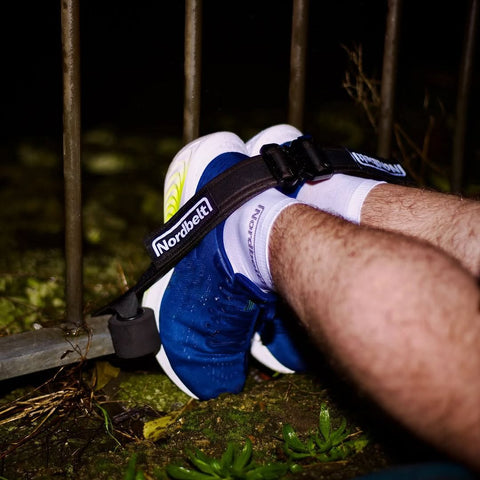
If the complaint is mild and eases with gentle movement, strength can be rebuilt later. Nordbelt fits only in that later phase: when you want stable low ankle fixation for light hamstring curls, sliders or assisted Nordic progression.
Start with the Nordbelt how-to guide and choose a regression that keeps the popliteal area calm. To view the tool, go to Nordbelt. With pain, the order matters: first rule out what does not fit ordinary stiffness, then train stronger.
FAQ
Is pain behind the knee always a Baker cyst?
No. A Baker cyst can create pressure, swelling or pain, but tendons, calf, meniscus, capsule or load can also be involved. A visible or palpable swelling makes a cyst more likely.
Can the hamstring tendon insertion hurt near the knee?
Yes. Hamstring tendons attach around the back and sides of the knee. The inner back corner can become sensitive after overload and often responds better to gradual loading than hard stretching.
Can I walk with pain behind the knee?
Short flat walking is often fine if pain stays mild, your gait does not change and the next day is not worse. Stop and seek assessment if pain sharpens, swelling appears or you start limping.