

Good morning exercise for hamstrings: technique and mistakes


The good morning exercise for the hamstrings is a hip hinge: push your hips back while keeping your knees slightly bent and your torso moving as one unit. Start without weight, keep pressure across the whole foot, and stop as soon as your back position, foot pressure, or hip path changes. Rise by bringing your hips forward again. Add a light load only when every repetition keeps the same depth and controlled return.
What do you train with a good morning?
The good morning is primarily a hip-dominant exercise. You do not bend deeply through the knees as you would in a squat; you move the hips back while the knee angle remains relatively steady. The hamstrings help control the hip movement and the return, together with the glutes and trunk muscles.
That does not automatically make the exercise the best choice for every hamstring goal. In research comparing the good morning, leg curl, glute-ham raise, and Romanian deadlift, among other exercises, activation patterns differed between exercises (McAllister et al., 2014). Use the good morning for the hip hinge and control of that movement, not as a replacement for every knee-flexion or Nordic variation.

How the good morning hip hinge works
Start with your feet about hip-width apart and keep your knees slightly bent. Distribute pressure across your heel, the ball of your big toe, and the ball of your little toe. Brace your trunk without holding your breath, and imagine your rib cage and pelvis forming one solid unit.
Now push your hips straight back. Your torso tilts because your hips move; do not try to dive your shoulders toward the floor. Stop as soon as you notice any of these changes:
- pressure disappears from your forefoot or heel;
- your knees keep moving farther forward;
- the shape of your lower back clearly changes;
- your hips cannot move farther back without you searching for balance.
Return by pushing the floor away and bringing your hips forward. Finish upright, without leaning excessively backward.
If you have not yet mastered the general movement pattern, start with the separate guide on how to learn the hip hinge. This page stays focused on the good morning as a specific exercise.
Four checks before your first repetition
Use four gates before every increase in depth or load. Change one variable only when all four remain open.
- Foot pressure: heel and forefoot remain in contact; you do not roll onto your toes or heels.
- Torso unit: rib cage and pelvis move together; you do not add flexion or overextension in the lower back.
- Hip path: the hips move back and return along the same controlled path.
- Return: you do not accelerate out of the bottom position, and you finish without leaning backward.
If one gate closes, reduce the range of motion or remove the load. Do not change weight, depth, and tempo at the same time. This makes it clear which adjustment restores control.
Take your Nordic curl from the first rep to week 10.
A concrete 7-page plan: build up week by week, without pushing too fast.
- 01A clear week-by-week progression
- 02Technique and the mistakes to avoid
- 03A simple log you will actually use

≤51%
✓Backed by research
Van Dyk et al., 2019: meta-analysis of programmes with NHE. Not an effect test of Nordbelt or this protocol.
Open the download page again or check the email we sent you.
Open the download page ↗How to perform a good morning without weight
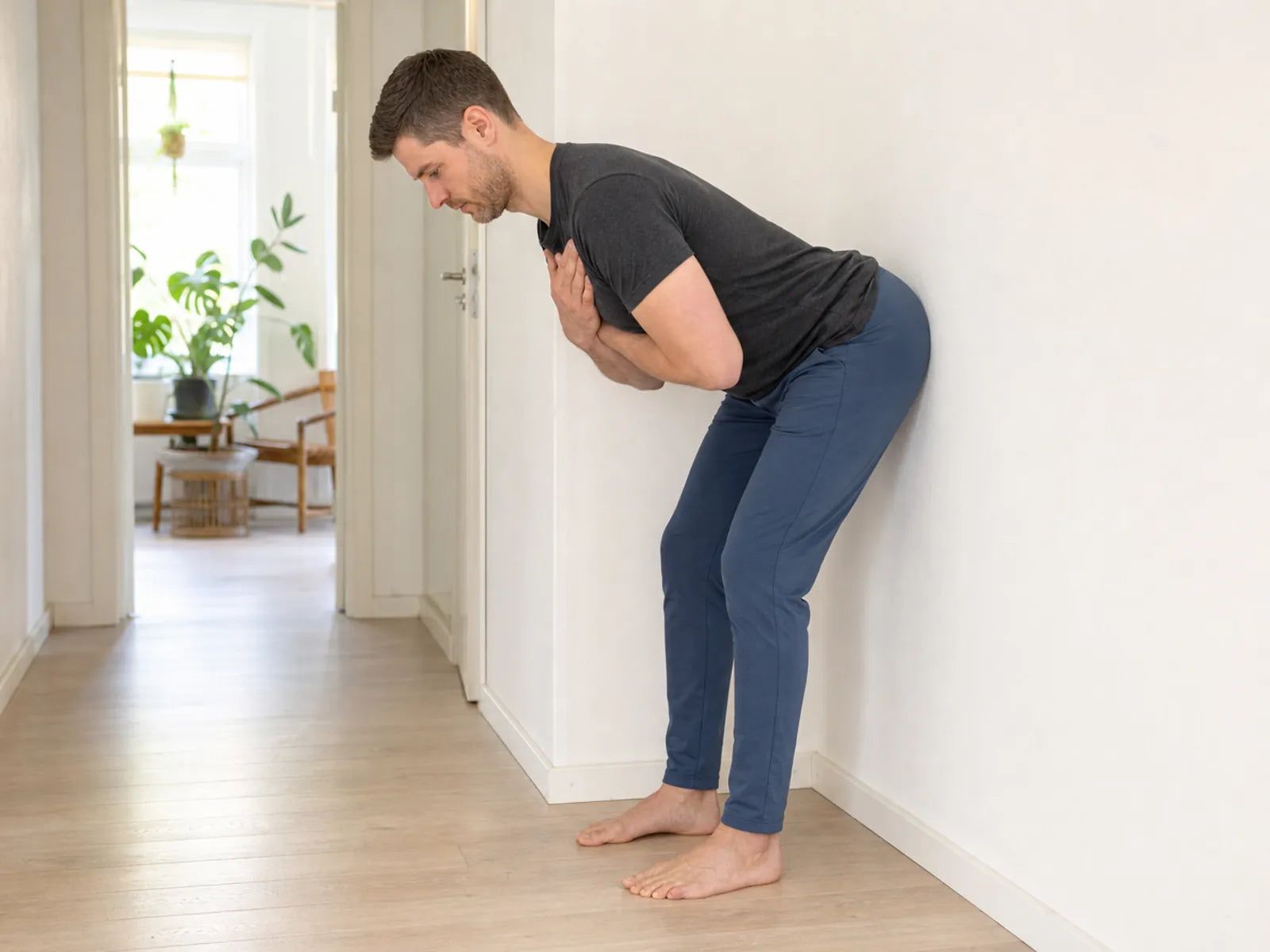
A wall tap makes the hip path tangible:
- stand with your back to a wall, about one short foot-length away;
- plant your feet firmly and bend your knees slightly;
- keep your hands on your chest or ribs;
- push your hips back until your glutes gently touch the wall;
- keep foot pressure and your torso unit unchanged;
- return slowly without bouncing off the wall.
Move a few centimetres farther from the wall if the movement is too small. Move closer if you can reach the wall only by rounding your back or bending your knees deeply. The wall provides feedback for the hip path; it is not a target you must reach at any cost.
What is the difference from a Romanian deadlift?
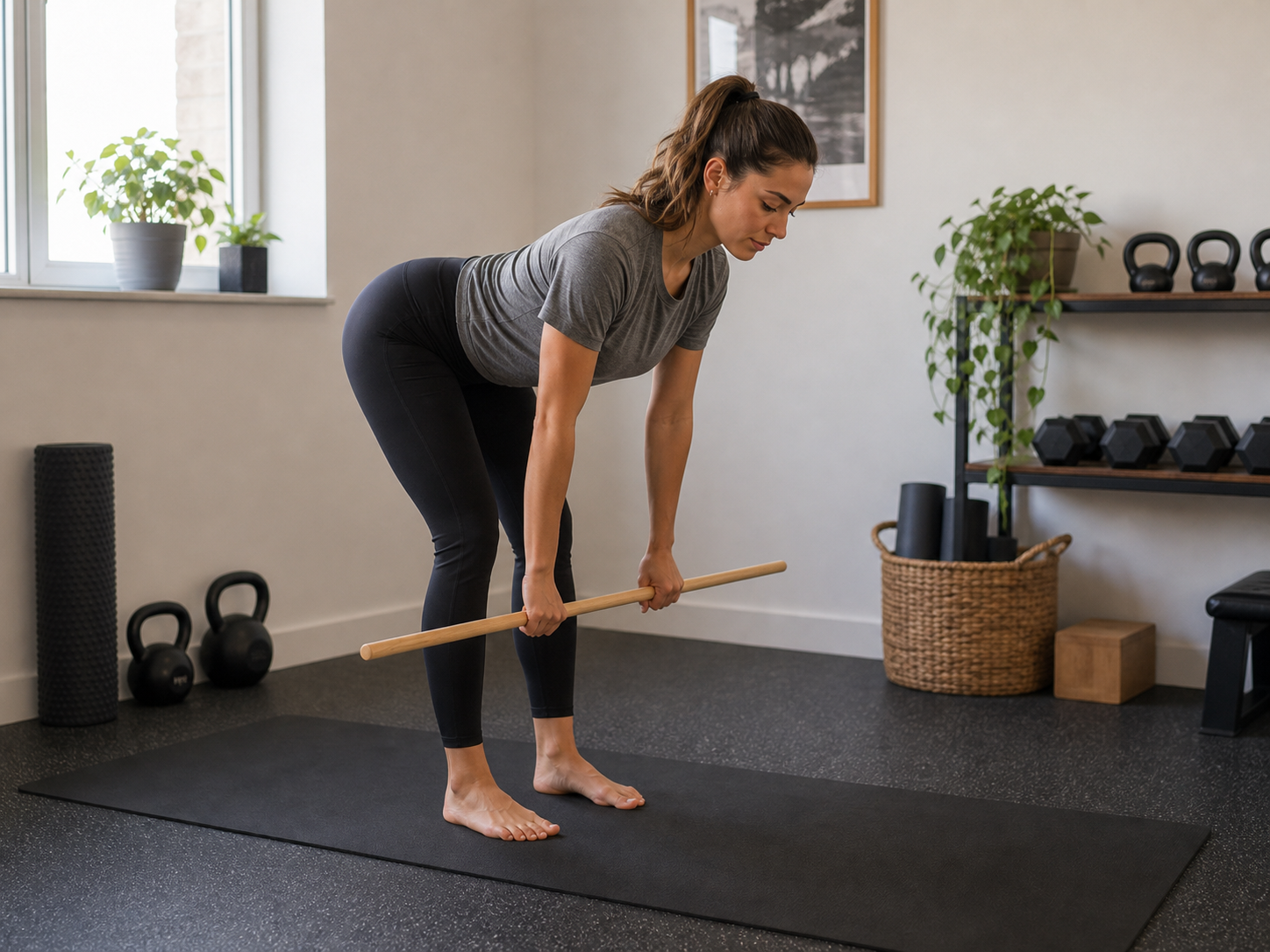
Both exercises use a hip hinge. In a Romanian deadlift, the load usually hangs in the hands in front of the body. In a traditional good morning, a light barbell or other suitable equipment sits higher on the body. This changes where the load is positioned relative to your hips and how you stabilise the movement.
This page is not a barbell tutorial. First practise without load or use a dowel for positional feedback. If you specifically want to learn how to hold and progress a weight in front of the body, use the existing guide to the Romanian deadlift as a hamstring exercise.
Research that included the good morning alongside other lower-body exercises also shows that exercises are not interchangeable based only on how the back of the thigh feels (Ebben, 2009). Choose the variation that matches the movement you want to learn and the load you can control.
Ankle fixation for Nordic curls at home
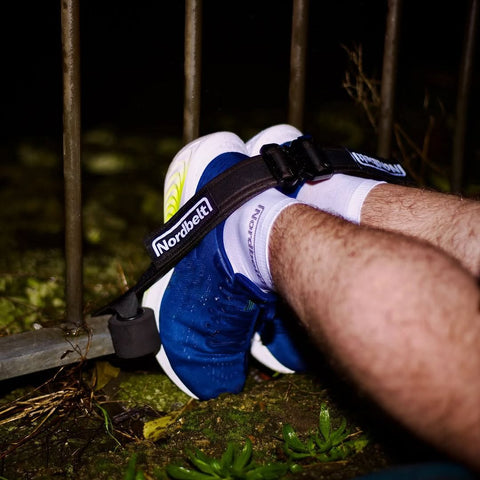
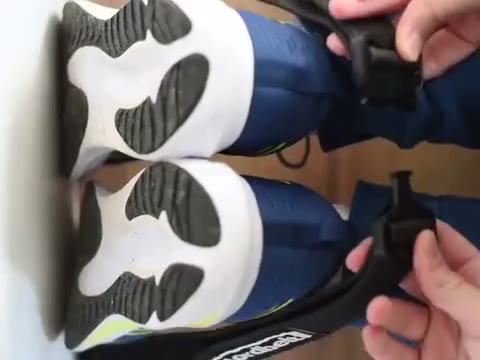
You would then be adding a different hamstring task. In the good morning, your hips move while your feet remain free on the floor. In a Nordic curl, both ankles stay fixed while the body leans forward from a kneeling position. With Nordbelt for Nordic curls at home, you can arrange stable ankle fixation without a training partner or large fitness machine, provided the door, anchor point, kneeling surface, and clear movement path are suitable and checked beforehand.
Nordbelt does not perform the good morning and does not replace hip-hinge technique, load selection, or a training plan. Its role begins only when you also want to add a controlled Nordic step at home and ankle fixation is the practical obstacle.
Good morning with a light load
Add load only when you can perform several unweighted repetitions with the same four gates. Choose equipment that you can safely hold or position according to its instructions. If you cannot assume the starting position independently and calmly, do not use that equipment for this variation.
Make one change at each step:
- first maintain your unweighted depth;
- add the lightest practical load;
- check that foot pressure, torso unit, hip path, and return remain the same;
- reduce the depth if the load changes the path;
- increase only one variable later: repetitions, tempo, range of motion, or resistance.
Progressive resistance training involves planned changes in exercise selection, volume, resistance, and rest, among other variables; it does not mean automatically going heavier in every session (Ratamess et al., 2009). For the good morning, a repeatable light execution is more informative than a heavier repetition that changes path.
Good morning mistakes involving the lower back
Your lower back does not have to feel completely passive: your trunk helps control the position. The problem arises when the lower back starts driving the movement while the hips barely move back.
Common mistakes include:
- pushing the chest down without moving the hips;
- going deeper after foot pressure or the torso unit has already changed;
- bending the knees farther and farther until the exercise resembles a squat;
- rising by lifting the shoulders first;
- leaning excessively backward at the top;
- adding a barbell before the unweighted path is stable;
- ignoring a sharp or new symptom to finish a planned set.
If you mainly feel local pressure in your lower back, return to the wall tap, reduce the depth, and check whether your hips are truly moving back. Stop if you feel a sharp, radiating, or persistent symptom and seek an appropriate assessment; a technique article cannot provide a diagnosis.
How deep should you go?
There is no mandatory end angle. Useful depth ends where all four gates still remain open. One person's torso may be nearly horizontal, while another person's controlled movement stops clearly higher. Body proportions, mobility, equipment position, and training background affect the available path.
Do not use the feeling of a stretch as your only depth gauge. A strong sensation in the hamstrings can occur alongside a loss of foot pressure or trunk control. You can film one set from the side, without personal information or other people in frame, and check whether the hips move back and the return follows the same line.
How does the good morning fit into your training?
Use the good morning as one hip-dominant exercise, not as a complete hamstring programme. The broader page on posterior-chain exercises helps you distribute hip extension, knee flexion, and trunk control across the week. For an overview of other movements, the guide to effective hamstring exercises remains the general reference.
In one session, prefer one clear task over several variations that repeat the same hip hinge. Record the depth, load, and tempo that kept all four gates open. Start there in the next session instead of searching again for an arbitrary maximum.
If you later want to assess the optional Nordic step in practical terms, use the Nordbelt guide for the home setup. Check the anchor, symmetry, kneeling surface, clear space, and regression before every set; that setup does not turn the good morning into the same exercise.
Frequently asked questions
Is the good morning a good hamstring exercise?
The good morning can be a useful hip-dominant hamstring exercise when you control the hip hinge and choose an appropriate load. It does not replace a knee-flexion variation or a complete programme. Choose it when you specifically want to train hip movement, trunk control, and a controlled return.
How do you perform the good morning exercise?
Plant your feet firmly, bend your knees slightly, make your rib cage and pelvis one torso unit, and push your hips back. Stop as soon as foot pressure, back position, or hip path changes. Return by bringing your hips forward, and finish upright without leaning backward.
How do you stop the lower back from taking over the good morning?
Start without weight and use a wall tap. Keep the range of motion small enough to maintain foot pressure and your torso unit. If your shoulders move down or up first while your hips barely move, shorten the path and practise the hip movement again.
How heavy should a good morning be?
There is no universal starting weight. First master the unweighted version, then add only the lightest practical load that allows all four gates to remain unchanged. Increase one variable at a time and step back when depth, tempo, or body position changes.
What is the difference between a good morning and a Nordic curl?
In the good morning, the hips move from a standing position and the feet remain free on the floor. In the Nordic curl, the ankles are fixed and the body moves around the knees from a kneeling position. The exercises have different setups, movement tasks, and progressions.
Summary
The good morning exercise for the hamstrings begins as an unweighted hip hinge. Check four gates: foot pressure, torso unit, hip path, and return. Increase the depth or add a light load only when all four remain consistent. Keep the good morning distinct from the general hip hinge, Romanian deadlift, knee-flexion variations, and Nordic curl so that each exercise has a clear role in your programme.