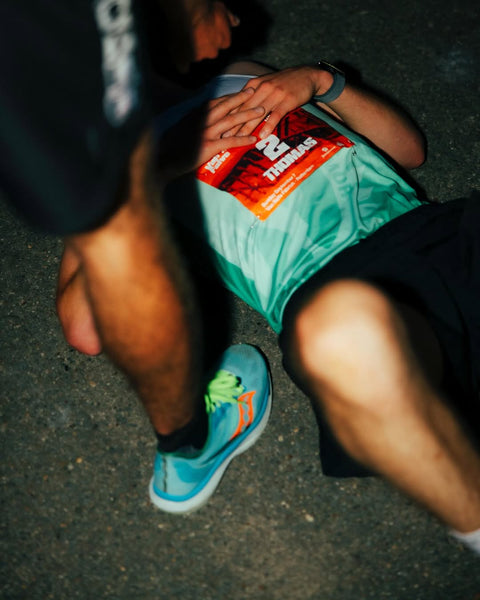


Crampi alle gambe di notte: cosa aiuta e quando fare attenzione?
 Thomas PereiraMedico e specialista in scienze motorie · cofondatore di Nordbelt
Pubblicato
5 min di lettura
Thomas PereiraMedico e specialista in scienze motorie · cofondatore di Nordbelt
Pubblicato
5 min di lettura

“Nordbelt si fissa facilmente e rimane stabile.”
I crampi alle gambe di notte sono di solito una contrazione improvvisa e dolorosa di polpaccio, piede, coscia o ischiocrurali. Spesso passano in pochi minuti, ma possono disturbare molto il sonno. Prima rilassa la zona, evita allungamenti aggressivi e poi muoviti con calma. Se tornano spesso, possono essere legati a fatica, posizione, età, farmaci, carico di allenamento o salute generale.
Risposta rapida
Un crampo notturno non è semplice indolenzimento. Blocca all’improvviso, tira forte e poi di solito si rilascia. Dopo un infortunio restano più spesso dolore, debolezza o sensibilità.
Evidence suggests that stretching before sleep can reduce frequency or severity for some people, but not for everyone (Hallegraeff et al., 2012). Reviews also describe several contexts, including medication and general health (Allen and Kirby, 2012).
Crampi notturni alle gambe
The cramp often appears without warning: the muscle shortens, tightens and the leg feels locked. It can happen in the calf, foot, thigh or hamstring, and the cause is rarely one single factor.
Contesti frequenti:
- harder training than usual
- long sitting or travel with little movement
- sleeping with the foot held pointed
- limited recovery after sport or long walks
- medication or health factors
- pregnancy, older age or recurring rest cramps
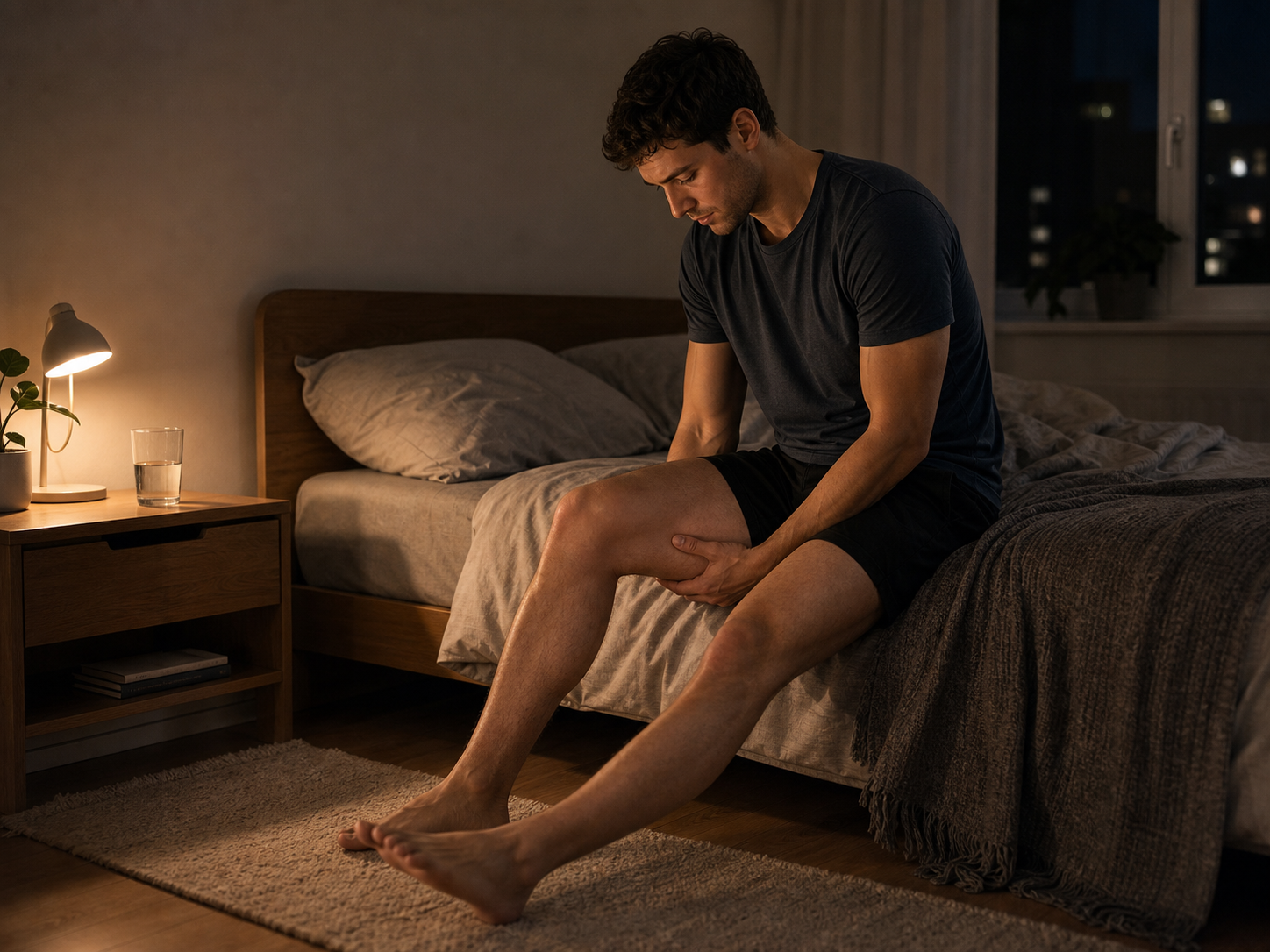
For exercise-associated cramps, research points mainly to neuromuscular fatigue and altered reflex control. Fluid and electrolytes may matter in some cases, but they do not explain every episode (Miller et al., 2022).

Crampo alla coscia di notte
A thigh cramp can feel deeper than a calf cramp. The key question is what remains after the episode.
If it eases quickly and walking is normal, it fits ordinary cramp more often. If sharp pain, bruising, clear tenderness or weakness remains, do not treat it as simple night cramp.
For symptoms mainly at the back of the thigh, read the guide on hamstring cramps. If the exact issue is waking with hamstring cramp, use hamstring cramps at night.
Porta il tuo Nordic curl dalla prima ripetizione fino alla settimana 10.
Un piano concreto di 7 pagine: progredisci settimana dopo settimana, senza strafare.
- 01Progressione chiara settimana dopo settimana
- 02Tecnica ed errori da evitare
- 03Un diario semplice da usare davvero

≤51%
✓Basato sulla ricerca
Metanalisi di studi randomizzati sul Nordic Hamstring Exercise.
Riapri la pagina di download o controlla l’email che ti abbiamo inviato.
Apri la pagina di download ↗Crampo agli ischiocrurali durante il sonno
Hamstring cramp during sleep often follows sprinting, hills, strength training, long sitting or a sudden increase in steps. The hamstring does not like abrupt load jumps.
Separate cramp, stiffness and pain. Cramp locks and releases; pain often remains during walking, bending, stairs or contraction. If pain remains the next day, start with hamstring exercises for pain or seek advice.
Cosa fare contro i crampi?
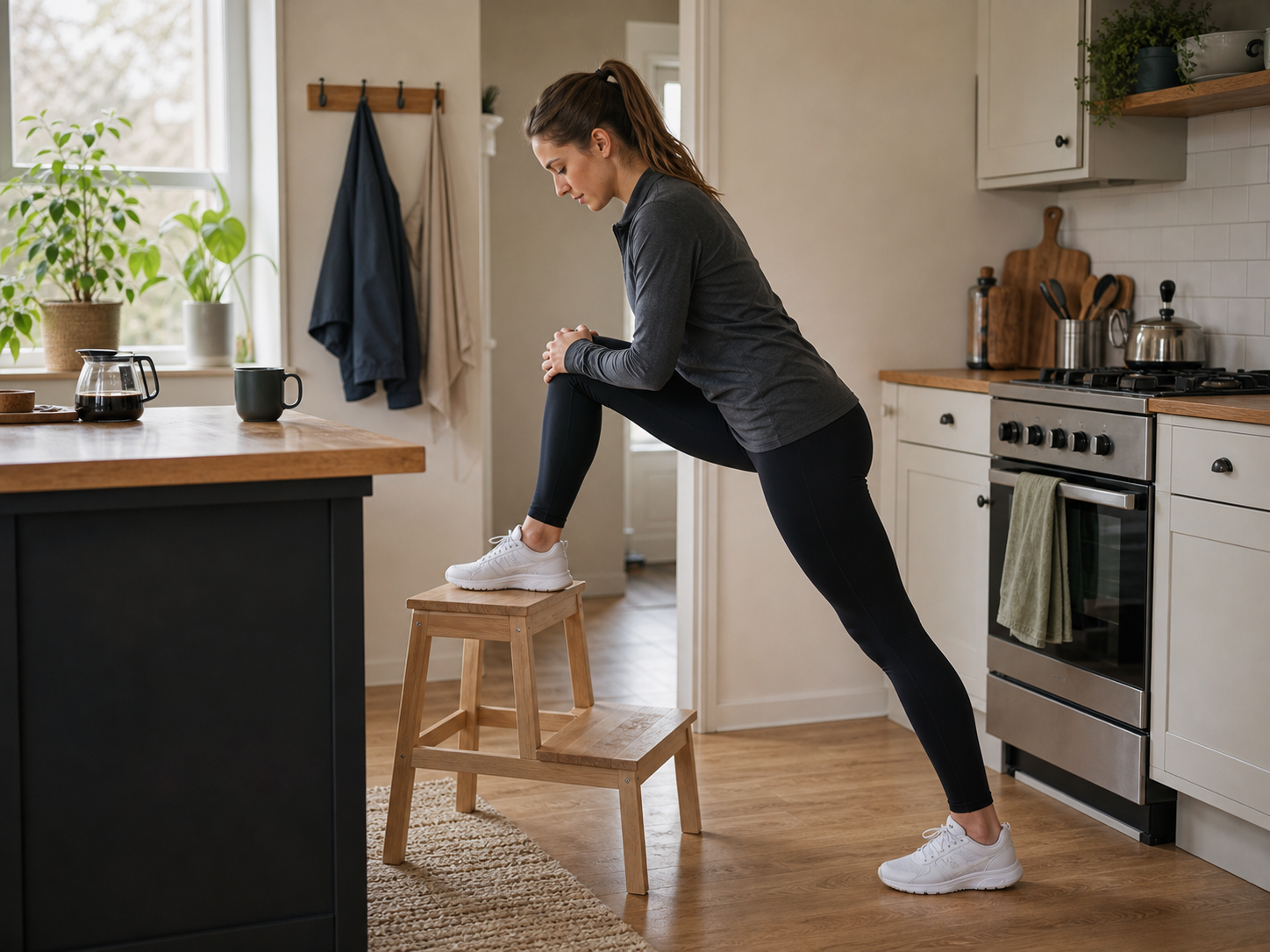
Start by calming the muscle, not forcing it.
- change position slowly and breathe calmly
- straighten the leg only gently
- move the ankle carefully
- massage lightly if helpful
- stand only once it eases
- walk briefly and drink if thirsty
Avoid maximal stretching while the muscle is fully locked. Small, calm movements are usually enough.
Ridurre i crampi durante il sonno
Prevention works best as a simple routine: light daily movement, calm evening mobility and fewer sudden training peaks.
Routine pratica:
- move calmly for 3 to 5 minutes
- do two gentle calf and hamstring stretches
- avoid hard lower-leg training just before sleep
- do not keep the foot forcefully pointed
- track whether cramps follow sprints, long drives, alcohol, little food or stairs
Magnesium is not automatic. A systematic review found no convincing general benefit for night leg cramps in studied groups (Sebo et al., 2014).
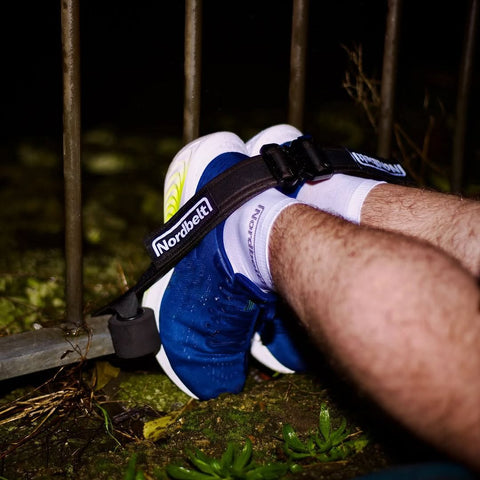
If cramps mainly return after sport, lower peak load temporarily. For controlled technique, use the Nordbelt how-to guide. Treat Nordbelt as a progression tool, not an instant cramp fix.
Quando farsi valutare?
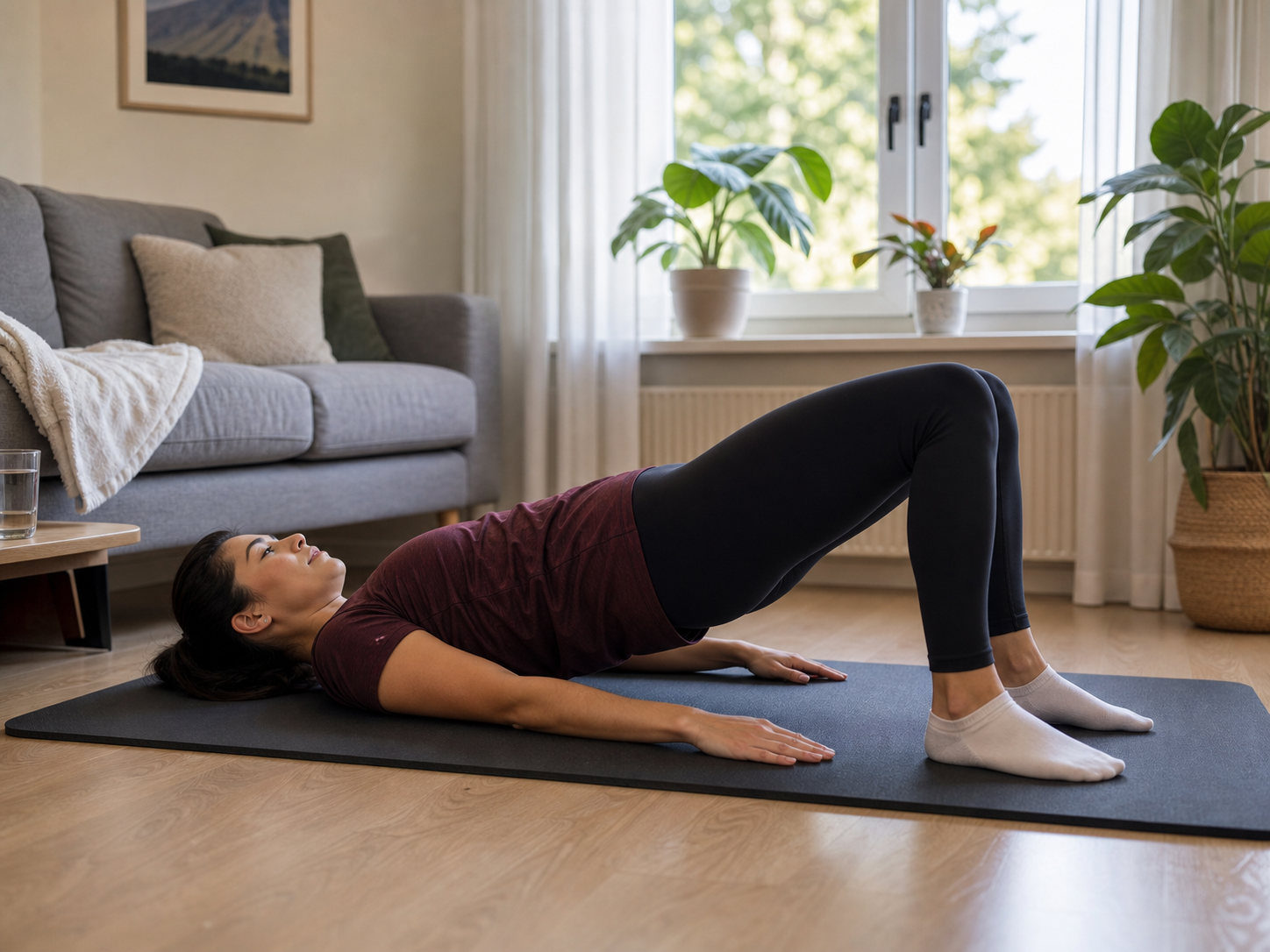
Get assessed if cramps are new, severe, one-sided or clearly unusual. Seek help sooner with swelling, redness, warmth, shortness of breath, tingling, numbness, weakness, fever, new medication or pain that remains during the day.
If sleep stays disturbed for weeks, review load, recovery, medication, circulation, nerve symptoms and general health.
Domande frequenti
Are night leg cramps dangerous?
Usually not when a single cramp eases quickly and leaves no symptoms. Frequent, one-sided or painful cramps with swelling, tingling or weakness deserve assessment.
What helps immediately?
Change position slowly, breathe calmly, gently straighten the leg, move the ankle and massage lightly. Do not force a maximal stretch.
Can it come from the hamstring?
Yes, especially at the back of the thigh, but cramps can also come from other thigh muscles or general rest cramp.
Does magnesium help?
Not automatically. Research does not support it as a general solution. Discuss supplements if you use medication, are pregnant, have kidney problems or suspect deficiency.
When should I seek help?
Seek help for new, frequent, very painful or one-sided cramps, or when swelling, warmth, shortness of breath, numbness, weakness, fever, new medication or daytime pain is present.