

Korfball hamstring exercises: stronger jumping, turning and take-off


Korfball hamstring exercises should match jumping, landing, turning away, short accelerations and repeated take-offs. A few hamstring curls after practice are too narrow for that job. Good hamstring training for korfball combines hip strength, single-leg control, eccentric braking strength and calm Nordics that you do not place right before a hard practice or match. Start with technique and control, keep the volume small and progress only when you can move normally the next day.
Key points
Korfball loads the hamstrings in actions where you switch quickly between jumping, landing, turning, stepping out and accelerating again. That is why korfball hamstring exercises work best when they combine strength and control: bridges, walkouts, single-leg hinges, sliders and later assisted Nordics. An evidence-based approach to hamstring strengthening shows that different exercises create different adaptations, so choose the exercise that fits your sport and current tolerance (Bourne et al., 2018).
Use this as a korfball-specific layer on top of the wider guide to hamstring exercises. First move without compensation, then build strength, then add Nordic progressions and weekly planning around korfball sessions.

Why the hamstrings work hard in korfball
Korfball is not a long straight sprint sport, but the hamstrings still receive many short, repeated loads. You sprint a few metres to get free, brake before a shot, open your hips, land after a rebound, step out again and keep moving in defence. The load is not always huge, but it comes often and from changing angles.
That means making the hamstrings stronger for korfball is not only about lifting heavier. You need hip strength for take-off, eccentric control for braking and landing, and single-leg stability so the knee, hip and trunk do not have to correct every landing from scratch.
In sport, hamstring injuries often involve high load while the muscle has to brake in a lengthened position. Mechanism reviews describe sprint-related hamstring load as a mix of muscle length, braking contraction and timing within the movement (Danielsson et al., 2020). For korfball players, the practical lesson is simple: prepare the hamstrings for braking, landing and re-accelerating.
Which hamstring training should korfball players choose first?
Start with exercises that make your korfball movement cleaner. If you jump stiffly, shoot lower or feel your back sooner after strength work, the stimulus was probably too heavy or badly timed. Korfball already has plenty of repetitions in duels, shots and short runs, so the extra strength dose should be precise.
- Glute bridge with heel pressure
- Hamstring walkout
- Hip hinge with a dowel
- Single-leg Romanian deadlift
- Hamstring slider curl
- Split squat with a slow lowering phase
- Assisted Nordic hamstring curl
- Full Nordic hamstring curl
Take your Nordic curl from the first rep to week 10.
A concrete 7-page plan: build up week by week, without pushing too fast.
- 01A clear week-by-week progression
- 02Technique and the mistakes to avoid
- 03A simple log you will actually use

≤ 51%
✓Backed by research
Van Dyk et al., 2019: meta-analysis of programmes with NHE. Not an effect test of Nordbelt or this protocol.
Open the download page again or check the email we sent you.
Open the download page ↗The 7 best korfball hamstring exercises
1. Glute bridge with heel pressure
Lie on your back, place the heels slightly farther from the hips and lift the pelvis slowly. Pull the heels toward you without moving them, hold for two seconds and lower with control.
2. Hamstring walkout
Start in a bridge and walk the feet away slowly. Keep the pelvis high enough and return step by step. This teaches tension while the hamstrings lengthen.
3. Hip hinge with a dowel
Hold a dowel along the head, upper back and pelvis. Move from the hips without rounding the back. This helps when take-offs and landings become messy.
4. Single-leg Romanian deadlift
Hinge on one leg, keep the back long and stop before the pelvis opens. This teaches you to produce force on one leg without losing balance after a turn or landing.
5. Hamstring slider curl
Use sliders, socks or a smooth floor. Lift the hips, slide the heels away and pull back with control. For more versions, use the guide to hamstring slider exercises.
6. Split squat with slow braking
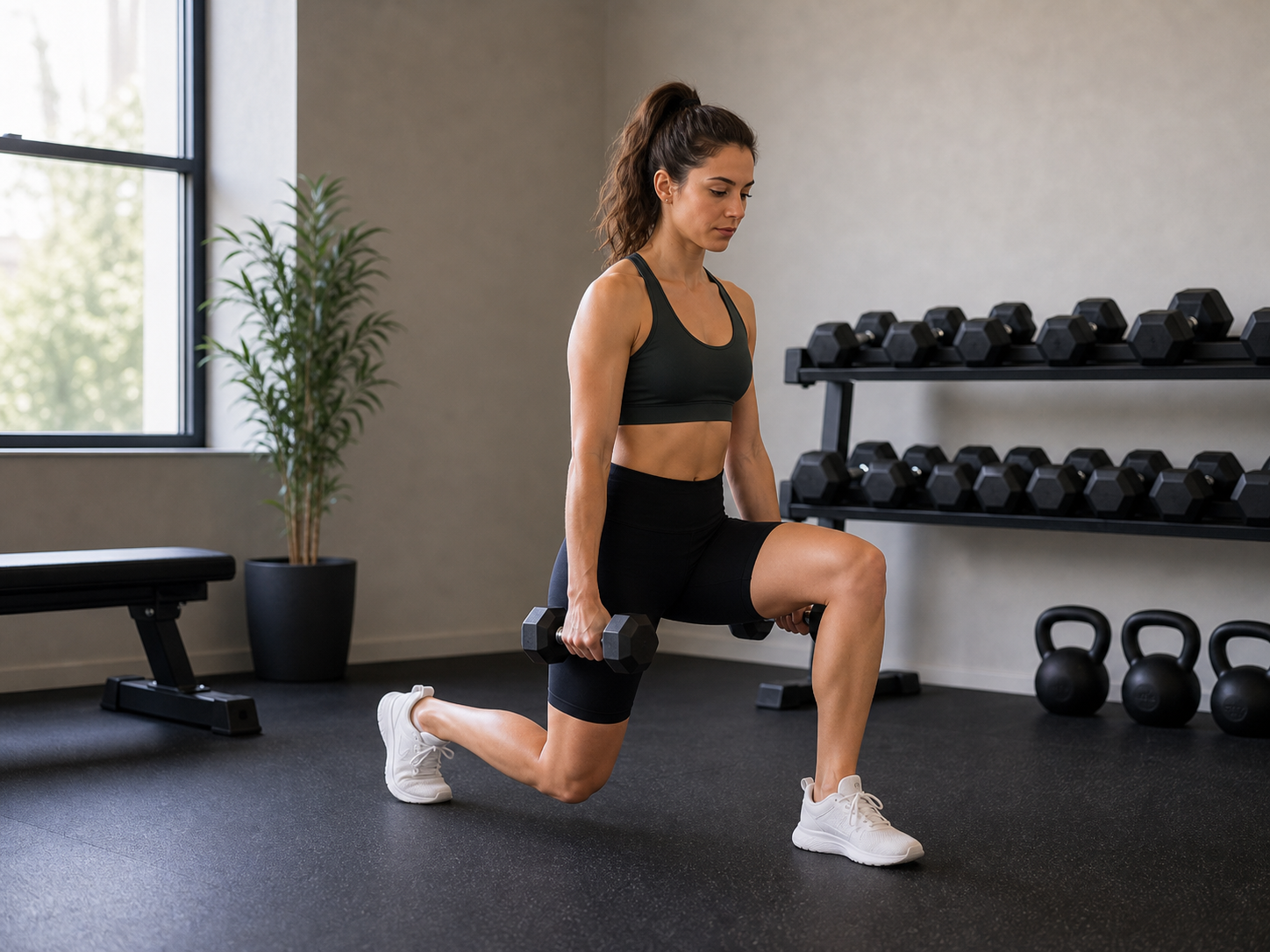
Step one foot forward and one foot back. Lower for three seconds, keep knee and hip controlled and return calmly. It is not a pure hamstring exercise, but it trains the single-leg braking that korfball needs.
7. Assisted Nordic hamstring curl
Kneel on a soft surface and fix the ankles low and firmly. Lower slowly, catch yourself with the hands and push back lightly. Programmes with the Nordic hamstring exercise are associated with lower hamstring injury rates in sport, but execution and adherence still matter (van Dyk et al., 2019).
For the broader exercise choice around Nordics, use the guide to eccentric hamstring exercises.
Nordic hamstring for korfball: when and how heavy?
The Nordic hamstring curl fits korfball, but not as a daily challenge. It is useful as a heavy eccentric stimulus once basic control is in place. Football studies found fewer acute hamstring injuries after a progressive Nordic programme, but that evidence is not a literal korfball guarantee (Petersen et al., 2011; van der Horst et al., 2015).
- Weeks 1-2: 2 sets of 3 assisted reps, small range.
- Weeks 3-4: 2 sets of 4-5 reps, slow lowering.
- Weeks 5-6: 3 sets of 4-5 reps, still catching with the hands.
- After that: progress only if practice and matches still feel normal.
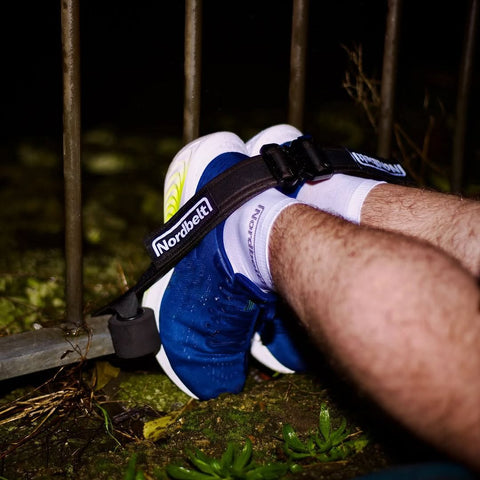
Stable ankle fixation makes the movement repeatable. With Nordbelt you can practise controlled Nordics at home, in the hall or from a stable low anchor. Use it only after you know which version fits. The technical base is in the Nordic hamstring curl guide and the practical setup is in the how-to guide.
Weekly hamstring planning for korfball
The biggest mistake is putting every stimulus on the wrong day. Heavy eccentric hamstring work should not sit right before the hardest practice or match. Keep at least one easier day between heavy hamstring work and lots of jumping, sprinting or duels.
- Monday: 20 minutes of strength, such as bridges, single-leg RDLs and slider curls.
- Tuesday: korfball practice.
- Wednesday: rest or light mobility.
- Thursday: short Nordic or eccentric stimulus, low volume.
- Friday: technical practice or easy shooting.
- Weekend: match.
- Day after the match: walking, recovery or light control work.
If you play two matches or have several hall sessions, reduce the volume. Hamstrings get stronger from a repeatable stimulus, not from being destroyed.
Reducing hamstring injury risk in korfball without false certainty
You can never fully prevent a hamstring injury with a list of exercises. You can avoid big load jumps, land better, keep some sprint exposure and build eccentric strength gradually. A broader meta-analysis of randomised trials found that eccentric strengthening can improve injury incidence and relevant risk factors, while programme design and execution remain important (Rudisill et al., 2023).
Scale back when the hamstring feels tight during the first accelerations, landings become stiff, cramp appears after short sprints, or recovery takes longer than usual. The goal is not to feel nothing ever again. The goal is to make your hamstrings fit your korfball week.
FAQ
Which korfball hamstring exercises matter most?
Start with bridges, walkouts, single-leg Romanian deadlifts, slider curls and assisted Nordics. Add jump and braking drills only after basic control is solid.
Does the Nordic hamstring curl fit korfball?
Yes, but start lighter than you think. Use assisted reps, a small range and place the exercise on a day with room to recover.
How often should I train hamstrings next to korfball?
For most players, one or two short sessions per week are enough. Lower the volume when you have several practices or matches.
Can you prevent hamstring injuries in korfball?
You can reduce risk, not make it zero. Combine gradual strength work, landing control, sprint exposure and recovery, and take recurring pain seriously.