

Hamstring exercises for golf: rotation, strength and control


Hamstring exercises for golf should help you transfer force without making your swing stiff. Golf asks for rotation, hip control, push-off, balance and repeatable acceleration. The hamstrings work as part of the hip, pelvis and trunk chain, so a useful golf hamstring plan starts with control, then eccentric strength and only later heavier Nordics or explosive drills.
Quick answer
For golfers, stronger hamstrings mainly support stable hips, controlled rotation and a powerful but relaxed swing. A golf swing EMG study found clear hamstring activity during the forward swing (Marta et al., 2016). Use this as a sport-specific layer next to the broader guide to hamstring exercises. The goal is not soreness; it is repeatable force with good timing.
A good golf plan is therefore small, repeatable and placed around your rounds. If your hamstrings feel heavy for two days after every session, the plan is too aggressive. Build enough capacity to hinge, rotate and brake without changing your swing tempo. That usually means one or two focused strength sessions per week, plus a short dynamic warm-up before range work or a round.
Why golf loads the hamstrings differently
Golf is a fast rotational movement, not a straight-line sprint. A review of golf training links flexibility, strength, power and technique work with better performance support and lower injury risk (Meira and Brumitt, 2010). That makes hamstring work useful when it is tied to hip control and rotation rather than random leg curls.
- Hip hinge control keeps the lower back calmer.
- Eccentric control helps with acceleration and braking.
- Single-leg stability supports weight transfer between trail leg and lead leg.
- Better posterior-chain endurance helps your swing feel similar late in a round.
The trail-leg hamstring helps you load and rotate without collapsing through the hip. The lead-leg hamstring helps you accept force as the club accelerates through impact. Both jobs require strength, but they also require timing. That is why slow hinges, single-leg work and controlled sliders often belong before maximal effort Nordics.
Which golf hamstring training comes first?
Choose exercises that keep your swing rhythm intact. If you need more exercise options, use the guide to eccentric hamstring exercises as the next layer. Start with movements you can control without holding your breath, twisting through the lower back or chasing a deeper range than your hips can manage.
- Glute bridge with hamstring pressure.
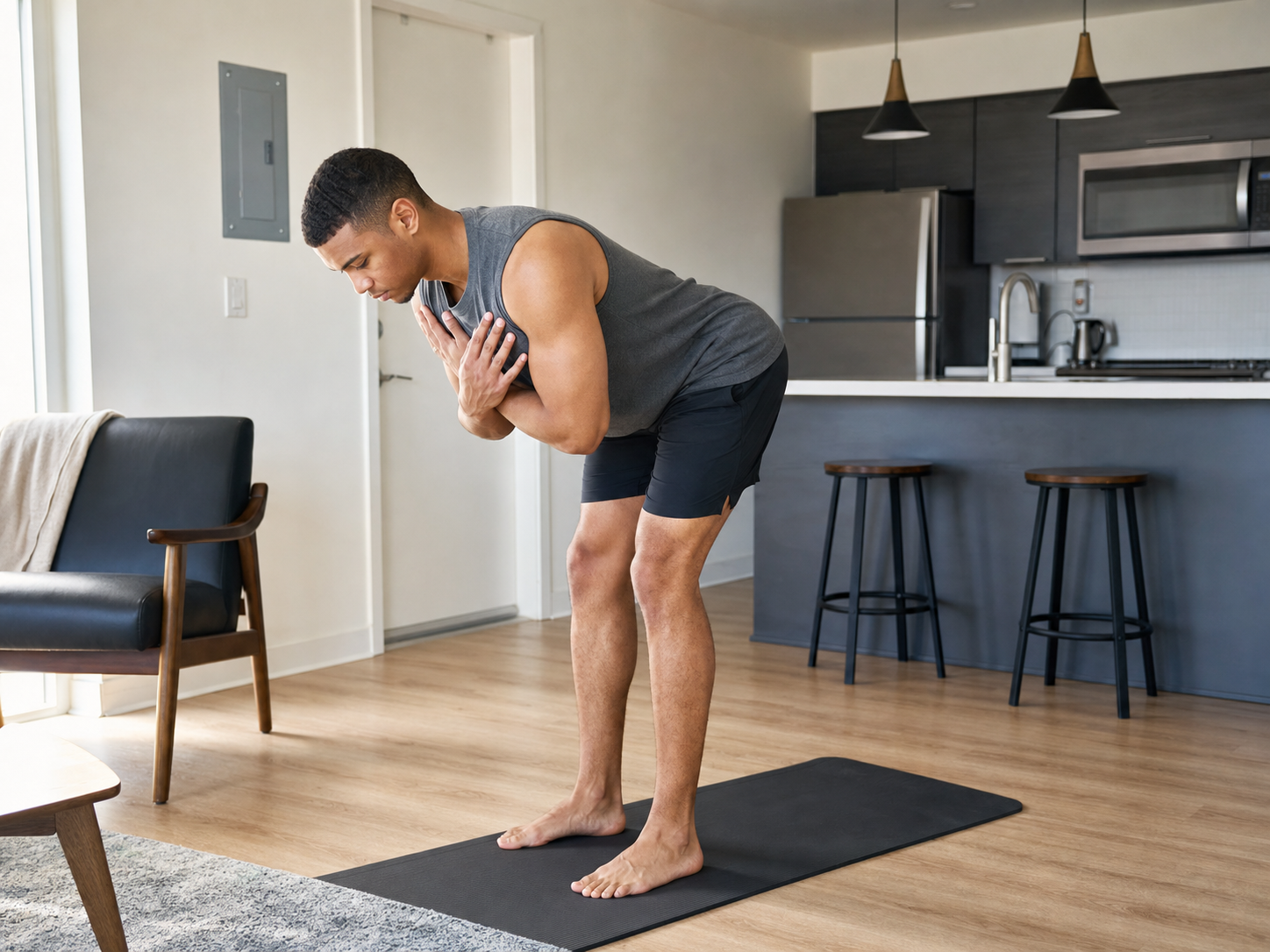
- Bodyweight hip hinge.
- Single-leg Romanian deadlift.
- Hamstring walkout.
- Slider leg curl.
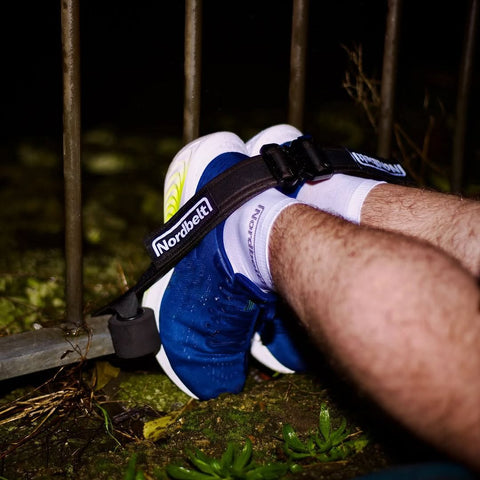
- Assisted Nordic hamstring curl.
Use the first three exercises when you are rebuilding control, returning after irritation or training during a busy playing period. Add sliders and walkouts when the basic patterns feel easy. Add assisted Nordics only when you can recover from them before your next important practice or round.
The 6 best golf hamstring exercises
Start with two or three exercises. The best choice is the one that builds strength while your swing still feels smooth the next day. Keep reps clean, stop before compensation and progress one variable at a time: range, tempo, load or weekly volume.
1. Glute bridge with hamstring pressure
Press the heels down, lift the hips and hold for two calm seconds. Keep ribs and pelvis quiet. This teaches you to extend the hip without arching the back, which is useful before adding rotation or heavier hinge work.
2. Hip hinge
Push the hips back with a long spine. This is the base pattern for stronger rotation. A golfer who can hinge well usually has an easier time loading the hips instead of turning every swing into a lower-back movement.
3. Single-leg Romanian deadlift
Move slowly from the hip and keep the pelvis level. Depth matters less than control. Use a club, wall or light support if balance steals attention from the hamstring. The aim is steady weight transfer, not a circus-style balance test.
4. Hamstring walkout
Walk the feet away from a bridge position in small steps and stop before the back takes over. This adds eccentric demand without making the exercise too technical. Keep the movement slow enough that you can still breathe normally.

5. Slider leg curl
Pull the heels in and slide slowly back out while the hips stay steady. Sliders are useful for golfers because you can scale the range easily. Begin with short partial reps, then lengthen the slide as control improves.
6. Assisted Nordic hamstring curl
Fix the ankles low, lower slowly and use the hands to return. Exercise choice and progression matter because hamstring adaptations differ by exercise (Bourne et al., 2018). For golf, assisted reps are usually more useful than forced full-range reps that leave you sore and change your swing the next day.
Nordic hamstring for golf: when does it fit?
Nordics can be useful for golfers, but most evidence comes from field sports, so do not treat them as a guarantee (Petersen et al., 2011; van der Horst et al., 2015). Use them as a small weekly strength dose and review the technique guide to the Nordic hamstring curl.
- Start once per week.
- Use 2 sets of 3 to 5 assisted reps.
- Lower for about three seconds.
- Keep heavy Nordics away from important rounds.
Progress Nordics only when your next-day movement still feels normal. Add one repetition before adding another set. If the exercise creates cramp, sharp pain or a swing that feels guarded, return to sliders or walkouts for two weeks and rebuild more gradually.
Golf hamstring training in a week plan
An active warm-up matters. Golf warm-up research generally favours dynamic and resistance-based warm-ups over static stretching alone (Ehlert and Wilson, 2019). A simple weekly plan keeps hard strength away from the moments when you need touch, speed and timing.
- Monday: light strength block with bridge, hinge and slider work.
- Tuesday: range or technique with a short dynamic warm-up.
- Thursday: low-volume Nordic or single-leg work if recovery is good.
- Weekend: round or match with only a short active warm-up.
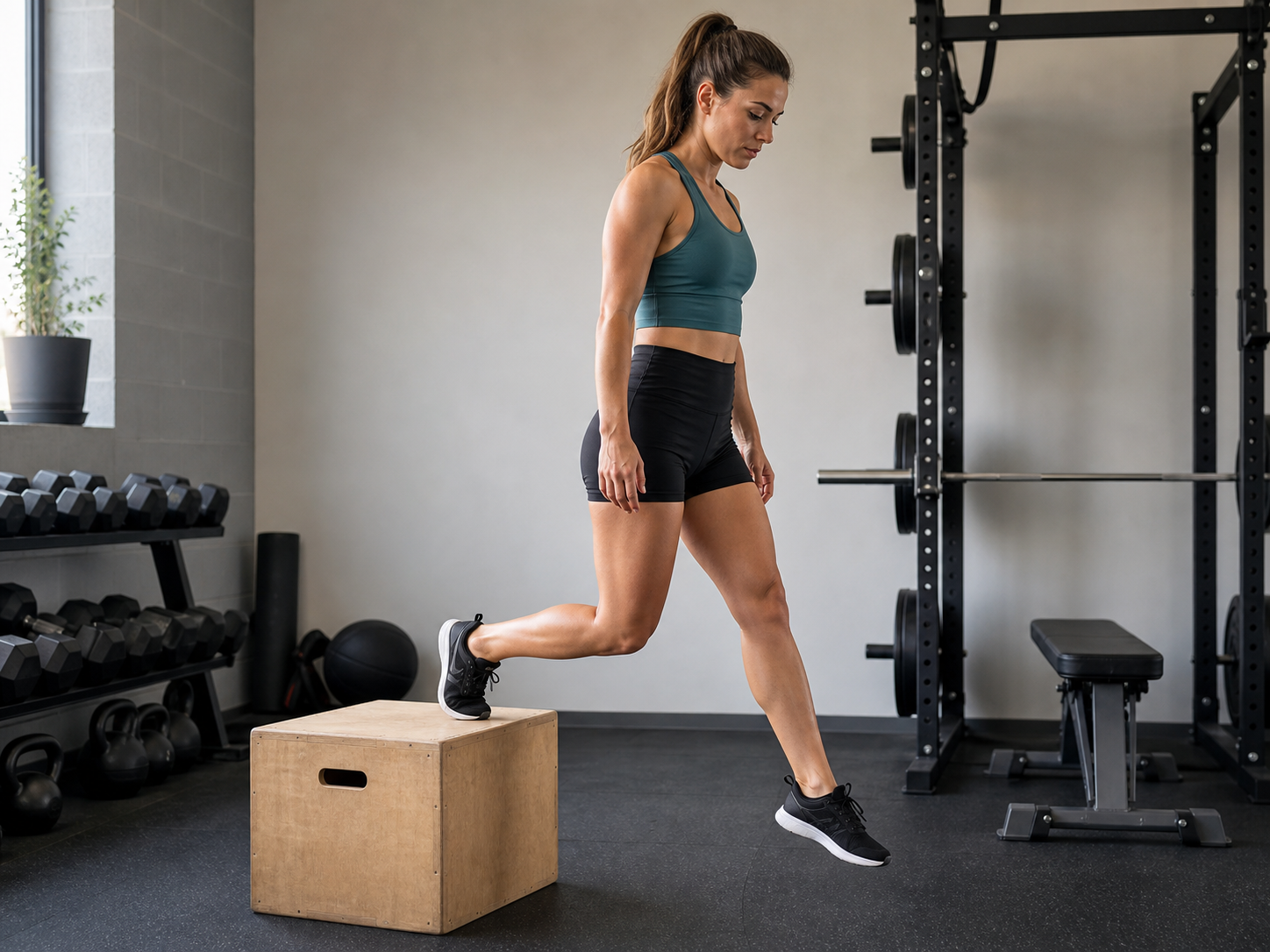
For a short warm-up, use five to eight minutes: brisk walking, hip hinges, bodyweight lunges, gentle rotation and two or three smooth practice swings. Save long static holds for after play or a separate mobility block, especially if you notice they make the first tee shots feel slow.
Reducing hamstring injury risk in golf without false certainty
No exercise list removes all risk. Build volume gradually, stop sharp pain and use the how-to guide if you want a stable setup. View Nordbelt.
Watch the total week, not only the gym session. A long range session, a hilly walking round, speed work and new hamstring strength work can add up quickly. Keep two easier days after the first Nordic session and treat mild muscle soreness differently from sudden pain, bruising or a clear loss of power. When symptoms are sharp, repeated or linked to a previous tear, get individual medical or physiotherapy advice.
FAQ
Which hamstring exercises for golf matter most?
Hinges, single-leg RDLs, slider curls, walkouts and assisted Nordics give most golfers enough strength work without making training complicated. Start with the exercise you can control cleanly and progress only when your swing still feels normal the next day.
Does the Nordic hamstring curl fit golf?
Yes, as a later progression. First build bridge, hinge and slider control, then add low-volume assisted Nordics. For many recreational golfers, one small Nordic dose per week is enough during the playing season.
How often should golfers train hamstrings?
One to two times per week is enough for most recreational golfers. Keep the hardest work at least 48 hours from an important round and place easier control exercises closer to practice days.
Can hamstring training prevent every golf injury?
No. It can support preparation, but technique, recovery, previous injury, hip mobility and total load also matter. Think of hamstring training as one layer in a broader golf preparation plan, not a guarantee.