


Hamstring exercises for tight hamstrings: move easier and build strength


“Nordbelt is easy to secure and feels stable.”
Hamstring exercises for tight hamstrings work best when you do more than stretch harder. First identify which stimulus is missing. Tightness can come from low movement, long sitting, heavy training, limited strength at longer muscle lengths, or simply a progression step that was too large. Start with calm mobility, add controlled strength, and test heavier options such as sliders or assisted Nordic hamstring curls only when your next-day response is normal. That approach helps the hamstrings feel easier without turning every session into a maximal stretch test.
In short
Tight hamstrings usually need a mix of movement, strengthening and careful dosage. Stretching can feel useful for a short time, but strength through a larger controlled range often changes the feeling more reliably. Research on stretching suggests that range of motion can improve when the dose and context are appropriate (Medeiros et al., 2020). Eccentric hamstring work can also support strength and adaptation, provided that the progression is calm enough (Ripley et al., 2021).
If your main question is whether to stretch or strengthen, start with the stretch-or-strength guide. If you want a broader exercise list, use the main hamstring exercise guide. This article focuses on the practical exercise order for tight hamstrings.
Stretch or strengthen tight hamstrings?
The question is important because a tight feeling does not always mean the muscle is physically short. Sometimes the nervous system is protecting you after too much load. Sometimes you lack control near end range. Sometimes there is very little variety in the week: a lot of sitting, little hip movement, then one heavy training session.
- If movement feels better after a few minutes, start with mobility.
- If long stretching feels good briefly but tightness keeps returning, add strength.
- If an exercise feels sharp, pinchy or very different side to side, make the step smaller.
- If walking or stairs are clearly worse the next day, lower the dose.
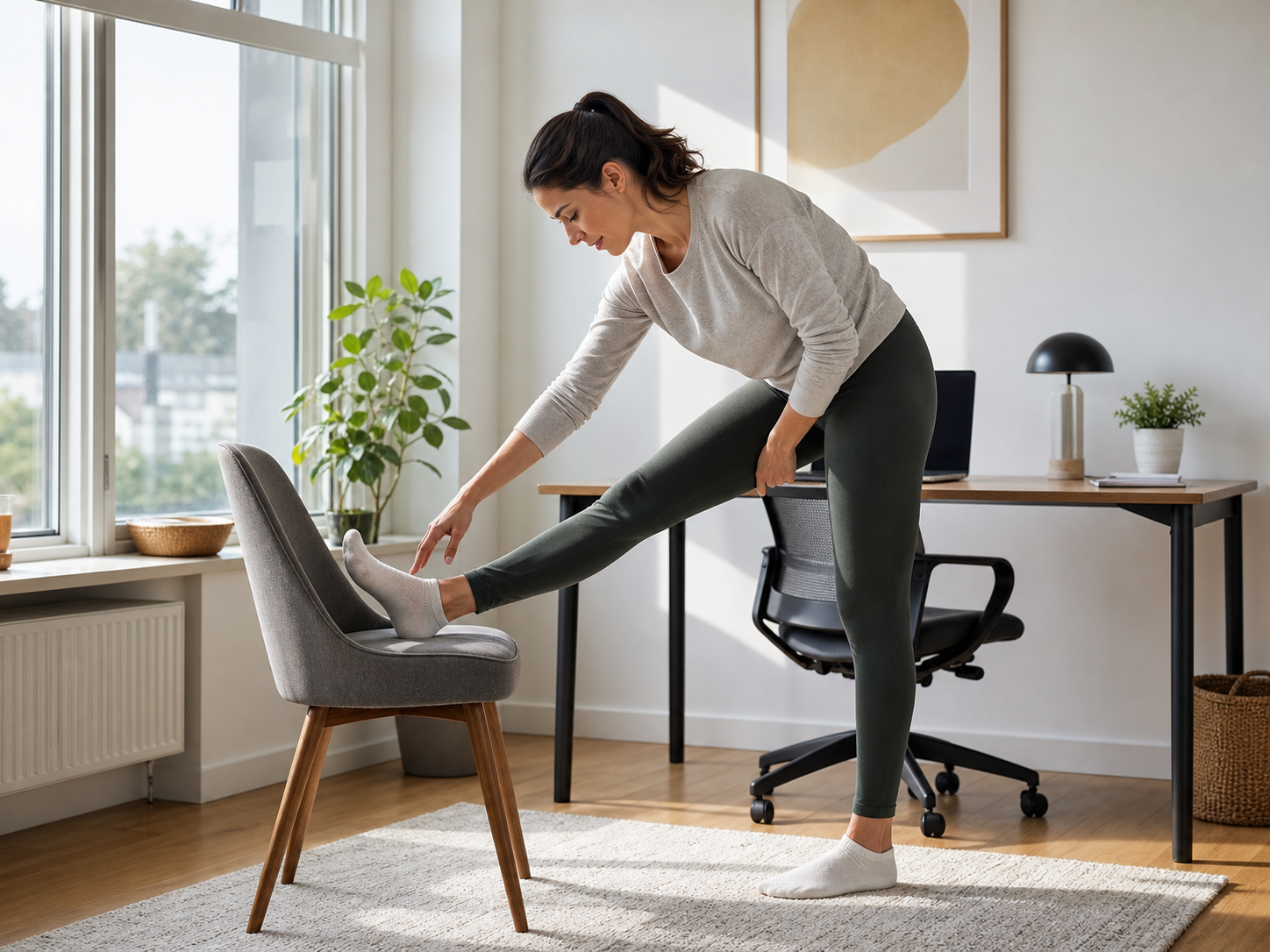
Stretching is not wrong. It is simply rarely the whole plan. For many people, a short mobility block at the start of the day or before training works best when paired with two or three strength exposures per week. With acute pain, a clear strain or a sudden loss of function, use a more cautious plan or get individual advice.

7 exercises for tight hamstrings
These exercises move from light to heavier. Choose three at first and repeat them for two weeks before adding more.
1. Hip hinge without load
Stand with your feet hip-width apart, soften your knees and move your hips back. Keep your spine long and stop when the hamstrings give clear tension without pain. Return smoothly. Two sets of eight calm repetitions are enough for the first sessions.
2. Hamstring sweep
Place one heel slightly in front, keep the knee almost straight and sweep your hands toward the shin. Alternate sides. Keep the motion short and fluid rather than holding the deepest position. This is useful before training or after long sitting.
3. Heel-drive bridge
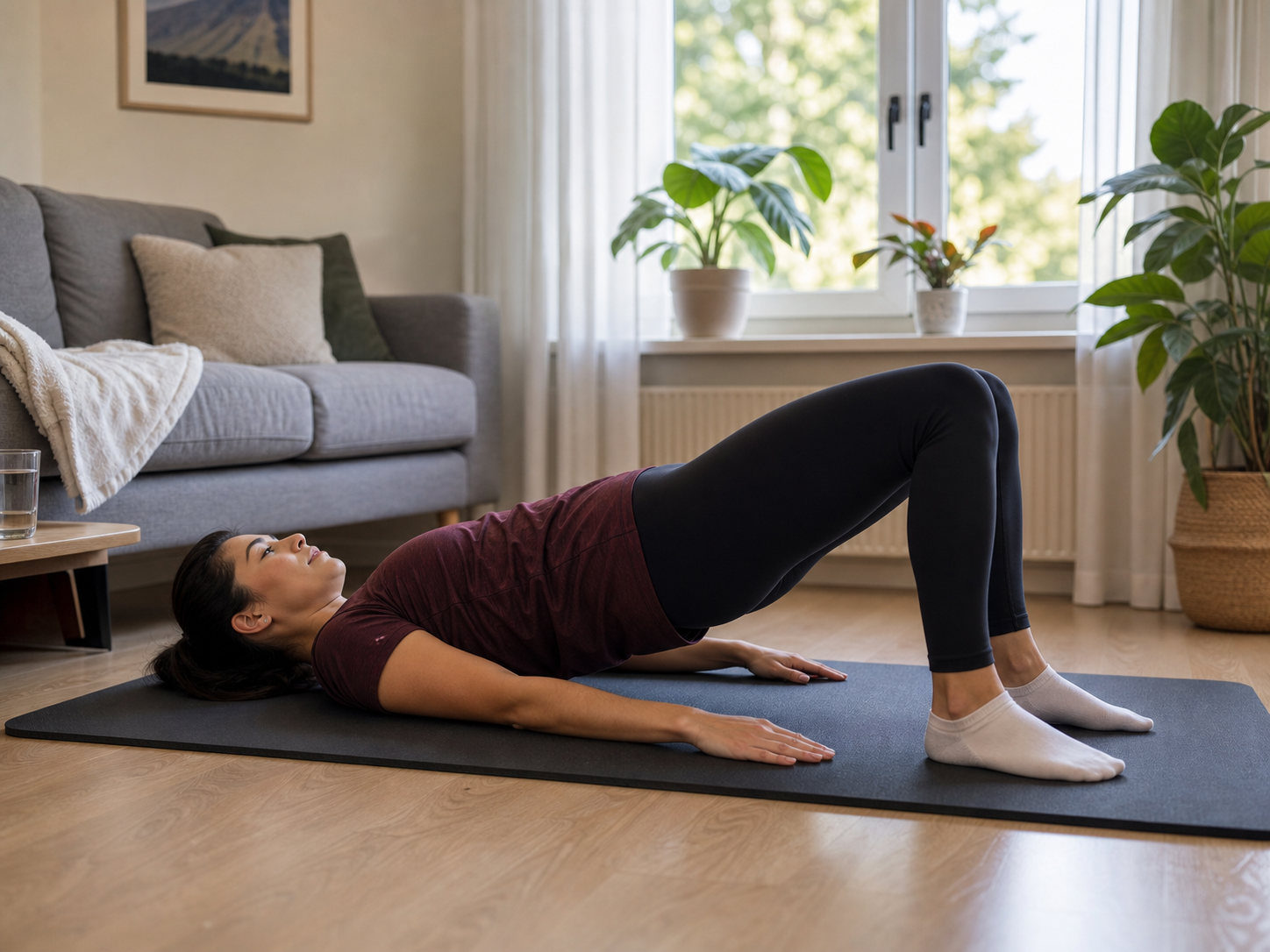
Lie on your back with knees bent. Drive through your heels, lift your hips and hold the top for two seconds. If your lower back takes over, reduce the height. The goal is hamstring and glute tension without a deep stretch.
4. Walkout bridge
Start in a bridge and walk your heels away one small step at a time. Keep the hips high as long as control stays clean, then walk back. This strengthens the hamstrings in a longer position without jumping directly to a heavy curl.
5. Short-range slider curl
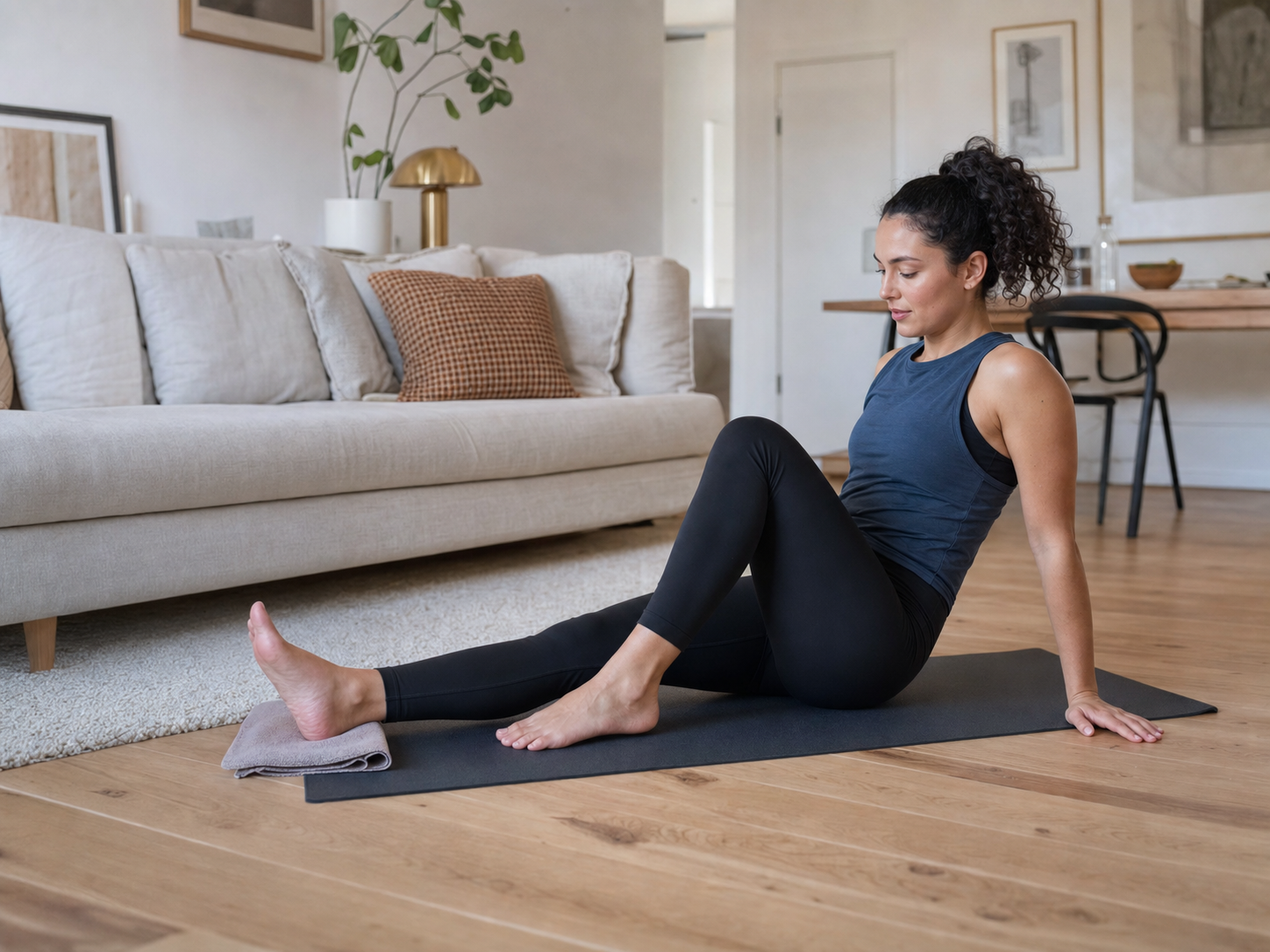
Use sliders or a smooth cloth. Start with the hips low or slightly lifted and slide the heels away slowly. Pull back without arching the lower back. This is often the first real bridge from mobility to strength. More options are in the hamstring slider exercise guide.
6. Light Romanian deadlift
Use a light dumbbell or backpack. Move from the hips rather than rounding the back. Stop at stretch tension, not maximum depth. Add load only when the next-day response stays normal.
7. Assisted Nordic hamstring curl
The Nordic hamstring curl can be valuable, but it is often too heavy as the first step for tight hamstrings. Begin with hand assistance, a band or a short range. Football research on Nordic hamstrings reported a large injury reduction when eccentric training was programmed well (Petersen et al., 2011). For technique and regressions, use the Nordic hamstring curl guide.
Take your Nordic curl from the first rep to week 10.
A concrete 7-page plan: build up week by week, without pushing too fast.
- 01A clear week-by-week progression
- 02Technique and the mistakes to avoid
- 03A simple log you will actually use

≤51%
✓Backed by research
Meta-analysis of randomised trials of the Nordic Hamstring Exercise.
Open the download page again or check the email we sent you.
Open the download page ↗When to use mobility drills
Mobility drills fit before training, after long sitting, or on a day when the first steps feel restricted. Keep the block short. The aim is to open movement, not to create fatigue.
- 8 unloaded hip hinges.
- 8 hamstring sweeps per side.
- 20 seconds of an easy bridge hold.
- 6 calm walkout bridge repetitions.
- 5 breaths in a comfortable forward fold.
If you move more easily afterward, mobility was the right first step. If the feeling returns within an hour, strength probably needs to be part of the plan. For tight hamstrings, the goal is not the deepest possible stretch, but a repeatable stimulus that your body accepts.
Build tight-hamstring exercises over three weeks
Use this structure if there is no acute injury and the main problem is a tight feeling.
Week 1: do two sessions. Choose the hip hinge, heel-drive bridge and hamstring sweep. Do two sets per exercise and keep everything easy.
Week 2: add the walkout bridge or short-range slider curls. Stay at three sets or fewer. Normal walking should still feel comfortable the next day. If not, repeat week 1.
Week 3: add light Romanian deadlifts or assisted Nordics. Choose only one heavier exercise per session. The rest stays focused on mobility and control.
For a fuller program with more variations, use the four-week at-home hamstring plan. If you later want a stable setup for controlled sliders or assisted Nordics, Nordbelt can help keep the anchor point consistent. Treat it as a way to repeat the movement more calmly, not as a reason to rush.
Make hamstrings feel easier without forcing every stretch
Hamstrings usually feel better when the order is consistent: first move, then build strength in a range you can control, then add more length or load. If you only stretch hard every day and never train strength in that position, the tight feeling often returns as soon as you run, lift or sit for a long time.
Use your reaction after the session as the main signal. A well-chosen exercise creates clear tension during the set and leaves you moving normally afterward. A step that is too large creates more tightness, less confidence or a shorter stride the next day.
For prevention work, consistency matters more than heroic single sessions. Reviews on hamstring prevention programs show that eccentric training can help, but the practical effect depends on execution and adherence (Prince et al., 2020). Make the plan simple enough to repeat.
FAQ
Which exercises for tight hamstrings work best?
Good first choices are hip hinges, hamstring sweeps, heel-drive bridges, walkout bridges, short-range slider curls and light Romanian deadlifts. Start with the versions you can tolerate well the next day, then add heavier eccentrics.
Should I stretch or strengthen my hamstrings?
Most people need both, but not at the same intensity at the same time. Mobility can open the movement. Strength helps you control and keep that range. If stretching keeps helping only briefly, add controlled strength.
Which mobility drills can I do daily?
Daily options include light hamstring sweeps, unloaded hip hinges and a comfortable forward fold with calm breathing. Keep them easy. Daily mobility should make movement feel better, not more sensitive.
How do I make tight hamstrings feel easier without pain?
Repeat small steps: short mobility, two calm strength sessions per week, and only later heavier sliders or Nordics. Stop at sharp pain and reduce range if the next day is clearly worse.
When should I stop doing hamstring exercises?
Stop or scale back when pain is sharp, when left and right suddenly feel very different, when your gait changes, or when the next-day reaction is worse than normal. Recurrent symptoms deserve individual advice from a physiotherapist or sports doctor.