

Restarting Nordic curls at home after a training break


When restarting Nordic curls at home after a training break, do not immediately return to your old range or volume, even if you previously performed them safely. First check the anchor, ankle fixation and kneeling surface, choose a shorter descent or more hand support, and assess your response during and after the session. Increase only one variable at a time. After pain, injury or unexplained loss of strength, seek an appropriate professional assessment before restarting.
Start with a new baseline, not your old level
A training break changes not only what you think you can do, but also which information is still current. Your old range of motion, support, repetition count and exercise position within the session describe an earlier situation. Treat them as history, not proof of where to start. The first restart session is therefore a baseline check: can you still organise the same home setup safely and perform an easier variation with control?
One study followed twenty recreationally active men through six weeks of Nordic training and then a period without that training. Measured biceps femoris long head fascicle length returned towards baseline within two weeks without training, while measured eccentric strength in this small study group had not demonstrably declined after four weeks. This difference mainly shows that one old performance measure does not reveal which adaptation was retained. The study does not provide a personal at-home restart programme (Presland et al., 2018).
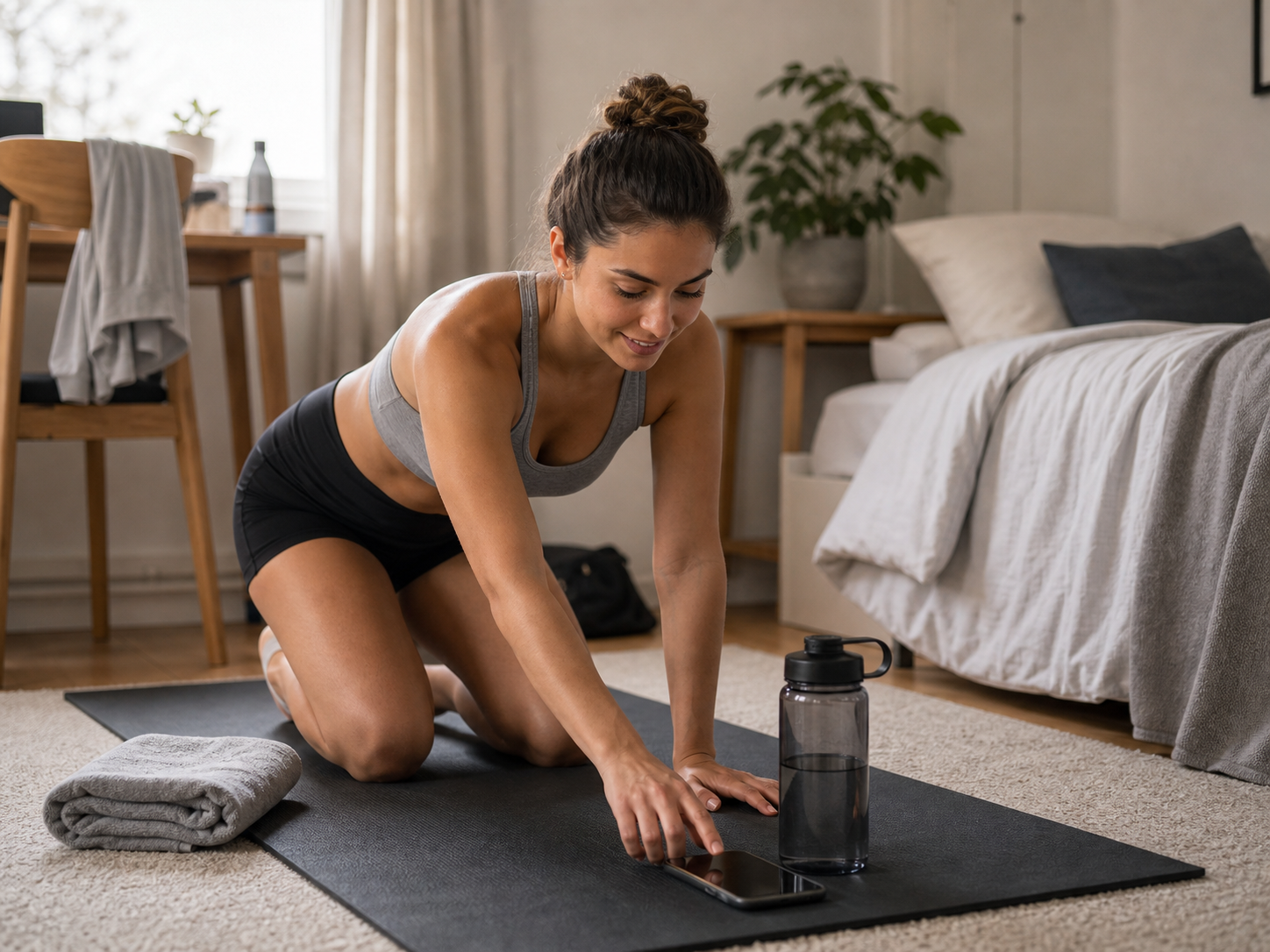
Explore this topic further: Nordic curls at home during a deload week.
First check what changed during the break
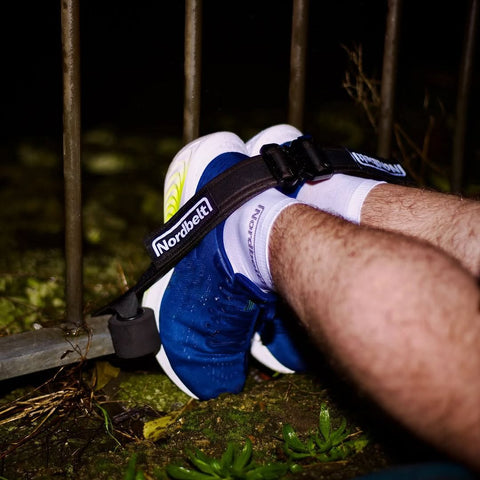
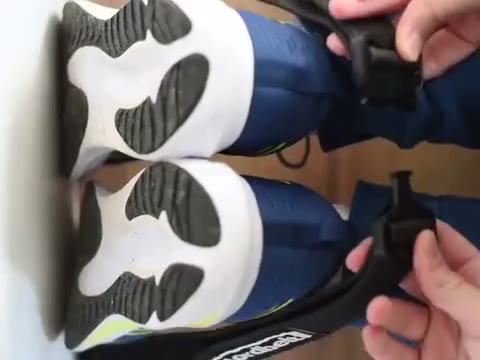
Review four points before the first repetition. Check that the anchor point is still undamaged and immovable, that both ankles can be fixed low and symmetrically, that the kneeling surface remains comfortable, and that the clear space in front of you is large enough for the chosen regression. Test the setup with your hands first and then with low, gradually applied force.
Check yourself as well. Was the break only due to a holiday, a busy period or scheduling, and are you otherwise symptom-free? Then this non-medical restart decision may be appropriate. If there was sharp pain, an injury, obvious swelling, altered sensation or unexplained loss of strength, this is not the right route for independently testing your old level.
For the full basic check, the separate guide to a safe Nordic setup at home remains the primary resource. This page deals only with the decision of how to start again after a break.
Ankle fixation for Nordic curls at home
Would you also like to add Nordic curls at home? Start with an anchor that does not move, a low and even strap position, a thick kneeling surface and a regression that lets you deliberately control the forward path. Test the fixation before every session and do not assume that a previously used setup will automatically respond in the same way.
With Nordbelt for Nordic curls at home, you can organise stable ankle fixation without a training partner or large fitness machine. That reduces practical setup friction, but it does not restore your previous load tolerance or select an appropriate range of motion or volume. The equipment does not replace an anchor check, technical control or gradual training progression.
Use the four-step Nordic restart ladder
The ladder below is an editorial decision framework based on the cited evidence and practical conditions at home. It is not a researched protocol, personal training programme or required number of sessions. Move to the next step only when the current step remains repeatable under the same conditions.
| Step | Goal | What you deliberately reduce | What must remain acceptable |
|---|---|---|---|
| 1. Setup reset | Revalidate the situation at home | No working set yet; only a hand test, kneeling position and low pulling force | Anchor, ankle fixation, knees and clear space remain stable |
| 2. Shortened entry | Rediscover a controllable descent | Range of motion, lever length or required hand support | Even deceleration without an unexpected collapse |
| 3. Repeatability | Assess the same easy variation again | No additional range, volume or difficulty | Setup and movement quality are recognisably the same |
| 4. Advance one variable | Build carefully | Only one choice changes: range, support, volume or position within the session | The other conditions remain constant and the response is acceptable |
Restart Nordic curls by changing one variable at a time
If you change the descent, hand support, number of repetitions and position in your training at the same time, you will not know afterwards which choice made the session harder. Choose one variable instead. For example, first make the path slightly longer while keeping support, setup and session position the same. Or keep the path unchanged and adjust only the volume by a limited amount. Feeling comfortable during the first repetition is not a reason to restore every previous choice at once.
A randomised study of 45 resistance-trained men first examined two weeks with 48 Nordic repetitions per week and then eight weeks with four or eight repetitions per week. Measured strength and muscle architecture adaptations were largely maintained in those specific groups at the lower follow-up volume. This supports the idea that more volume is not automatically necessary to retain every earlier adaptation, but the supramaximal protocol used is not a home programme and does not indicate which starting point is right for you (Miura & Miyamoto, 2025).
For complete technique and regressions, use the general guide to the Nordic hamstring curl. If you recognise a technical error, first check the separate explanation of common Nordic curl mistakes instead of adding more repetitions.
Restarting Nordic curls after a holiday: assess three moments
Do not assess only the repetition itself. Use three fixed moments to decide whether to repeat the same step, go back or move one step forward:
- Before the session: the setup, kneeling surface, clear space and your symptom status are suitable.
- During the session: you can control the chosen regression without unexpectedly collapsing, a moving anchor or sharp pain.
- After the session and the next day: note whether the response matches what you expected beforehand and whether everyday movements remain normal.
A training response does not have to be completely absent, but it is not a contest you have to overcome either. Repeat the same step if the information is still unclear. Go back if control or the setup became less stable. Stop and have your situation assessed if you experience sharp or increasing pain, visible swelling, loss of sensation, clear loss of strength or symptoms you cannot explain.
Only then choose its position in your home session
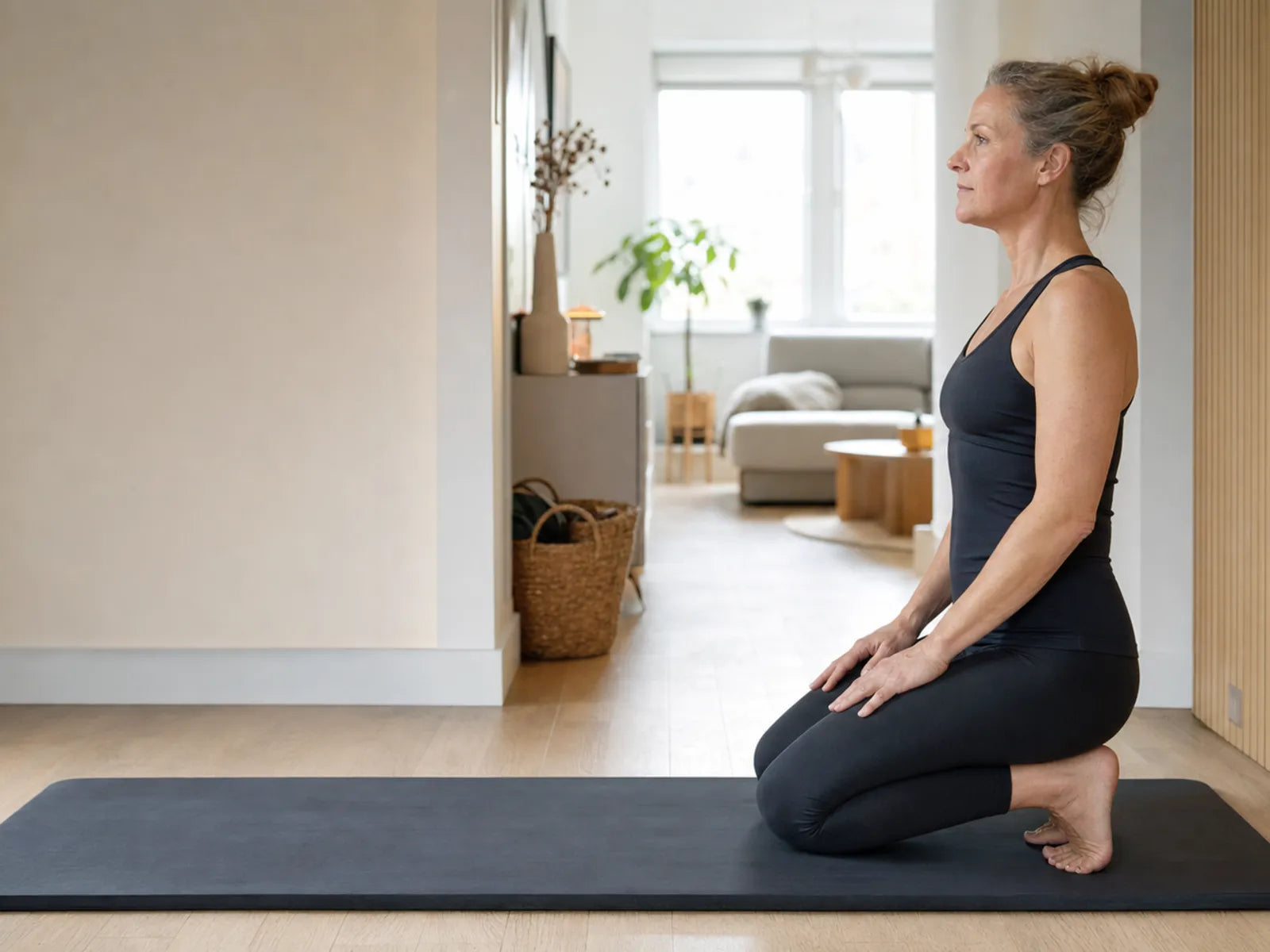
After a break, a main block is not automatically better than a finisher. Early in the session you are generally fresher and can observe the restart variation more accurately. Later in the session, fatigue can obscure the comparison with your baseline. Keep the first restart sessions in a consistent position, and do not change that position at the same time as range or volume.
Once the easy variation is repeatable, the separate decision guide to Nordic curls as a main block or finisher can help with the next programming step. If you also want to choose your main goal again, use the guide to Nordic curls for strength or muscle growth at home. The restart itself does not need to solve both decisions yet.
When are you back to your old level?
Your old level is not a date or a single record. It is a set of conditions: the same setup, a comparable range of motion, recognisable movement quality and a training response that fits your wider plan. Only when those conditions are repeatable again can you fairly compare with data from before the break.
Avoid a deadline such as “everything must be back after two sessions”. The two cited studies measured specific groups, protocols and outcomes; they do not provide a universal recovery time after a break. Apply their central lesson conservatively: different adaptations may respond differently to stopping or reduced volume, so reconfirm your movement and load tolerance step by step instead of copying an old number (Presland et al., 2018; Miura & Miyamoto, 2025).
If you want to calmly review the strap, door and starting position beforehand, use the Nordbelt guide to Nordic curls at home. Treat that setup check as a condition for training, not as proof that your old range or volume is already appropriate.
Frequently asked questions
How long should you build up more gradually after a training break?
There is no universal number of days or sessions. The duration depends on the length and reason for the break, your previous experience, the chosen regression and your response. Repeat a step of the restart ladder until the setup and movement remain recognisable under the same conditions. Then increase only one variable.
Can you immediately do your old number of Nordic curls after a holiday?
That is not a safe default assumption. Use your old number as historical information and start with an easier, controllable baseline check. A shorter descent or more hand support provides information about your current movement without requiring you to prove both your old range and your old volume at the same time.
What should you change first when restarting Nordic curls at home?
Start with the setup reset and then choose a controllable movement path. Next, change only one factor: range, support, volume or position within the session. This keeps it clear which adjustment made the exercise harder and lets you make a fair comparison in the next session.
Is muscle soreness after the first restart session normal?
A training response can occur after a restart, but muscle sensation alone does not show whether you chose the right load. Also assess movement control, everyday movements and how the response develops. Stop with sharp or increasing pain, swelling, altered sensation or clear loss of strength, and have unexplained symptoms assessed.
When should you not restart Nordic curls independently?
Do not restart independently if the break was linked to an injury, sharp pain or an unexplained change in function, or if you now have new swelling, loss of sensation or clear loss of strength. The decision then falls outside this non-medical restart page, and assessment by an appropriate healthcare professional is more sensible before testing your old load.