

Exercise snacks and strength training: what can short bouts do?

Exercise snacks and strength training can sit alongside each other. Short bouts of movement may help you fit activity into a busy day, but their duration does not tell you what training stimulus they provide. Start with your goal: moving more, improving fitness, muscular endurance or getting stronger. Below, compare what research actually measured and map the moments you can use. A few scattered minutes should not automatically count as a replacement for planned strength training.
What exactly are exercise snacks?
Exercise snacks are short bouts of activity spread throughout the day. The term tells you little about the exercise, effort or recovery involved. A review of 32 studies and research registrations found varied definitions, with research mainly involving inactive but otherwise healthy adults. That makes it inappropriate to treat every short activity as one proven training method Jones et al., 2024.
First separate distributing activity from designing a training programme. A short walk and a demanding exercise set are different tasks. Both can fit a brief time slot, but you judge them against different goals. For movement during desk work, see the separate guide to hamstring exercises for people working from home. This article concerns whole-body training expectations, rather than another list of desk exercises.
Which goal fits short bouts of movement?
Use this table to clarify your question. The final column helps you decide what to monitor; these are editorial decision prompts, not a validated test or an individual exercise prescription. Improvement in one area does not automatically establish improvement in another.
| Your goal | What does the research say? | What do you need to clarify? |
|---|---|---|
| Moving more | Short activities proved feasible in various small studies, although definitions and participants differed Jones et al., 2024. | When can I actually do a suitable activity? |
| Cardiorespiratory fitness | A review of 11 randomised trials involving 414 inactive participants found improved fitness in adults, with moderate-certainty evidence Rodríguez et al., 2026. | Does the chosen effort suit my fitness goal and starting point? |
| Muscular endurance | The same review found improvement in older adults, but with very low-certainty evidence Rodríguez et al., 2026. | Do I mean repeating a movement for longer, or producing more force? |
| Muscle strength | Separate strength outcomes remain uncertain; a recent analysis rated the evidence for the muscle functions studied as low certainty Wang et al., 2026. | Which exercise, resistance and repeatable technique do I want to develop? |
The fitness review compared exercise snacks with non-exercising controls. It does not show that scattered activity bouts deliver the same benefits as a well-structured strength session. Nor does the fitness improvement guarantee the same result for someone who already trains regularly Rodríguez et al., 2026.
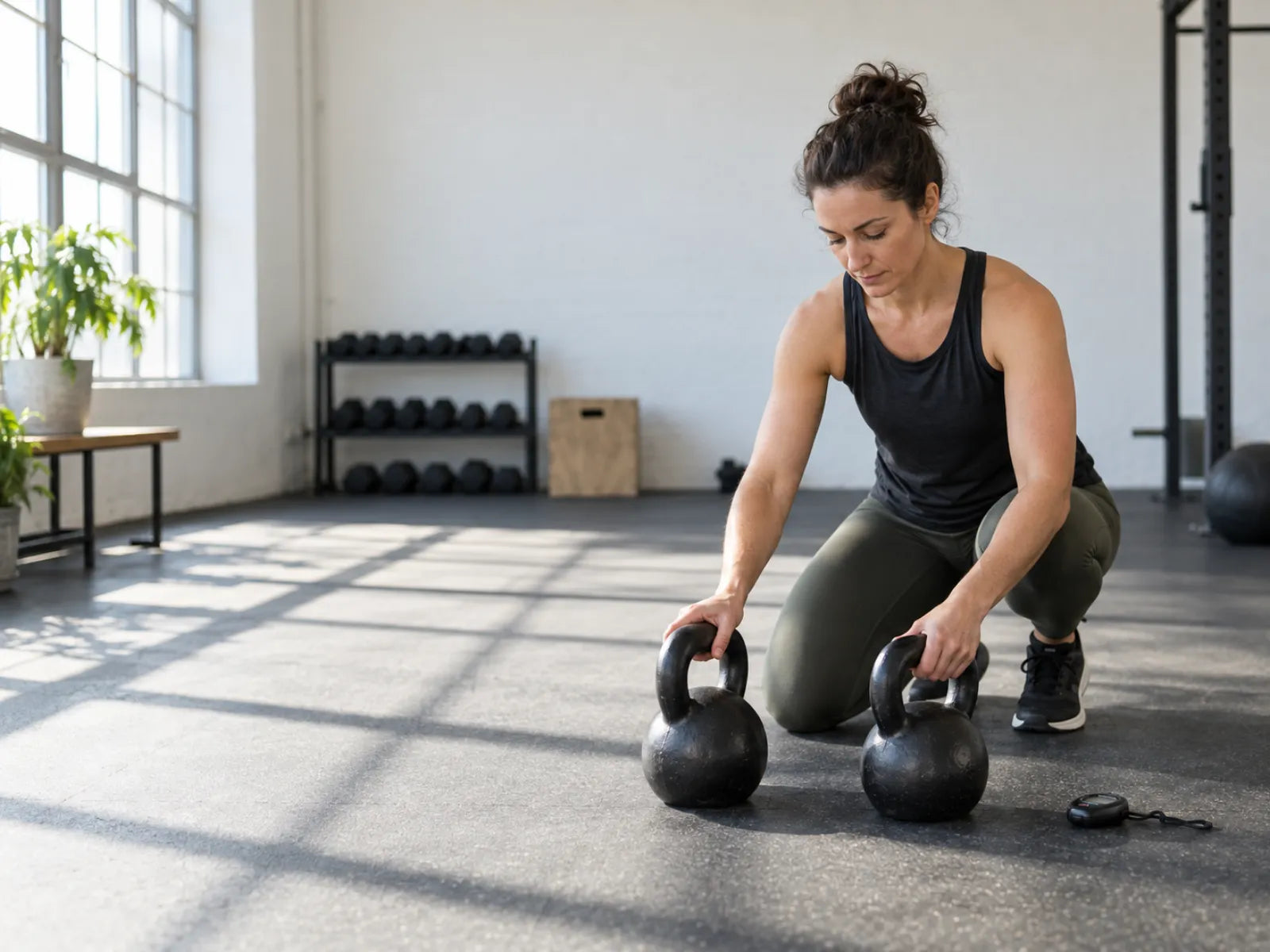
Illustrative training-preparation scene. A stopwatch does not make a set a proven exercise snack; no repetition is being performed in this image.

When is planned strength training still useful?
If getting stronger is your goal, you need more information than the number of spare minutes. Record the movement you practise, the resistance or variation you use and what you want to repeat later. A planned session does not have to be long. The distinction lies in its purpose and progression, not a magical duration threshold.
A study of 36 healthy young adults distributed maximal eccentric elbow-flexor contractions across different weekly patterns. After four weeks, strength improved only in the group performing small numbers on five days. This was a precisely defined upper-arm task, not a test of arbitrary short workouts, complete leg training or daily Nordic curls Yoshida et al., 2022.
You can therefore explore whether an existing, suitable programme is practical to divide up, but cannot simply convert minutes into equivalent training. Keep preparation, technique, resistance and recovery identifiable in your plan. To choose specific exercises, use the guide to training your legs at home without machines. This page does not add a competing weekly schedule.
Take your Nordic curl from the first rep to week 10.
A concrete 7-page plan: build up week by week, without pushing too fast.
- 01A clear week-by-week progression
- 02Technique and the mistakes to avoid
- 03A simple log you will actually use

≤51%
✓Backed by research
Van Dyk et al., 2019: meta-analysis of programmes with NHE. Not an effect test of Nordbelt or this protocol.
Open the download page again or check the email we sent you.
Open the download page ↗Map the moments you actually have
Fill in the blank rows first. Include only time that is truly available, allowing for setting up and putting equipment away. Then decide whether the slot suits ordinary movement or an exercise you have already selected. Leave a cell empty if you are rushed or lack a suitable space. This map organises availability; it does not establish an optimal dose.
| A genuinely available moment | Space, clothing and equipment | A task within my current abilities | What will I record afterwards? |
|---|---|---|---|
| My first opportunity: … | … | … | Completed, adapted or skipped: … |
| A possible later opportunity: … | … | … | What did or did not fit: … |
| Time for a planned session: … | … | … | Technique and chosen load: … |
Also write down what you need before the activity can begin: clear floor space, suitable clothing or equipment already in place. This lets you compare available time with the whole task. An empty calendar slot is not always a usable training opportunity.
Judge the map by both feasibility and purpose. More completed cells do not automatically mean better training. Allow room to begin a movement calmly and stop when its execution is unsuitable. A short slot is not a reason to skip a warm-up or start with maximal effort.
Does separate hamstring training fit your plan?
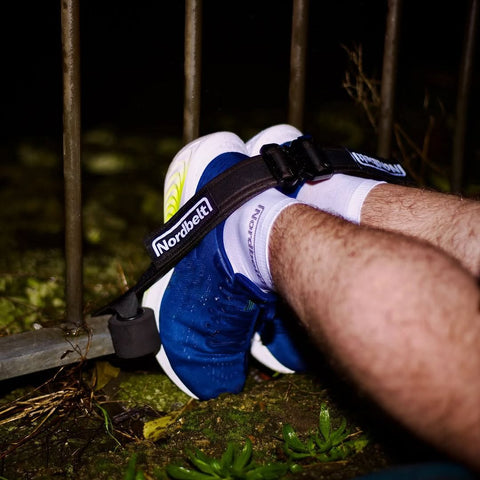
Short movement breaks do not require a special device. Only if you independently choose Nordic curls at home might Nordbelt ankle fixation make the setup practical without a training partner or large gym machine. It secures both ankles to a suitable, checked anchor point. The product is not a proven micro-workout method and does not determine a training dose. Read the Nordic hamstring curl guide before deciding whether the exercise belongs in your existing training.
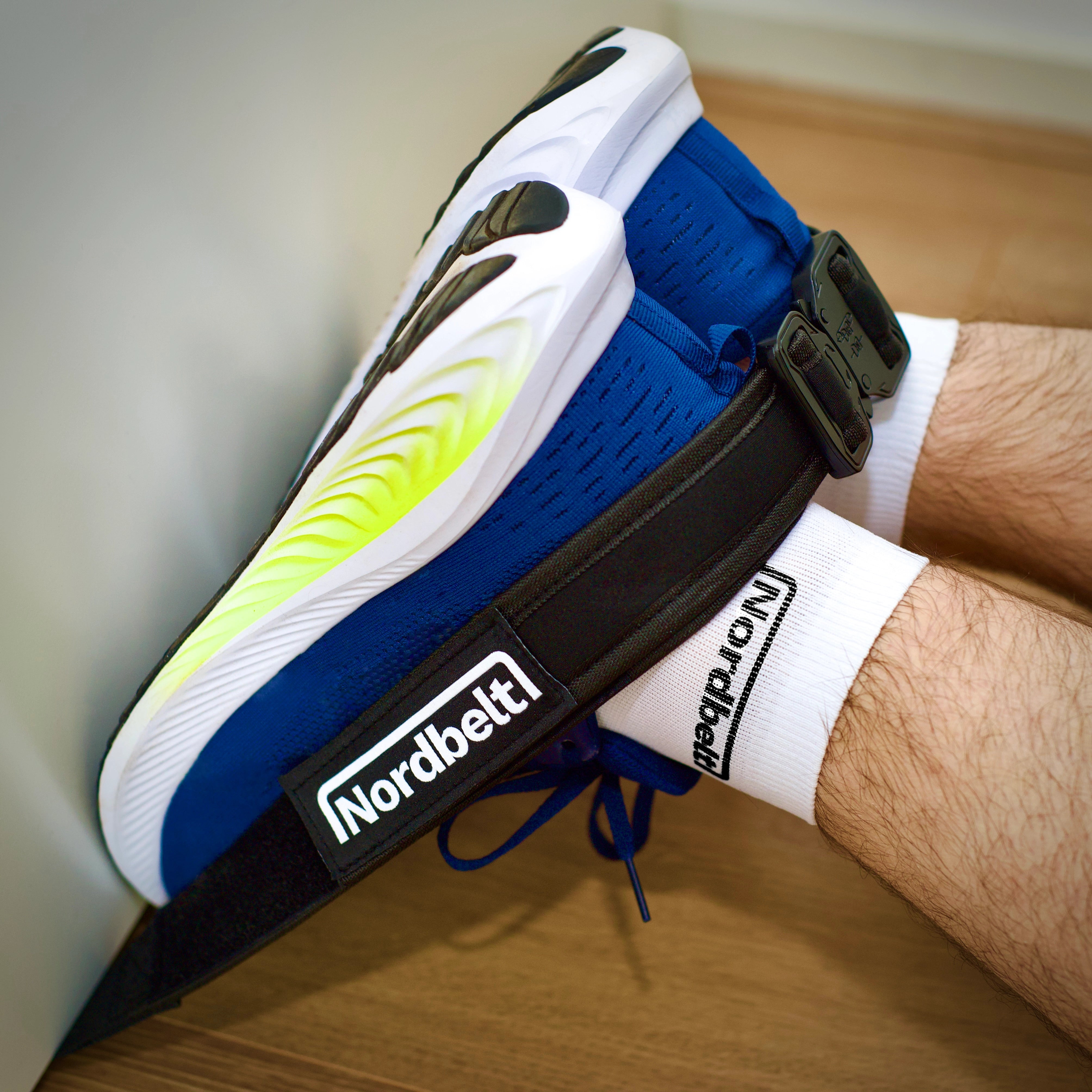
Equipment detail for a separately chosen Nordic setup. The anchor point and complete exercise position are outside the frame.
Two fictional examples using the same map
These invented examples illustrate the decisions. They describe no customers, measured results or tested programmes. Both people start with their own goal and available space; neither uses a calculation that turns scattered minutes into a gym session.
Mila mainly wants to move more. A long training block rarely fits her day. Her map contains two possible short opportunities, but one often disappears. She chooses the time that is genuinely available and notes whether her activity happened. She treats this as a practical change to her day, without concluding that her maximum strength or muscle mass increased. If her goal changes later, she reassesses the activity too.
Daan wants to become stronger in an existing exercise. Beside his available slot, he records the variation, resistance and technique he already uses. On a busy day, he considers which parts of the plan remain feasible, including preparation. If the setup does not fit, he chooses another time. A walk counts as movement, but not as a completed strength set. He compares the same exercise under similar conditions rather than only the minutes in his calendar.
Their key difference is the question they start with. Mila wants a feasible activity; Daan wants to organise a chosen strength stimulus. Neither has to fill every free minute. An empty cell can reveal where expectations do not fit the day.
Frequently asked questions
Are exercise snacks as good as a full strength workout?
That has not been established for arbitrary short activity bouts. Studies differ in exercises, participants, intensity and outcomes. The fitness analysis used non-exercising controls, not an equivalent strength session. A non-significant strength effect also does not prove that every short strength programme is ineffective. The narrower conclusion is to avoid making a general replacement claim from these studies Rodríguez et al., 2026.
Can short daily strength sessions make me stronger?
It depends on what you actually do. The upper-arm study shows that a specific distributed programme can improve strength; it gives no minimum prescription for the whole body. The recent analysis of nine studies involving 313 insufficiently active adults found a small combined effect on neuromuscular performance, while separate effects on strength, power and function remained uncertain. Choose a goal-led plan rather than duration alone Yoshida et al., 2022; Wang et al., 2026.
How many minutes should an exercise snack last?
These sources provide no universal personal minimum. One review defined snacks as bouts of no more than five minutes, at least twice daily. That was a criterion for selecting studies, not a prescription that works for everyone. Consider activity, intensity, starting level and purpose. A slot without time to begin calmly or set up safely is not automatically suitable for an exercise set Rodríguez et al., 2026.
Must a short workout always be hard?
No. Short duration does not prescribe intensity. Effort varied across the programmes studied; an easy walk and near-maximal exertion are not interchangeable. Choose something within your current capabilities and do not treat brief bouts as an exemption from preparation. Stop if you experience pain, dizziness or unusual breathlessness. With a health condition or uncertainty about your capacity, seek individual advice Jones et al., 2024.
How can I tell whether my approach is helping?
Start with the outcome you mean. For a feasible routine, record whether the activity actually took place. For strength, compare the same relevant exercise and technique; starting a timer more often is insufficient. Do not use a daily map as a medical test or proof of muscle growth. If your goal changes, your way of assessing progress must change too. A few completed opportunities do not justify a result label.