Calisthenics exercises for beginners: choose your starting point

Calisthenics exercises for beginners are bodyweight exercises adapted to your current level. For your first workout, choose a pushing movement, a pulling movement, a leg exercise and an exercise for core control. You could start with wall push-ups, a simple row on a suitable fixed bar, a squat to a chair and a bird-dog. If you have nowhere safe to pull, arrange a suitable setup first. A mat alone does not provide a complete pulling option.
Which calisthenics exercises suit your starting point?
You do not need to start with pull-ups, dips or a handstand. Choose a variation you can perform calmly and return from under control. Use this guide before collecting a long list of exercises.
| Pattern | Simple starting point | Choose an easier variation when… |
|---|---|---|
| Push | Wall push-up | Your hips sag or you fall forwards without control |
| Pull | A row on a suitable fixed bar | You can only pull yourself up with a jerk |
| Legs | Squat to a sturdy chair | You drop onto the seat or lose your balance |
| Core | Extend one arm or leg from hands and knees | Your pelvis rotates or your lower back arches further |
This is an editorial framework for choosing your level, not a tested training protocol. A harder variation is only useful when you can still control how you perform it.
Pushing: from the wall to a lower support
Place your hands slightly wider than your shoulders against the wall. Step back far enough to keep your body straight. Bend your elbows to bring your chest towards the wall and push back calmly. Keep your head, torso and hips roughly in line; do not let your abdomen hang forwards.
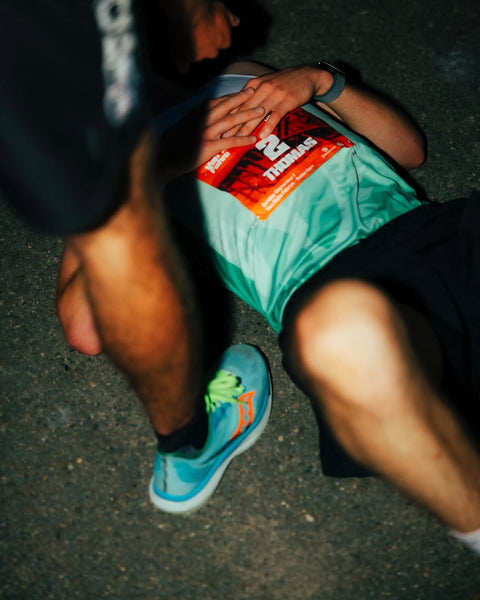
Once that is controlled, try a lower fixed support designed to take the load. A kneeling push-up is another intermediate step, as shown in the opening photo. Do not use a wheeled chair or a loose table edge as a pushing support. Change the height or the variation without changing everything else in your session at the same time.
Pulling: the setup is part of the exercise
A row brings your chest towards a fixed bar while your feet remain on the ground. Grip the bar, keep your body moving as a unit, bend your elbows and pull towards the bar under control. Then lower yourself back calmly. Choose a body angle that lets you do this without jerking; a more upright position can be a useful first variation.
Use a purpose-built, correctly installed bar or training setup, following its instructions. Do not hang under an ordinary table or trap a towel in a door. If you have no suitable pulling station at home, practise the other patterns and plan your pulling work at a suitable bar in an outdoor fitness area or gym. In that case, do not yet call the session a complete push-and-pull workout.
Legs: keep the first choice simple
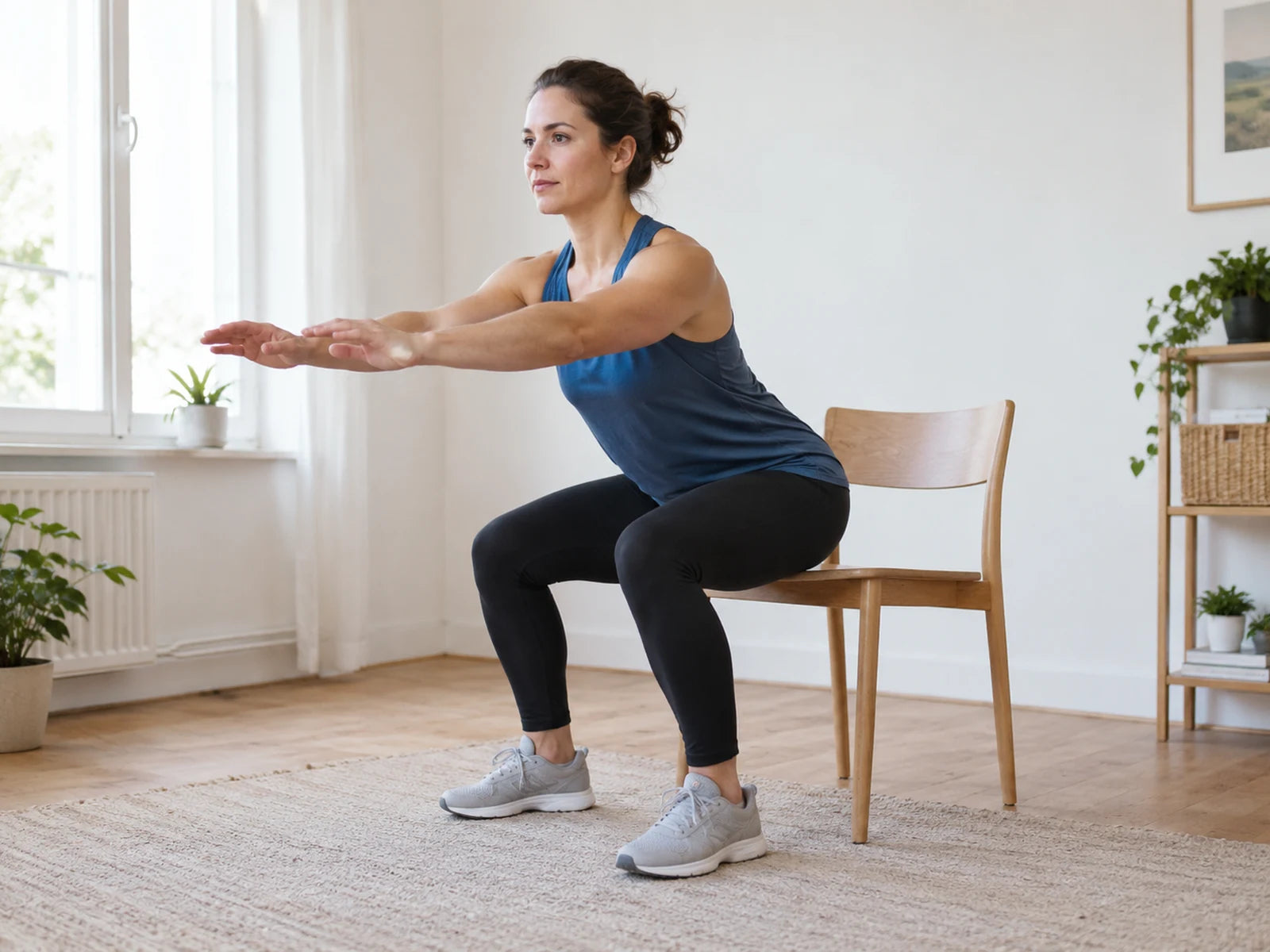
Stand in front of a sturdy chair that will not slide. Bend your hips and knees, touch the seat under control and stand up again. Choose a height that does not make you drop down. The photo shows the exercise setting; it does not prove that every chair is suitable.
For more leg variations and a fuller lower-body plan, see training legs at home without equipment. Here, the leg exercise remains one part of a whole-body session.
Core: control first, then longer levers
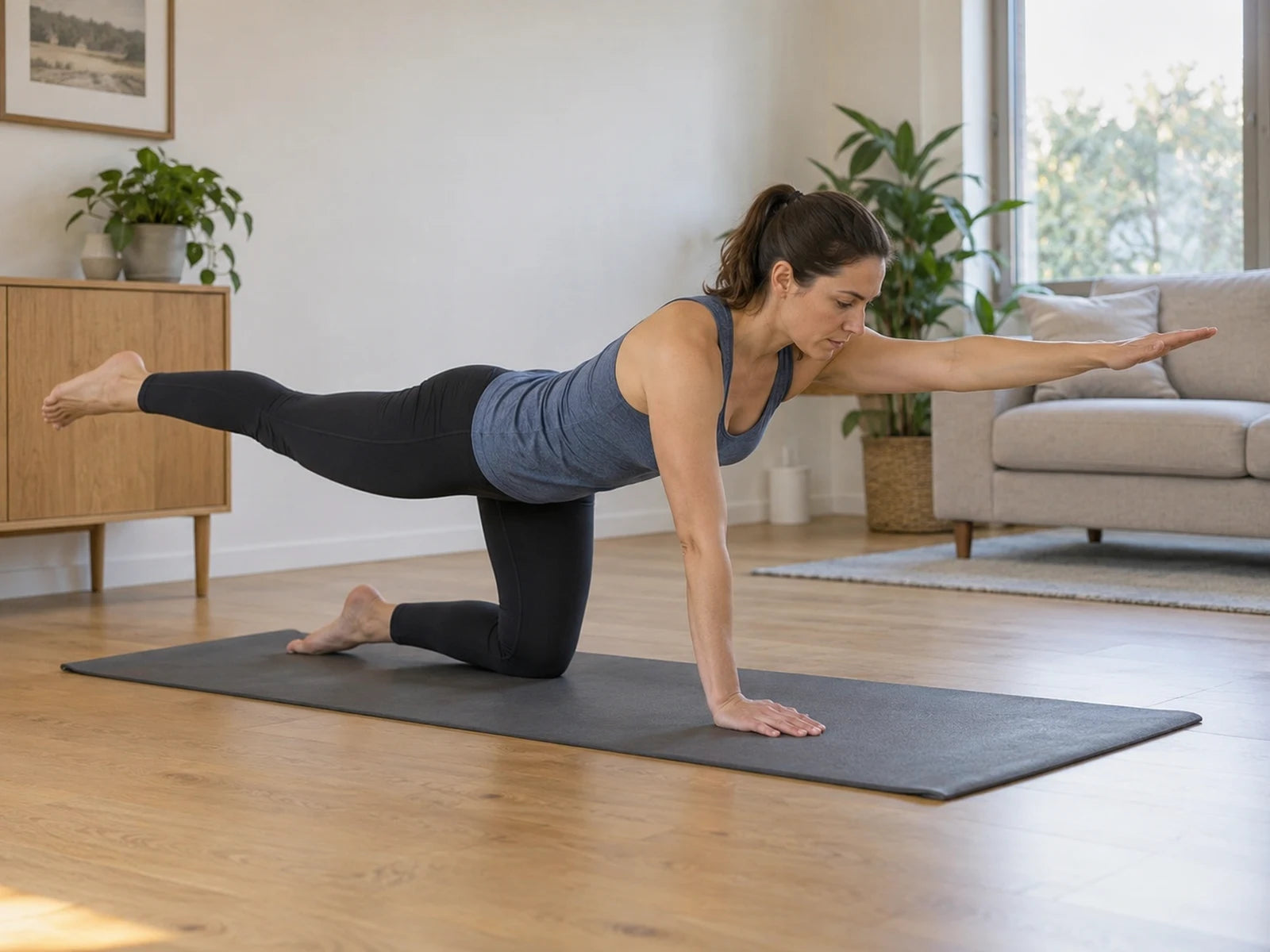
Start on hands and knees, with hands under shoulders and knees under hips. First extend just one arm or one leg without rotating your pelvis. Once you can do that, combine an arm with the opposite leg: the bird-dog. Reach away from yourself rather than as high as possible. Return calmly and switch sides. Shorten the movement if your lower back starts arching further.

Would you also like to do Nordic curls at home?
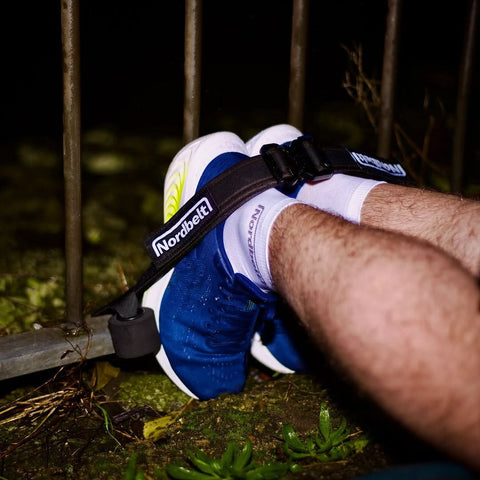
Nordic curls are a separate hamstring exercise, not an essential starting exercise for calisthenics. If you deliberately choose to add them later, Nordbelt helps secure your ankles at home without a training partner or a large machine. See the home setup. You still need a suitable, checked attachment, support under your knees and clear movement space. The tool does not take over the technique or provide a pulling grip for your upper body. The guide to the hand-assisted Nordic curl explains a carefully scoped variation.
A beginner calisthenics plan: record what you actually did
Make your first session an exploration. Try your chosen variations calmly, rest whenever you need to and stop before you can only continue by compensating. Stop the exercise if you feel sharp pain or unusual symptoms; have persistent symptoms assessed. There is no mandatory repetition count or plan here that suits every beginner.
A fictional example: Sam records “wall, controlled” for pushing; “suitable bar missing” for pulling; “chair, gentle contact” for legs; and “leg only, pelvis stays still” for core. The useful next step is to arrange a pulling station and try the same choices again. A harder push-up does not make up for the missing pulling exercise.
For each exercise, record the variation, support height or body angle, repetitions actually completed and why you stopped. This lets you compare your next session. Change one element when you can maintain good execution; do not automatically read a different support height as greater strength. To divide your training across days later, read the guide to full-body versus split routines.
Take your Nordic curl from the first rep to week 10.
A concrete 7-page plan: build up week by week, without pushing too fast.
- 01A clear week-by-week progression
- 02Technique and the mistakes to avoid
- 03A simple log you will actually use

≤51%
✓Backed by research
Van Dyk et al., 2019: meta-analysis of programmes with NHE. Not an effect test of Nordbelt or this protocol.
Open the download page again or check the email we sent you.
Open the download page ↗What does research say about bodyweight training?
In a small study, 18 young men trained for eight weeks using an adapted push-up or light bench press. Push-up load was matched to bench-press load. Both groups increased measured chest and triceps thickness and bench-press strength. This supports the possibility of resistance training with an appropriate push-up variation. It does not prove that all calisthenics exercises are equivalent or that you will experience the same change (Kikuchi and Nakazato, 2017).
A preliminary study in 17 adults examined four weeks of short calisthenics breaks during a workday involving prolonged sitting. The intervention group improved, among other outcomes, measured maximal knee-extensor strength. This was not a comparison of complete beginner programmes and does not establish an optimal training dose. The finding is limited to the group, approach and outcomes studied (Mear et al., 2022).
Frequently asked questions
Can I do calisthenics at home as a beginner?
Yes, there are simple variations for pushing, legs and core. Check the floor and any support. A row needs a suitable fixed grip; a mat cannot replace it. Arrange the equipment or do your pulling work at another suitable location.
Do I need to be able to do a full push-up first?
No. Start against a wall or on an appropriate fixed raised support. Kneeling push-ups are also an option. Choose according to your control in both directions, not because a variation looks more impressive.
How many repetitions belong in a beginner calisthenics plan?
The studies discussed here do not establish a universal number. Record what you can perform under control and stop before you have to force the movement. The variation and support height partly determine what those repetitions mean, so compare the setup too.
Do I need Nordbelt for these calisthenics exercises?
No. The pushing, pulling, leg and core exercises listed do not require Nordbelt. Ankle fixation only becomes relevant if you separately choose Nordic curls. That optional addition does not replace suitable basic variations or an appropriate bar for pulling.