

Nordic hamstring curl equipment: which setup fits home training?


A Nordic hamstring curl machine does not have to be a large piece of equipment. The key function is that your ankles stay stable and fixed low while you lower yourself forward from a kneeling position. For home training, four setups work best: a heavy Nordic bench, a weight bench with solid fixation, a door anchor or compact Nordic tool, and a fixed fence or low anchor point. The best choice depends on space, budget, how often you train and how easy it is to repeat the same setup each week.
In short
If you are searching for Nordic hamstring curl equipment, you are usually not looking for a complicated machine. You are looking for reliable ankle fixation. If you are specifically looking for Nordic curl equipment for home, it is usually the same decision: compact, stable ankle fixation that takes little space and is quick to set up. The Nordic hamstring curl is demanding because your hamstrings have to brake the forward movement eccentrically. That is why the setup matters: if your feet move, the exercise becomes unsafe and unreliable.
Research on Nordic hamstring training shows that the exercise is relevant for eccentric strength and injury prevention in sport, but the effect depends strongly on consistent execution and progression (van Dyk et al., 2019; Ripley et al., 2021). Good equipment should mainly help you repeat the exercise consistently.
What do people mean by Nordic hamstring curl equipment?
When people talk about Nordic hamstring curl equipment, they usually mean one of these options:
- a large Nordic curl machine or GHD-style bench
- a separate Nordic bench for a home gym
- an anchor placed under or at a door
- a strap or belt for a weight bench
- a compact tool that lets you train at home, outdoors or in the gym
Many athletes want to know what actually works without spending hundreds of euros or placing a large machine at home.
If you first want to understand the exercise itself, read the main guide to the Nordic hamstring curl. This page focuses on choosing the right setup.
Nordic bench, leg curl machine or compact strap?
| Equipment | Main function | Trade-off to check |
|---|---|---|
| Nordic bench or Nordic curl machine | Supports the knees and fixes the ankles for a kneeling forward descent. | Floor space, knee padding, fit and whether the design offers adjustable assistance. |
| Seated or lying leg curl machine | Provides external resistance while you bend the knee. | This is a different exercise setup; it does not automatically provide Nordic ankle fixation. |
| GHD or glute-ham bench | Supports exercises using a hip/thigh pad and foot support. | Pad and pivot geometry vary. Check which exercises the manufacturer supports instead of treating every GHD as a Nordic bench. |
| Compact strap or door anchor | Provides ankle fixation while you use your own floor space and knee support. | You still need a compatible stable anchor. Portability does not remove the anchor requirements. |
Start with the movement you want to train, then compare fit, footprint and attachment requirements. For actual attachment steps and demonstrations, use the setup guide and videos. If your goal is a different exercise, the glute-ham raise alternatives guide helps separate the options.
What should good equipment do?
Good Nordic hamstring curl equipment meets five criteria.
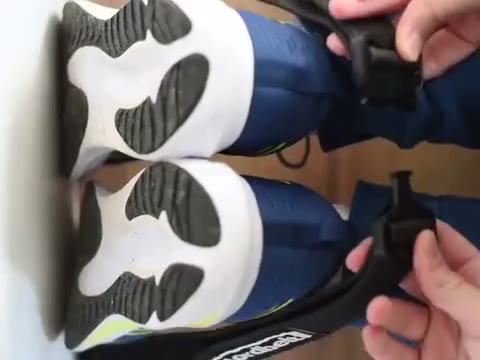
1. Low ankle fixation
Your ankles need to be fixed low and firmly. Fixation that is too high feels less stable and can change your technique.
2. No movement under load
Before your first set, pull hard on the fixation. If the anchor point shifts, slides or tilts, the setup is not suitable.
3. Space to catch yourself
You need room to place your hands in front of you when you can no longer hold the lowering phase. That is normal, especially in the first weeks.
4. A soft surface for your knees
Always use a mat or thick towel. The exercise is hard enough; knee pressure should not be the limiting factor.
5. Repeatability
The best equipment is not always the largest equipment. It is the setup you will actually use consistently. With Nordic training, consistency matters because prevention programmes and strength gains only become useful when athletes keep doing the exercise (Goode et al., 2015; Ripley et al., 2021).
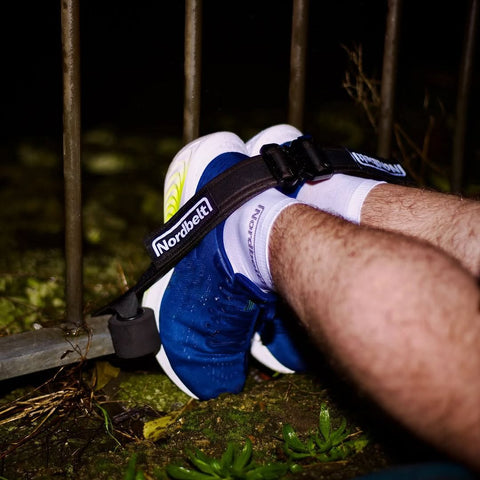
If you want a compact solution built around repeatability, Nordbelt is relevant: you can use it with a door, weight bench, fence or beam without needing a fixed machine.
Option 1: heavy Nordic bench or machine
A heavy Nordic bench or machine often feels stable and straightforward. You have a fixed platform, a knee pad and fixed ankle rollers. That can be useful if you have a home gym or want multiple athletes to train in a clinic or gym setting.
The downside is space and price. A real bench is large, usually stays in one place and is less logical if you only want to do a few sets per week at home. For many athletes, it is more equipment than they need.
Choose this option if:
- you have enough space
- several people will use the setup
- you want a fixed gym or clinic station
- budget matters less than having a permanent station
Option 2: weight bench with fixed ankle fixation
A weight bench can work well if the bench is heavy enough and the ankle fixation stays low. This is especially practical if you already do strength training and have a stable bench available.
The mistake is usually the bench itself. A light bench can slide or tilt faster than you expect. Always test first without doing a rep: fix your feet, pull hard on the setup and check whether everything stays in place.
This option makes sense if you already train in a gym or home gym. For practical setup details, also see the guide to Nordic hamstring curls at home.

Option 3: door anchor or compact Nordic tool
For most home athletes, this is the most interesting category. You do not need a large machine, but you do need a reliable way to fix your ankles. A door anchor or compact Nordic tool is especially useful if you have limited space, train alone or do not want to depend on a training partner.
Note: a door setup is only suitable if the door closes away from you, shuts fully and cannot open under load. Always test it with your hands first before kneeling down.
A compact tool has three advantages:
- you can start quickly
- you can repeat the same setup every time
- you can train without a partner or large machine
If training alone is your main problem, this connects with the guide to the Nordic hamstring curl without a partner.
Option 4: fixed fence or low anchor point
A strong fence, beam or low anchor point can work very well outdoors or in a garage. This is especially practical for football players, sprinters or teams that want to train on the field.
The rule is simple: the anchor point must be heavier and more stable than the force you apply to it. If it moves, it is not good equipment for Nordic curls.
Which option fits you?
Use this decision guide.
You have a home gym and plenty of space
Choose a heavy Nordic bench or fixed machine if you do the exercise often and space is not a problem.
You already train in the gym
Use a stable weight bench with reliable ankle fixation. This is practical if you want to add the Nordic curl to your existing strength training.
You train at home and want little hassle
Choose a door anchor or compact tool. For most people, that is the best balance between price, space and repeatability.
You train outdoors or with a team
Use a fixed fence, beam or low anchor point that you always test first. For teams, speed matters: everyone needs to understand the setup without a long explanation.
You mainly want to stay consistent
Do not automatically choose the largest piece of equipment. Choose the solution you are most likely to use. For many athletes, that is a compact tool with clear instructions, such as Nordbelt with the how-to guide.
How do you build up safely with equipment?
Good equipment makes the exercise possible, but it does not replace progression. Start as if you are learning a heavy strength movement.
Start with:
- 1 to 2 sessions per week
- 2 to 3 sets
- 3 to 5 controlled repetitions
- a shorter range of motion if full reps are still too hard
- your hands ready to catch yourself
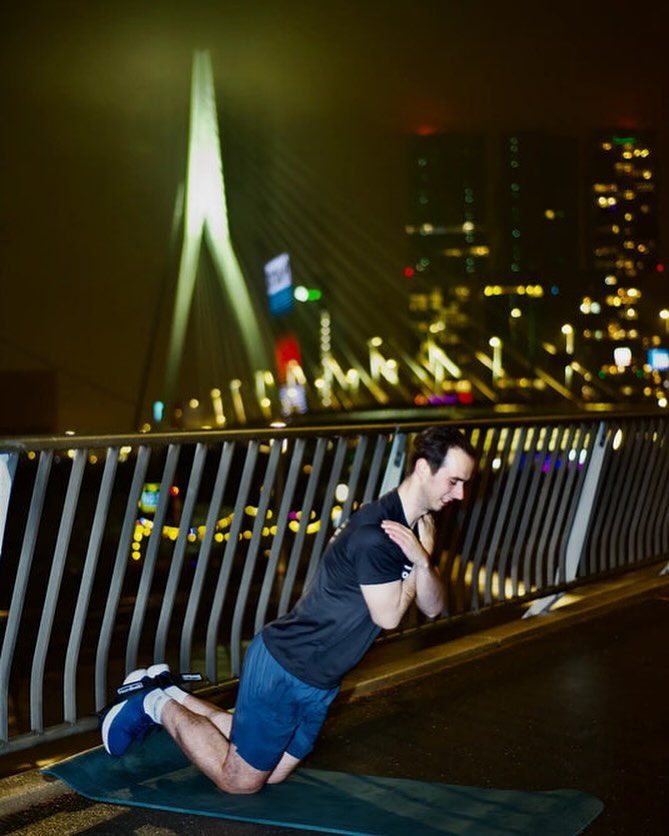
First extend the lowering phase before adding more repetitions. A controlled half rep is more valuable than a full rep where you simply drop down. The Nordic hamstring exercise is well studied, but it remains a demanding movement that should be built up logically (Petersen et al., 2011; Medeiros et al., 2020).
Frequently asked questions
What is the best Nordic hamstring curl equipment for home?
For most home athletes, the best equipment is a compact, stable fixation that takes up little space and is quick to set up. A large Nordic bench can be excellent, but it usually only makes sense if you have a home gym. If you train at home with limited space, a door anchor or compact Nordic tool is often more practical.
Do I need a real Nordic curl machine?
No. You do not need a real machine if your ankles are safely and firmly fixed. The exercise is about controlled eccentric hamstring loading, not about the size of the equipment. A machine can be useful, but a good compact setup can be enough for home use.
Is a door anchor safe for Nordic hamstring curls?
A door anchor can be safe if the door closes away from you, is fully shut and the anchor point does not shift under load. Always test it with your hands first. Do not use a door that opens toward you, is loose or does not close completely.
What is the difference between Nordic curl equipment and a hamstring curl machine?
Nordic curl equipment mainly fixes your ankles so you can lower yourself from a kneeling position. A traditional hamstring curl machine usually has you lying or sitting while bending your knees against resistance. Both train the hamstrings, but the Nordic curl emphasizes eccentric control in a different position.
Can I do Nordic curls without a partner?
Yes. You do not need a partner if you have safe ankle fixation. That can be a fixed machine, a bench, a door anchor, a fence or a compact tool. The main condition is that the setup does not move and that you start with a regression if full reps are still too hard.
How often should I train with Nordic hamstring curl equipment?
For most athletes, 1 to 2 times per week is a sensible start. Only build up when you recover between sessions and your technique stays under control. More is not automatically better; consistency, execution and recovery matter more than a high number of repetitions.