★ 4.6
Nordic curl tempo: slow lowering or a fast rebound?

Slow eccentric lowering and a fast stretch-shortening cycle are different tasks. Record the descent, catch and return separately and interpret the research without a universal seconds rule.
FREE 10-WEEK TRAINING PROTOCOLSend my free protocol ↓Nordic curl tempo starts with the movement you intend to perform. Lowering slowly, catching yourself with your hands and returning with assistance is a different task from lowering quickly and immediately rebounding actively. Choose the variation and a manageable movement limit first. Then record the descent, catch and return separately. The available studies establish no universal number of seconds that is best or safest for everyone.
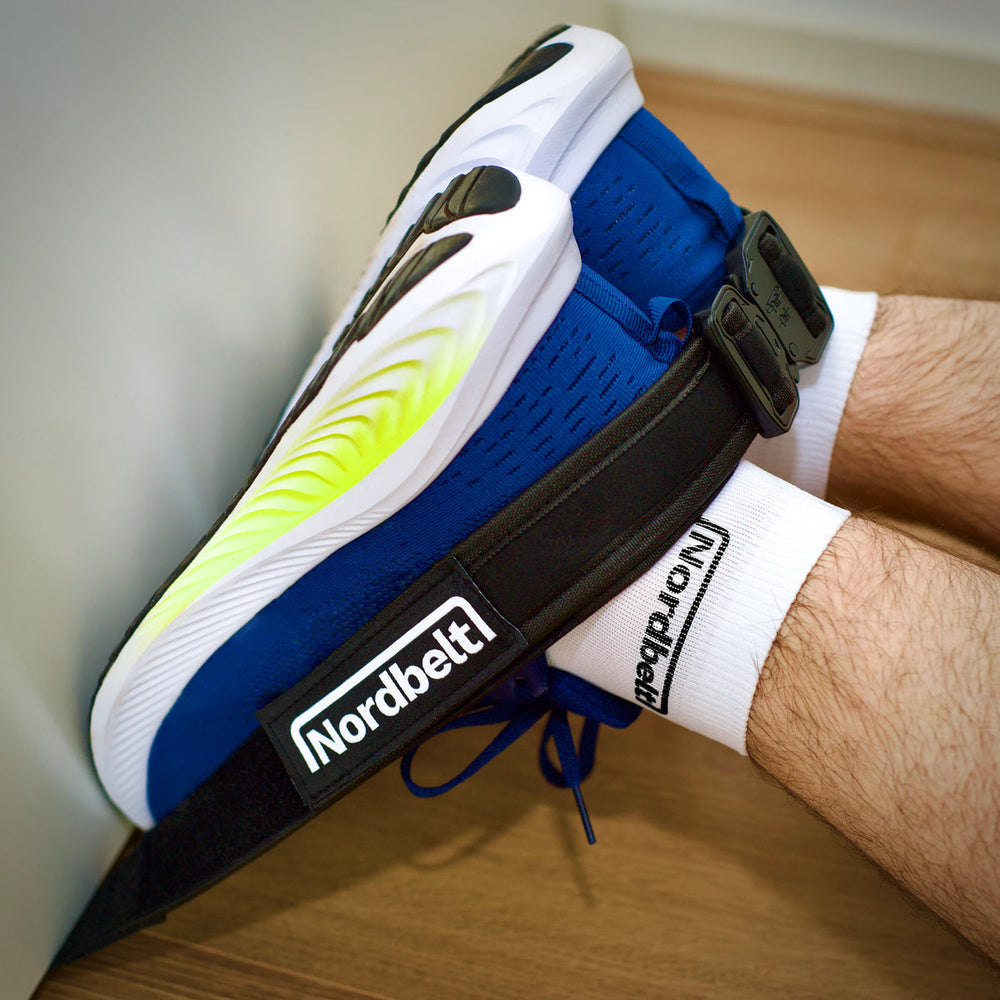
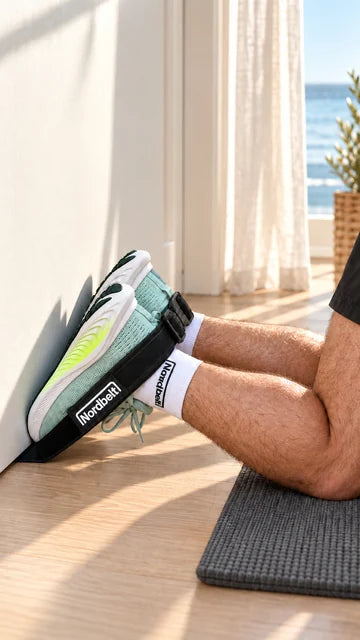
A consistent setup helps keep repetitions comparable. The homepage explains how Nordbelt provides ankle fixation for Nordic curls. The tool secures your ankles; it does not choose the tempo, catch you or determine whether the exercise suits you. Do not change the attachment to make a faster repetition possible.
Choose the variation before watching the clock
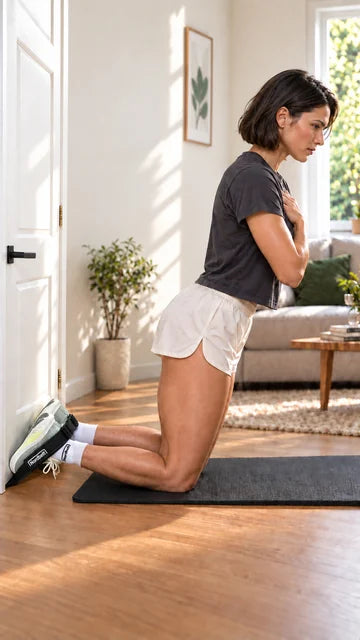
In the usual eccentric version, your hamstrings brake the forward movement. Kneel with secured ankles, keep shoulders, hips and knees roughly aligned and let your body move forwards from the knees. Keep your hands ready for an early catch. Return to the start with assistance; pulling yourself back without help is not a requirement. See the full Nordic hamstring curl technique guide for the basic exercise.
A fast transition from lowering to an active return adds a different contraction cycle. You cannot compare these variations fairly using only the total duration of a repetition. A short return with considerable hand assistance can shorten the whole rep while the descent stays the same. Equally, a slow overall repetition can still contain an uncontrolled final section.
This explanation is for people who have already chosen an appropriate Nordic variation. It does not teach rebounding. With a current injury, sharp pain or uncertainty about load tolerance, do not use a faster tempo as a test; discuss appropriate loading with a doctor or physiotherapist.

What did the studies actually examine?
Augustsson and colleagues compared a slow eccentric Nordic with a fast stretch-shortening variation in 22 elite athletes. In the fast variation, the descent was immediately followed by an active return. Measured peak knee-flexor force was higher in this acute comparison. That does not show that participants sprinted faster after training, sustained fewer injuries or that beginners can safely perform the same variation. More than speed changed: the contraction cycle also differed (Augustsson et al., 2023).
Alt and colleagues followed 16 male sprinters through four weeks of standardised Nordic training targeting a low movement velocity. They found changes in measured hamstring strength, with the largest adaptations at the highest tested velocity after training. This was a repeated-measures study within the same participants, not a randomised comparison of slow and fast training. It cannot establish an ideal home-training speed or mandatory number of seconds (Alt et al., 2018).
Together, these studies show why you need to name the exercise task and measured outcome. Peak force during one execution, strength changes after training and sprint performance are different things. A higher result in one test is not a general verdict on a better programme.
Record the descent, catch and return separately
Make your notes specific enough to show what you actually compared. The following is a practical recording example, not a tested training protocol or force measurement.
| Component | What should you record? | What can it distinguish? |
|---|---|---|
| Descent | Chosen variation, assistance and range you control | Planned lowering versus unintended acceleration |
| Catch | Where your hands make contact and whether it happens earlier than intended | A changed movement limit versus a different counting rhythm |
| Return | Returning with hand assistance or another agreed form of help | A shorter return versus a faster descent |
Suppose you put your hands down earlier today than last time. Record that earlier catch. Writing only “finished faster” hides the fact that you completed a smaller part of the descent. If you perform the same descent but return with more hand assistance, a shorter total time does not automatically mean your hamstrings worked faster.
A side-view recording can help you see the sequence again. It cannot establish knee-flexor force, exact tendon load or medical suitability. If you unintentionally sit back or fall through the final part, review common Nordic curl technique mistakes before comparing times.
Context image of watching something together. The screen does not show an assessable repetition; the photo demonstrates neither tempo nor technique nor professional coaching.
Take your Nordic curl from the first rep to week 10.
A concrete 7-page plan: build up week by week, without pushing too fast.
PDF7 pagesStraight to your inbox
- 01A clear week-by-week progression
- 02Technique and the mistakes to avoid
- 03A simple log you will actually use

Open the download page again or check the email we sent you.
Open the download page ↗≤ 51%
✓Backed by research
Van Dyk et al., 2019: meta-analysis of programmes with NHE. Not an effect test of Nordbelt or this protocol.
Keep the setup recognisable
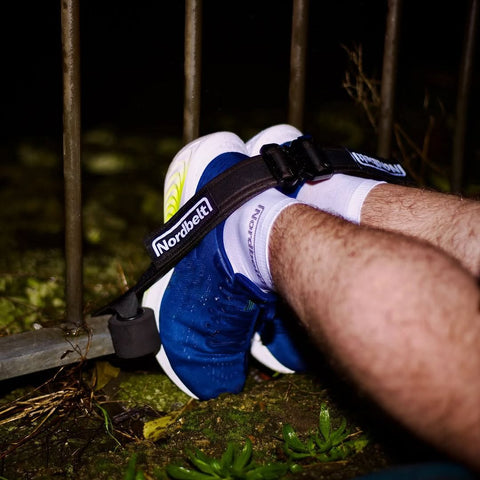
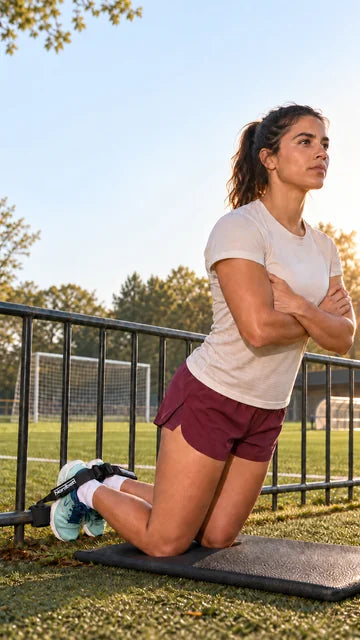
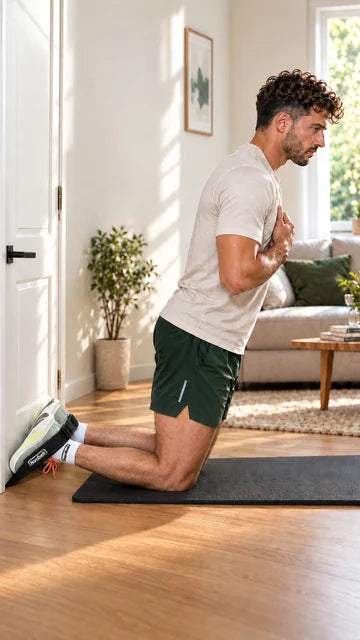
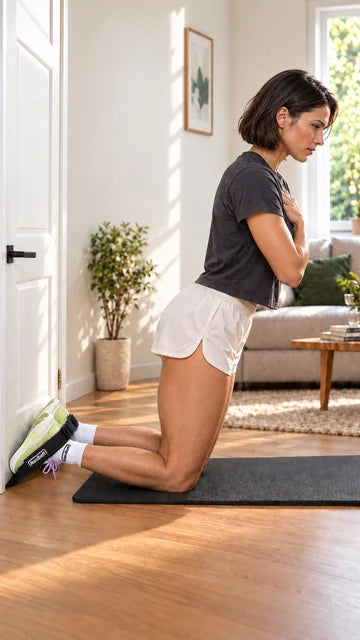
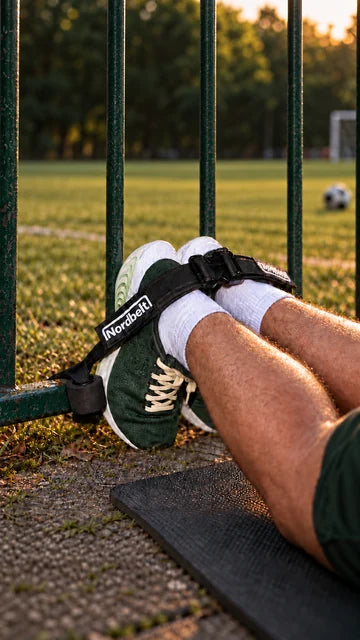
Use a stable surface with comfortable knee padding, enough space for your hands and low, symmetrical ankle fixation. Before loading it, check that the attachment and surface stay in place. Follow the attachment guide. A door must be securely closed and suitable for the chosen attachment according to the instructions. A bench or railing is usable only if its structure and anchor can actually withstand the load; a light chair, loose bench or moving railing does not replace a checked setup.
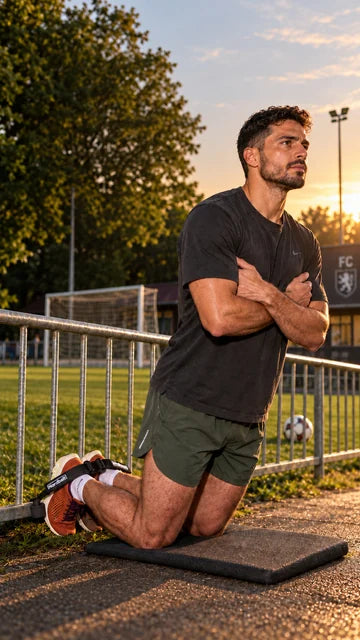
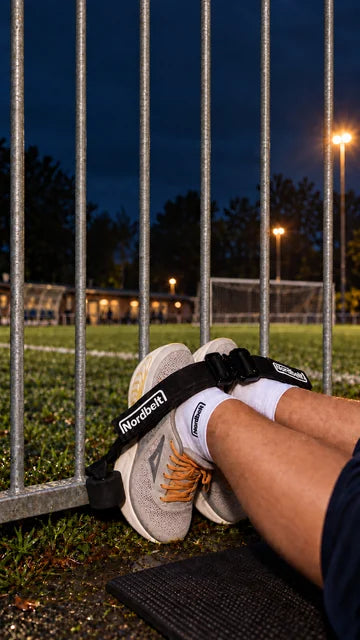
The top photo shows a starting position beside a railing. It does not prove that every railing is suitable or demonstrate a descent or rebound. Keep the same knee padding, attachment, starting posture and assistance when comparing repetitions. Begin within a range you can control while using your hands in time. Stop if the attachment shifts or you lose control of the movement.
Avoid changing tempo, range and repetition count at the same time. Otherwise you will not know which task you performed. For the separate question of training volume, read what research does and does not say about Nordic curls per week. Recording more information does not oblige you to train more or harder.

Context image for keeping training notes; the notebook contains no visible prescribed programme.
Frequently asked questions
How many seconds should you lower during a Nordic curl?
The studies discussed provide no universal seconds prescription. First choose an appropriate variation, manageable range and agreed assistance. If you record time, describe the descent separately from the catch and return. This avoids giving different movements the same tempo label.
Is a faster rebound better for sprinting?
That does not follow from the acute comparison. The fast stretch-shortening variation produced greater peak force in the elite athletes studied, but sprint improvement after a training programme was not the measured outcome. Nor does the research clear beginners to use it safely (Augustsson et al., 2023).
Must you be able to return without your hands?
No. In a chosen eccentric execution, you can catch yourself early with your hands and return with assistance. Record that help so you can recognise the execution later. An active fast return is a different task; you do not need to add it for the repetition to count.
Can a video show how much force you produce?
No. A video can show movement and sequence, but it is not a force meter. Use it to describe the descent, catch and return. A knee-flexor force value requires an appropriate measurement; video also cannot determine medical readiness for a harder variation.