

Hamstring exercises for cycling: stronger pedalling, climbing and sprinting


Hamstring exercises for cycling should fit long periods of pedalling, low-cadence climbs, out-of-the-saddle sprints and hours in a fixed hip angle. Stretching after a ride is not enough. A useful plan combines hip-dominant strength, eccentric control, light Nordics and short strength blocks that do not sit right before your hardest ride. Start with movements you can repeat cleanly, then increase load only when your hamstrings feel normal the next day.
In brief
Cycling can look quad-dominant, but the hamstrings still help every pedal stroke as the hip extends, the knee is guided and the leg moves through the rear part of the cycle. EMG research shows that hamstring activation changes across the pedal cycle and that biceps femoris activation rises with higher workload (da Silva et al., 2016; Bing et al., 2024).
Read this as a cycling-specific addition to the broader guide to hamstring exercises.

Why hamstrings are loaded differently in cycling
On the bike, the hamstrings are not just the muscles at the back of the thigh. They help extend the hip, control the knee and smooth the transition through the back of the pedal stroke. The load becomes more relevant during low-cadence climbing, high resistance, repeated accelerations and long rides in a deep position.
- low-cadence climbing or pushing a heavy gear
- repeated short sprints or closing gaps
- holding a deep position for a long time and then producing power
In elite sprint cyclists, performance change during repeated sprints was strongly related to hamstring and vastus muscle fatigue (Wang et al., 2020).
Which cycling hamstring exercises should you choose first?
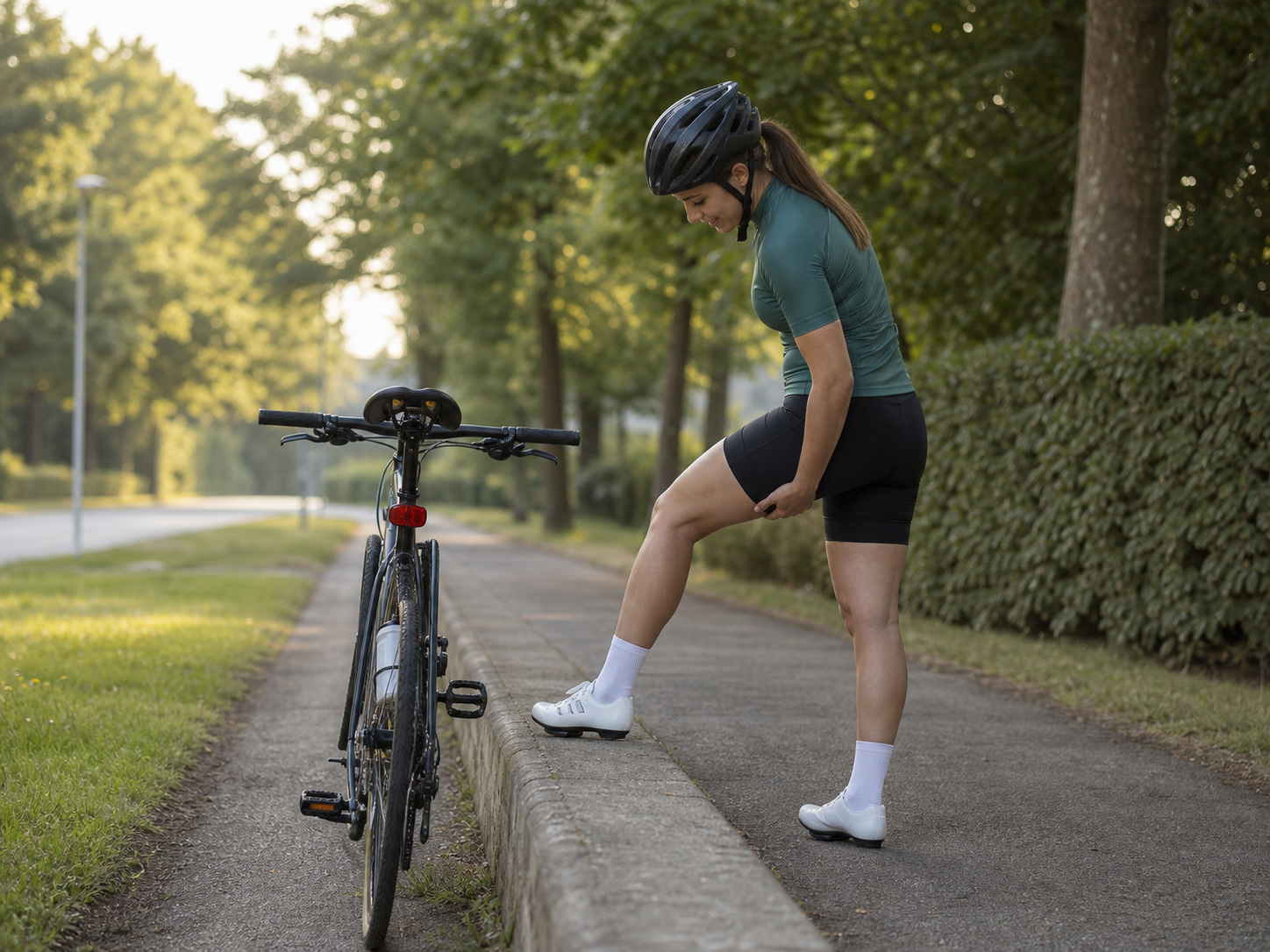
Choose exercises that let the hip, knee and trunk work together calmly. If your lower back arches, your pelvis rotates or your knee drops inward, the variation is too heavy or too early. Cyclists are often good at repetition but less used to controlled strength work away from the bike, so keep the first weeks short and technical.
- glute bridge with hamstring pressure
- hamstring walkout
- single-leg Romanian deadlift with light load
- hip hinge or Romanian deadlift
- reverse lunge with a quiet landing
- sliding leg curl or towel curl
- assisted Nordic hamstring curl
- short acceleration or climbing blocks only when the base responds well
Take your Nordic curl from the first rep to week 10.
A concrete 7-page plan: build up week by week, without pushing too fast.
- 01A clear week-by-week progression
- 02Technique and the mistakes to avoid
- 03A simple log you will actually use

≤51%
✓Backed by research
Van Dyk et al., 2019: meta-analysis of programmes with NHE. Not an effect test of Nordbelt or this protocol.
Open the download page again or check the email we sent you.
Open the download page ↗The 6 best hamstring exercises for cycling
1. Glute bridge with hamstring pressure
Lie on your back, place your heels slightly farther from your hips and lift calmly. Pull your heels toward you without moving them, hold for two seconds and lower with control.
2. Hamstring walkout
Start in a bridge and walk your heels away with small steps. Keep the pelvis level and stop before your lower back takes over.
3. Single-leg Romanian deadlift
Stand on one leg, hinge from the hip and let the free leg move behind you. Keep the range small while you find balance.
4. Romanian deadlift
Use a light bar, kettlebell or two dumbbells. Move from the hip, keep the spine neutral and feel the back of the thigh load.
5. Sliding leg curl
Use sliders or towels on a smooth floor. Pull your heels in, lift the hips and let the feet slide out slowly. This trains knee flexion and eccentric control. It also connects well with eccentric hamstring exercises.
6. Assisted Nordic hamstring curl
Fix the ankles, keep the trunk long and lower forward slowly. Use the hands to catch the movement. Nordic training can be useful in injury-prevention programmes, but consistency matters more than a maximal test (van Dyk et al., 2019).
The research findings apply to the programmes and participants studied. The exercise plan on this page has not itself been tested as an injury-prevention programme for this sport. Treat the suggested schedule as a practical example and adapt it to your training and recovery.

Nordic hamstring for cycling: when and how heavy?
Use the Nordic hamstring curl as a supporting exercise, not as a replacement for riding, basic strength or bike fit. Start with one weekly session of 2 sets of 3 to 5 slow reps. If walking, stairs and riding feel normal the next day, you can later move toward two weekly exposures.
Low volumes can already provide a meaningful eccentric hamstring stimulus and architectural adaptation, so cyclists do not need an extreme starting volume (Cuthbert et al., 2020).
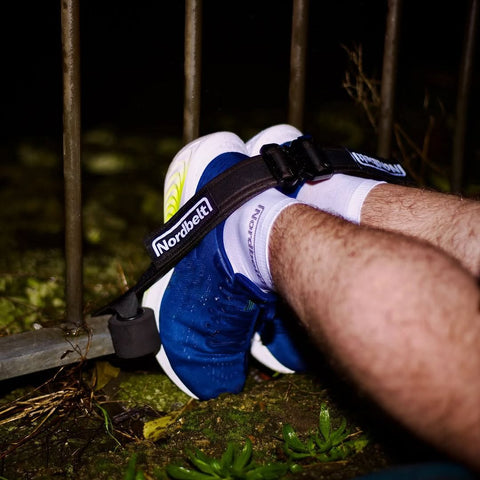
When you train alone, a fixed anchor point helps. The how-to guide shows how to test ankle fixation safely. Nordbelt can help you repeat the same Nordic progression at home, in a garage or outdoors without a partner. how-to guide.
Hamstring training for cycling in a weekly plan
Do not place heavy hamstring work the day before your hardest intervals, hill session or race. A simple week can look like this:
- day 1: easy endurance or recovery ride
- day 2: short strength session with bridges, Romanian deadlifts and light Nordics
- day 3: intervals or climbing blocks
- day 4: rest, mobility or a short recovery ride
- day 5: light strength stimulus with walkouts and reverse lunges
- day 6: long ride or group ride
- day 7: rest or easy spinning
If you already work with Nordic dosing, compare the logic with the Nordic hamstring curl plan.
Preventing hamstring injuries in cycling without forcing it
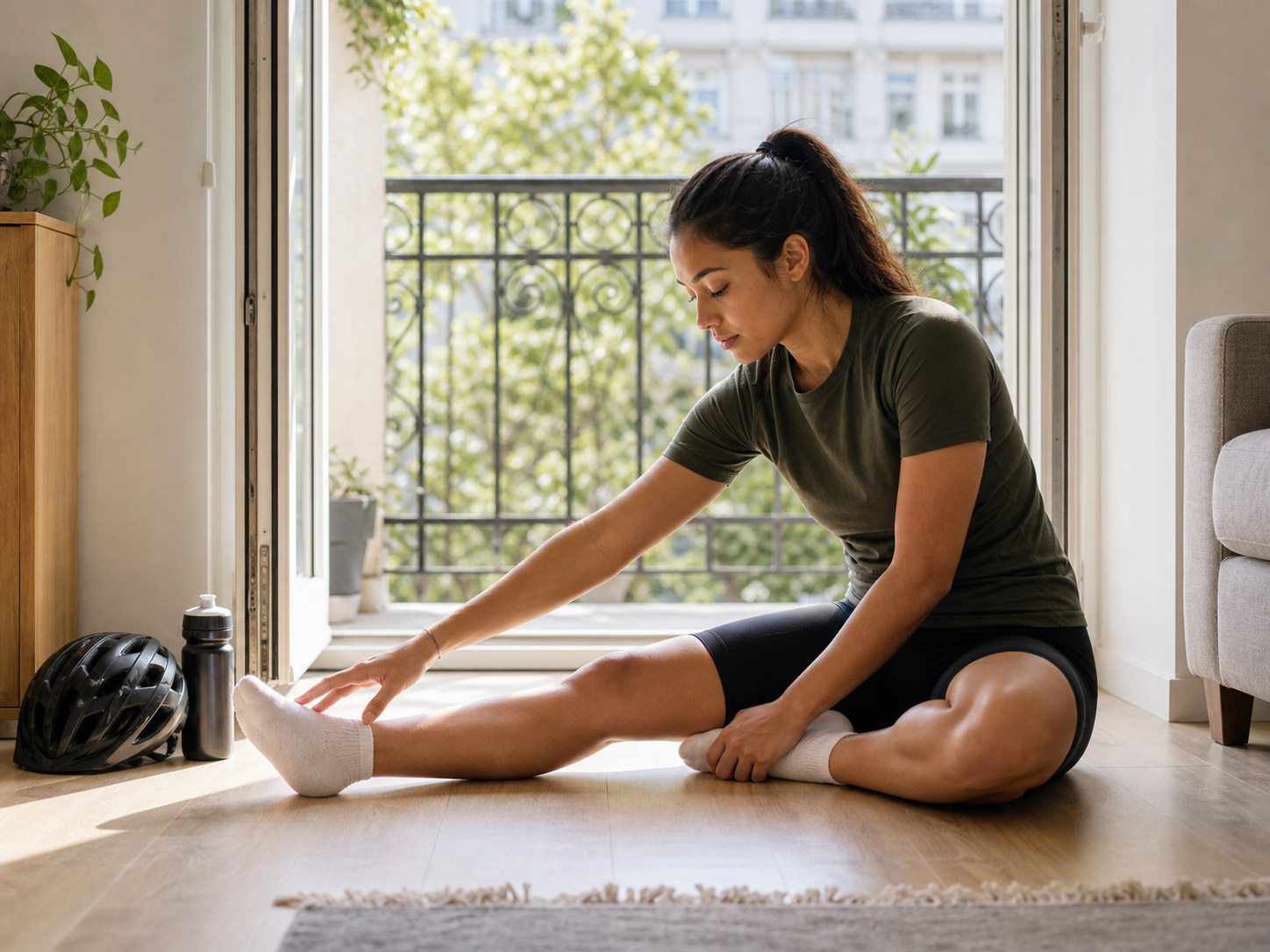
You cannot fully prevent hamstring injuries in cycling. You can reduce risk by combining strength, recovery, bike position and gradual training load. Pay attention to symptoms that appear during low cadence, high resistance, sprinting or long time in a deep position.
- the hamstring feels unusually stiff the next morning
- you avoid high resistance or standing climbs without meaning to
- you feel pulling pain behind the knee or high near the sit bone
- symptoms start after a bike-fit change, new saddle or longer crank
- you need two days to move normally after interval work
If these signs appear, return temporarily to bridges, walkouts and light hip hinges. Delay Nordics, heavy deadlifts and sprint blocks. Sharp pain, a clear strain or recurring symptoms should be assessed by a physiotherapist, sports physician or bike-fit specialist.
Frequently asked questions
Which hamstring exercises for cycling matter most?
The most useful hamstring exercises for cycling are glute bridges with hamstring pressure, hamstring walkouts, Romanian deadlifts, single-leg Romanian deadlifts, sliding leg curls and assisted Nordics. Together they train hip strength, knee control and eccentric capacity without forcing heavy soreness.
Does the Nordic hamstring curl fit cycling?
Yes, but use it as an accessory exercise. For most cyclists, one weekly session of 2 sets of 3 to 5 calm reps is enough to start. Increase only when riding, walking and sitting feel normal the next day.
How often should I train hamstrings alongside cycling?
One to two sessions per week is usually enough. In a heavy riding week, use a short maintenance dose. In an easier week, add a second calm session. Avoid heavy hamstring work just before climbing, racing or a long group ride.
Can you prevent hamstring injuries in cycling?
Not completely, but you can lower risk with gradual strength work, smart scheduling, recovery and attention to bike position. If pain keeps returning, get load, fit and technique assessed.
What if my hamstrings get stiff quickly after riding?
Start with light bridges, walkouts and hip-hinge drills, and temporarily reduce low-cadence blocks, sprints and heavy strength sets. If stiffness returns every ride or includes pain, get the pattern assessed before adding harder exercises.