

Squash hamstring exercises: sprint, brake and turn stronger


Squash hamstring exercises have to match short sprints, deep lunges, sudden braking, turning and pushing off again. General curls alone miss the sport context. A useful squash hamstring plan combines hip strength, knee-flexion strength, single-leg control, eccentric braking strength and calm Nordic work that is not placed right before a heavy match night. Start with control and small volumes, progress only when you can play normally the next day, and make the exercise harder before making the whole week harder.
In Short
Squash asks a lot from the hamstrings because you constantly switch between accelerating, reaching low, braking, turning and driving back to the T. A recent systematic review of squash injuries shows that injuries are often located in the lower limb, so strength work should respect the fast leg demands of the sport (McCartney et al., 2026).
Use this article as the squash-specific companion to the broader guide to hamstring exercises. The order is practical: position control first, then strength, then Nordic progression and weekly planning around court time.

Why Hamstrings Must React Fast In Squash
Squash is played in a small area, but the leg work is not small. You start hard, step deep, rotate, brake and return from a low position. The hamstrings help slow the lower leg, control the hip and keep the trunk stable when you reach for the ball.
Research in elite squash shows that external and internal training load do not always tell the same story (James et al., 2021). For squash hamstring training, that means you should not only count court hours. Also count deep lunges, short accelerations and how much recovery your week allows.
In sprint-type hamstring injury mechanisms, eccentric load matters when the muscle has to brake while lengthening (Danielsson et al., 2020). Squash is less straight-line than sprinting, but the lesson carries over: train controlled braking, not only peak force.
Which Squash Hamstring Training Comes First?
Choose exercises that make movement cleaner before choosing exercises that feel impressive. If a strength block leaves you slower out of a lunge or less sharp when turning, the dose was probably too high or too close to a court session. A simple order is:
- glute bridge with heel pressure
- hamstring walkout
- single-leg Romanian deadlift
- hamstring slider curl
- split squat with slow eccentric lowering
- lateral lunge with controlled return
- assisted Nordic hamstring curl
- full Nordic hamstring curl
For most squash players, the first six steps already build useful control. The last two are heavier inputs and should not be placed just before competition, tournaments or heavy ghosting sessions.
Take your Nordic curl from the first rep to week 10.
A concrete 7-page plan: build up week by week, without pushing too fast.
- 01A clear week-by-week progression
- 02Technique and the mistakes to avoid
- 03A simple log you will actually use

≤51%
✓Backed by research
Van Dyk et al., 2019: meta-analysis of programmes with NHE. Not an effect test of Nordbelt or this protocol.
Open the download page again or check the email we sent you.
Open the download page ↗The 7 Best Squash Hamstring Exercises
Do not run this list as one long circuit. Pick two or three exercises that fit your level and your playing week.
1. Glute bridge with heel pressure
Lie on your back, press the heels into the floor and lift the hips smoothly. Hold the top for two seconds. You should feel hamstrings and glutes without arching the lower back.
2. Hamstring walkout
Start in a bridge and slowly walk the heels away from the body. Keep the hips high enough and return under control. This teaches tension while the lever becomes longer.
3. Single-leg Romanian deadlift
Stand on one leg and move the hip back while the trunk stays long. The goal is not maximum depth, but control of hip, knee and foot when you correct from a lunge.
4. Hamstring slider curl
Pull the heels toward you from a bridge and slide back slowly. Start with both legs. Move to one leg only when the hips stay level. For more detail, use the guide to hamstring slider exercises.
5. Lateral lunge with controlled return
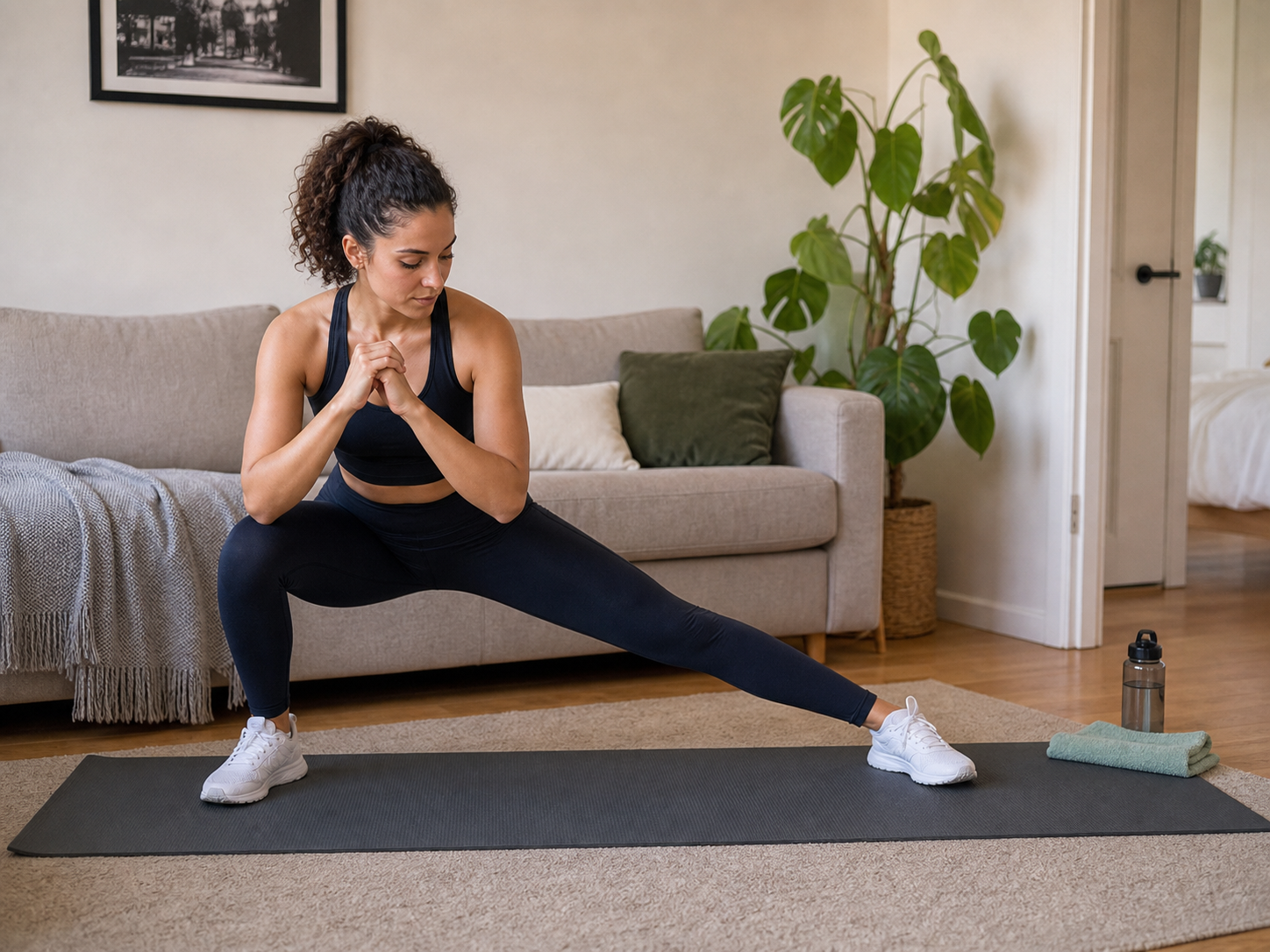
Step sideways, bend the support knee and keep the other leg longer. Push back to the middle smoothly. Start small; this should train control, not become a maximum stretch.
6. Split squat with braking phase
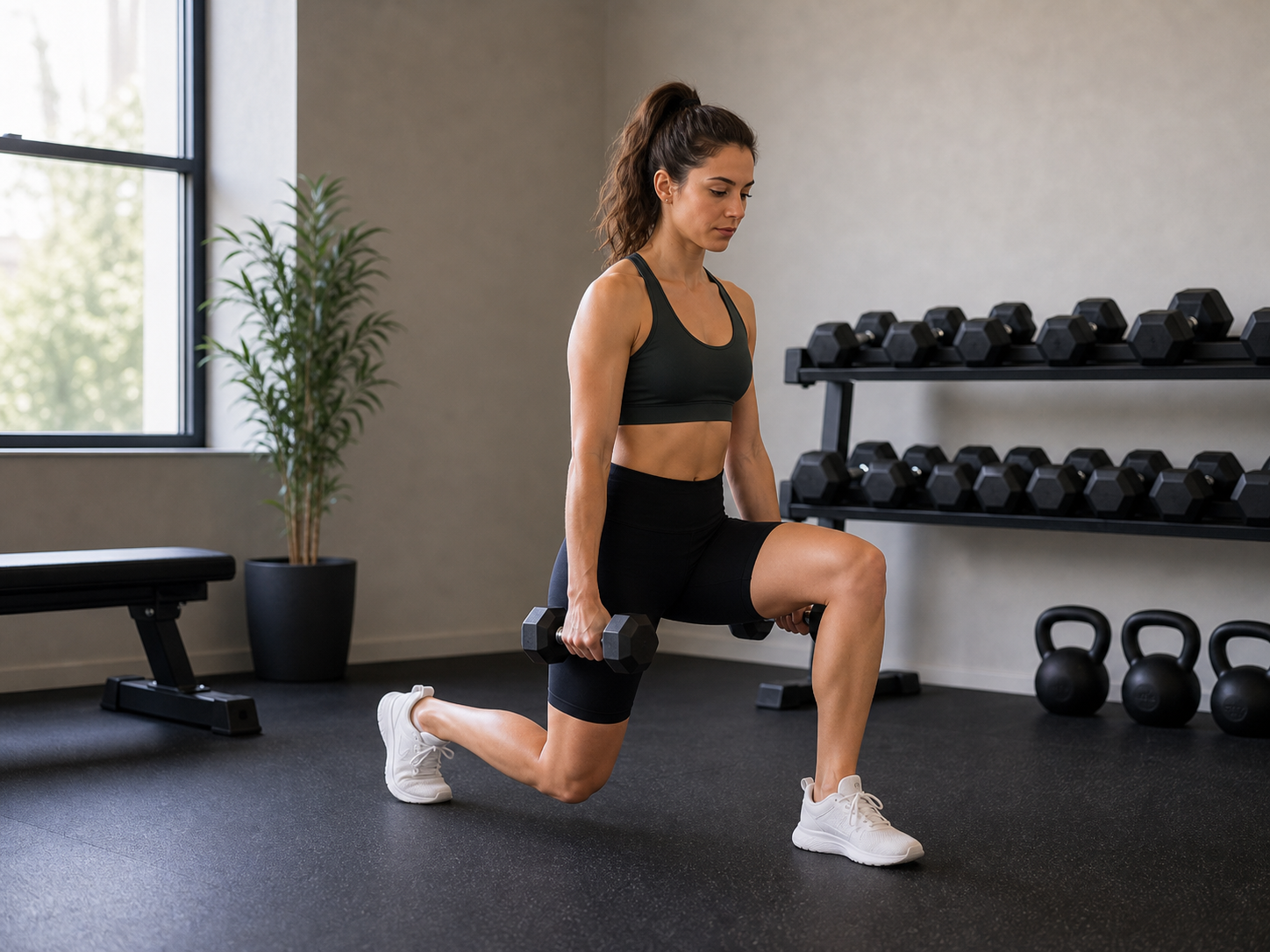
Place one leg forward and one behind. Lower for three to four seconds and come back up calmly. Think control rather than heavy load.
7. Assisted Nordic hamstring curl
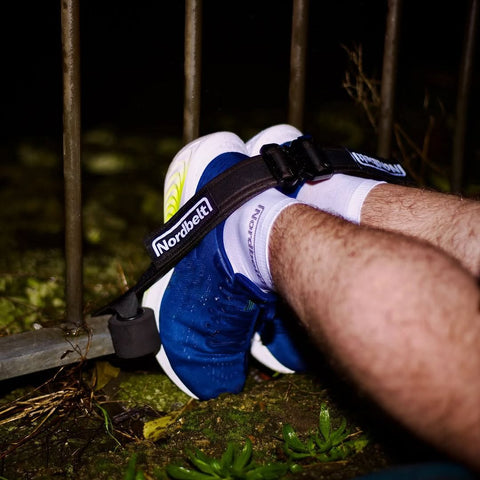
Kneel on a soft surface, secure the ankles low and firmly, lower forward slowly, catch yourself with the hands and help yourself back. Start with short ranges and few reps. Strengthening research shows that different exercises create different hamstring stimuli, so the Nordic should be a focused heavy input, not the only exercise (Bourne et al., 2018).
Nordic Hamstring For Squash: When And How Heavy?
The Nordic hamstring curl can fit squash well, but not as a daily test. Use it as a heavier eccentric strength input next to lighter control work. Sports programs using the Nordic hamstring exercise are often linked with lower hamstring injury rates, although execution and adherence still matter (van Dyk et al., 2019).
The research findings apply to the programmes and participants studied. The exercise plan on this page has not itself been tested as an injury-prevention programme for this sport. Treat the suggested schedule as a practical example and adapt it to your training and recovery.
- outside a busy match week: 1 to 2 sessions per week
- during a crowded playing week: at most 1 short session or lighter variants
- right before competition: no new heavy Nordic stimulus
- with heavy soreness: reduce volume instead of forcing through
If you often train alone, stable ankle fixation matters. First use the how-to guide. and build from assisted repetitions before trying full reps. The broader explanation is in the guide to the Nordic hamstring curl.
Squash Hamstring Training In A Playing Week
A squash week becomes too heavy quickly when strength work is stacked on top of many court hours. Keep the plan simple.
- with 1 court session per week: one light control session plus one short heavier session
- with 2 to 3 court sessions per week: one focused hamstring session and one short maintenance input
- during a tournament week: keep volume low and use technique, mobility and light activation
- avoid heavy sliders or Nordics right before your hardest playing day
Use this as a starting point, not a rule. If your legs feel slow the next day, that feedback counts. Hamstring training should support sharp movement, not blunt it.
Reducing Hamstring Injury Risk In Squash Without False Certainty
You can never fully prevent hamstring injuries in squash. The sport combines acceleration, braking, turning, deep lunges, fatigue and unpredictable rallies. You can reduce the chance that the hamstrings are surprised by sudden volume, heavy strength work or poor timing.
- do not increase court hours and strength volume hard at the same time
- train control in low positions
- use eccentric exercises with modest volume
- plan recovery after hard matches
- keep basic strength work in the program when you feel good
For a broader view of exercise types, read eccentric hamstring exercises. For general exercise selection, the pillar about hamstring exercises.
FAQ
Which squash hamstring exercises matter most?
The most useful exercises are the ones that improve control in positions you use on court. Start with bridges, walkouts, single-leg Romanian deadlifts and lateral lunges. Add slider curls and assisted Nordics later.
Does the Nordic hamstring curl fit squash?
Yes, if it is dosed calmly. Use it as a heavier eccentric stimulus, not as a test before a hard playing day. Start assisted and use low volume.
How often should I train hamstrings next to squash?
Most recreational and competitive club players do well with 1 to 2 sessions per week. With many court hours, one short session is often smarter than two heavy ones.
Can squash hamstring injuries be prevented?
Risk can be reduced, but not removed. Combine gradual court load, controlled strength work, recovery and good lunge mechanics.
What if the hamstring already feels sensitive after squash?
Do not immediately train harder. Start with easy bridges, walking, gentle mobility and pain-free movement. Sharp pain, bruising, weakness or recurring symptoms deserve personal medical advice.