

Ice skating hamstring exercises: stronger push-off, corners and control


Ice skating hamstring exercises should match a low skating position, a sideways push-off, long glide phases, cornering and short accelerations when your legs are already tired. Stretching after the session is not enough. A useful plan combines hip-dominant strength, eccentric control, light Nordics, single-leg stability and short dry-land strength blocks that do not sit right before your hardest ice session. Start with clean movement, keep volume modest and only add load when your hamstrings feel normal the next day.
In brief
Ice skating asks the hamstrings to work differently from running. You stay low for longer, push sideways and need the hip, knee and trunk to stay quiet while you produce force. Biomechanical skating research links speed with greater joint moments and power from the hip, knee and ankle in a low aerodynamic position (de Koning et al., 1991). That is why skating hamstring exercises should train more than the back of the thigh: they need hip control, braking strength and repeatable stability.
Use this article as an ice-skating-specific addition to the broader guide to hamstring exercises. The order is practical: control first, then strength, then Nordic progression and planning around ice time.

Why hamstrings are loaded differently in skating
In skating you do not push straight backward like in a sprint. The push-off is more lateral, the trunk stays low and the stance leg has to hold position while the other leg returns. The load may feel less explosive than sprinting, but the mix of a low posture, repeated strokes and corners can still ask a lot from the hamstrings, glutes and adductors.
Watch these situations in particular:
- long blocks in a deep skating position;
- cornering and pace changes while staying low;
- returning to the ice after a quiet period or summer break.
Research on on-ice skating in hockey shows that acceleration and steady-state skating use different hip and knee patterns, with clear differences in muscle activity and hip motion between phases (Buckeridge et al., 2015). That is not a perfect copy of recreational speed skating, but it supports the idea that hamstring training for skating should be more specific than a random leg curl.
Which skating hamstring exercises should you choose first?
Choose exercises that let the hip, knee, ankle and trunk work together calmly. If the pelvis rotates, the knee drops inward or the lower back takes over, the variation is too heavy or too early. Skaters are often good at repeating a position, but dry-land strength should not immediately feel like a maximal leg session.
- glute bridge with hamstring pressure;
- hamstring walkout;
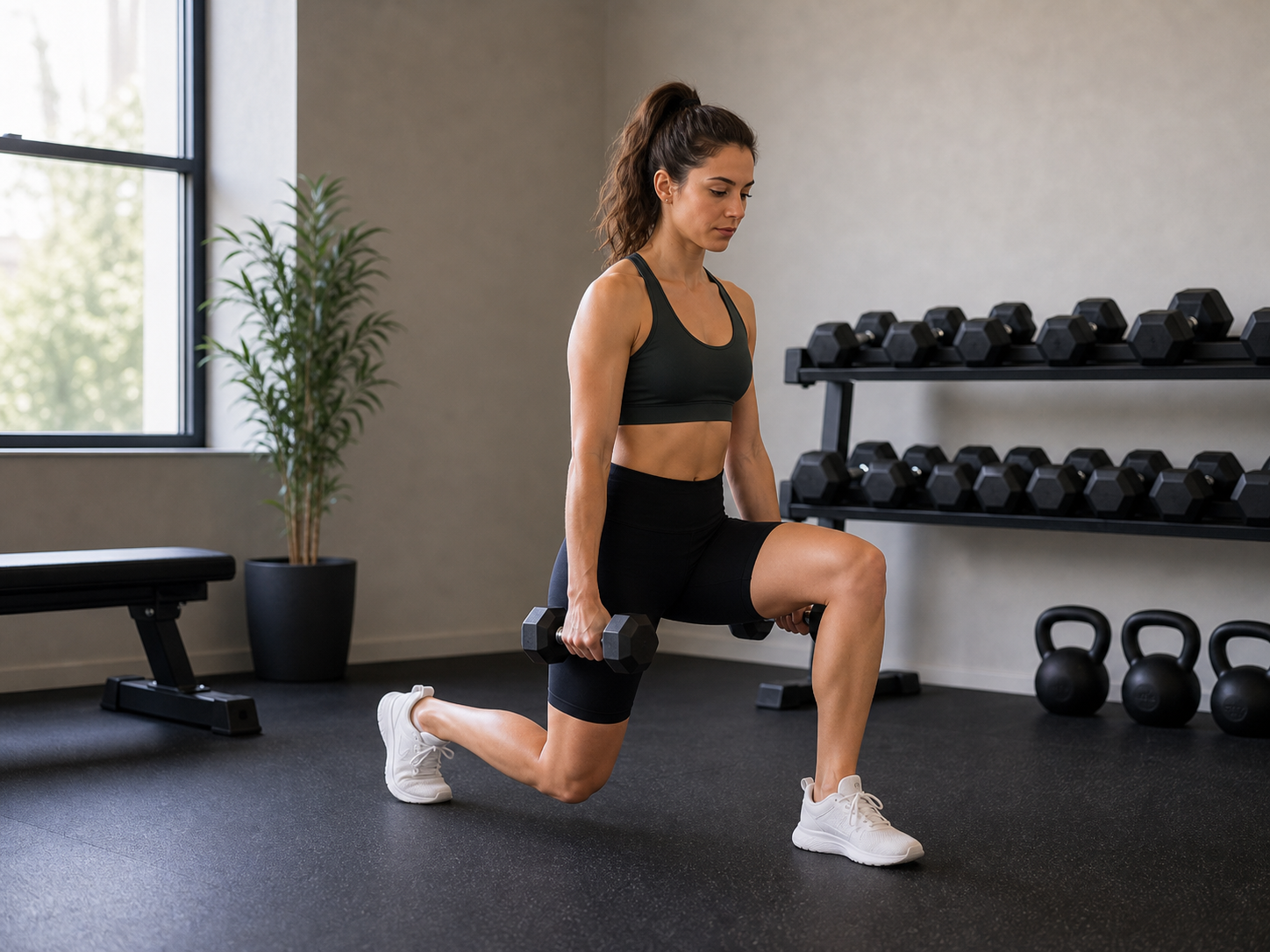
- split squat hold in a low position;
- single-leg Romanian deadlift;
- sliding leg curl or towel curl;
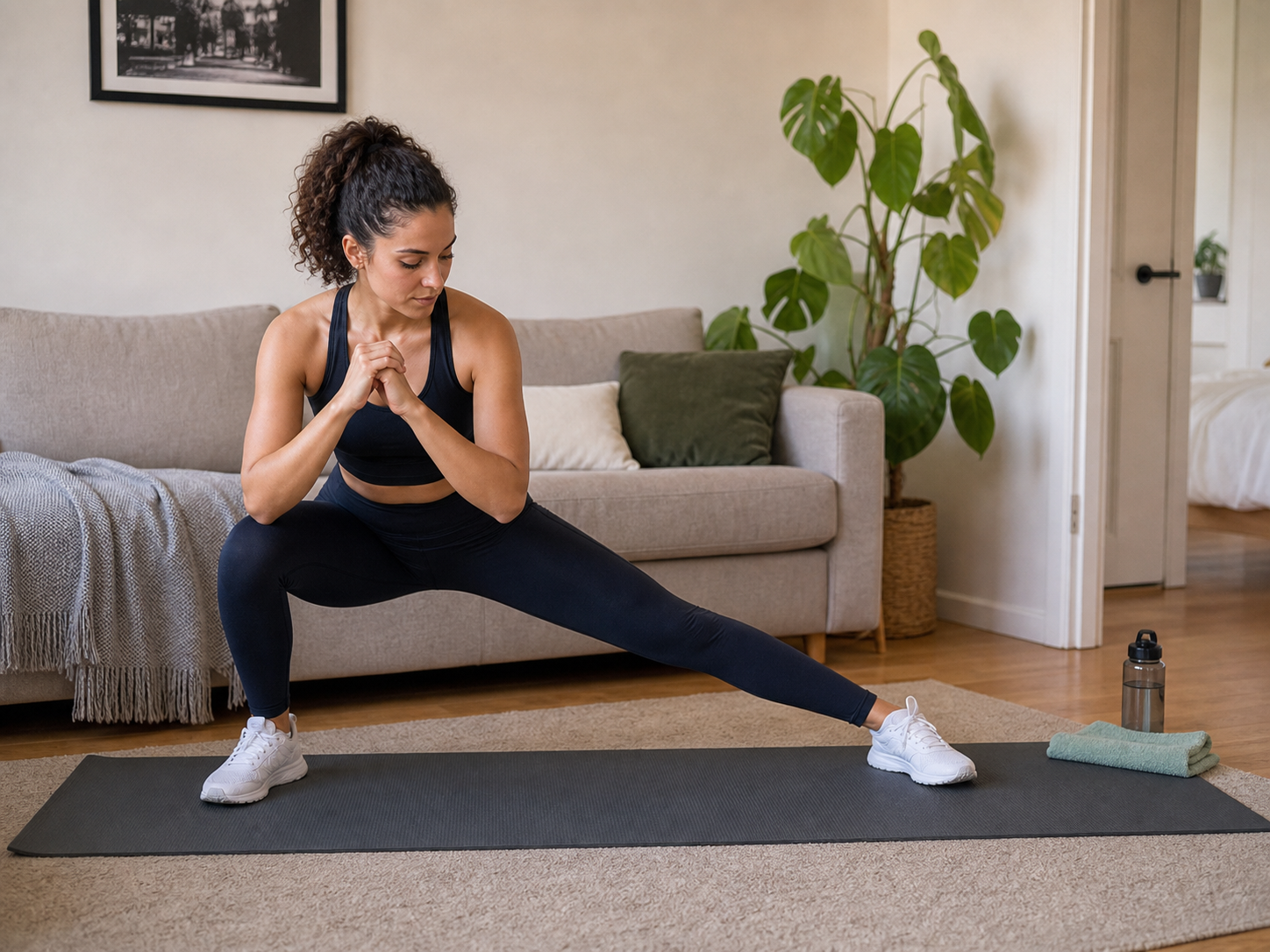
- lateral lunge or skater squat;
- assisted Nordic hamstring curl;
- short skating or dry-land acceleration blocks only when the base responds well.
This order helps you build stronger hamstrings for skating without creating heavy soreness after every session. That matters if you have several ice sessions per week or combine skating with strength work.
Take your Nordic curl from the first rep to week 10.
A concrete 7-page plan: build up week by week, without pushing too fast.
- 01A clear week-by-week progression
- 02Technique and the mistakes to avoid
- 03A simple log you will actually use

≤51%
✓Backed by research
Van Dyk et al., 2019: meta-analysis of programmes with NHE. Not an effect test of Nordbelt or this protocol.
Open the download page again or check the email we sent you.
Open the download page ↗The 6 best hamstring exercises for skating
1. Glute bridge with hamstring pressure
Lie on your back, place your heels slightly farther from your hips and lift calmly. Pull the heels lightly toward you without moving them. Hold for two seconds and lower with control. This is a useful starting point when your hamstrings mainly feel stiff after skating.
2. Hamstring walkout
Start in a bridge and walk the heels away with small steps. Keep the pelvis level and stop before the lower back takes over. Use it as a bridge between activation and real eccentric control.
3. Split squat hold in a low position
Sink into a split squat and hold the position for 20 to 30 seconds. The front leg works, but the posterior chain has to help keep the pelvis still. This fits skaters because you learn to produce force without constantly standing upright.
4. Single-leg Romanian deadlift
Hinge from the hip, keep the back long and let the free leg move behind you. The range can stay small. The gain is control: stable foot, soft knee and hips as square as possible.
5. Sliding leg curl
Use sliders, socks on a smooth floor or a towel. Pull the heels in and slide back slowly. Keep the hips high enough, but do not force range if control disappears. For more exercise choices, use the guide to eccentric hamstring exercises.
6. Lateral lunge or skater squat
Step sideways, send the hip back and return with control. This is not a maximal jump. The goal is for the hip, knee and foot to work in the direction skating asks for. Start slowly and add speed later.
Nordic hamstring for skating: when and how heavy?
The Nordic hamstring curl can help skaters, but it should not be the first heavy exercise in a week already filled with hard ice sessions. Use it as a controlled strength stimulus, not as a test of how much soreness you can tolerate. Eccentric hamstring training can improve strength and relevant risk factors in sport populations, but dosage and consistency still decide whether it helps (Rudisill et al., 2023).
- start with one session per week;
- use 2 sets of 3 to 5 calm reps;
- keep the hands ready to catch the movement;
- use a short range if full reps are too heavy;
- leave at least 48 hours before the hardest ice or strength session.
If you want to practise the technique first, read the Nordic hamstring curl explanation. For skaters, the movement does not have to be maximal to be useful. Control during the lowering phase matters more than forcing a full rep.
Hamstring training for skating in a weekly plan
Plan hamstring work around ice time rather than by mood. Most skaters do well with two short dry-land moments per week. A hard block right before intervals on the ice is usually a poor trade.
- Monday: calm strength, glute bridge, single-leg Romanian deadlift and core work;
- Wednesday: ice or technique session, no heavy Nordics afterward;
- Friday: assisted Nordic and sliding leg curl with low volume;
- Weekend: ice time, endurance block or race-like stimulus.
If you skate once per week, you can place strength work more freely. If you have three or more ice sessions, keep the strength work shorter and more specific. Compare the logic with hamstring training for cycling: the sport gives a lot of repetition, so strength work should add what the sport does not train well.
Reducing hamstring injury risk in skating without forcing it
You cannot completely prevent a hamstring injury in skating with a list of exercises. What you can do is avoid big jumps in training load, build the low position gradually and add eccentric strength before symptoms force you to. In football research, a progressive Nordic programme reduced acute hamstring injuries, but that result is sport-specific and should not be sold as a hard promise for skating (Petersen et al., 2011).
- stiffness stays clearly present for more than 48 hours;
- left-right difference grows while skating;
- you feel a pulling sensation high in the hamstring in a low position;
- sprinting or pushing off feels less secure than normal.
With pain or a recent strain, this article is not a rehabilitation plan. Rebuild basic pain-free loading first and consult a physiotherapist, sports physician or coach if symptoms return, feel sharp or change your technique.
Where does Nordbelt fit?
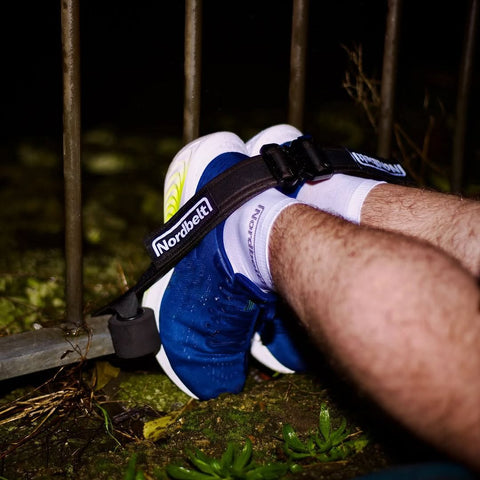
Nordbelt mainly fits the work around the ice: assisted Nordics, controlled Nordics and solo training where the ankles need a low and predictable fixation. You do not need a product to skate. For the strength block around skating, a stable anchor can help you repeat the same exercise reliably.
Always test an anchor with your hands first, start with a short range and only increase if control stays clean. View Nordbelt if you want a compact setup for a room, bench or fixed anchor point. Use the how-to guide to check the fixation step by step.
Frequently asked questions
Which hamstring exercises for skating matter most?
Start with glute bridges, hamstring walkouts, single-leg Romanian deadlifts, sliding leg curls and lateral lunges. Together they train hip strength, eccentric control and lateral stability without forcing maximal Nordics immediately.
Does the Nordic hamstring curl fit skating?
Yes, but dose it calmly. The Nordic hamstring curl works best as an accessory strength exercise away from the ice. Start assisted, keep volume low and avoid placing it right before your hardest ice session.
How often should I train hamstrings alongside skating?
For most recreational and competitive skaters, one or two short sessions per week is enough. In a busy ice week, one quality session can be better than two tiring sessions.
Can you prevent hamstring injuries in skating?
Not completely. You can manage risk by increasing load gradually, not suddenly doubling low-position work and training eccentric strength consistently. Pain, a clear strain or recurring symptoms call for personal assessment.
Can I do these exercises away from the rink?
Yes. Bridges, walkouts, single-leg Romanian deadlifts, sliders and assisted Nordics can all be done away from the rink. Use a stable surface and a reliable anchor if you do Nordics, and test the anchor before loading it with body weight.