

Field hockey hamstring exercises: sprint and brake stronger


“Nordbelt is easy to secure and feels stable.”
Field hockey hamstring exercises should match short accelerations, hard decelerations, low body positions and repeated changes of direction. A useful plan combines hip strength, eccentric control, assisted Nordics and field drills instead of relying on stretching alone. Start with movements you can repeat cleanly, keep heavy hamstring work away from match day and increase speed only when the next training day feels normal.
Quick answer
Field hockey loads the hamstrings when players accelerate, brake, reach forward and rotate under fatigue. Sprint research shows high mechanical demand on the hamstrings at speed, especially when hip and knee positions change quickly (Schache et al., 2012). Use this article next to the broader hamstring exercises guide: control first, eccentric strength second, speed last.
Why field hockey asks more from the hamstrings
A hockey sprint is rarely straight and relaxed. You push away from a duel, brake within a few steps, turn open, drop low for ball control and then accelerate again. That repeated switch makes sudden load jumps more important than one isolated exercise.
Good field hockey hamstring exercises should train the back of the thigh and the braking phase. That is why eccentric hamstring exercises are a useful layer for players who sprint and decelerate often.

Which exercises to start with
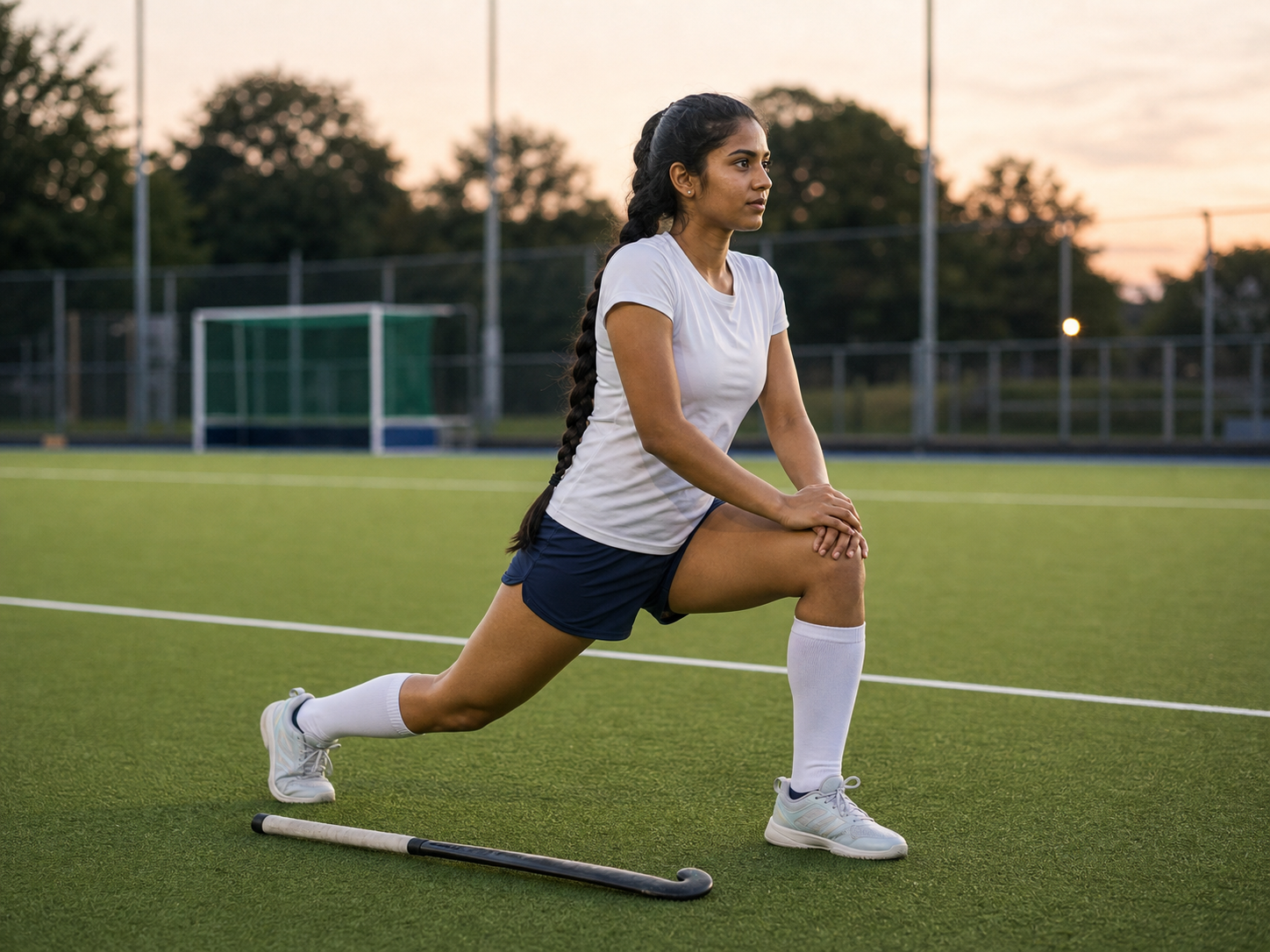
Choose the first exercise by control, not by difficulty. If your pelvis drops, your back takes over or you cannot slow the movement down, the step is too heavy.
- Glute bridge with gentle heel pressure.
- Hamstring walkouts.
- Sliding leg curls.
- Romanian deadlifts.
- Assisted Nordic hamstring curls.
- Short sprint-and-brake drills.
Take your Nordic curl from the first rep to week 10.
A concrete 7-page plan: build up week by week, without pushing too fast.
- 01A clear week-by-week progression
- 02Technique and the mistakes to avoid
- 03A simple log you will actually use

≤51%
✓Backed by research
Van Dyk et al., 2019: meta-analysis of programmes with NHE. Not an effect test of Nordbelt or this protocol.
Open the download page again or check the email we sent you.
Open the download page ↗Nordics for field hockey
Nordic hamstring training has strong prevention evidence in football groups. One randomized study reported fewer hamstring injuries after a Nordic programme (Petersen et al., 2011), and another amateur-football trial found lower risk when players followed the programme (van der Horst et al., 2015). Hockey is not football, but the sprint and braking demand makes the exercise relevant.
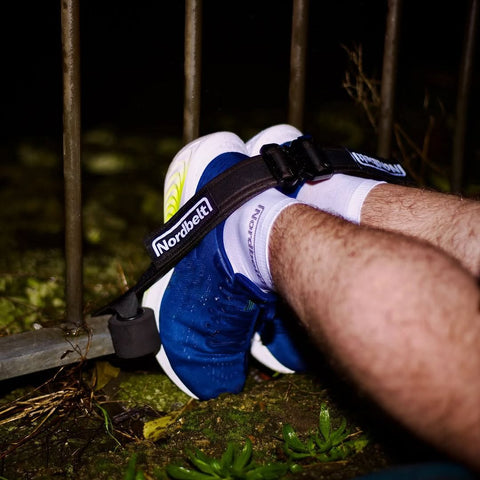
Begin with assisted repetitions: two sets of three in the first weeks is enough. Add range or repetitions, not both at once. Nordbelt can help fix the ankles consistently without a partner or large machine. Check the how-to guide before treating the Nordic as a heavy strength exercise.
Weekly planning
Place the main hamstring session early in the week. With a weekend match, Tuesday is usually better than Friday. During the season, one maintenance session can be enough; outside the season you can add more strength volume. Reviews suggest Nordic work can improve eccentric strength and muscle architecture, but the stimulus remains heavy and needs consistent progression (Medeiros et al., 2020).
Lowering injury risk without forcing it
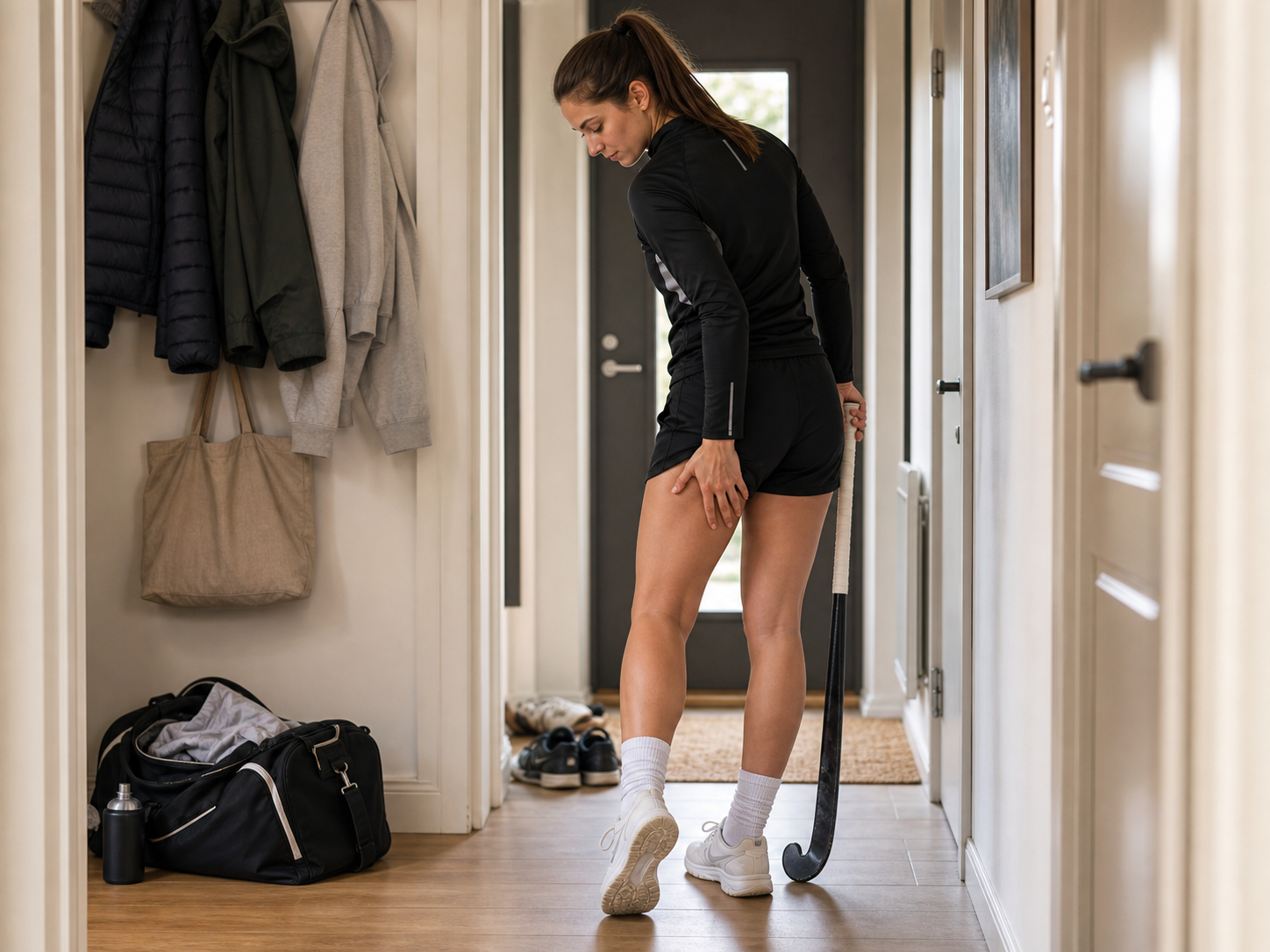
Reducing hamstring injury risk in field hockey is about predictable loading: gradual sprint exposure, technical braking, recovery and sensible placement of Nordics. The football Nordic schedule is a useful team-sport comparison, and the broader hamstring injury prevention guide covers general principles. Stop if pain is sharp, power drops or a clear pull occurs.
Exercise cues for cleaner reps
For bridges and walkouts, keep the ribs down and move slowly enough that the hamstrings do the work instead of the lower back. For sliding curls, keep the hips high only as long as the movement stays smooth. If the hips drop halfway through, shorten the range and rebuild control before adding repetitions.
For Romanian deadlifts, think about moving the hips back rather than reaching for the floor. The aim is tension through the back of the thigh with a calm spine. For assisted Nordics, a three-second lower is more useful than a fast drop. Catch yourself with the hands, reset and keep every repetition repeatable.
Progression rules
Progress one variable at a time. Add a little range, a little volume or a little speed, but do not change all three in the same week. If hockey training already includes repeated sprints or small-sided games, keep the strength session shorter. If the next field session feels worse, the previous dose was too high.
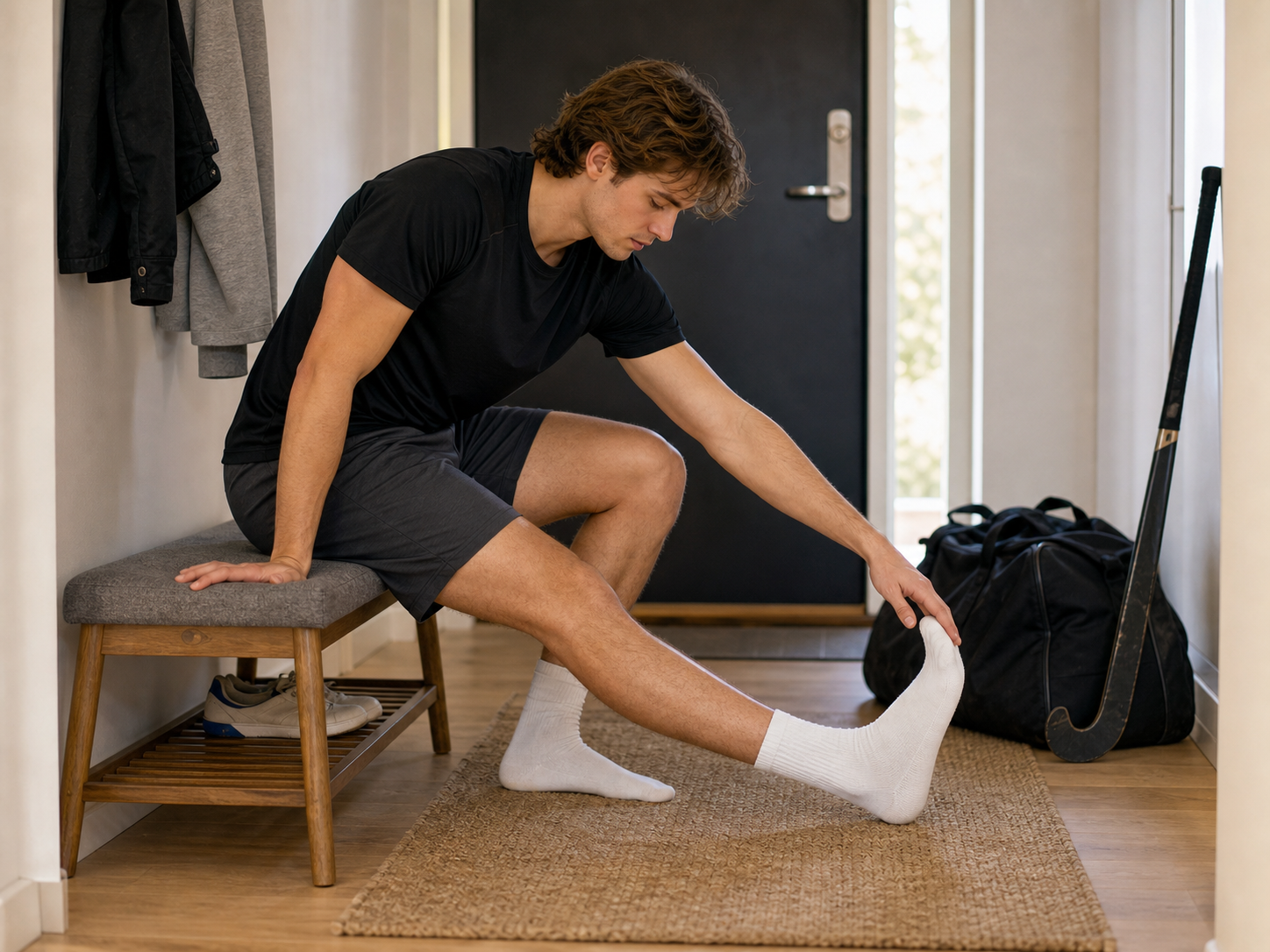
- Use light hamstring control on recovery days.
- Use strength work early in the week.
- Use sprint-brake drills only when warm and fresh.
- Keep hard Nordics away from match day.
When to step back
Step back when soreness changes the next hockey session, when sprinting feels guarded or when one side feels clearly weaker than the other. That does not mean the plan has failed. It usually means the dose was too large for the current week. Reduce the range on Nordics, use sliders instead of full drops, or keep the session to bridges and walkouts until field speed feels normal again.
Players returning from a previous hamstring problem should treat the first fast sessions as part of training, not as a test to prove fitness. Increase exposure across several practices: controlled accelerations first, then sharper decelerations, then reactive drills with ball pressure. The exercise plan works best when the field load progresses with it.
FAQ
Which field hockey hamstring exercises matter most?
Sliding leg curls, Romanian deadlifts, assisted Nordics and sprint-brake drills are the main choices. Bridges and walkouts are useful base exercises.
Does the Nordic hamstring curl fit field hockey?
Yes, when it is introduced gradually. It should not be the first heavy drill in a busy match week.
How often should players train hamstrings?
One or two sessions per week is enough for most players. In season, use smaller maintenance work.
Can hamstring injuries be fully prevented?
No. You can reduce risk, but not remove it. Consistency, sprint progression and recovery matter as much as exercise choice.