

Glute ham raise alternative at home: Nordic curl without a GHD

If you need a glute ham raise alternative at home, the Nordic curl is usually the closest practical option. You do not need a GHD machine, but you do need a low, stable ankle anchor and a gradual progression. Slider curls, hamstring walkouts and short eccentric reps are useful steps before full Nordics. Choose the variation you can repeat with control, not simply the hardest one.

What is the best home alternative to a glute ham raise?
It depends on why you wanted the glute ham raise. If the goal is knee-flexion hamstring strength, the Nordic curl is the closest match because the hamstrings must slow the body as the knees open. If you need a lower entry point, sliders or hand-assisted Nordics are smarter. A hip hinge such as a Romanian deadlift is useful for posterior-chain strength, but it does not replace the knee-flexion demand of a glute ham raise.
The important tradeoff is support. A GHD machine supports the knees and thighs, so the movement feels smoother and the lever can be managed through the pad. A floor Nordic asks you to control more of the lever yourself. That is why a home alternative should start from the setup and the progression, not from a promise that one exercise is always better.
Research on the Nordic hamstring exercise is strongest for eccentric hamstring strength and fascicle length, not for rushing every athlete into full reps (Medeiros et al., 2020). Use this order: sliders, assisted Nordics, short eccentric Nordics, then full reps later. If you cannot control the lowering phase for even a short range, you have not failed the exercise; you have found the correct starting point.

Glute ham raise vs Nordic curl: the difference that matters
Both movements load the hamstrings, but the support changes the difficulty. On a GHD, your knees and upper thighs are supported. In a Nordic curl, only the ankles are fixed while the trunk, hips and hands help manage the fall. The Nordic curl is therefore more demanding at home, especially near the bottom where the lever is longest.
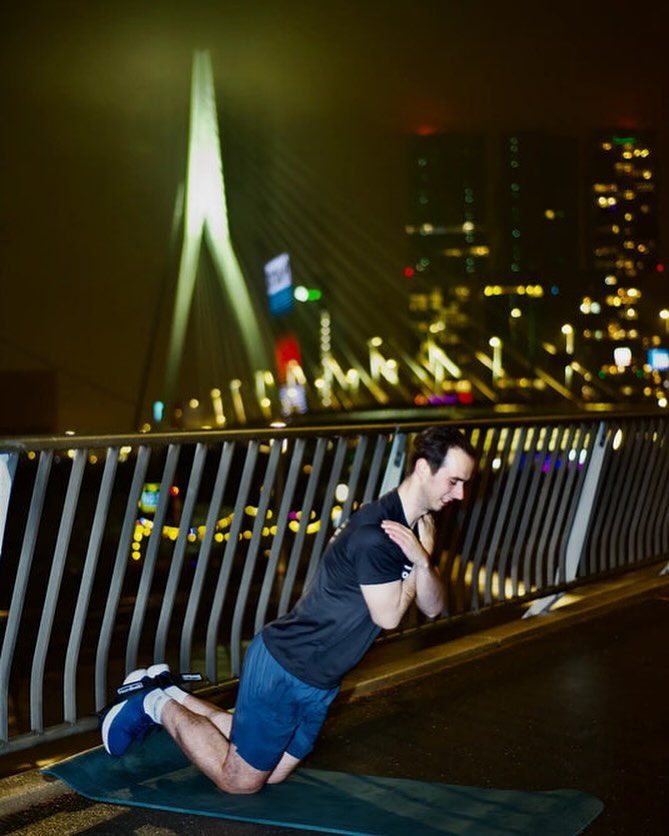
That does not make the Nordic curl automatically better. It makes it more specific and often heavier. A classic soccer study found stronger eccentric strength gains from Nordic hamstrings than from a traditional hamstring curl variation (Mjolsnes et al., 2004). For home training, the practical question is whether you can repeat the movement without losing position.
Watch for three signs that the variation is too hard: the hips shoot backward, the lower back arches to escape the load, or the hands slam into the floor every rep. In those cases, reduce the range, use more hand assistance or move back to sliders. A regression is not a softer option when it lets you keep the hamstring stimulus clean.
Explore this topic further: Nordic curl or 45-degree hip extension for hamstrings at home.
Three options without a GHD machine
1. Nordic curl with a stable ankle anchor
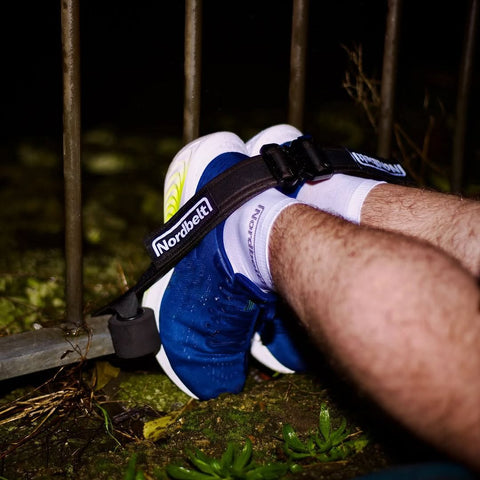
This is the most direct replacement. Kneel on a mat, fix the ankles low, keep the hips relatively extended and lower slowly until your hands catch you. If you are unsure about door, bench or fixed-point setup, read Nordic hamstring curl at home and the equipment guide Nordic hamstring curl apparatus.
Use short ranges first. Many people try to make the first session look like a complete rep and end up changing the exercise into a hip hinge or a controlled fall. A short, honest eccentric rep is more useful than a long rep that loses alignment.
2. Slider curls
Slider curls are easier to dose and make a good bridge before heavy Nordics. Lie on your back with the heels on sliders or towels, lift the hips and move the feet away and back under control. You still train hamstring control, but you do not have to brake the full bodyweight through a long kneeling lever. The progressions are explained in hamstring slider exercises.

3. Assisted Nordic curl
Use your hands, a band or a shorter range to control the dose. The goal is not to fall as far as possible. The goal is that every rep slows down the same way. Start with three sets of three to five controlled reps, stopping before your hips shift back. If you need more regressions, use Nordic hamstring curl alternatives.
Take your Nordic curl from the first rep to week 10.
A concrete 7-page plan: build up week by week, without pushing too fast.
- 01A clear week-by-week progression
- 02Technique and the mistakes to avoid
- 03A simple log you will actually use

≤51%
✓Backed by research
Van Dyk et al., 2019: meta-analysis of programmes with NHE. Not an effect test of Nordbelt or this protocol.
Open the download page again or check the email we sent you.
Open the download page ↗Build it without jumping too fast
The main mistake is replacing the glute ham raise with too much Nordic volume. The exercise looks simple, but the eccentric load is high. Nordic hamstring programs are studied because they create a strong stimulus; that does not mean daily high-volume training is smart (Petersen et al., 2011).
- Weeks 1-2: sliders or assisted Nordics, twice per week, two to three sets.
- Weeks 3-4: short eccentric Nordics, twice per week, three to five reps per set.
- Weeks 5-6: slightly larger range, stopping before technique breaks.
- After that: increase range or volume, not both at once.
Keep at least 48 hours between hard sessions when you are new to Nordics. Mild soreness at the back of the thigh can happen, but sharp pain, a pulling feeling during sprinting or a clear next-day setback means you should reduce the dose. EMG work comparing Nordic curls and ball leg curls also supports treating the Nordic as a high-demand option (Monajati et al., 2017).
A simple rule helps: progress one variable at a time. Add range before you add sets, or add one set before you make the range longer. If you change everything together, you cannot tell which part caused soreness or technique breakdown.
When does Nordbelt make sense?
Nordbelt makes sense when you do not want a large GHD machine but still want repeatable low ankle fixation. A partner, bench or heavy piece of furniture can work only if it stays low, stable and predictable. Test the anchor with your hands first, then with partial bodyweight, before you commit to full eccentric reps.
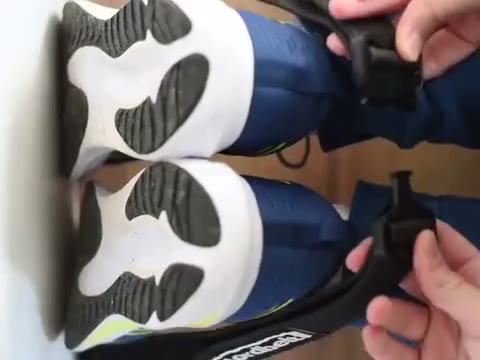
For home training, repeatability matters more than novelty. If the setup takes too long or feels different every session, you will either skip it or overload too quickly. Nordbelt keeps the focus on the exercise rather than on improvising the anchor. View Nordbelt if you want a compact setup, and use the how-to guide to test the anchor before loading it.
The short choice guide is simple. If you have a GHD and train heavy in the gym, use the GHD as your main variation. If you have no machine but can fix the ankles safely, choose the Nordic curl. If you are a beginner or returning from hamstring sensitivity, start with sliders or assisted reps. If you want to train consistently at home, choose the setup you can prepare safely in less than a minute.
FAQ
Is a Nordic curl the same as a glute ham raise?
No. They train related hamstring functions, but a GHD changes the support and lever. A Nordic curl is usually heavier because only the ankles are fixed and the body must control a longer lever from the floor.
Can I do a glute ham raise without a machine?
You cannot perfectly copy a GHD at home, because the machine changes the pad support and the leverage. You can train the same practical goal with Nordic curls, sliders and assisted regressions. For most home athletes, that is more realistic than buying a large GHD machine.
Which version is best for beginners?
Slider curls and assisted Nordics are usually best because you can dose the range and keep control. Move toward full Nordics only when you can lower slowly without pushing the hips backward or landing hard on the hands.
How often should I train it?
Start with two sessions per week and low volume. Two or three sets of three to five controlled reps is enough for many beginners. Add work only when the next day feels normal and your technique stays consistent.
Do I need Nordbelt?
No, but you do need a stable low ankle anchor. Nordbelt is useful when you want that setup to be quick and repeatable without a GHD machine or training partner. The exercise remains demanding, so keep the progression gradual even with good fixation.