

Nordic hamstring curl alternative: 7 regressions that work

A Nordic hamstring curl alternative can train the hamstrings when a full Nordic is too demanding, the setup is unsuitable or a different movement better fits your goal. Alternatives can be useful exercises in their own right; progressing to a full Nordic is optional. Compare these seven options by technique, adjustable load and purpose.

Your Nordic setup, made simple
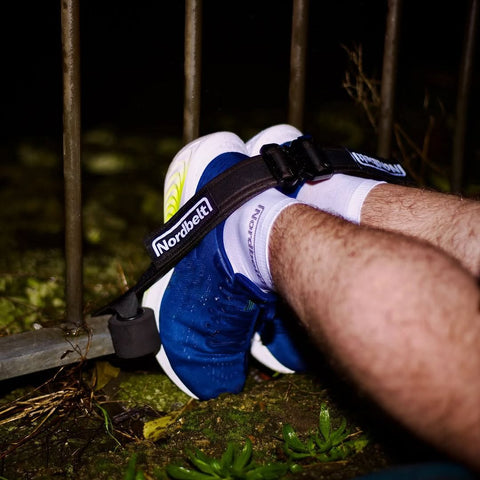
Want to practise an assisted Nordic? Check how to anchor your ankles, then choose a range of motion you can control.
Includes bag, guide & 10-week protocol
View Nordbelt €34.99 Free shipping · 30-day return period
In short
The Nordic hamstring curl is strong, but not magical. What makes it valuable is that it requires a lot of eccentric tension from the hamstrings. So a good alternative does at least part of three things:
- straining hamstrings in the braking phase
- building control around knee bend or hip extension
- enable progression towards a heavier variant
This logic is in line with the literature on Nordic variants: the relevant gains are mainly in eccentric strength, fascicle length and a smart progression back to more specific loads ( Medeiros et al., 2020 ; Rosado-Portillo et al., 2021 ).
Explore this topic further: Glute ham raise alternative at home: Nordic curl without a GHD.

When an alternative is smarter than forcing
An alternative is better than forcing it as:
- you immediately go down in free fall
- your setup is unreliable
- you feel high irritation or pain with the first reps
- you already have a lot of other heavy sprint or strength loads
- you technically cannot yet organize the exercise
The mistake many athletes make is thinking that only the real Nordic counts. As a result, they skip the logical structure and either do nothing or do too much.
What a good alternative should do
Choose an exercise that targets your intended task, allows you to adjust the load and suits your programme. Moving closer to a full Nordic matters only if that is your goal.
From that logic, these are the best alternatives.
Take your Nordic curl from the first rep to week 10.
A concrete 7-page plan: build up week by week, without pushing too fast.
- 01A clear week-by-week progression
- 02Technique and the mistakes to avoid
- 03A simple log you will actually use

≤ 51%
✓Backed by research
Van Dyk et al., 2019: meta-analysis of programmes with NHE. Not an effect test of Nordbelt or this protocol.
Open the download page again or check the email we sent you.
Open the download page ↗7 regressions and alternatives
1. Band-assisted Nordic
The most direct regression. You keep the same direction of movement, but a tire takes away some of the load.
2. Eccentric half Nordic
You only do the top half of the braking phase. This is often the best first step for athletes who already understand technical skills what the exercise requires.
3. Sliding leg curl
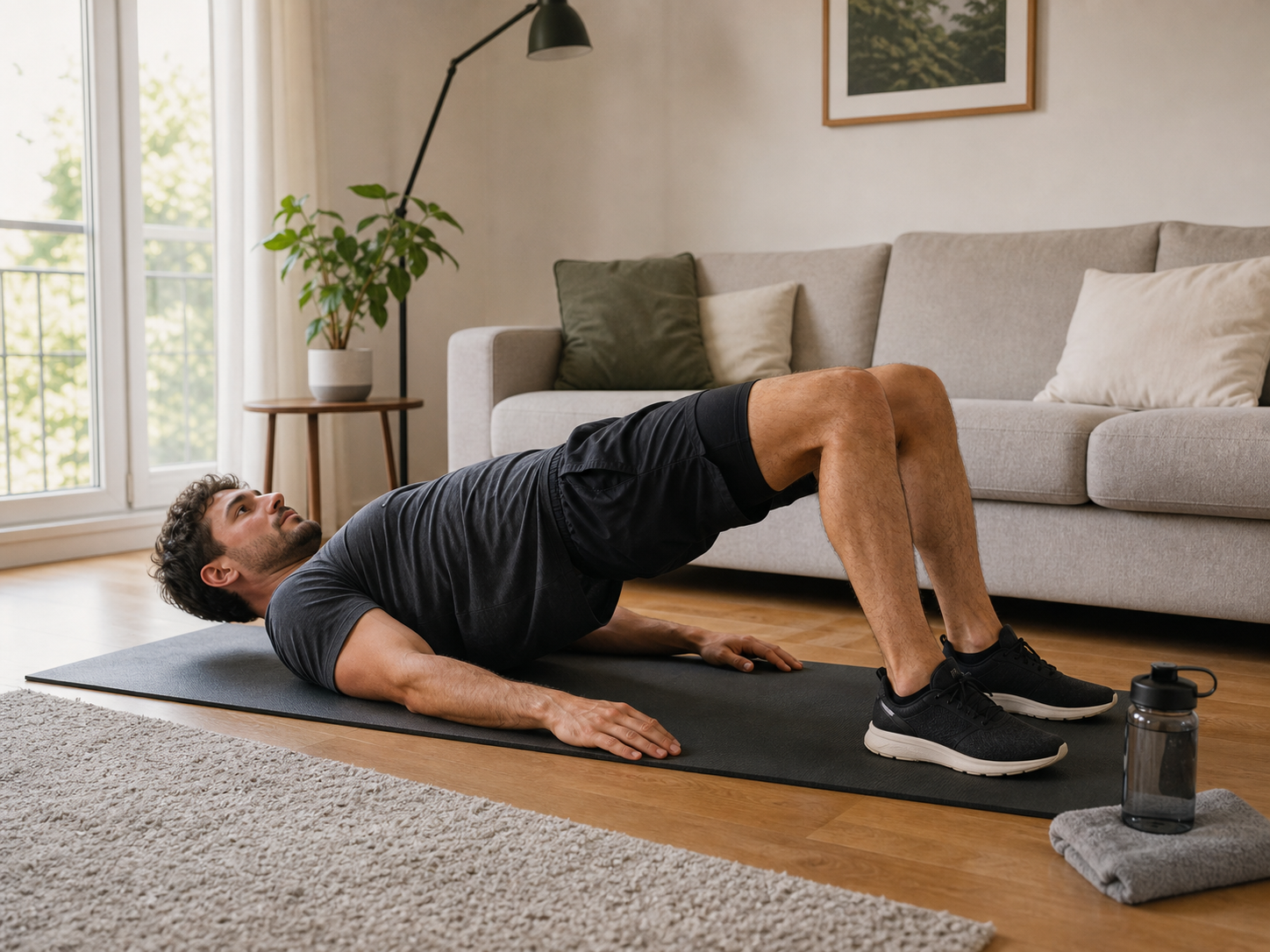
Using towels or sliders, pull your feet towards you from a bridge position. Good home variant for hamstrings, but less specific than the Nordic.
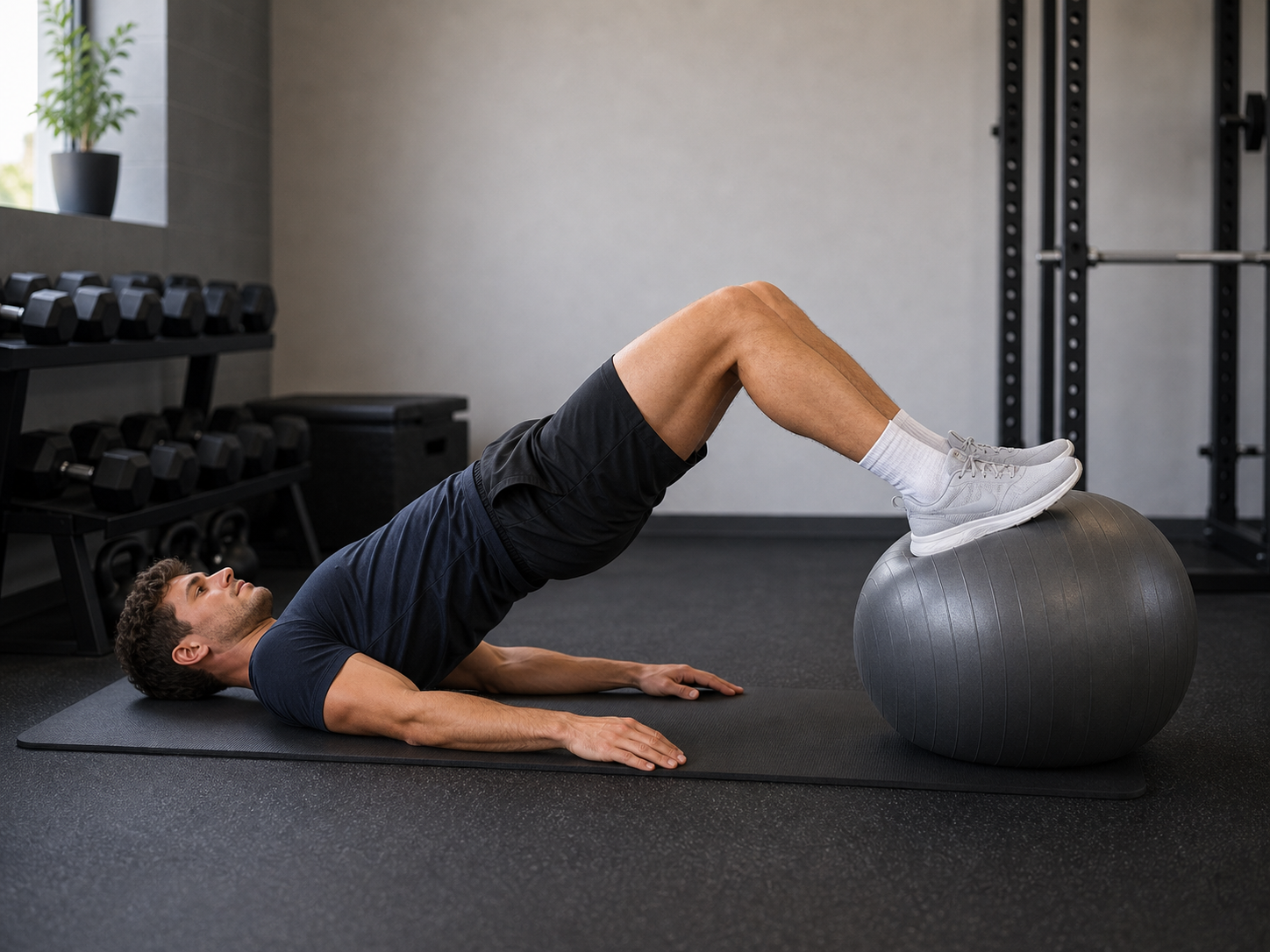
4. Swiss ball leg curl
Similar to the sliding leg curl, but slightly easier to dose. Good for beginners who want to feel tension and control first.
5. Hamstring walkout
From a bridge position, step your heels further and further forward. Simple, heavy enough and good for home use.
6. Razor curl or bridge variations
Strong intermediate step if you have already reached a higher level. More load, but still easier to organize than a full Nordic.
7. Romanian deadlift
Not the same pattern, but useful as a hip-dominant strength base. See this exercise as a supportive alternative, not a one-to-one replacement.
Which exercise suits your level?
Based on your starting point, choose:
- Absolute beginner: hamstring walkout, swiss ball curl
- Beginner with basic control: sliding leg curl, eccentric half Nordic
- Intermediate: band-assisted Nordic, razor curl
- Strong athlete without setup: Romanian deadlift as support + later real Nordic
Anyone who trains at home and wants to build up to real movement will eventually have to return to a variant with stable ankle fixation. That is why the bridge to the How-to guide remains relevant.
This is how you build back to the real Nordic
A smart progression path looks like this: 1. Start with a regression that you technically master. 2. Build pace and control first. 3. Then increase the range of motion. 4. Then switch to a band-assisted or half Nordic. 5. Then work up to full negative reps. 6. Only then move on to more full reps.
The transition to the real Nordic is the moment when a fixed setup becomes important. If you notice that regressions go well but your ankle fixation becomes your limiting factor, the Nordbelt product page is relevant.

Common mistakes
- choosing an exercise that is too easy and wrongly calling it "alternative"
- doing multiple alternatives at the same time without a clear goal
- directly increase volume instead of control
- never switch back to a more specific Nordic pattern
FAQ
What is the best Nordic hamstring curl alternative for at home?
Walkouts, slider curls and assisted Nordics are possible starting options. The best choice is the movement you can control and dose for your goal, rather than automatically the hardest option.
Is a Romanian deadlift a good alternative?
As a supporting exercise, yes, but it does not completely replace the specific eccentric knee-dominant load of the Nordic. Therefore, see a Romanian deadlift primarily as an additional hip-dominant strength base, not as a one-on-one replacement for the Nordic pattern.
When do I switch to the real Nordic?
You do not have to switch. If a full Nordic is your goal, first practise a short assisted version with a checked anchor and early hand support. Increase one variable at a time according to control and recovery, not a universal readiness test.