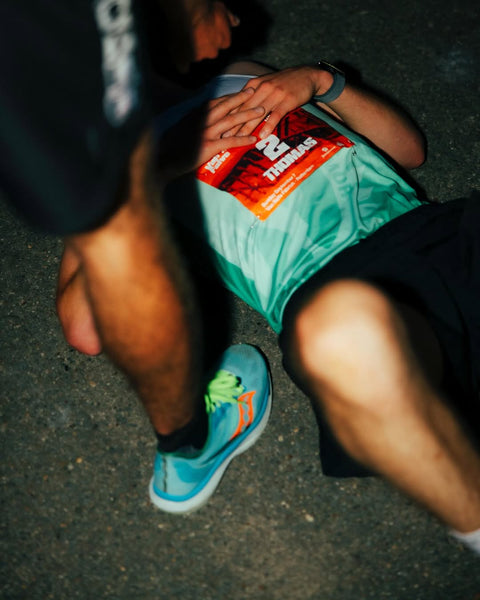


Hamstring injury: recovery, exercises and rebuilding strength


Recovery from a hamstring injury takes a different amount of time for each person. Severity, injury location, previous injuries and the demands of your sport all matter. A fixed number of weeks cannot tell you when you are ready to run or sprint again. This guide explains useful recovery milestones, examples of exercises and where Nordic curls may fit.
Why there is no single recovery timeline
An injury in the muscle belly is different from one involving a tendon. Walking comfortably is also different from tolerating sprinting, braking or kicking. Return-to-sport decisions should consider function and the response to progressively greater loads, not just the calendar or pain alone. See Hickey et al., 2017 and Rudisill et al., 2021.
When to seek an assessment
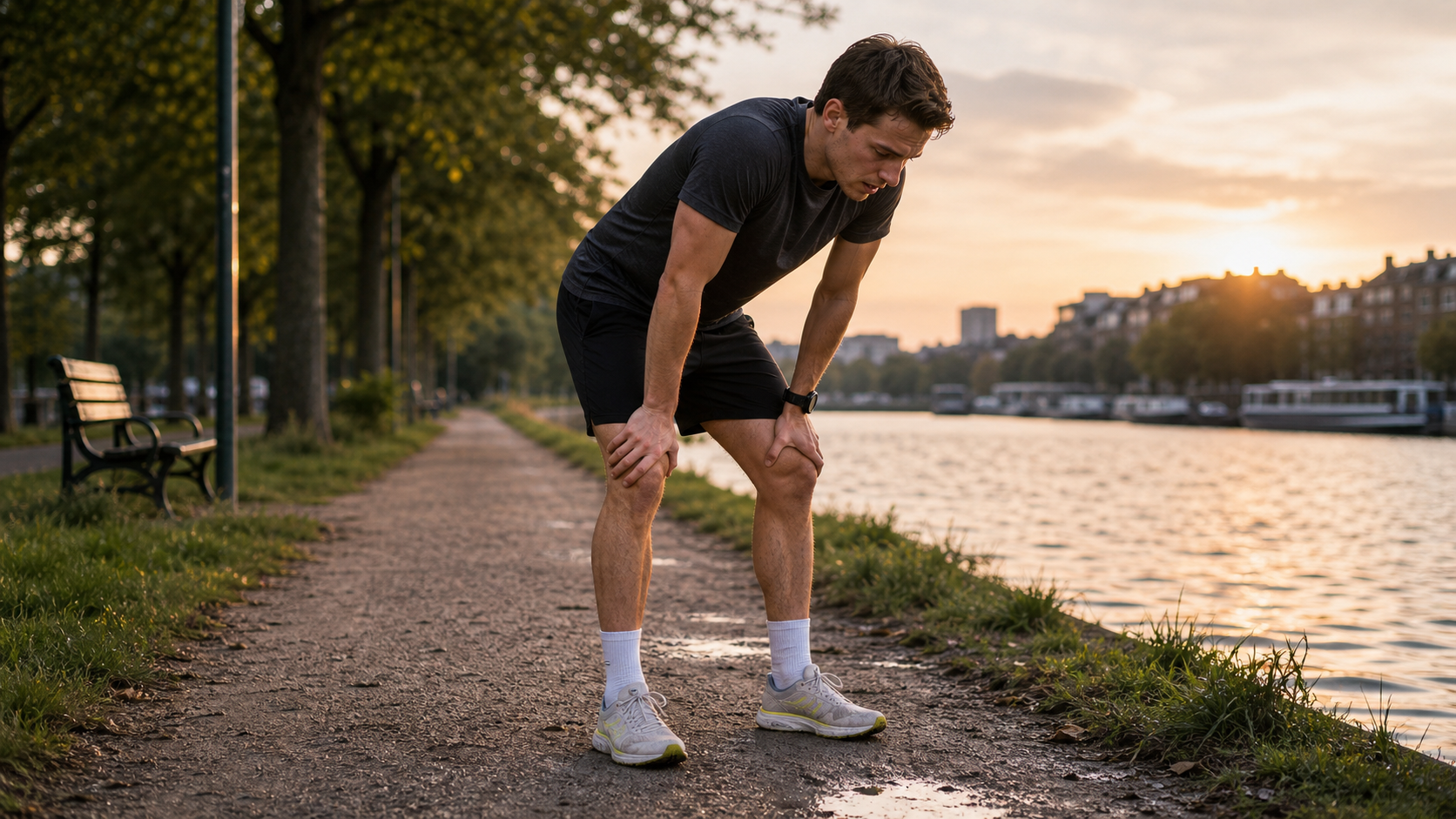
Stop the activity that provokes sudden sharp pain. A pop, substantial bruising or swelling, marked weakness, or difficulty walking warrants prompt assessment by a clinician. Persistent or recurring symptoms also deserve assessment. Pain high near the buttock, particularly when sitting, may involve a tendon or another cause and should not automatically be treated as a simple muscle strain. For a fresh injury, read what to do in the first 48 hours.
Which exercises can fit during recovery?
The following are examples to discuss with your physiotherapist, not a personalised rehabilitation programme. Exercise choice, resistance, range and repetitions depend on the injury and your response. These stages can overlap; do not advance simply because a certain number of days has passed. Progressive strength work and gradual return to running are discussed in Hickey et al., 2022.
1. Gentle movement and controlled activation
Once suitable after assessment, examples include gently bending the knee without added resistance or a light heel press into the floor without moving the leg. Keep effort and range within the limits agreed with your clinician. Do not use these movements to test the maximum strength of a newly injured hamstring.
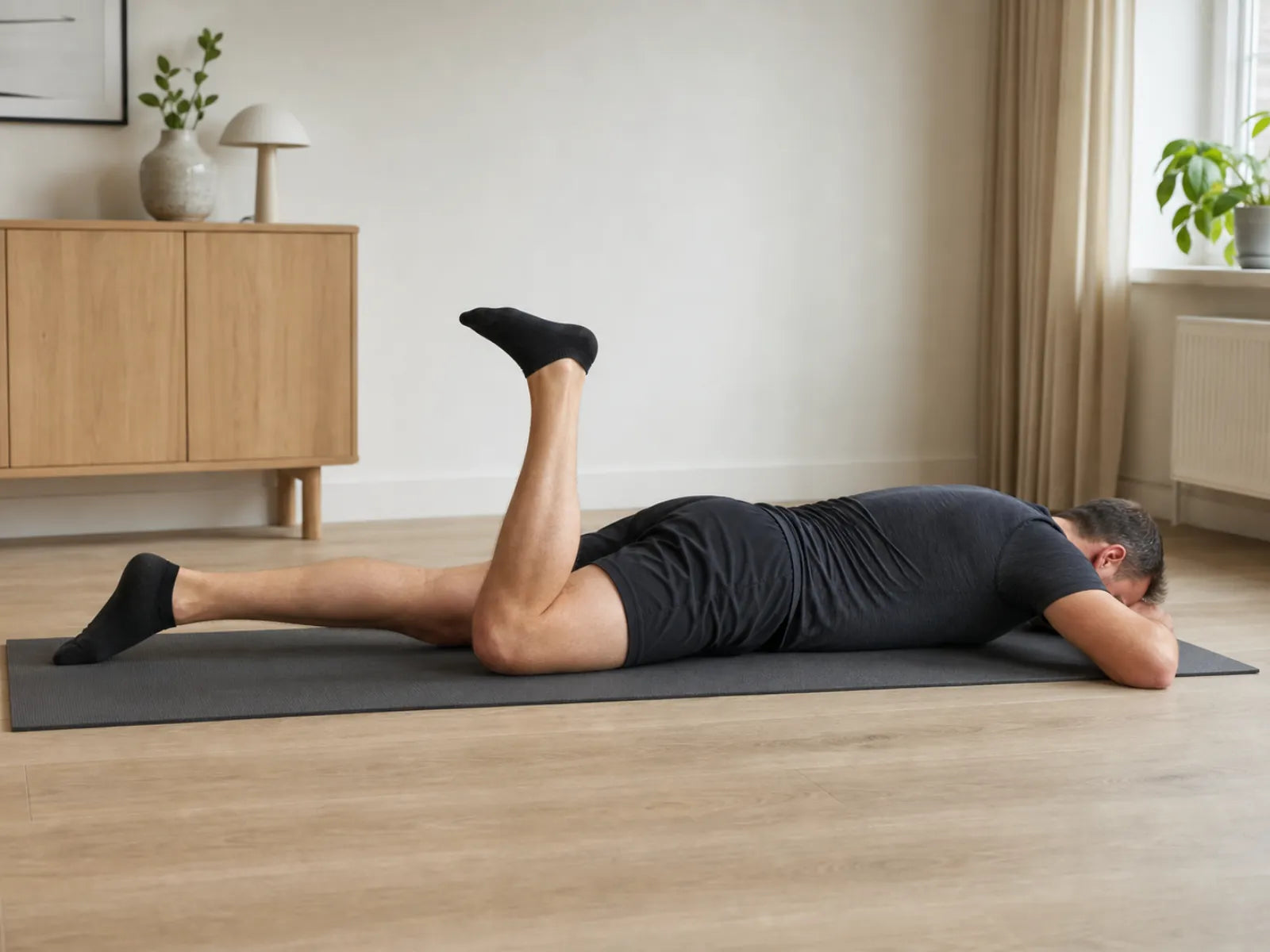
2. Rebuild strength gradually
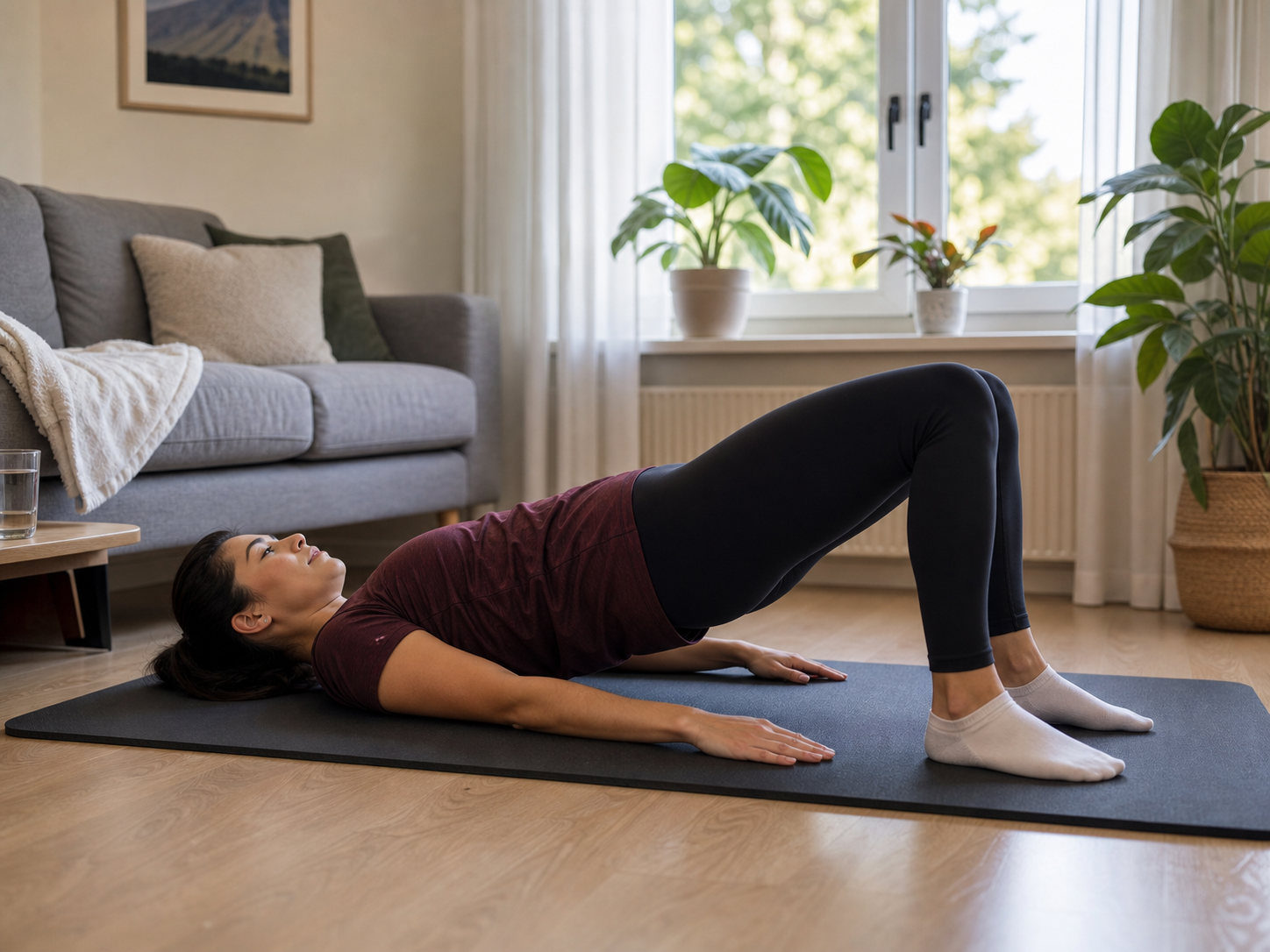
A two-legged bridge, controlled knee curls and hip-hinge exercises are possible options when appropriate. Increase resistance or range gradually rather than changing everything at once. The response later that day and the following day matters too. Increasing pain, swelling, weakness or worsening walking is a reason to step back and seek advice.
3. Add demanding exercises and sport-specific loading
More demanding eccentric exercises, including appropriately assisted Nordic curls, may become part of an individual plan. They are not automatically the right starting point after an injury. Progression towards running, faster efforts and sprinting needs its own assessment; completing strength exercises does not by itself mean you are ready for a match.
What does Nordbelt do?
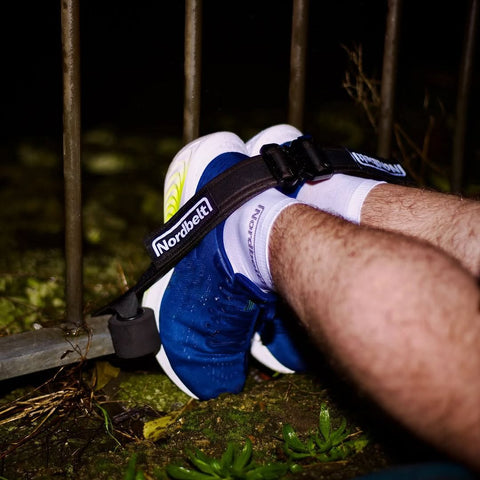
If Nordic curls are appropriate in your training plan, Nordbelt provides ankle fixation so you can set up the exercise without a training partner. It is a training tool, not a treatment for pain or a guarantee of faster recovery. The included training protocol is not a universal rehabilitation schedule. Follow your clinician's loading advice and check the setup in the Nordbelt how-to guide.
Useful milestones before returning to sport
Discuss whether everyday movement is manageable, strength and confidence are improving, and progressively faster running is tolerated. Your sport may also require acceleration, braking, kicking or changes of direction. Avoid treating one pain-free session as clearance for every activity. See the guides on hamstring injuries and running and hamstring injuries in football.
Frequently asked questions
Does every mild strain heal within the same number of weeks?
No. Symptoms can improve before strength and tolerance to high-speed activity have recovered. Use individual milestones rather than a guaranteed deadline.
Should I start Nordic curls immediately?
No. First establish what is injured and what loading is appropriate. Nordic curls are demanding and may only fit later, with suitable assistance and progression.
Can a training tool speed up healing?
Nordbelt makes a particular exercise easier to set up. It does not establish a diagnosis, replace rehabilitation or guarantee a shorter recovery time.
For more context, read hamstring injuries: types, symptoms and recovery.