★ 4.6
Nordic curls or sprint training: can one replace the other?

Nordic curls and sprinting are different tasks. Learn how to interpret direct comparisons and separate strength, running performance and symptoms without a speed guarantee.
FREE 10-WEEK TRAINING PROTOCOLSend my free protocol ↓Nordic curls or sprint training is not a choice between two interchangeable exercises. A Nordic hamstring curl practises braking from a kneeling position; sprint training practises running fast. Research suggests that both, within a broader programme, can improve certain strength and performance measures (Ripley et al., 2023). That does not show that either task fully replaces the other. First decide what you want to improve, then assess that outcome separately.
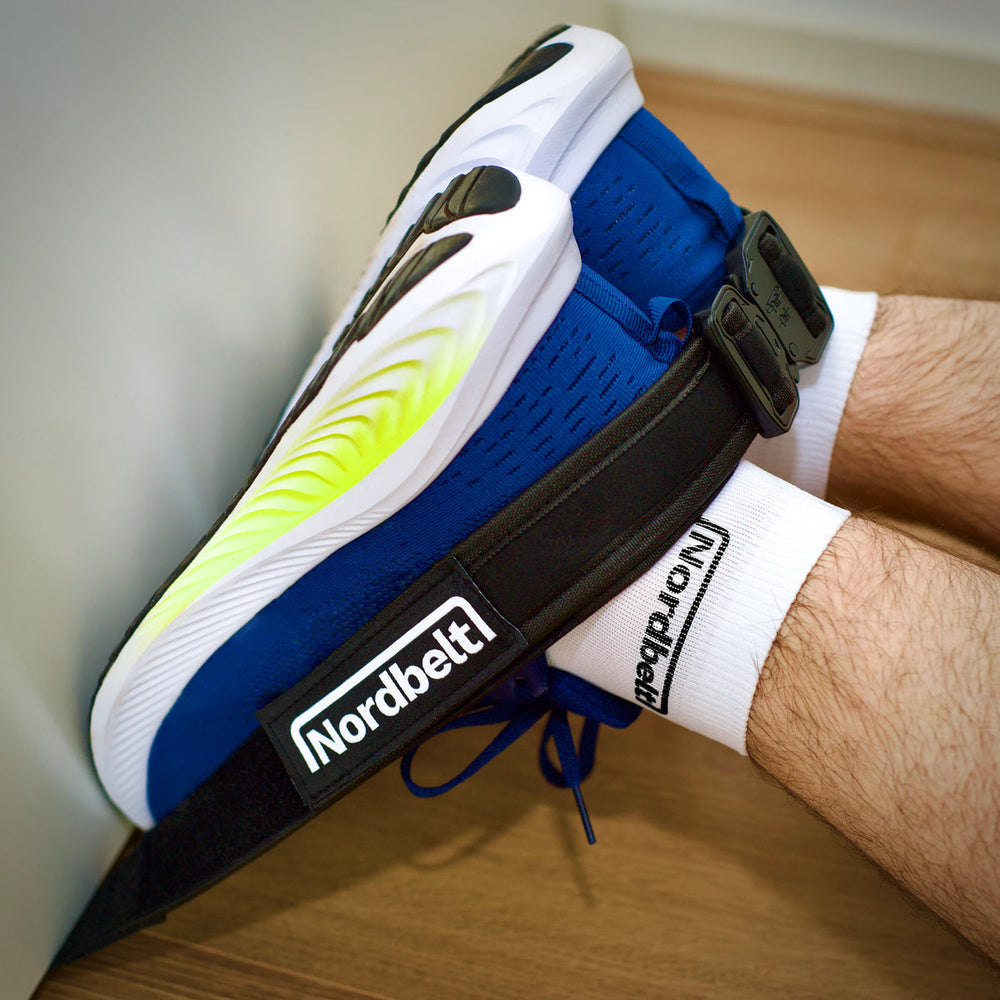
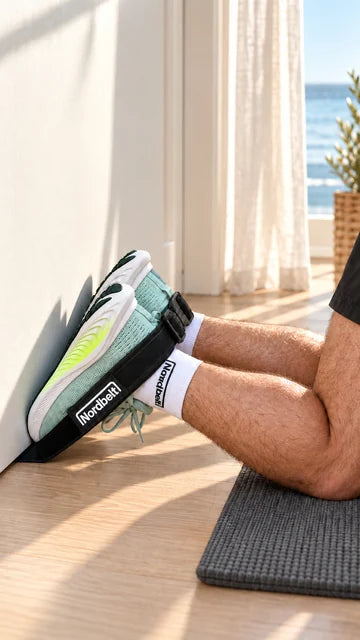
If you also want to do Nordic curls at home, a consistent setup can help. See how Nordbelt provides ankle fixation for Nordic curls. The tool enables the exercise without a training partner, provided the attachment is suitable. It does not select your training load, catch you or replace sprint training.
Which task do you want to train?
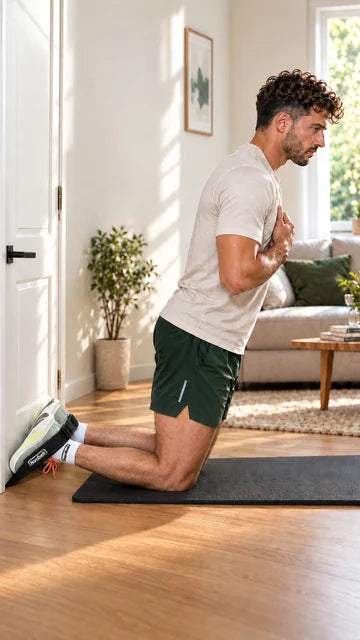
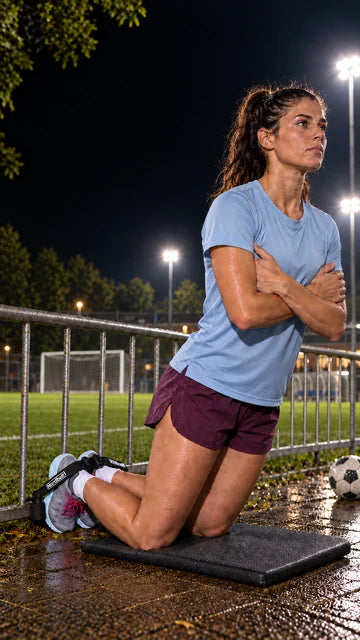
In the usual eccentric Nordic curl, you kneel with secured ankles. Let your body move forwards from the knees while your hamstrings brake the movement. Keep your hands ready to catch yourself; returning with assistance is part of this version. Read the basic Nordic hamstring curl technique if the exercise is new to you.
Sprinting involves accelerating, alternating strides and continuing to run at speed. You do not perform that task in a kneeling strength exercise. It is more useful to ask how each training method contributes to your goal than to declare one a complete substitute. The direct comparison below examined both additions to the same resistance programme, rather than two entirely separate training systems (Ripley et al., 2023).
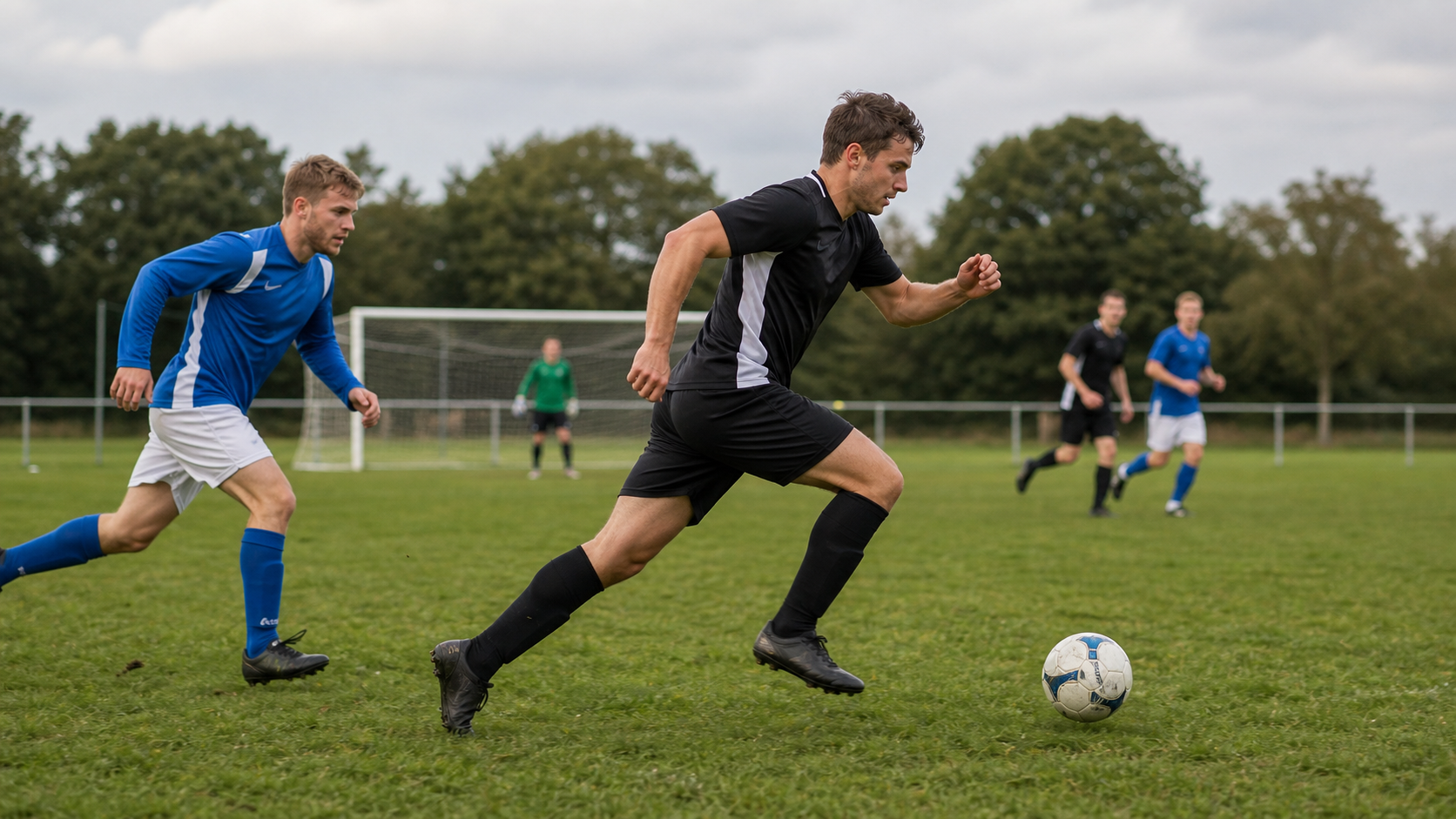
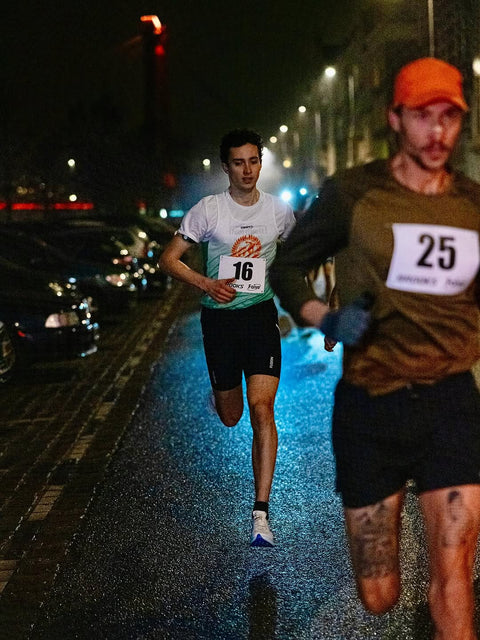
Context image of a running action in football. The photograph shows no measured speed, prescribed sprint load or training-programme result.

What did the Nordic and sprint study compare?
Ripley and colleagues assigned 38 collegiate athletes to three groups. All groups followed the same lower-body programme for seven weeks. One group added Nordic curls, another added sprint training, and the control group added neither. Researchers measured muscle architecture, eccentric hamstring strength and sprint performance, among other outcomes. Both groups with an addition improved their measured sprint times, while the control group also improved on several strength measures (Ripley et al., 2023).
This is useful information, but it does not establish complete interchangeability. Groups were small and performed several shared exercises. You cannot interpret the improvements as though only Nordics or only sprinting had been studied. Strength, muscle architecture and performance were the measured outcomes; a reduction in actual hamstring injuries was not demonstrated here (Ripley et al., 2023).
Nor does “sprint time improved” mean “everyone will become faster”. A group result from this programme cannot determine your individual response, suitable dose or how much sprint training you can remove. The study did not compare Nordbelt with another attachment method either.
Does Nordic training change muscle activity during fast running?
A second study examined one specific aspect of transfer. Twenty injury-free male basketball players were studied after a twelve-week Nordic intervention or a control period. Using multiple electrodes, researchers measured hamstring activity during the late-swing phase of fast running. They found no statistically clear change in the activity measures studied. The authors urge caution because few usable data sets were available (Suskens et al., 2025).
Muscle activity measured by electromyography, or EMG, is different from strength, sprint time or injury numbers. A lack of a clear EMG difference therefore does not establish that Nordic training is worthless. Neither does it show that stronger Nordics automatically change your sprinting or make it safer. This study did not examine complete replacement of sprint training or return after a current injury (Suskens et al., 2025).
Take your Nordic curl from the first rep to week 10.
A concrete 7-page plan: build up week by week, without pushing too fast.
PDF7 pagesStraight to your inbox
- 01A clear week-by-week progression
- 02Technique and the mistakes to avoid
- 03A simple log you will actually use

Open the download page again or check the email we sent you.
Open the download page ↗≤ 51%
✓Backed by research
Van Dyk et al., 2019: meta-analysis of programmes with NHE. Not an effect test of Nordbelt or this protocol.
Assess strength, speed and symptoms separately
The practical step is to choose your question and the relevant observation beforehand. The comparison below is an editorial decision framework, not a validated test battery or training protocol. The studies above give reasons to separate outcomes, not to treat this table as proof of personal suitability.
| Your question | What should you record separately? | What should you avoid concluding? |
|---|---|---|
| Am I performing my chosen Nordic better? | The same setup, assistance and controllable range | That your sprint performance or injury risk is therefore known |
| Am I running faster in my sport task? | An appropriate running measurement under comparable conditions, with guidance if needed | That one additional exercise caused the change |
| Does the load suit my situation? | Symptoms, recovery and total sport load, discussed when needed | That a good repetition provides medical clearance |
Suppose you can lower farther in a Nordic but have not measured your running performance. Record only the improvement in that execution. If you have measured a faster sprint while your team training also changed, do not attribute the gain solely to Nordics. Your notes remain useful without suggesting more certainty than you have.
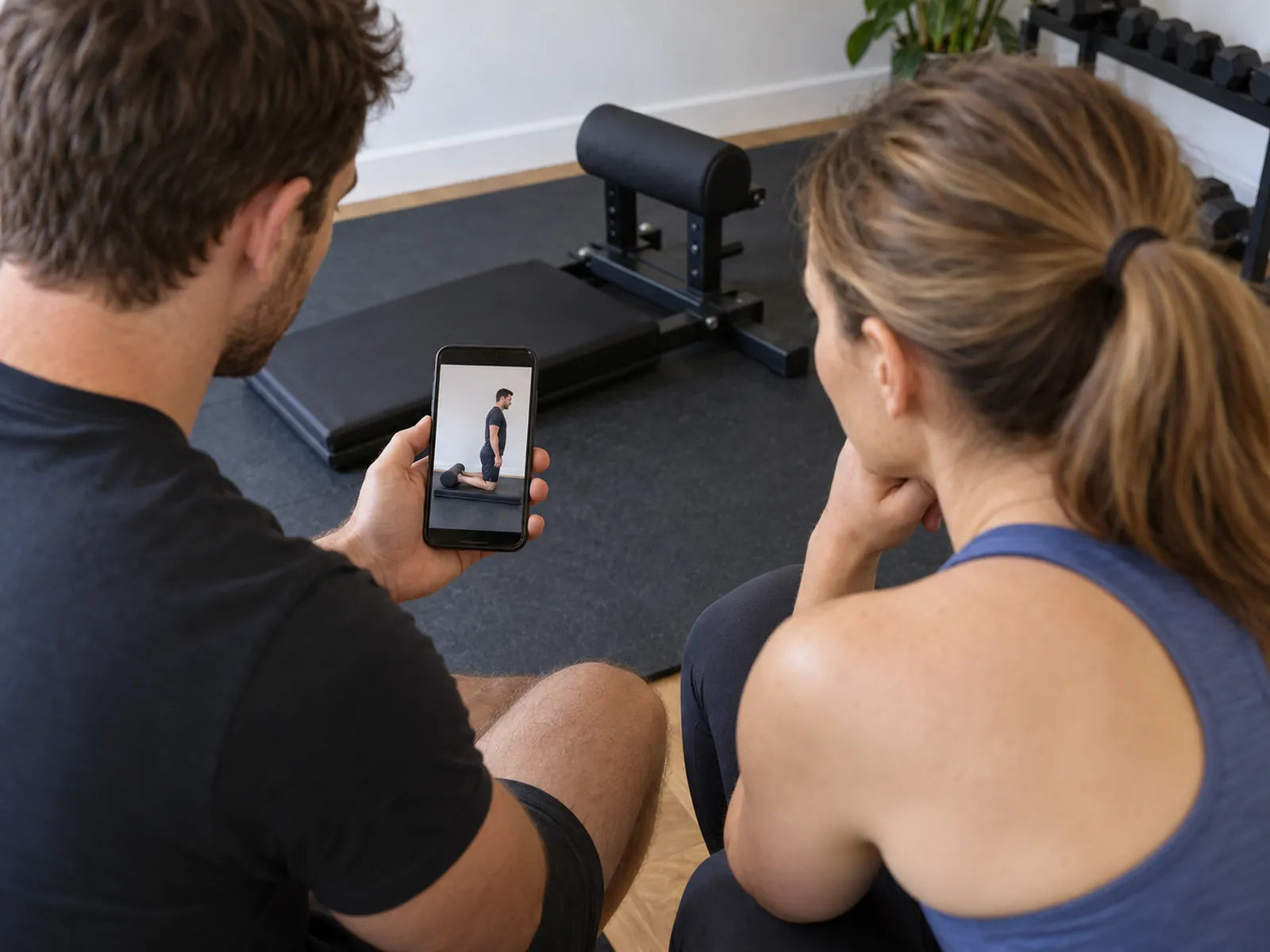
Context image of reviewing a recording together. A phone image does not measure hamstring force, sprint readiness or medical suitability; the photograph shows no professional assessment.
Make the Nordic component practical
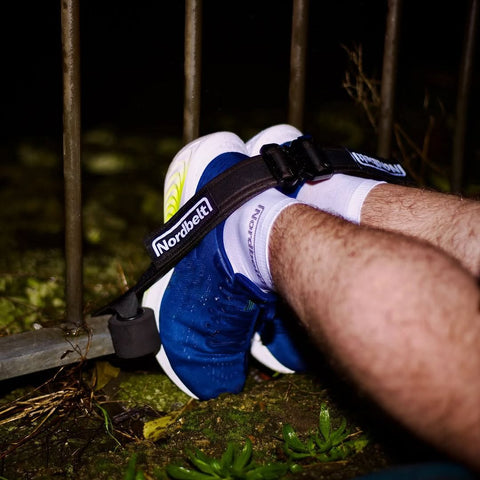
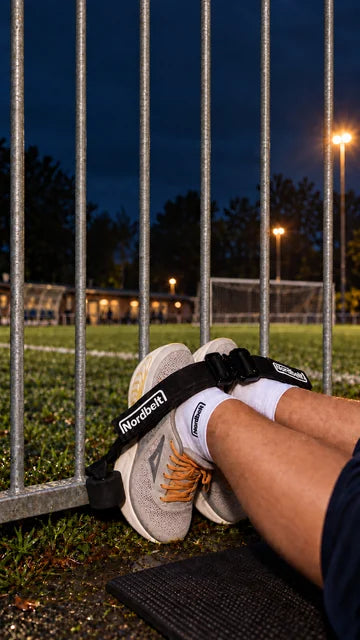
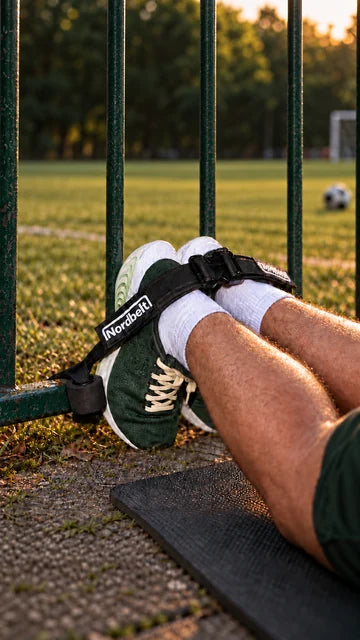
Choose a stable surface, comfortable knee support, enough room for your hands and low, symmetrical ankle fixation. Before loading, check that the anchor and attachment stay in place. Follow the guide to a suitable door, bench or fence setup. A door must be firmly closed and suitable for the attachment described. A bench or fence must withstand the load without moving; a light chair or loose fence is not a safe alternative.
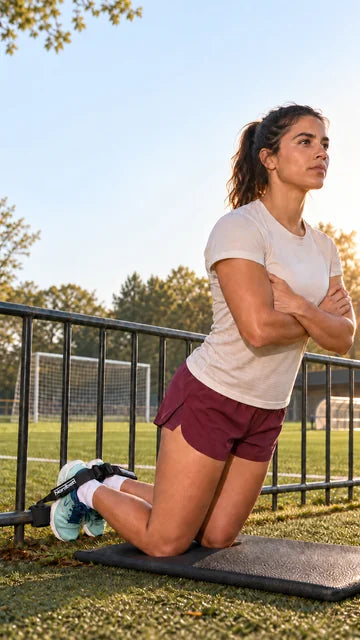
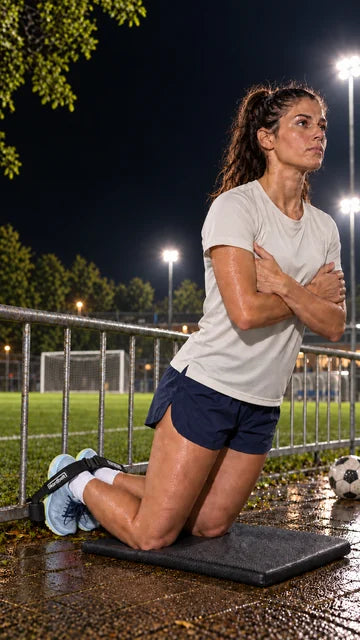
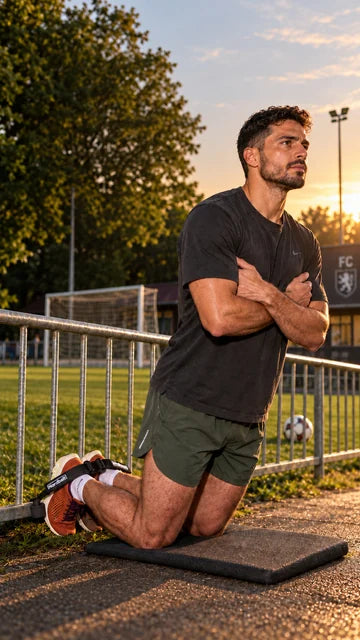
Start upright on your knees. Keep shoulders, hips and knees roughly aligned, move forwards under control and catch yourself early with your hands. Use assistance to return. Stop if the attachment shifts, you fall without control or sharp pain occurs. The top photograph shows only a starting position by a fence; it neither approves every fence nor demonstrates a complete repetition.
When combining this with sport, use a plan that accounts for your existing load. The separate Nordic curl schedule for football covers placement around training and matches. Training volume is discussed in how many Nordic curls per week. Those topics serve a different purpose from deciding whether strength training and sprinting are the same task.
This article concerns training choices for healthy athletes. Do not use a Nordic or a fast run to test a current injury. Discuss new sharp pain, persistent symptoms or uncertainty about resuming with a doctor or physiotherapist. A well-executed strength exercise alone is not permission to sprint maximally again.
Frequently asked questions
Can Nordic curls replace sprint training?
Do not assume complete replacement. Nordics and sprinting can influence overlapping measures within a broader programme, but the direct comparison does not establish that they train the same sport task or that you can remove sprint loading without limits. Decide which component you need and record strength and running performance separately (Ripley et al., 2023).
Will Nordic curls make me faster?
The group adding Nordics improved its measured sprint times in the programme studied. All groups also performed the same lower-body programme. This is no individual speed promise and does not establish that the Nordic curl alone caused the improvement (Ripley et al., 2023).
Does no EMG change mean the exercise does nothing?
No. The basketball study examined specific activity measures during fast running, with few usable data sets. No clear difference in that measurement is not a general verdict on all possible training effects. It provides no medical certainty for an individual athlete either (Suskens et al., 2025).
Must I do both in the same session?
That does not follow from this comparison. Suitable placement depends on your current programme, experience, recovery and sport goal. Discuss planning with your coach if needed, and symptoms with a doctor or physiotherapist. Do not add a maximal sprint test to check whether a Nordic session worked.