

Lower back pain from tight hamstrings: causes and what to do


“Nordbelt is easy to secure and feels stable.”
Lower back pain from tight hamstrings often comes from a combination of limited range of motion, long periods of sitting, and little control around the hips and pelvis. Tight hamstrings don’t literally tear your back, but they can make tilting your pelvis, bending forward, and getting up from a chair less smooth. Therefore, don’t start by forcefully stretching your hamstrings. First, check your pattern, take short movement breaks, and then gradually build mobility and strength.
In brief
Lower back pain from tight hamstrings is usually not a matter of a muscle that is 'too short' and therefore needs to be stretched harder. It is more often about a movement chain: hamstrings, hips, glutes, lower back, and core control work together. If you sit for a long time, your hamstrings may feel stiff and your lower back may respond more sensitively when standing up or bending forward.
A logical approach has three steps: sit for shorter periods at a time, move smoothly without forcing pain, and then add light hamstring and hip strength. If you mainly want to know whether stretching or strengthening suits you, also read the guide on stretch or strengthen tight hamstrings. This article focuses on the connection with lower back pain.
Can tight hamstrings cause lower back pain?
Stiff hamstrings can play a role in lower back pain, but they are rarely the only cause. A systematic review of prospective cohort studies found that limited hamstring mobility was associated with an increased likelihood of developing lower back pain, alongside factors such as limited lateral trunk movement and lumbar lordosis (Sadler et al., 2017). That means: hamstring mobility is a meaningful aspect to check, but not a complete diagnosis.
The practical translation is simple. If tight hamstrings cause back pain when bending over, putting on shoes, or sitting for a long time, don't just look at 'more stretching.' Also look at how your pelvis moves, whether your hips can hinge properly, and whether your torso stays steady when you get up again.
In case of genuine radiating pain, loss of strength, tingling, or pain that rapidly worsens, this is not a self-test article. In that case, assessment by a doctor or physiotherapist is wiser than continuing to stretch.

How do you recognize the pattern after sitting for a long time?
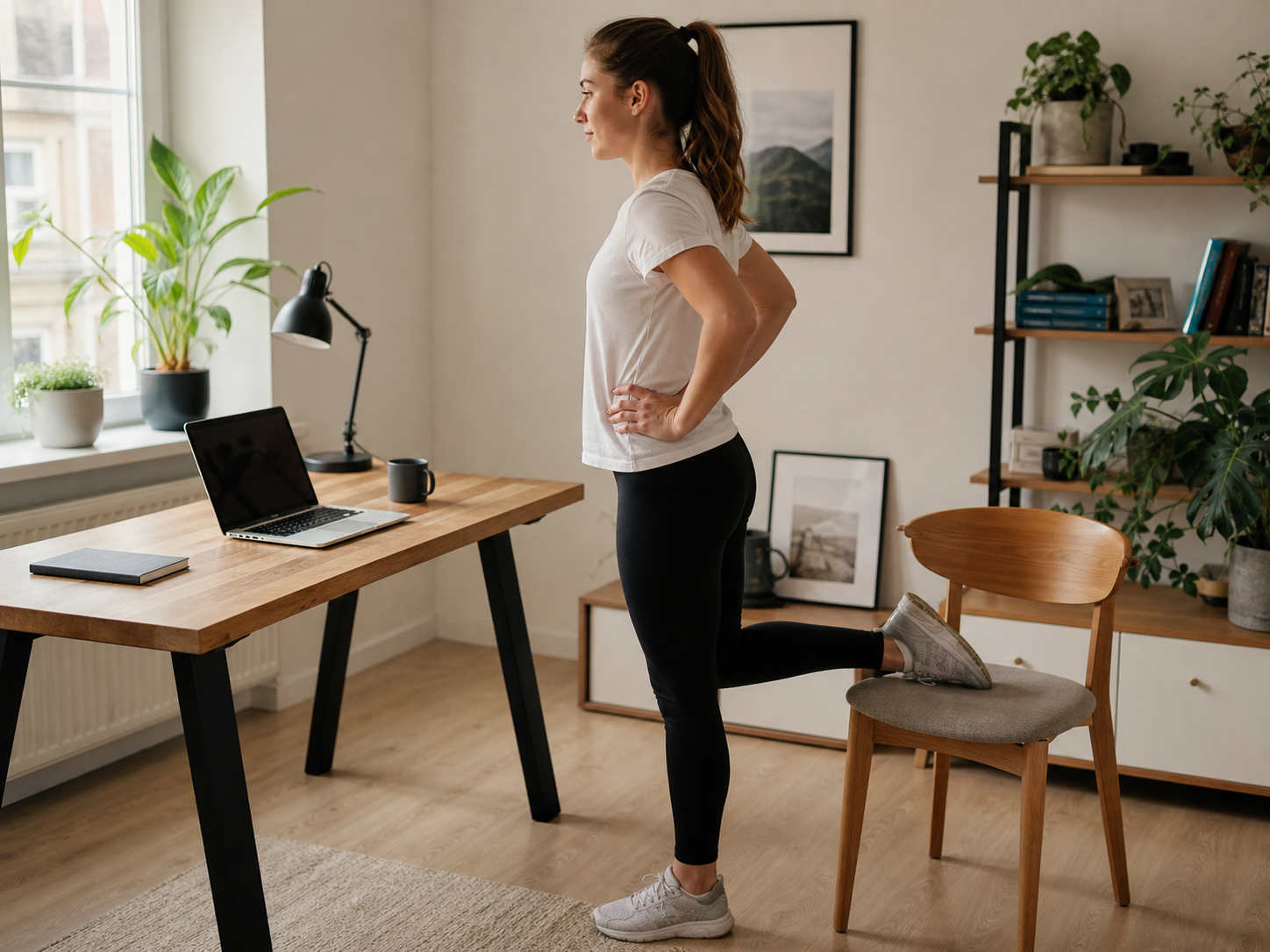
Lower back pain with tight legs often appears in a few recognizable situations. You sit for a long time behind your laptop, stand up, feel tension behind your thighs, and notice that your lower back is stiff or sensitive for the first few minutes. After that, it usually gets better when you walk. Another variant: you bend forward and immediately feel a stretch at the back of your legs, after which your back compensates by rounding.
Use three short checks:
- Get up after sitting for 45 to 60 minutes and walk for two minutes. If lower back pain clearly decreases after sitting for a long time, lack of movement is likely a contributing factor.
- Place a heel on a low step, keep your back relaxed, and bend very slightly from the hip. Mainly feel the stretch in the back of the thigh, not sharp back pain; then hamstring mobility may be relevant.
- Do five slow hip hinges without weight. If your back immediately takes over the movement, you should not stretch deeper but first learn the hip hinge.
These checks prove nothing medically. They do help in choosing between mobility, technique, and strength building.
Take your Nordic curl from the first rep to week 10.
A concrete 7-page plan: build up week by week, without pushing too fast.
- 01A clear week-by-week progression
- 02Technique and the mistakes to avoid
- 03A simple log you will actually use

≤51%
✓Backed by research
Meta-analysis of randomised trials of the Nordic Hamstring Exercise.
Open the download page again or check the email we sent you.
Open the download page ↗Loosening hamstrings without straining your back
Making hamstrings flexible in a back-pain-friendly way means: stretch gently, avoid maximal end range, and monitor your pelvis. In a meta-analysis of randomized studies in people with low back pain, hamstring stretching was associated with lower pain scores and better function, but the studies differed greatly from each other (Gou et al., 2024). Therefore, use stretching as part of a plan, not as a miracle cure.
A good start is 2 to 3 rounds of 20 to 30 seconds per side. Choose a position in which you can breathe calmly. Keep your knee slightly bent as a straight knee immediately pulls on your back. Stop if the stretch becomes sharp, tingling, or radiating.
A study in standing workers showed that hamstring stretching with pelvic control was more beneficial than more general stretching for pain and function (Han et al., 2016). That fits with practice: the posture in which you stretch is often more important than how far you go.
Gentle exercises for hamstrings, hips, and lower back
If stretching helps temporarily but the stiffness returns, then add light strength and control. Start with exercises that keep your back neutral and do not immediately put maximum strain on your hamstrings.
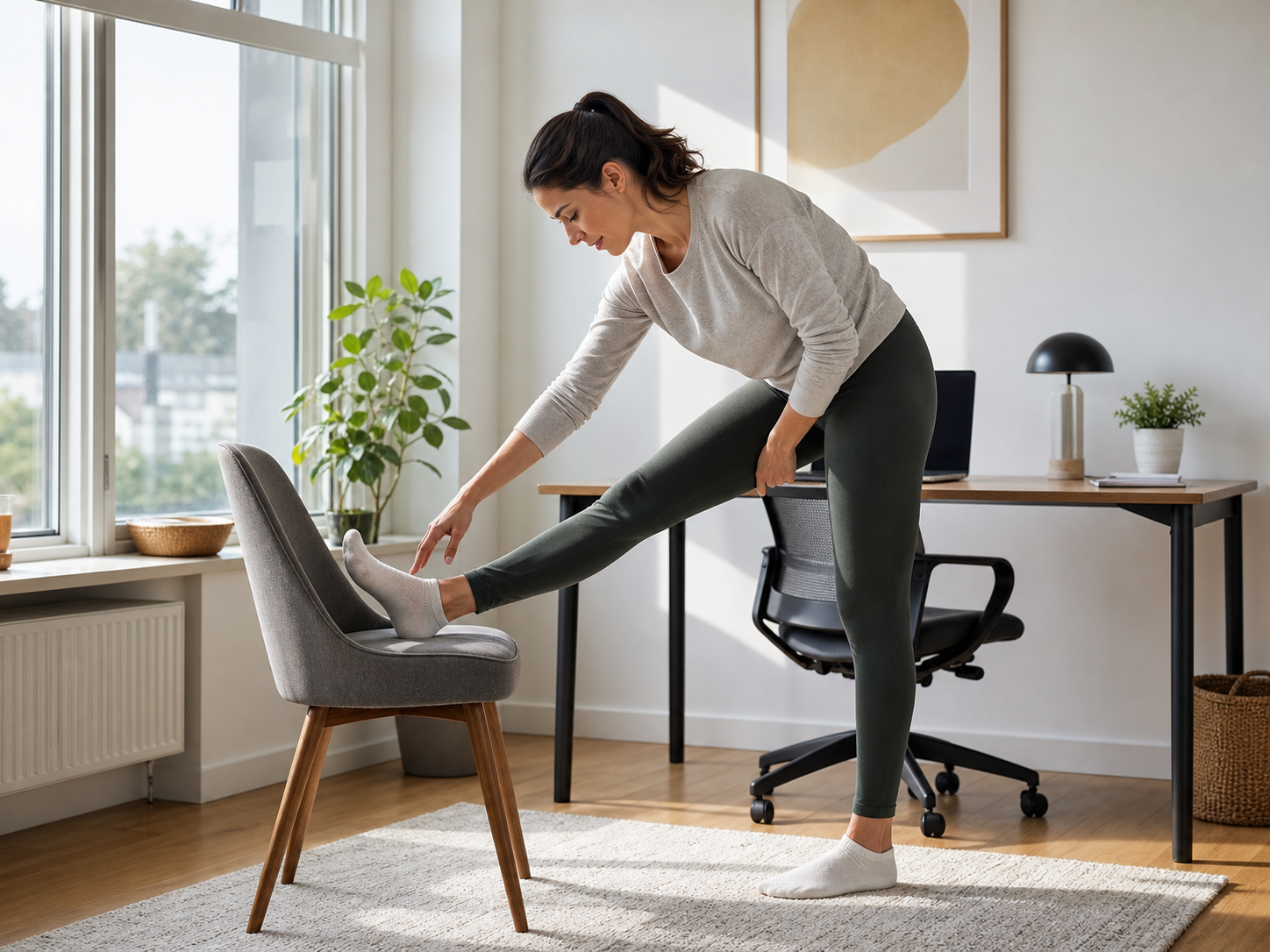
Start with this order:
- Movement break: every 45 minutes walk for two minutes or climb stairs slowly.
- Hamstring stretch with pelvic control: 2 rounds per side, mild and gentle.
- Bodyweight hip hinge: 2 sets of 8 repetitions, only as deep as your back remains neutral.
- Glute bridge: 2 sets of 8 to 12 repetitions, focus on hip extension without arching your lower back.
- Heel slides or light hamstring curls: slide out slowly, pull back without cramping.
In non-specific low back pain, core and hip exercises can improve function and activity (Kim and Yim, 2020). That is why the best routine usually not only stretches the hamstrings, but also involves the hips and torso.
If you want more exercise options after that, use the comprehensive guide to hamstring exercises. For a practical home program, the hamstring exercises at home guide fits better.
When is it not just a hamstring problem?
Lower back pain due to tight hamstrings is a useful search image, but not every back complaint comes from your hamstrings. Pay attention to the context. Pain that is mainly in the buttock or the back of the thigh sometimes requires a different distinction than ordinary stiffness. Then the explanation about pain at the back of your thigh is more relevant.
If you mainly get symptoms when sitting, also read pain at the back of the thigh when sitting. That pattern may relate more to nerve irritation, tendon attachment, sitting load, or local sensitivity than to 'short hamstrings'.
Seek help if you experience pain radiating below the knee, tingling or numbness, noticeable loss of strength, fever or unexplained illness, or if pain develops after a fall or trauma. Also, do not continue the same stretch for weeks if the back complaint does not change.
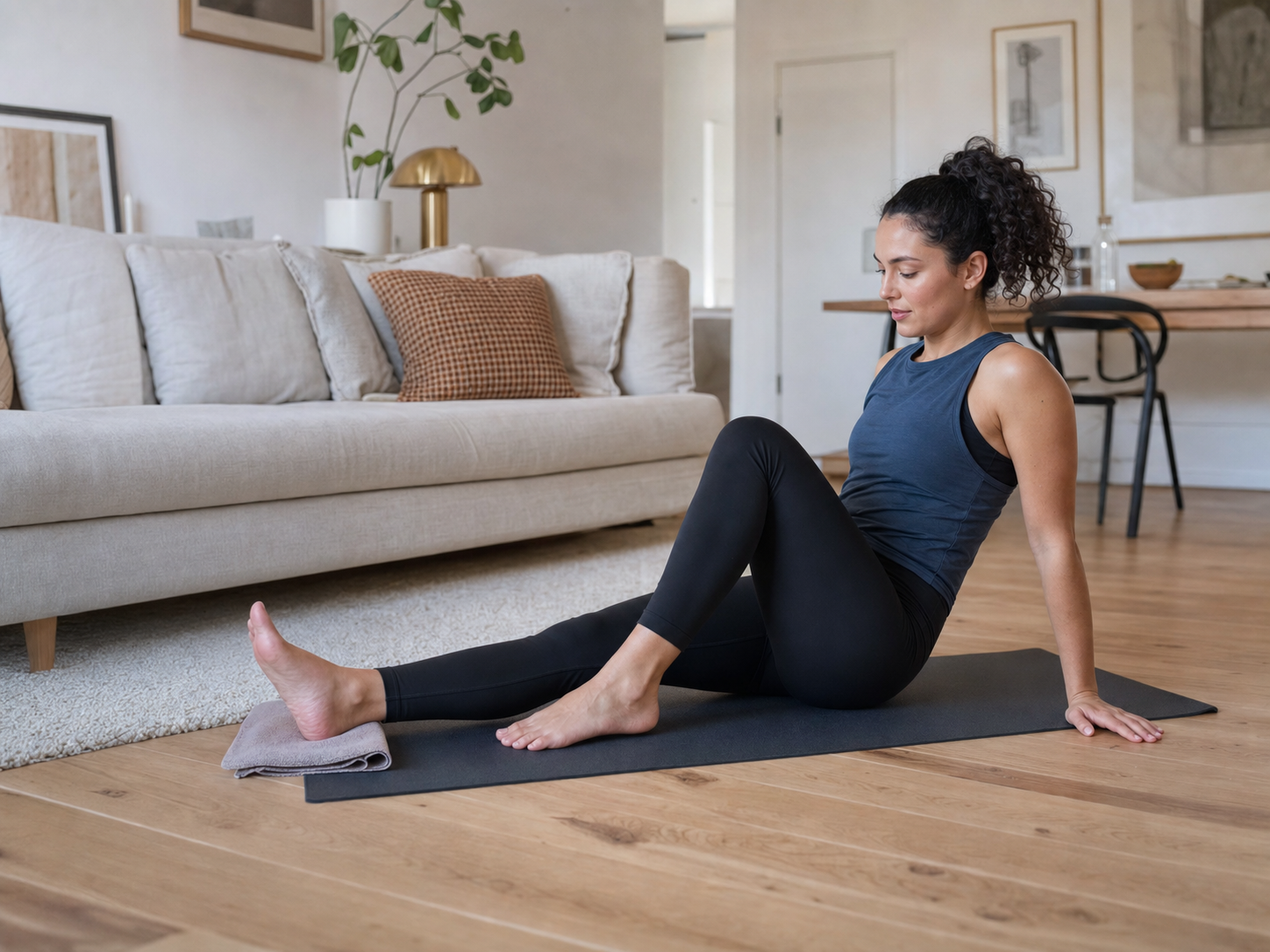
From suppleness to controlled power
If walking, mobility, and light hip control are going well, you can later strengthen hamstrings with more targeted exercises. This is not necessary in the first days of a painful back. Wait until the basics feel comfortable and then gradually build up: hip hinge, bridges, sliders, and only then heavier eccentric steps.
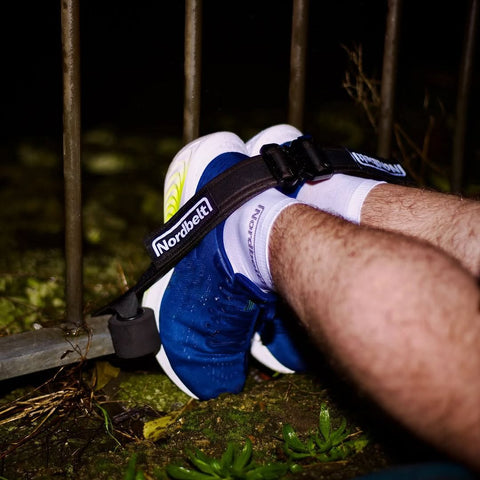
Nordbelt only fits in at a later stage: when you want controlled ankle fixation for hamstring curls, sliders, or assisted Nordic progression. Then start with the technique in the Nordbelt how-to guide and build up calmly. If you want to check out the setup, go to Nordbelt. In case of pain complaints, the order remains important: first move gently, only then build strength.
Frequently Asked Questions
Can tight hamstrings cause lower back pain?
Stiff hamstrings can contribute to lower back pain, especially if your pelvis and hips move less smoothly when sitting, standing up, or bending over. They are usually not the only cause. Therefore, treat them as part of the chain: hamstrings, hips, glutes, core control, and sitting behavior.
Why do I feel lower back pain and tight legs after sitting?
After sitting for a long time, you move little through your hips, hamstrings, and lower back. As a result, your legs can feel stiff and your back can react sensitively when you suddenly stand up or bend over. Often it helps to walk short distances more often and then do gentle mobility instead of stretching hard once a day.
Does stretching help with tight hamstrings and back pain?
Stretching can help, especially if you stretch gently and check your pelvic position. It should not cause sharp back pain, tingling, or radiating pain. If stretching only helps briefly, then add light hip and hamstring strength so that you do not remain dependent on stretching over and over again.
How often should I loosen my hamstrings for back pain?
Start with a short routine of 5 to 8 minutes, 4 to 6 days a week: walking, gentle hamstring stretch, hip hinge, and optionally a glute bridge. Keep the intensity low. More is not automatically better; you are looking for repeatable movement without after-pain.
When should I seek help?
Seek professional help for radiating pain below the knee, tingling, numbness, noticeable loss of strength, pain after trauma, fever, or symptoms that worsen quickly. Also seek help if you do not see a clear improvement after two to three weeks of gradual buildup.