

HYROX training for beginners: prepare for your first race

HYROX training for beginners starts with three tasks: running, learning the race stations and choosing suitable strength work. First consider what you can already do and which equipment you can actually access. An experienced runner has different learning needs from someone who mainly lifts weights. Use your starting point to choose the next sessions for your first HYROX Individual Open, without assuming a fixed preparation time or finish time.
What does your first HYROX involve?
In Individual Open, you alternate eight one-kilometre runs with eight stations. The order is ski ergometer, sled push, sled pull, burpee broad jumps, rowing, kettlebell carry, sandbag lunges and wall balls: squats followed by throwing a ball at a target. Combining running and stations makes the event different from a normal running race (Brandt et al., 2025). Check the current rules, weights and movement standards for the 26/27 season before taking part. Open does not mean you choose your own competition loads.
Brandt's study involved eleven recreational participants with a median of eighteen months of HYROX experience. It measured acute exertion and associations with performance during one simulated race. It did not test a beginner programme or establish an individual preparation timeline (Brandt et al., 2025).
What can you prepare without access to every station?
Separate general preparation from experience with competition equipment. This table helps you choose where to train. The movements in the middle column are not equivalent replacements for a station.
| Task | At home or in a regular gym | What still needs specific practice? |
|---|---|---|
| Running between stations | Regular runs on a familiar route | Finding a controlled running rhythm after a station |
| Ski ergometer and rowing | General fitness work; learning to use available ergometers | Rhythm, controls and setup of both race machines |
| Sled push and pull | General leg strength and pulling movements | The actual sled, surface, rope handling and rules |
| Carries and lunges | Carrying weights and controlled lunges | Kettlebells and a sandbag under competition standards |
| Burpees and wall balls | Learning the movements calmly with enough clear space | Jump standards, ball, target height and valid repetitions |
Arrange a suitable practice location for missing equipment. Write down the skill you want to learn there, such as getting the sled moving or reaching the target with the ball. Pushing an improvised heavy object across the floor does not tell you how a race sled feels. Do not use a training strap as an improvised sled harness.
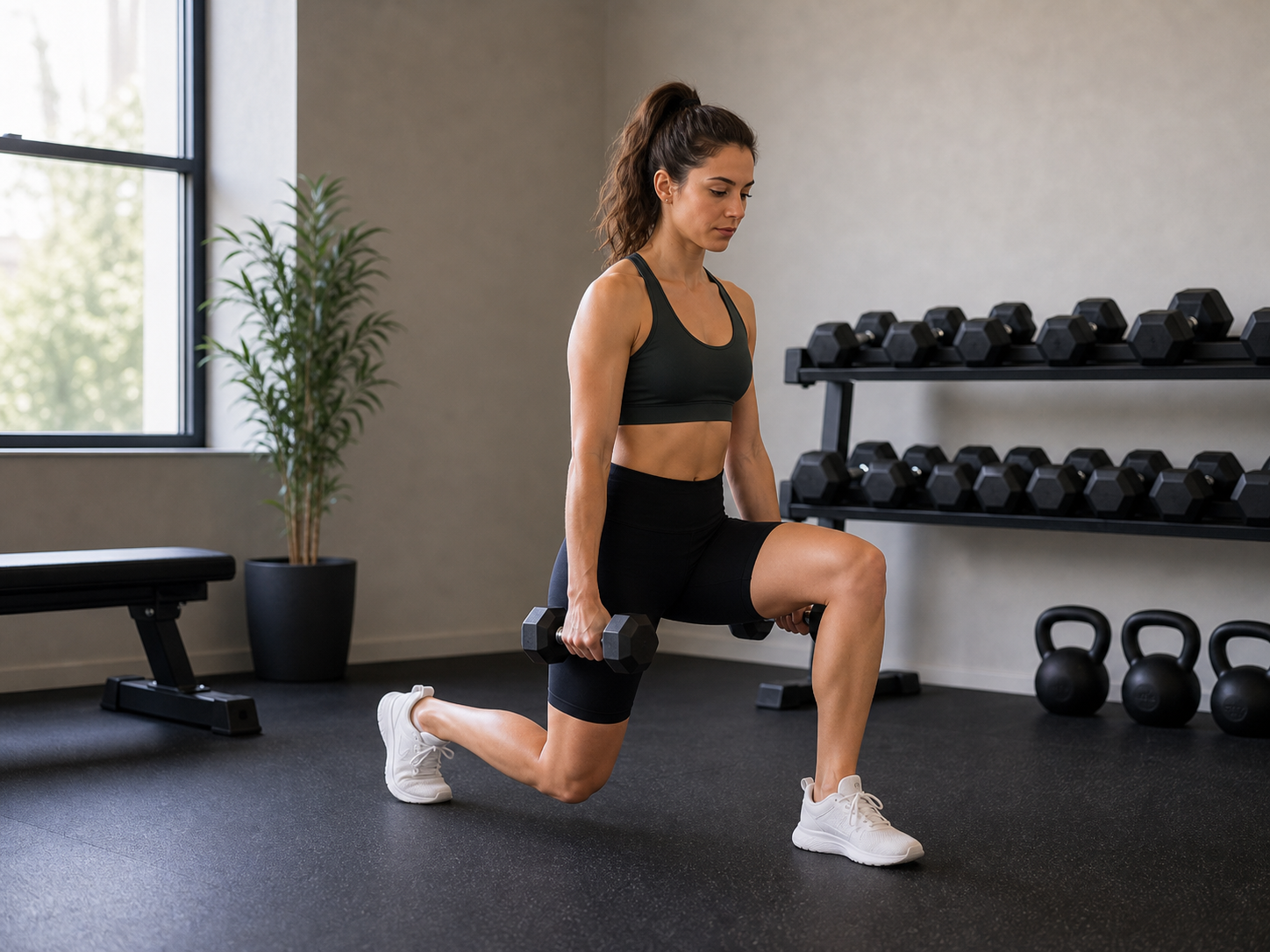
A dumbbell lunge illustrates general strength training. The HYROX lunge uses a sandbag; this image does not demonstrate that station.

Start with your sporting background
The following situations are fictional examples that make training choices concrete. They are not tested programmes or entry requirements.
A runner with little station experience. Noor runs regularly but has never used a sled. She keeps familiar easy runs in her schedule and uses her available gym session to learn station skills. Her first question is whether she understands and controls a movement, rather than how quickly she can complete all the stations in sequence. Later, she can practise a short combination of familiar tasks.
A lifter who rarely runs. Daan trains regularly with weights but runs inconsistently. He first schedules manageable runs and retains a straightforward strength session. At a separate equipment session, he learns the unfamiliar stations. Lifting a heavy weight does not show that repeated running already suits his current capacity. He does not make both running and station work maximally demanding at the same time.
Take your Nordic curl from the first rep to week 10.
A concrete 7-page plan: build up week by week, without pushing too fast.
- 01A clear week-by-week progression
- 02Technique and the mistakes to avoid
- 03A simple log you will actually use

≤51%
✓Backed by research
Van Dyk et al., 2019: meta-analysis of programmes with NHE. Not an effect test of Nordbelt or this protocol.
Open the download page again or check the email we sent you.
Open the download page ↗How should you divide the available training days?
Start by writing down fixed commitments, recent training and recovery time. Then identify the missing task. An illustrative week with three sessions could include a familiar easy run, station technique with suitable strength work, and another run. Someone who knows the movements can occasionally practise a short, controlled combination in place of an existing session. This is a planning example, not a tested HYROX protocol.
A review of 43 studies in healthy adults compared combined endurance and strength training with the same strength training without endurance work. Maximal strength and muscle growth did not differ significantly on average; explosive strength gains could be smaller, particularly within the same session. This does not establish an optimal HYROX week or a mandatory recovery interval between sessions (Schumann et al., 2022). Choose a main purpose for each session and shorten a combination if you can no longer control the movements.
Want to add Nordic curls at home?
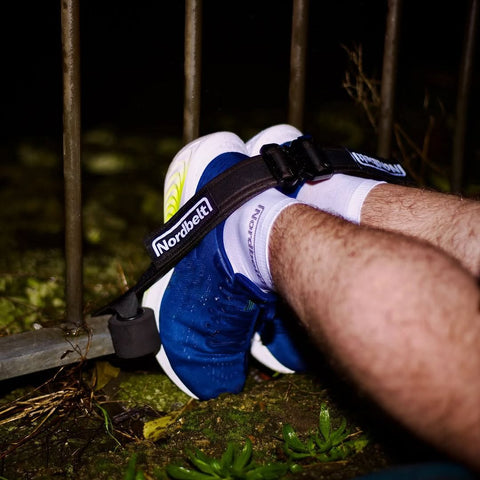
Your preparation first needs running experience, station skills and a workable schedule. If you independently choose to add Nordic curls at home, Nordbelt provides stable ankle fixation without a training partner or large machine. You still need a suitable anchor point, knee support and room to catch yourself with your hands. This aid does not replace a race station and is not required to take part. For that separate exercise, read the Nordic hamstring curl guide.
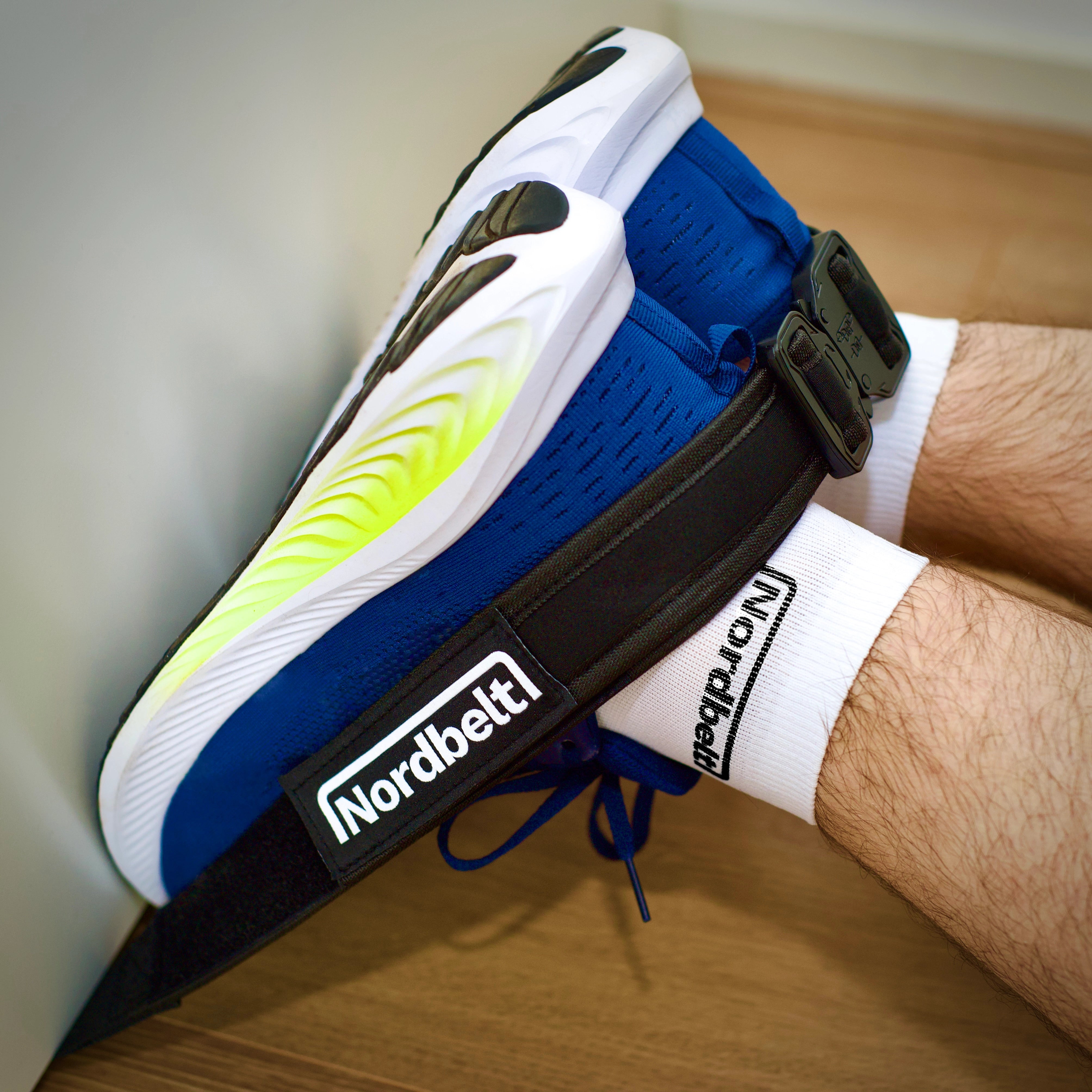
Ankle straps for a separate home Nordic setup. The photo shows their fit, not a complete repetition or a HYROX station.
Frequently asked questions
How many weeks do I need before my first HYROX?
A number of weeks means little without your current running experience, station skills and available time. First identify what is missing: regular running, unfamiliar equipment or combining familiar elements. Then discuss a manageable plan with a trainer who knows your starting point. A general six- or eight-week schedule is not proof that you are ready. Use a practice session to identify specific uncertainties, rather than interpreting one successful workout as a guarantee of race performance.
Can I train for HYROX without a sled or ski ergometer?
You can develop general fitness and strength, but you will still lack experience with that equipment. List the stations you have not practised and arrange access before assuming your preparation is complete. A rower, resistance band or loaded walk serves its own purpose; none proves that you can perform an unfamiliar station. Ask a practice venue about the available equipment, surface and guidance. Use the visit to resolve a real gap in your knowledge.
Should a runner mainly add more strength training?
Look at what is missing, rather than just the label of runner. Someone who knows the stations makes different choices from someone lifting a sandbag for the first time. Keep the parts of your running week that work well and make room for station skills. Separate hamstring exercises for runners can address an additional strength need, but they are not a complete HYROX plan. Adding more accessory exercises is not automatically the best use of limited gym time. Identify the race task that needs attention and why.
Can I keep my existing gym or CrossFit week?
That week is a starting point, not automatic preparation for every HYROX task. Map where running, strength and station technique already occur and where demanding work accumulates. Replace an existing session when necessary as you add a new task. The guide to hamstring exercises alongside CrossFit covers accessory work around existing sessions; this page concerns your first complete fitness race. Bring your whole schedule to a trainer so that an extra HYROX session does not quietly get added on top of everything else.
What should I record after a combined practice session?
Record the tasks, loads, breaks and perceived exertion. Describe where your technique or running rhythm changed and how your next planned session went. A useful note is concrete: the first run felt controlled, but after the carry I started too hurriedly and had to slow down. That gives you something to address next time. It is not a diagnosis or validated readiness score. With sharp pain or persistent symptoms, stop the aggravating exercise and have the problem assessed before progressing.