

Pain at the back of your thigh when sitting: patterns, first steps and when to get help


Pain at the back of your thigh when sitting does not always fit a simple acute hamstring strain. Especially when the pain shows up during sitting, driving or long periods bent forward, the area around the tendon attachment or the sitting bone is often part of the pattern. That is not a diagnosis from a distance, but it is a useful clue. This article explains the patterns that often show up, what you can try first and when it makes sense to get help.
In short
When pain at the back of the thigh is worse during sitting, these are often the most relevant questions:
- is the pain higher up under the glute rather than in the middle of the muscle?
- does sitting become more irritating faster than calm walking?
- does deep stretching feel sharper instead of relieving?
- did the symptoms build up gradually rather than after one clear pop or sprint?
If several of those answers are yes, the pattern usually fits less with a purely acute strain and more with irritation around the attachment or a longer-term overload pattern.
Which patterns do you often see when pain shows up during sitting?
Pattern 1: high under the glute, especially during longer sitting
This often shows up with symptoms around the proximal hamstring tendon. It does not feel like a classic muscle tear in the middle of the thigh, but more like a deep, nagging or sharp pain close to the sitting bone (Pietrzak et al., 2018).
Pattern 2: sitting feels worse than calm walking
With many muscle problems, movement is the clearest problem. With attachment or tendon-type irritation, sitting can feel surprisingly unpleasant while calm walking still feels reasonably manageable.

Pattern 3: stretching feels sharper instead of better
People often react by stretching more, while that can be exactly what keeps the irritation going.
Pattern 4: gradual build-up
The symptoms do not always start after one clear sprint or misstep. They can creep in through training load, sprint volume, hill work, strength work or simply a lot of sitting in between.
What can fit with this pattern?
This page does not diagnose you. But these are logical explanations that often show up in the differential picture:
- proximal hamstring irritation or tendinopathy;
- ongoing overload after an earlier injury;
- referred pain from the glute, hip or nerve structures;
- local irritation from the combination of sitting plus high training load.
Especially the combination of pain while sitting, high irritation close to the sitting bone and a gradual loading history more often fits proximal hamstring tendinopathy than a simple acute muscle strain (Pietrzak et al., 2018).
For a more tendon-specific follow-up, continue with hamstring tendinopathy: symptoms, approach and recovery.
What can you try first yourself?
Start simple. Not aggressive.

-
Reduce the triggers that directly provoke the symptoms.
Break up long sitting periods more often, change position sooner and avoid deep stretching if that clearly irritates the area. -
Look at the total load.
Sprints, hill sessions, heavy hinge movements and long sitting blocks can add up much more than each part does on its own. -
Use light, tolerable tension.
Not zero load, but also not heavy Nordics or deep stretching routines straight away. -
Use a pattern lens, not an ego lens.
If the symptoms flare every time you sit, that is useful information.
For the broader build-up afterwards, continue with hamstring exercises for home and gym.
When is an assessment the smart move?
Get assessed if:
- the symptoms keep hanging around for weeks without clear progress;
- you also get pain at rest or at night;
- your strength or walking pattern clearly changes;
- you notice tingling, referred nerve pain or significant loss of function;
- you are not sure whether the source is the hamstring, glute, back or a nerve structure.
How do you build back up afterwards?
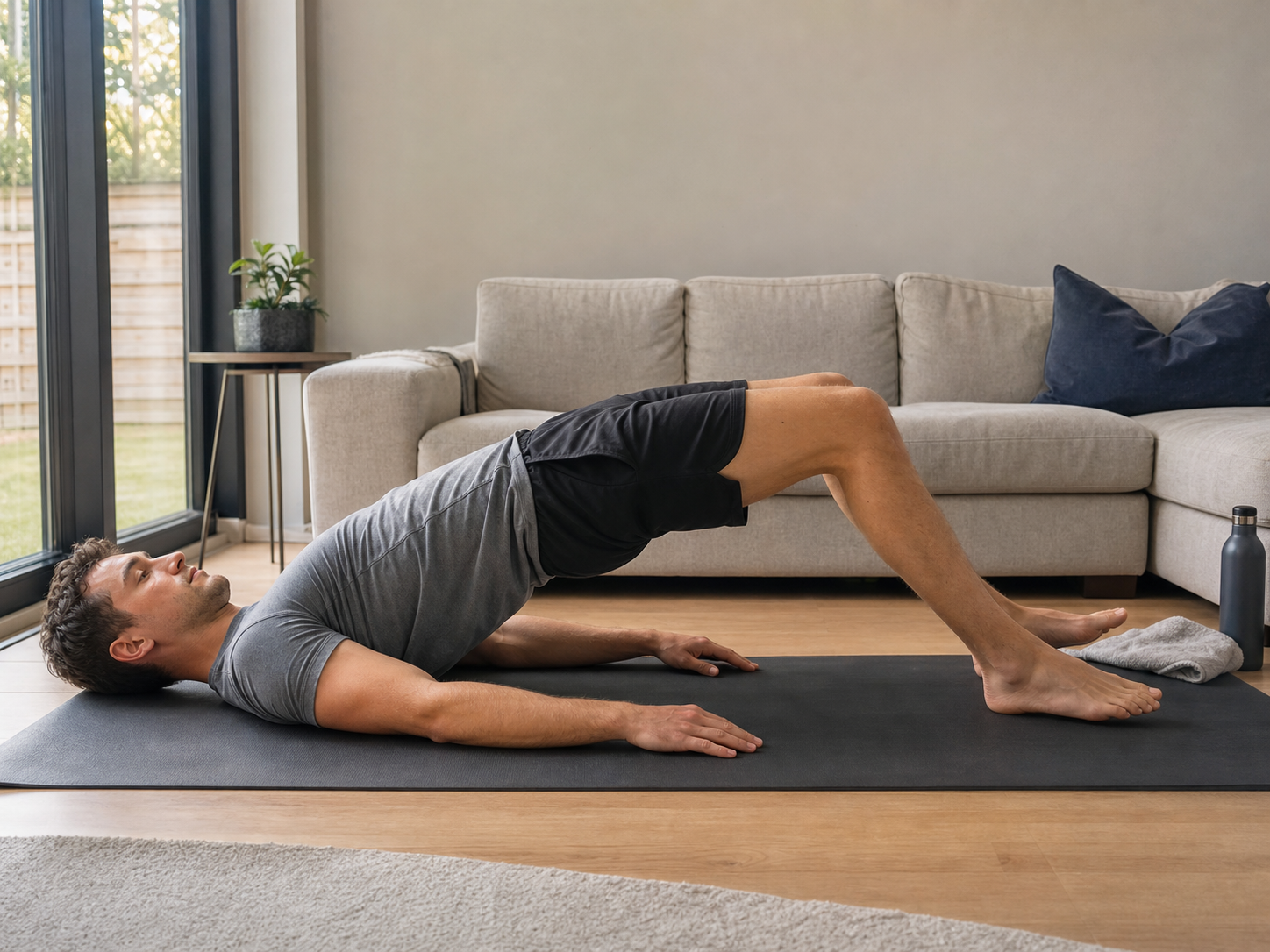
Once the irritation settles, the focus shifts to controlled loading again. First lower load and good tolerance, only later heavier patterns. That is the point where a fixed, dosed home setup can become relevant.
So first continue with the how-to guide and with pain at the back of your thigh: causes and first steps if you want to read further.
Common mistakes
- assuming immediately that it is just a tight hamstring;
- trying to stretch the symptoms away because stretching feels familiar;
- continuing to sprint even though sitting already clearly provokes the area;
- recognising too late that the pattern does not fit simple muscle soreness.
Frequently asked questions
Why does my upper thigh mostly hurt when I sit?
That pattern often fits less with a standard acute muscle strain and more with irritation high around the hamstring attachment or nearby structures. Especially if long sitting, driving or deep bending is more irritating than calm walking, it makes sense to look beyond the idea of just a tight hamstring.
Should I stretch more?
Not necessarily. In some patterns, deep stretching actually makes things worse because it repeatedly tensions the same irritated region. If stretching keeps feeling sharper instead of relieving, that is usually a sign to dose load differently rather than stretch harder.
When should I get help?
Get help if symptoms persist, function drops, you are unsure about the cause or you notice clear referred symptoms such as tingling or nerve pain. Also, if the problem has been there for weeks without clear improvement, assessment is usually smarter than continuing to guess.
Can I keep training?
Sometimes yes, but usually only if you reduce the provoking load intelligently and stop repeatedly aggravating the area. In practice that often means less sprinting, less deep stretching and more light, tolerable tension instead of forcing something because you still want to do a hard workout.