

Nordic curls at home: supersets or straight sets


Nordic curls at home as a superset or as straight sets? Choose straight working sets when control, range of motion and a consistent lowering phase matter more than saving time. Choose a superset only when the second exercise barely interferes with the Nordic task and your next repetition still looks technically the same. A superset is therefore not automatically a better programme: use it to save time, not as an excuse to skip rest, the anchor test or movement quality.
When are straight Nordic working sets the better choice?
With straight working sets, you perform one Nordic set, take genuine rest and start the next set only when you can repeat the same variation with control. This is usually the better choice when the exercise is close to your current limit, your range of motion still varies or you mainly want to assess whether the lowering phase stays consistent from repetition to repetition.
The benefit is not that rest works by magic. You mainly remove an extra source of interference. That makes it easier to see whether a shorter range, early hip flexion or a hurried catch comes from the Nordic itself rather than fatigue from the second exercise. The page on common Nordic curl mistakes helps you recognise those signs separately from this set structure.
A systematic review of Nordic training links the exercise to changes in eccentric knee-flexor strength and muscle architecture, but it does not prescribe one universal set or rest structure for every athlete (Medeiros et al., 2020). That supports a simple rule: keep execution measurable before trying to make the session more compact.

Ankle fixation for Nordic curls at home
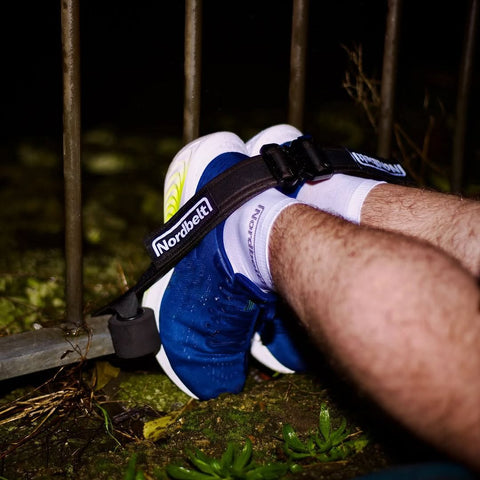
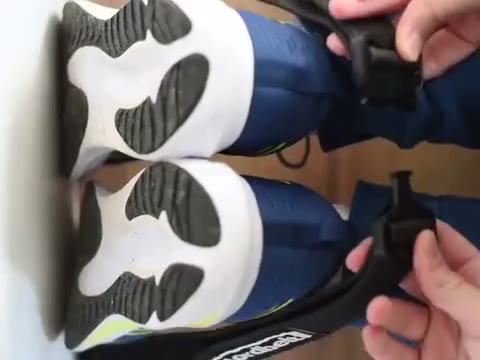
Test the anchor first and decide on your set structure afterwards. The attachment should not shift when you load it firmly with your hands before the first working set. Both ankles need to be secured low and evenly, your knees need a comfortable surface and you need enough clear space in front for your chosen range of motion. The dedicated article on a safe Nordic setup at home covers these checks in more detail.
With Nordbelt for Nordic curls at home, stable ankle fixation becomes practical without a training partner or large fitness machine. That is the product's defined job: a repeatable home setup for the Nordic. The equipment does not decide between supersets and straight working sets, and it does not replace an anchor test, knee comfort, technical control or appropriate loading.
When does a superset suit Nordic curls at home?
A superset can work when time is the real constraint and the second exercise creates little competition with the Nordic task. You are not simply alternating two hard exercises without a break. You use the paired exercise as active use of part of the rest period, then still check whether you are ready for the next Nordic set.
A meta-analysis comparing supersets with traditional sets found shorter average session duration with supersets, with similar total repetitions and volume across the pooled studies. Perceived effort and internal load were often higher, while pairings with a similar biomechanical task could reduce volume (Zhang et al., 2025). That review was not specifically about Nordic curls. Treat the result as a programming principle, not proof that every superset works equally well with this exercise.
With a Nordic, interference can arise through three routes. Local interference occurs when the paired exercise heavily recruits the hamstrings again. General interference occurs when breathing and effort rise enough to make you rush the next starting position. Practical interference occurs when moving between two locations or pieces of equipment changes the anchor, kneeling area or chosen regression. A good pairing remains calm enough on all three routes.
Do not automatically call every compact workout a superset. If you perform several exercises in sequence and only rest after the full series, you are effectively building a circuit. That can be a valid training format, but it answers a different question. Here the Nordic remains the fixed reference point: the paired exercise must not make the next Nordic set unrecognisable.
Take your Nordic curl from the first rep to week 10.
A concrete 7-page plan: build up week by week, without pushing too fast.
- 01A clear week-by-week progression
- 02Technique and the mistakes to avoid
- 03A simple log you will actually use

≤51%
✓Backed by research
Van Dyk et al., 2019: meta-analysis of programmes with NHE. Not an effect test of Nordbelt or this protocol.
Open the download page again or check the email we sent you.
Open the download page ↗Which exercise should you pair between Nordic sets?
Use an interference ladder instead of a list of supposedly perfect combinations:
| Interference | Examples | Practical meaning |
|---|---|---|
| Low | calm breathing, gentle shoulder mobility or a simple arm exercise | little direct competition with ankle fixation, trunk control and the hamstrings |
| Moderate | easy calf raises, a light core exercise or a brief mobility drill | may fit, but stop if breathing or trunk control changes your next Nordic set |
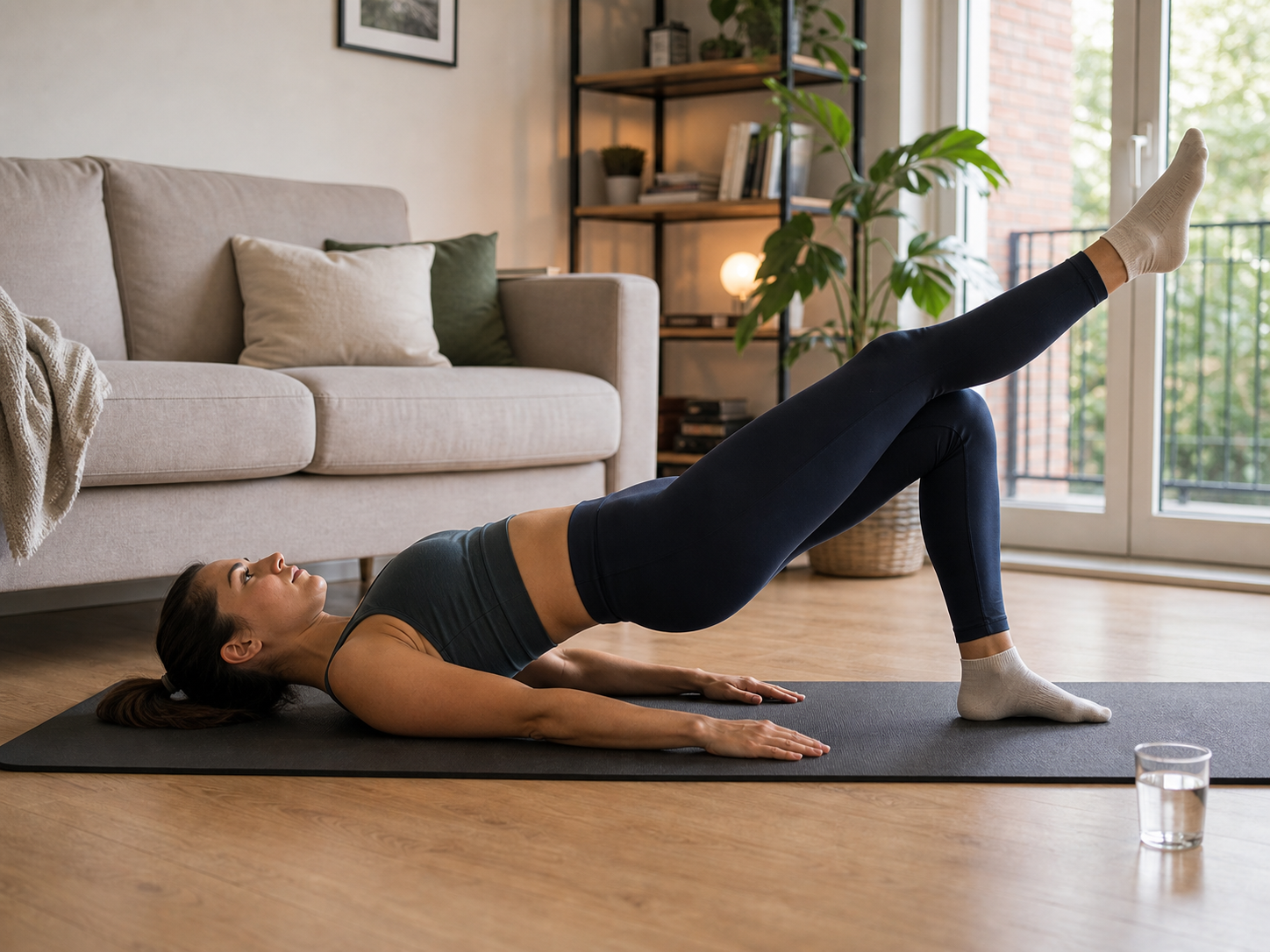
| High | hamstring bridge, hip hinge, jump, sprint drill or another demanding knee-flexion task | loads the same chain or increases general fatigue; prefer straight sets |
The ladder does not label an exercise as good or bad in general. A single-leg bridge can fit perfectly well in a hamstring programme, but it is not a neutral break between hard Nordics. For the broader question of whether one Nordic exercise is enough, the Nordic curl as your only hamstring exercise at home remains the guide article.
How do you protect Nordic technique in a short home workout?
Use the same next-set check after every working set:
- Is the anchor still in exactly the same place?
- Can you select the same regression and range of motion again?
- Does your trunk remain one recognisable line without folding early at the hips?
- Can you still slow the forward phase with control and catch yourself safely?
- Is your breathing calm enough to take the starting position deliberately?
If one answer is no, increase the rest, make the paired exercise easier or drop the superset. General resistance-training research shows that longer rest during a demanding task can preserve force output and total volume better than shorter rest in those particular tests (McMahon et al., 2024). That study was not a Nordic protocol either. It only supports the point that time pressure is not a good reason to ignore a clear loss of quality.
A practical framework for choosing supersets or straight sets
Decide with two questions: how much technical margin do you have, and how much time pressure are you under?
| Technical margin | Time pressure | Logical starting choice |
|---|---|---|
| Small or inconsistent | Low or high | straight working sets; first preserve a repeatable Nordic variation |
| Large and stable | Low | straight working sets; there is no reason to add extra complexity |
| Large and stable | High | superset with a low-interference paired exercise and the same next-set check |
| Uncertain after the first pairing | Any | return to straight sets and compare your execution again |
This framework does not replace an individual programme. Its main purpose is to stop “finishing faster” from quietly becoming “different movement quality”. For a separate choice between strength and muscle growth, use the guide article Nordic curls for strength or muscle growth at home.
How to put your chosen structure into practice
Before the session, fix one Nordic variation: the same regression, the same clear path and the same anchor. Then test one round with the chosen paired exercise. Compare not only how hard it feels, but especially whether the next Nordic start still looks recognisably the same. If it changes, you already have the most important information: the pairing needs more rest or does not fit today.
The Nordbelt guide for the home setup shows how to prepare the attachment and starting position. Use that route for the setup; your repeatable execution, not the equipment, determines whether you choose supersets or straight sets.

For broader guidance on the movement itself, everything about the Nordic hamstring curl remains the starting point. This article keeps its narrower task: deciding whether saving time leaves the technical quality of your Nordic sets intact.
Frequently asked questions
Is a Nordic curl superset always faster?
Total session time may be shorter, but only when the paired exercise requires little additional recovery. If you have to wait longer after the pairing or need an easier Nordic variation, some of the time saving disappears. Measure the whole session, not just the pause between two exercises.
Which exercise is best to pair between Nordic sets?
Start with a low-interference task that barely loads the hamstrings, anchor test or trunk control. Think calm shoulder mobility or an easy arm exercise rather than a bridge, hip hinge, sprint drill or second demanding leg task. The next Nordic set is the decisive test.
How much rest do you need between Nordic curl sets?
There is no honest universal rest time for every variation and every home athlete. Wait until you can deliberately check your anchor, breathing, starting position and chosen range of motion again. If execution deteriorates, extend the rest or remove the paired exercise.
Can you superset a glute bridge or hip hinge with Nordics?
It can exist as a programmed pairing, but it is not a neutral break. Both tasks can add load to the posterior chain. Anyone who wants to compare Nordic quality should therefore avoid them as a first superset test and keep them in separate working sets.
Can you perform Nordic curls at home without a partner?
Yes, provided you have a stable anchor, even ankle fixation, comfortable kneeling support and a safe catch area. Test the attachment before the working sets and choose a regression you can lower through with control. A solo setup does not make the technical or loading decisions for you.