

Choosing a hamstring machine for home: 4 practical options


“Nordbelt is easy to secure and feels stable.”
Choose a hamstring machine for home based not on its size or appearance, but on the movement you want to train. A seated or lying leg curl machine trains knee flexion along a guided resistance path. Sliders let you pull your heels towards you from a bridge position. Dumbbells or a barbell suit hip-dominant exercises such as the Romanian deadlift. A Nordic setup, by contrast, fixes the ankles while you lower your body forwards under control.
The short answer: choose one training function first, then decide how much space, adjustability and room for progression you need. For many people who train at home, sliders or free weights are the simplest place to start. If you specifically want to do Nordic curls, you need stable ankle fixation and a suitable clear area in which to move. None of these options automatically replaces the others.
What should a hamstring machine for home do for you?
Start by asking where the resistance comes from and which joint does most of the moving. In a leg curl, the knee bends against resistance. In a Romanian deadlift, movement mainly comes from the hip while the knee angle remains relatively steady. In a slider curl, you combine a high hip position with knee flexion. In a Nordic curl, the body remains largely in one line while the knees form the pivot point.
These differences have practical consequences. You can move a lot of weight on a leg curl machine without automatically being able to perform a Nordic curl. Conversely, stable ankle fixation for Nordics does not make a seated leg curl possible. Research into hamstring exercises shows that different variations do not load the muscles and movement functions identically, so exercise selection should match the goal and a manageable load (Guruhan et al., 2021).
Use four questions to guide your choice:
- do you mainly want to train knee flexion, hip extension or a controlled Nordic movement;
- do you want to adjust resistance precisely, or would you rather work with bodyweight and regressions;
- how much clear floor, storage and movement space do you actually have;
- can you check the setup yourself and reproduce it in the same way for every session?
The broader page on hamstring exercises for home and the gym can help if you do not yet know which movement function is missing from your programme. Only after that does this guide consider the appropriate machine or training aid.
When is a slider the best hamstring training aid for home?
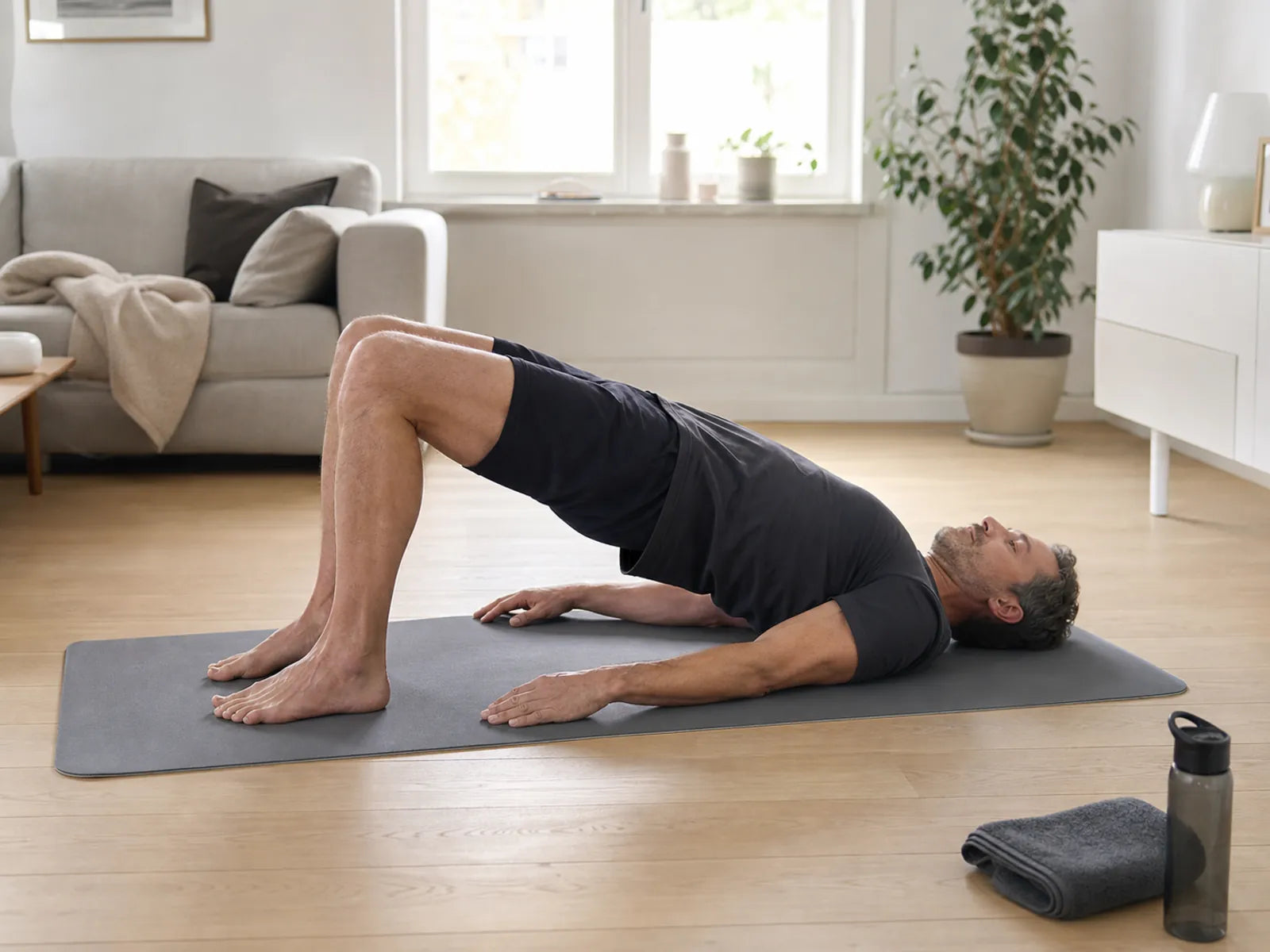
Sliders, furniture gliders or a towel on a suitable smooth floor require little storage space. You start in a bridge position, keep your hips as stable as possible and slide your heels away from you and back under control. This trains knee flexion without a large machine. Resistance mainly comes from your bodyweight, lever length, range of motion and the number of legs you use.
A slider makes sense if you want a compact entry point, want to learn the movement gradually or do not yet want to create a permanent training area. Its performance does depend on the surface. Too much friction makes the movement jerky; too little grip can cause the feet to slide away unpredictably. A slider is also not a precisely incremented weight-stack machine.
Progress from a short two-leg slide-out to a greater range, a longer braking phase or a partly single-leg variation. The existing guide to hamstring slider exercises and progressions explains these steps in more detail. EMG research includes the sliding single-leg curl as a distinct functional hamstring exercise; above all, this underlines that sliders form their own exercise category and are not a miniature version of every other machine (Gulgosteren et al., 2025).

Ankle fixation for Nordic curls at home
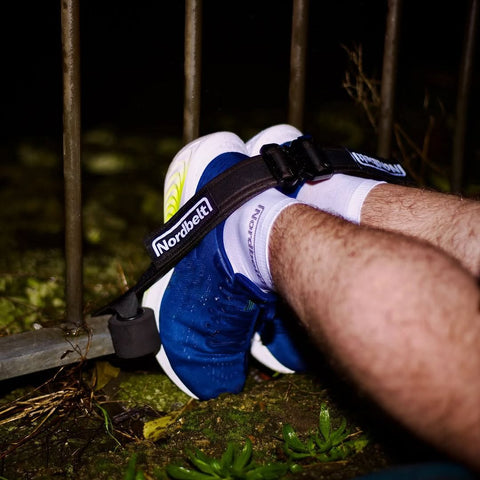
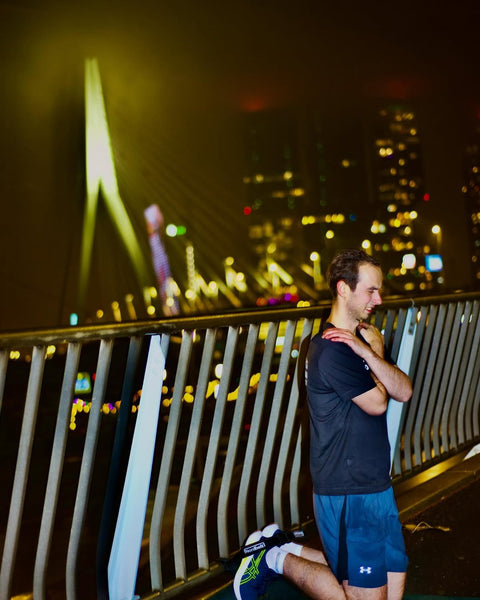
That changes the setup question. With Nordbelt for stable ankle fixation during Nordic curls at home, you can secure both ankles to a suitable anchor point without a training partner or large fitness machine. It solves only the fixation obstacle for Nordic curls. The product does not choose an anchor, regression, range of motion or training dose, and it is not a seated or lying leg curl machine.
Before every session, therefore, check the anchor point, symmetry around both ankles, the kneeling surface, the clear path in front of you and your chosen means of support. Start with a manageable regression. The Nordic is a demanding bodyweight exercise; reviews describe improvements in eccentric strength and muscle architecture, while also showing that programmes and training doses vary (Medeiros et al., 2020). The setup makes the movement possible; it does not automatically make it suitable for every athlete.
Take your Nordic curl from the first rep to week 10.
A concrete 7-page plan: build up week by week, without pushing too fast.
- 01A clear week-by-week progression
- 02Technique and the mistakes to avoid
- 03A simple log you will actually use

≤51%
✓Backed by research
Van Dyk et al., 2019: meta-analysis of programmes with NHE. Not an effect test of Nordbelt or this protocol.
Open the download page again or check the email we sent you.
Open the download page ↗When is a compact hamstring machine for home a better fit?
A seated or lying leg curl machine is a better fit if you want to train knee flexion with external weight and small resistance increments matter to you. The movement path is guided and the load is usually directly adjustable. The trade-off is that such a machine requires a permanent location, suitable adjustment for your body and maintenance. “Compact” on a product page does not automatically mean compact in your room.
Measure the entire operating area, not just the frame. You need space to get on and off, operate the lever or weight pin and move without obstacles. Check whether the seat, roller pad and pivot point can be adjusted to suit your body dimensions. A machine that cannot be adjusted correctly does not become suitable simply because it occupies little floor space.
A compact hamstring machine for home is not necessarily the best first purchase either. If you only want to train knee flexion occasionally, sliders or resistance bands may be enough. If you want to learn Nordic curls instead, a standard leg curl machine answers a different question. The existing comparison of a Nordic hamstring curl machine and compact alternatives examines the Nordic-specific choice in greater depth without duplicating this broader category page.
Are dumbbells a hamstring training device for home?
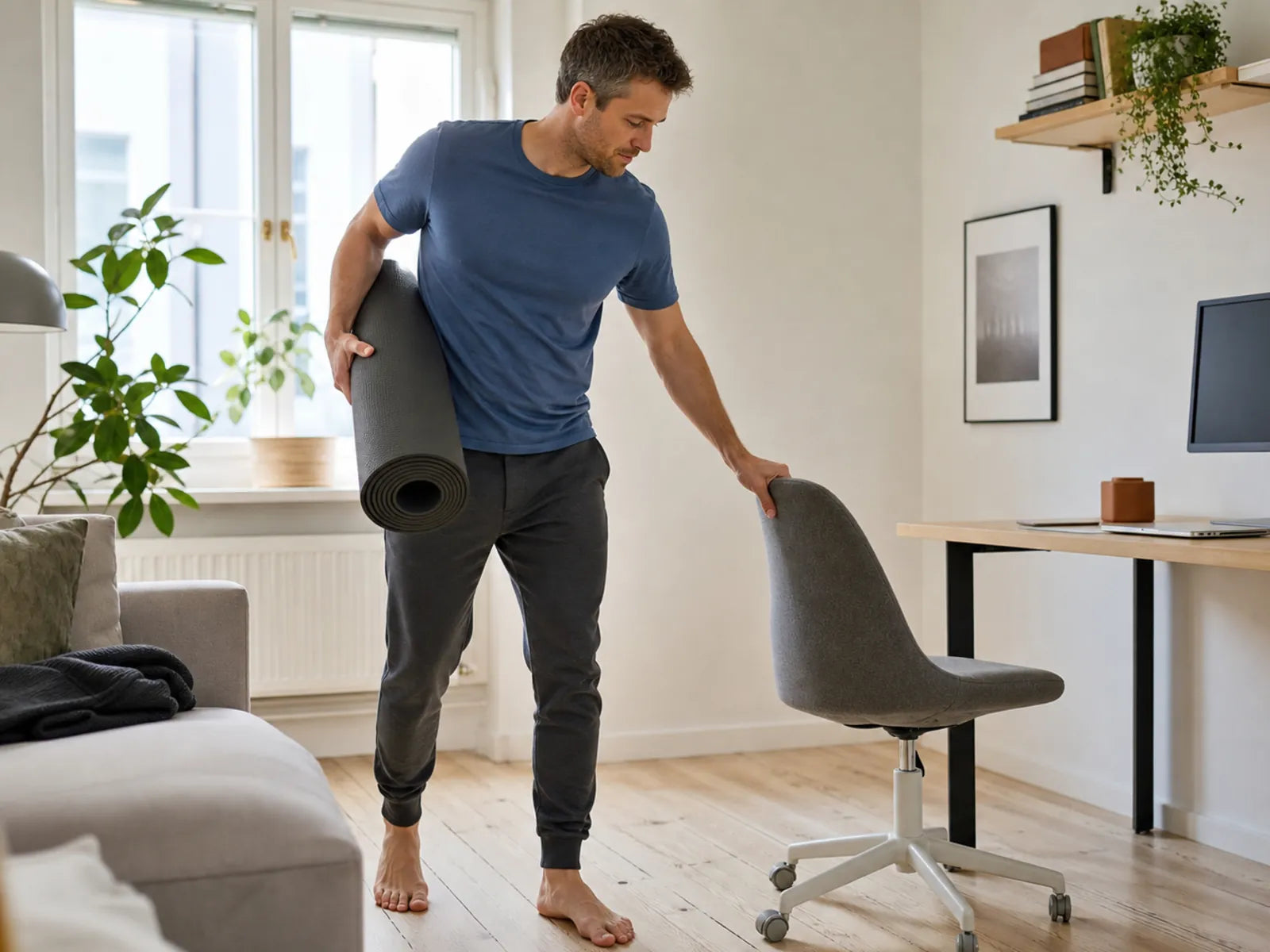
Dumbbells are not a hamstring machine, but they can provide resistance for hip-dominant exercises. Examples include a Romanian deadlift, single-leg Romanian deadlift or a controlled good morning with suitable equipment. In these movements, the hamstrings work with the glutes and trunk to control hip movement.
Choose free weights if you want to do several exercises with the same equipment and already have control of the hip hinge. The limitation is that the movement is less guided. You have to control your trunk, hip path and the weight yourself. More kilograms are therefore not automatically a better progression. A greater range of motion, slower eccentric phase or better single-leg control may be more useful first.
Progressive resistance training involves planned adjustments to factors including volume, intensity, exercise selection, rest and frequency (Ratamess et al., 2009). That principle applies to every training aid: choose an option that lets you make clear, achievable progress rather than a device that mainly promises numerous possibilities.
How much space does a compact hamstring machine require?
Draw a floor plan of the active exercise area. Note the storage dimensions, access zone, full movement path and any support area. Sliders require a suitable floor and enough length for your legs. Dumbbells require space to pick them up and put them down safely. A leg curl machine needs clear space around the frame. A Nordic setup needs an assessed anchor, a kneeling zone and a clear path in front of the body.
Test the location at the time you actually train. A clear living room during the day may be a walkway in the evening. A setup beside a desk can become unsuitable once chair legs, cables or a low piece of furniture enter the movement path. Compact means the complete routine fits, not merely that the equipment can be stored.
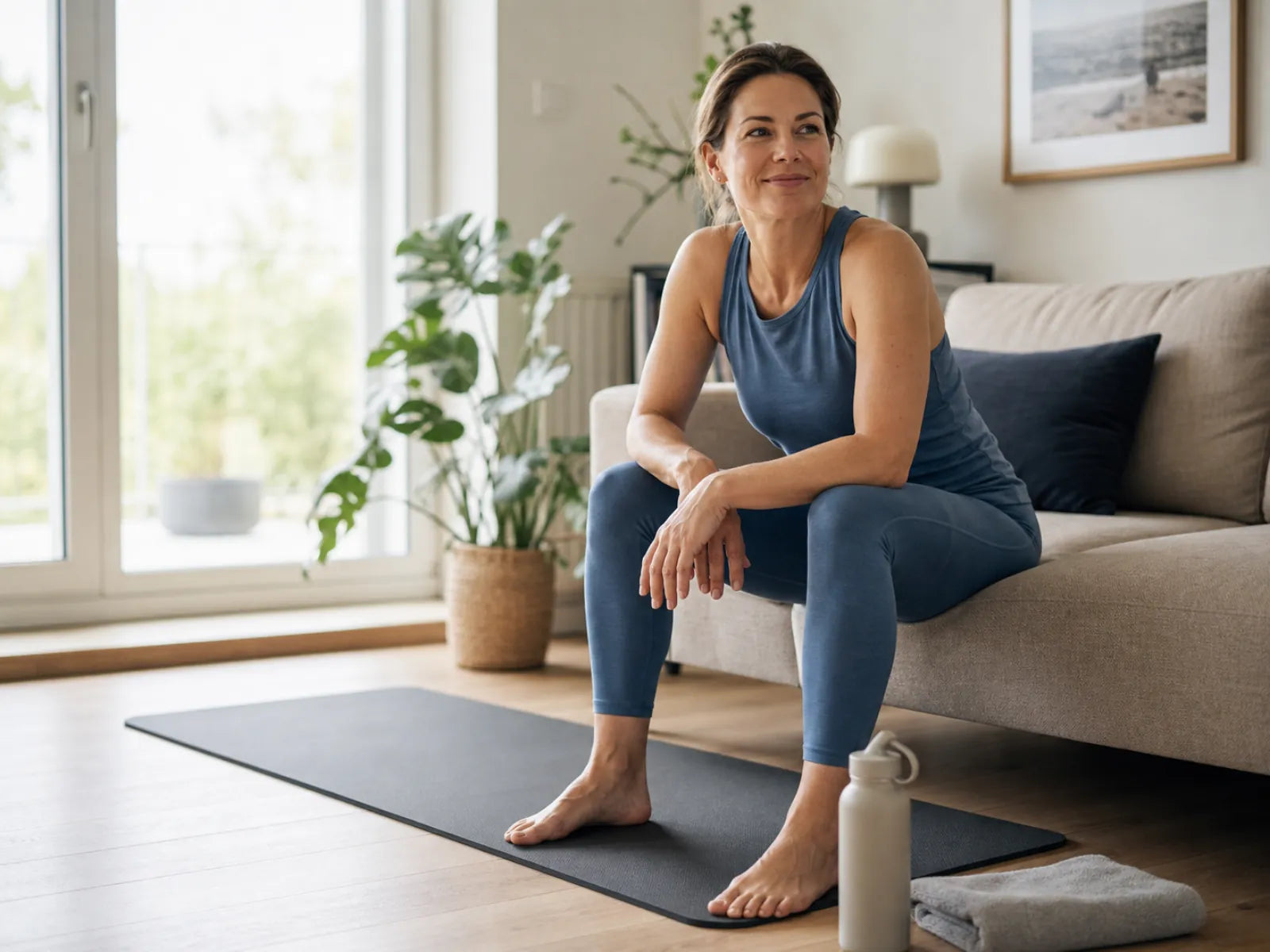
How to choose a hamstring training aid for home
Use a short practical test before you buy anything or create a permanent training area:
- Write down the exercise you want to perform, not just the muscle group.
- Decide how you will change the resistance or regression in small steps.
- Measure the storage, access and full movement space.
- Check which adjustment, surface or anchoring is necessary.
- Consider whether you can reproduce the setup independently and consistently.
- Note explicitly what the training aid cannot replace.
If you choose the Nordic category, you can use the practical how-to guide to see how to set up and use it. That explanation does not replace checking the specific anchor point, clear space or an appropriate training progression.
When do you not need to buy a new hamstring training device?
Do not buy equipment first if your exercise selection is still unclear. Test the movement function with something you can already use safely: a bridge or slider for knee flexion, an unloaded hip hinge for hip control, or a greatly simplified Nordic regression in a suitable, controlled setup. This will show you which obstacle can actually be solved with equipment.
A new device is also not the first step if your training space cannot be arranged safely, the required adjustment does not fit or you do not have an achievable progression. Equipment can make execution more repeatable, but it does not write a programme or correct an unsuitable exercise choice.
Checklist for your choice
- Which exact exercise do you want to do at home?
- Does mainly the knee, the hip or the whole body around the knee move?
- How is the resistance or regression adjusted?
- Do both the storage and full operating area fit?
- Can you check the setup independently?
- Is it clear which exercises the training aid cannot perform?
- Can you test a simple variation before making your choice?
Frequently asked questions about a hamstring machine for home
What is the best hamstring machine for home?
There is no single best option for every goal. A leg curl machine suits guided knee flexion with adjustable weight. Sliders suit compact sliding curls. Dumbbells suit hip-dominant exercises. A Nordic setup suits controlled forward lowering with stable ankle fixation. Choose the category that matches the exercise you want to perform.
Is a slider the same as a hamstring machine for home?
No. A slider uses bodyweight, friction and leverage from a bridge position. A leg curl machine uses a guided resistance path and usually external weight. Both can train knee flexion, but their adjustment, stability and progression differ.
Is a Nordic setup the same as a leg curl machine?
No. During Nordic curls, the ankles are fixed and the body moves around the knees. Nordbelt supports that ankle fixation, but it is not a seated or lying leg curl machine and does not replace sliders, free weights or a complete training programme.
How much space do I need for hamstring training at home?
That depends on the exercise you choose. Always measure storage, access and the full movement path. Sliders require leg-length space on a suitable floor, a machine needs room around the frame, dumbbells require a safe lifting area and a Nordic setup needs an anchor, kneeling and support zone.
Can I train my hamstrings at home without a machine?
Yes. Bridge variations, hip hinges and some controlled bodyweight movements require little or no special equipment. A device becomes relevant when it adds a specific resistance, adjustment or fixation that is missing for your chosen exercise.