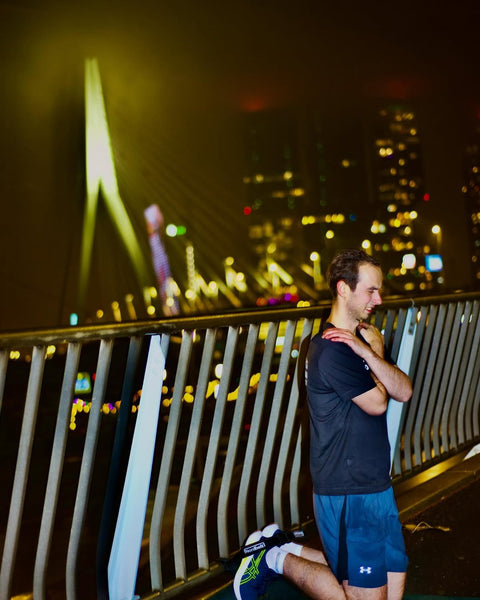


Nordic curl training station for personal trainers: a fixed workflow


“Nordbelt is easy to secure and feels stable.”
A Nordic curl training station for personal trainers is a fixed workflow, not simply an exercise area where everyone performs the same repetition. Before every set, check the anchor, ankle fixation, kneeling area, catch and regression. This lets you coach clients without the setup changing or a full Nordic curl becoming the entry test.
The key is repeatability. Mark where the knees go, define how you test light tension and record which support and range of motion were manageable. A compact station works only when the reset between users is taken as seriously as the execution itself. Below is a practical layout for studio work, coaching and suitable continuation at home.
What should a Nordic curl station for personal training be able to do?
A usable station answers five operational questions. The anchor remains stable under pulling force. The ankle fixation sits low and comparably on the left and right. The client has enough room to move forwards and catch the movement with the hands or another support. The trainer can reduce the range of motion without rebuilding the entire station. Finally, the exit after the set is clear and accessible.
Start with the environment, not the repetition. Check the anchor according to its intended use and test it with your hands first. Place a knee mat in a fixed position, keep the area in front of the client clear and put any support within reach. The separate guide to a safe Nordic hamstring curl setup at home explains which environmental checks you must not skip in a studio either.
Only then should you make the individual adjustment. Shoes, lower-leg length, experience, control and training goals differ. A fixed station therefore means a fixed checking sequence, not one universal strap length, range or dose for everyone.
Ankle fixation for Nordic curls at home
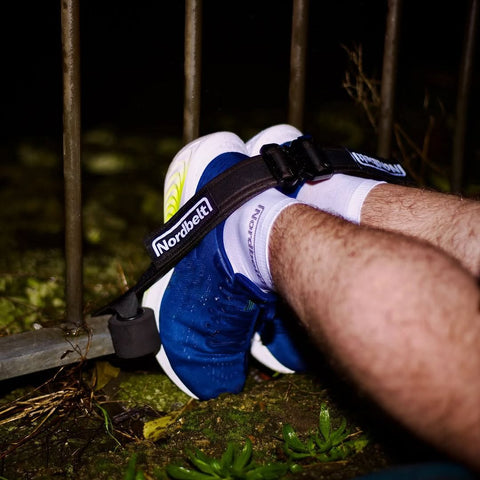
Do you also want clients to add Nordic curls at home? The relevant product task is stable ankle fixation that makes the exercise practical without a training partner or large fitness machine. With Nordbelt for Nordic curls at home, you can assess that compact setup function and carry the same checking sequence over from a supervised session. The limitation remains important: every anchor, every shoe and every user must be checked separately, and the equipment does not determine technique, regression or training dose.
For a personal trainer, this is especially useful as a transfer model. You are not just teaching an exercise, but a reproducible preparation: test the anchor, compare the strap path, build light tension, try a short range and only then decide whether the working set is appropriate.
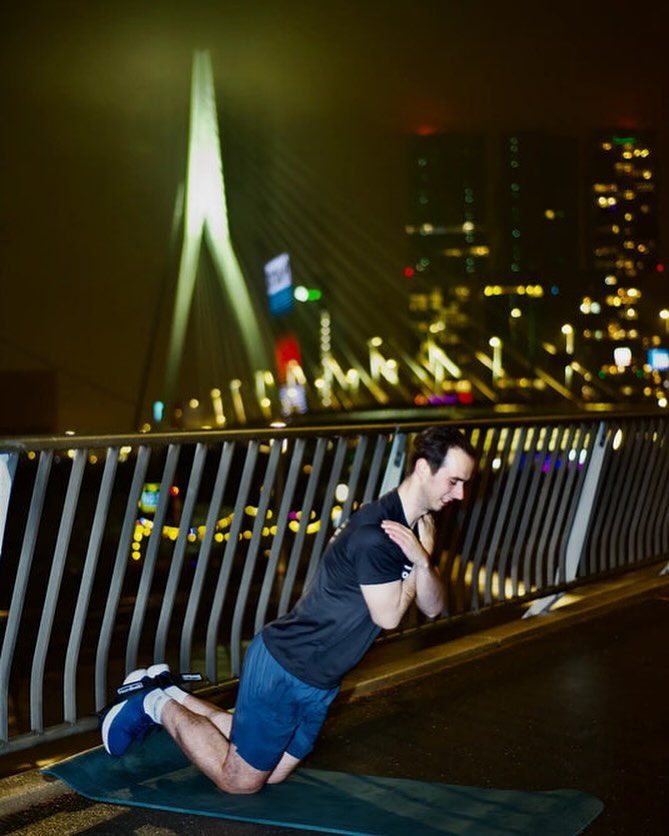

How to set up a hamstring training station in the studio
Divide the station into four zones. The anchor zone contains only the intended attachment point and remains free of loose equipment. In the adjustment zone, the client can kneel calmly while you check the strap path, symmetry and light tension. The movement zone in front of the knees remains clear and provides enough room for the selected range. The catch zone contains the regression you chose in advance, such as a hand catch, a raised support or another suitable form of assistance.
Mark the kneeling position with a removable line or fixed reference on the mat. Also record one measurement that is easy to reproduce, such as the distance between the knees and the anchor. This makes a deviation visible before anyone moves. Never use the mark as proof that the adjustment should be identical for every client; it is a starting reference that you adapt to each person.
Keep the walking route outside the station as well. The next client or loose equipment must not enter the catch zone.
Take your Nordic curl from the first rep to week 10.
A concrete 7-page plan: build up week by week, without pushing too fast.
- 01A clear week-by-week progression
- 02Technique and the mistakes to avoid
- 03A simple log you will actually use

≤51%
✓Backed by research
Van Dyk et al., 2019: meta-analysis of programmes with NHE. Not an effect test of Nordbelt or this protocol.
Open the download page again or check the email we sent you.
Open the download page ↗Make the setup repeatable for multiple clients
When several clients perform Nordic curls, the greatest risk does not necessarily arise during the first set, but during a quick changeover. A strap length, shoe position or mat can shift while the next client is already waiting. Use a short reset every time, even when two clients are approximately the same height.
- Release all tension and inspect the anchor and strap.
- Return the mat to the starting reference and clear the movement zone.
- Have the new client step in wearing their own training shoes.
- Readjust the left and right sides and perform three light-tension tests.
- Test a short movement with the selected regression before the working set begins.
Record only training-relevant information for each client: the support used, manageable range, set and repetition target, and one brief technical observation. A previous adjustment can be a useful starting point, but it does not replace today's checks.
Select the regression before the working set
A professional station should not only make a full Nordic curl possible. Above all, it should provide a suitable entry point. Before the set, decide how the client will brake the movement and where the repetition will end. Options include a very short forward range, an active hand catch, a support point or another hamstring exercise when the Nordic variation is not suitable that day.
Do not use the first repetition as an improvisation opportunity. Agree on how much control you want to see, when the hands will make contact and which signal means the set stops. This keeps coaching predictable and prevents motivation or group pressure from increasing the selected range during the set.
Research programmes using Nordic hamstring exercises apply different volumes and progressions. This supports planned progression instead of one maximal entry point for everyone (Medeiros et al., 2020). The product or station does not make that programming decision.
Coach technique without slowing the workflow
Choose one or two observable focus points for each set. For example, check whether the hip and trunk position remain approximately the same throughout the selected range, whether the left and right sides build tension together and whether the client can catch the movement at the agreed point. Too many cues at once make it harder to see which adjustment has an effect.
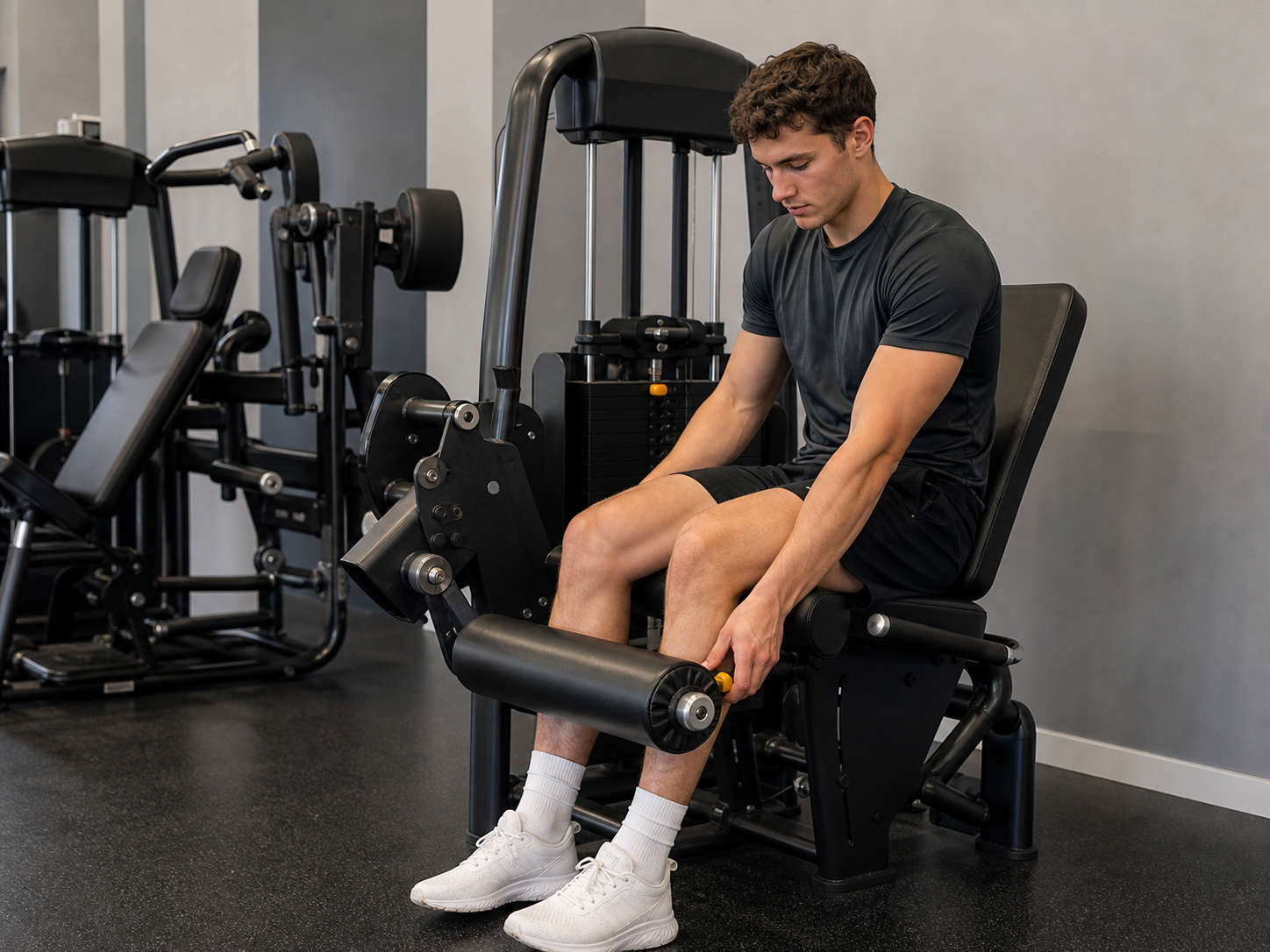
A short note with the regression, range and next technical focus is often enough. The guide to common Nordic hamstring curl mistakes helps distinguish setup errors from execution errors.
Then change one variable at a time, for example control first and later support, range, tempo or volume. This keeps the effect of each adjustment visible.
From studio to home programme without copying and pasting
A supervised adjustment is not automatic approval of the home situation. At home, the door, floor, clear space, shoes and catch may be different. Have the client complete the full checklist again and treat the home setup as a separate environment.
Use three transfer questions. Is there a suitable anchor that can be tested using the intended method? Is there enough kneeling and catch space? Can the client perform the agreed regression independently and without rushing? If one answer is uncertain, keep the exercise in the studio or choose a different task for home.
For a broader professional context, use the existing hamstring training protocol for physiotherapy as a clear scope boundary: equipment selection and station logistics are different from clinical assessment, treatment or an individual rehabilitation decision.
Practical rotation for a personal-training block
Before the first client, allow time for a complete anchor and equipment check. Only one person should work in the movement zone; the next client steps in only after the reset is complete.
A simple sequence often works well:
- before the block: check the anchor, strap, mat, catch and walking route;
- for each client: adjust, test light tension, try a short range and perform the working set;
- after the set: unload the equipment completely and make a technical note;
- at changeover: clear the station and restart from the first adjustment step;
- after the block: record wear, movement and any required follow-up action.
Practical feasibility partly determines whether a training component is applied consistently (Ripley et al., 2021). Choose a short, fixed reset that also works under normal studio pressure.
When is a compact Nordic curl station unsuitable?
Choose another exercise or location when the anchor cannot be tested using the intended method, the catch zone is too small, the fixation continues to shift or the client cannot control the agreed regression. Also stop in the event of sharp or unexpected symptoms, tingling, numbness or a clear change in movement. Such signals call for appropriate assessment, not tighter equipment or additional repetitions.
A compact station is also the wrong choice when the session format does not allow calm individual adjustment. A time-pressured circuit can include other exercises, but the Nordic curl station needs enough time for entry, testing and exit. Compact means little equipment and limited storage, not as little checking as possible.
What information should you record after the session?
Keep the record brief enough to use consistently. Note the selected regression, approximate range used, sets and repetitions, the main technical observation and whether the setup needs further adjustment at the next session. Do not attribute a result to the equipment itself, and do not use a smooth first session as proof that a larger range is immediately suitable.
After a few sessions, check whether the reset steps have become clearer or are instead being skipped, and whether the home variation was genuinely checked separately. Only then will the workflow remain repeatable under normal studio pressure.
Decide based on workflow, user and environment
A good Nordic curl training station for personal trainers does not make every client the same. It makes the preparation visible and repeatable: anchor, fixation, space, regression, coaching and reset. This helps you organise supervised sessions and provide a home variation only when the other environment has been checked again.
To compare the assembly and execution sequence with your own station check, use the step-by-step guide. Retain your own professional selection and dosing; the guide describes the setup, not suitability or the training decision for an individual client.
Frequently asked questions
How much space does a compact Nordic curl station need? There is no universal distance. You need a fixed kneeling zone, a clear movement and catch zone, accessible support and a safe exit. Test the selected regression in the actual space before the set begins.
Can one Nordic curl station be used by multiple clients? Yes, provided you readjust and test the station for each client. Shoes, body dimensions, control and suitable range of motion differ, so a saved adjustment is only a starting point.
Does a personal trainer need a large Nordic curl machine? Not necessarily. Compact fixation can make a station possible, but only with a suitable anchor, enough space, an appropriate regression and a fixed checking workflow. The machine or fixation does not determine dosage or suitability.
How can a client continue Nordic curls at home? Treat the home environment as a new setup. Have the anchor, floor, clear space, shoes, fixation and catch checked again, and provide only the regression the client can control independently.
When should a set stop immediately? Stop if the anchor moves, the fixation shifts, the agreed control is lost, catch space is insufficient or sharp and unexpected physical signals occur. Reset the setup or choose another exercise; do not try to solve the problem with extra tension or repetitions.