

Leg cramps at night: what helps and when to pay attention?


“Nordbelt is easy to secure and feels stable.”
Leg cramps at night are usually a sudden, painful tightening of the calf, foot, thigh or hamstring. They often ease within minutes, but they can seriously disturb sleep. First relax, avoid aggressive stretching and then move lightly. Recurrent night cramps can relate to fatigue, position, age, medication, training load or general health. This guide helps you choose what to do immediately, how to reduce recurrence and when to ask for help.
Quick answer
Night leg cramps are not the same as ordinary muscle soreness. A cramp locks suddenly, feels hard or pulling, and then usually releases. Muscle soreness is more diffuse. After an injury, pain, weakness or tenderness often remains after the moment passes.
Research on night leg cramps suggests that stretching before bed can reduce frequency and severity for some people, but the effect is not universal (Hallegraeff et al., 2012). Reviews also stress that night leg cramps can have several contexts, including medication and underlying health (Allen and Kirby, 2012). Treat this as a practical decision guide, not a diagnosis.
Night leg cramps
Night leg cramps often appear without a clear warning. You are lying still, the muscle shortens or tightens, and suddenly the leg feels locked. This is common in the calf or foot, but it can also happen in the thigh or hamstring. The cause is rarely one simple factor.
Common contexts include:
- a harder training day than usual;
- long sitting or travel with little leg movement;
- sleeping with the foot held in a pointed position;
- limited recovery after sprinting, walking, fitness or football;
- medication or health factors that can increase cramp sensitivity;
- pregnancy, older age or recurring rest cramps.
For exercise-associated cramps, the literature points mainly to neuromuscular fatigue and altered reflex control. Fluids and electrolytes can matter in some situations, but they do not explain every cramp episode (Miller et al., 2022). That is why drinking more water or taking random supplements is often too simple.
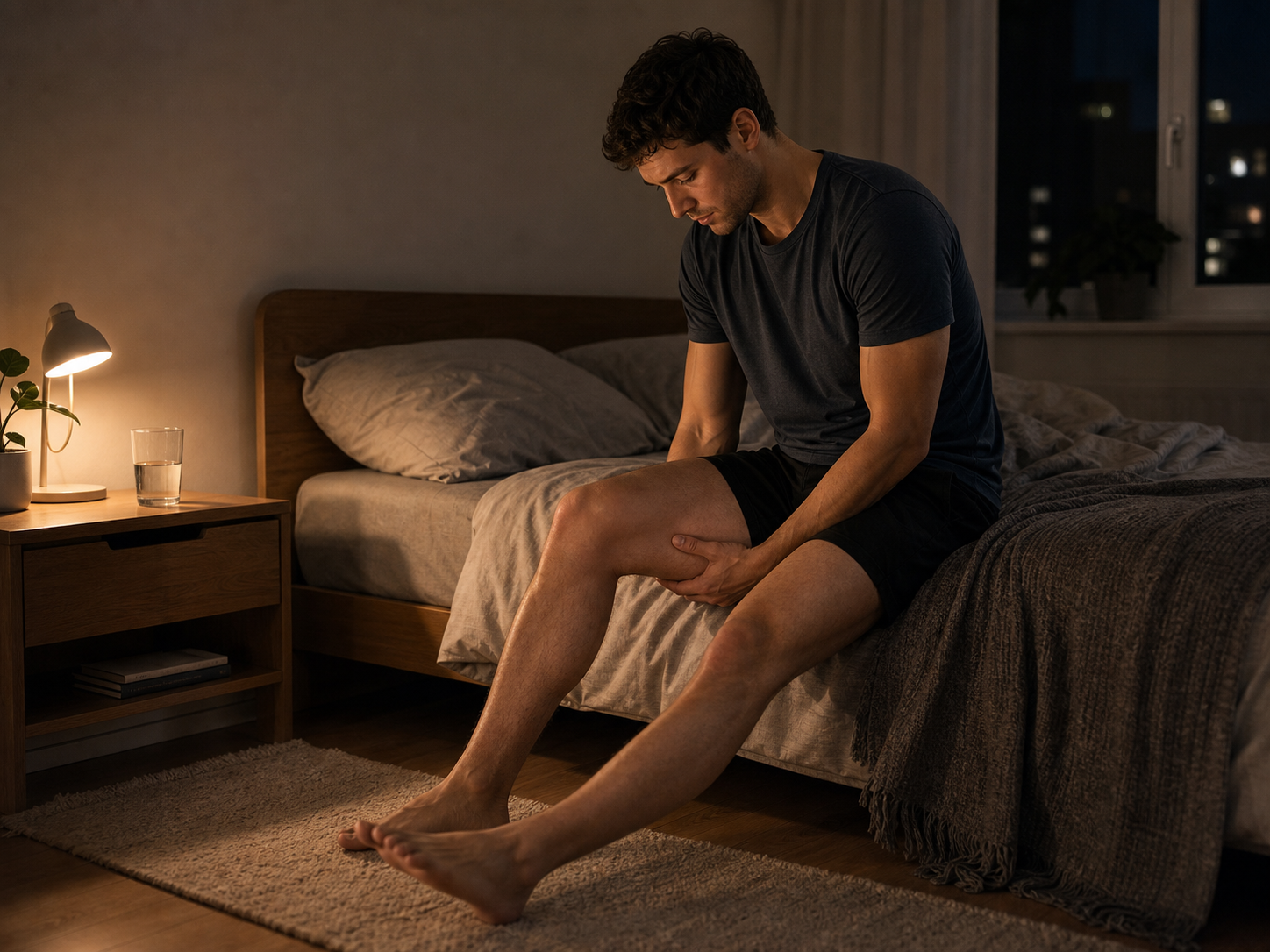

Thigh cramps at night
Thigh cramps at night can feel different from calf cramps. The muscle mass is larger, so the tightening can feel deeper and more threatening. Sometimes it is in the front of the thigh, sometimes at the back toward the hamstring. Look mainly at what happens after the episode.
If it eases quickly and you can walk normally, it fits ordinary cramp more often. If sharp pain, bruising, clear tenderness or loss of strength remains, do not treat it as simple night cramp. A strain, tendon irritation, nerve sensitivity or another issue may be involved.
For symptoms that mainly stay at the back of the thigh, the broader guide on hamstring cramp is a better next step. If the exact problem is waking because the hamstring cramps, the narrower sibling hamstring cramps at night fits that intent. This page stays broader: legs, thigh, calf, hamstring and prevention.
Take your Nordic curl from the first rep to week 10.
A concrete 7-page plan: build up week by week, without pushing too fast.
- 01A clear week-by-week progression
- 02Technique and the mistakes to avoid
- 03A simple log you will actually use

≤51%
✓Backed by research
Meta-analysis of randomised trials of the Nordic Hamstring Exercise.
Open the download page again or check the email we sent you.
Open the download page ↗Hamstring cramp while sleeping
Hamstring cramp while sleeping often follows sprinting, hills, strength training, long sitting or a sudden jump in daily steps. The hamstring does not like sharp changes in load. If you do much more than normal during the day and cramp at night, the question is not only what you lack, but whether the stimulus was too large.
Notice the difference between cramp, stiffness and pain. Cramp locks and then releases. Stiffness feels more like limited mobility. Pain often remains during walking, bending, stairs or contraction. If pain remains the next day, do not start heavy hamstring exercises. Use the guide to hamstring exercises with pain or ask for individual advice.
What to do for leg cramps
What to do for leg cramps starts with calming the muscle, not forcing it. The aim is to let the cramp release without creating extra irritation the next day.
- Change position slowly and breathe calmly.
- Straighten the leg only a little, without pulling hard.
- Move the ankle gently up and down.
- Massage lightly if that feels good.
- Stand only when the cramp clearly eases.
- Walk briefly and drink water if you are thirsty.
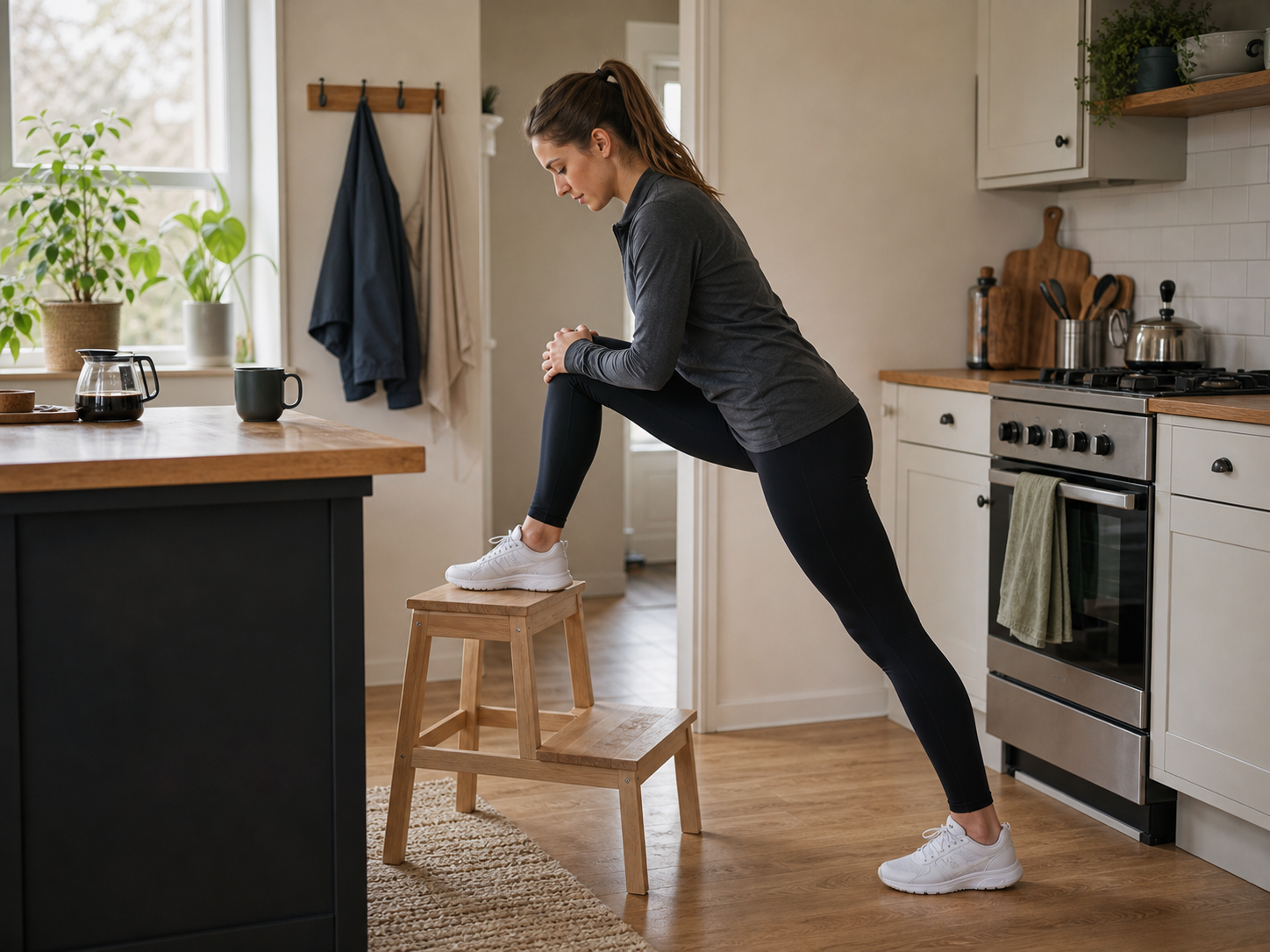
Avoid maximal stretching while the muscle is still fully locked. A mild stretch can help, but aggressive pulling is unnecessary. For a calf cramp, gently drawing the toes toward you may help. For a hamstring cramp, slowly straighten the knee and keep the movement small.
How to reduce night leg cramps
Reducing night leg cramps is about a simple routine you can actually keep. Do not choose ten steps. Start with three habits: light movement during the day, calm mobility in the evening and fewer large training spikes.
A practical evening routine:
- walk or move calmly for 3 to 5 minutes;
- do 2 rounds of mild calf and hamstring stretching for 20 to 30 seconds;
- avoid heavy hamstring or calf training right before bed;
- avoid keeping the feet forcefully pointed under tight bedding;
- note whether cramps follow sprinting, long drives, alcohol, little food or many stairs.
Magnesium is not an automatic solution. A systematic review found no convincing general benefit of magnesium for night leg cramps in the studied populations (Sebo et al., 2014). That does not mean correcting a true deficiency never helps, but supplements are not a substitute for reviewing load, medication, sleep and health.
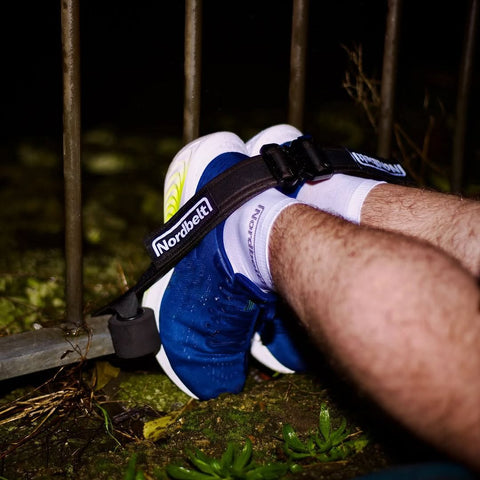
If cramps mainly return after sport, temporarily lower the peak load. Do not increase distance, speed, hills and strength work at the same time. Use light hamstring control only once the acute night cramp has settled. For a technical and repeatable start, use the Nordbelt how-to guide. View Nordbelt as a tool for controlled progression, not as a quick fix during a cramp attack.
When to get assessed
Get night leg cramps assessed when the pattern is new, severe, one-sided or clearly different from normal. Seek help sooner with swelling, redness, warmth, shortness of breath, tingling, numbness, loss of strength, fever, feeling unwell without explanation or pain that remains during the day. Cramps that start after new medication are also a reason to discuss it.
Also ask for help if your sleep remains disturbed for weeks. Then the issue is no longer just one stretch before bed, but a broader check of load, recovery, medication, circulation, nerve symptoms and general health. Do not keep stretching harder if the problem keeps returning.
FAQ
Are leg cramps at night dangerous?
Usually not. A single night cramp that eases quickly and leaves no symptoms is often harmless. It is different when cramps keep returning, seriously disturb sleep, occur with swelling or tingling, or leave daytime pain and weakness.
What helps immediately for night leg cramps?
Change position slowly, breathe calmly, lightly straighten the leg and move the ankle up and down. Massage gently if useful and stand only when the cramp eases. Avoid maximal stretching while the muscle is fully locked.
Is a thigh cramp at night caused by my hamstring?
It can be, especially when the cramp is at the back of the thigh. But thigh cramps can also come from the front of the thigh or from general rest cramp. Persistent pain, weakness or tenderness needs a different approach.
Does magnesium help prevent leg cramps during sleep?
Not automatically. Magnesium is often mentioned, but research does not support it as a general solution for night leg cramps. Discuss supplements with a clinician if you use medication, are pregnant, have kidney problems or suspect a real deficiency.
When should I see a doctor for night leg cramps?
See a doctor when cramps are new, frequent, very painful or clearly one-sided. Seek help sooner with swelling, redness, warmth, shortness of breath, tingling, numbness, weakness, fever, new medication or pain that remains during the day.