★ 4.6
Single-leg or two-leg Nordic curls?

Two legs are the starting point for a controlled Nordic curl. See what changes with one leg and when a seated leg curl is more practical for training each side.
FREE 10-WEEK TRAINING PROTOCOLSend my free protocol ↓Use both legs for Nordic curls when you want to practise a controlled repetition on your own. Want to train the left and right sides separately and track each one? A suitable seated leg curl machine lets you adjust the resistance for each leg. A single-leg Nordic curl needs a setup and a load you can adjust for that side.
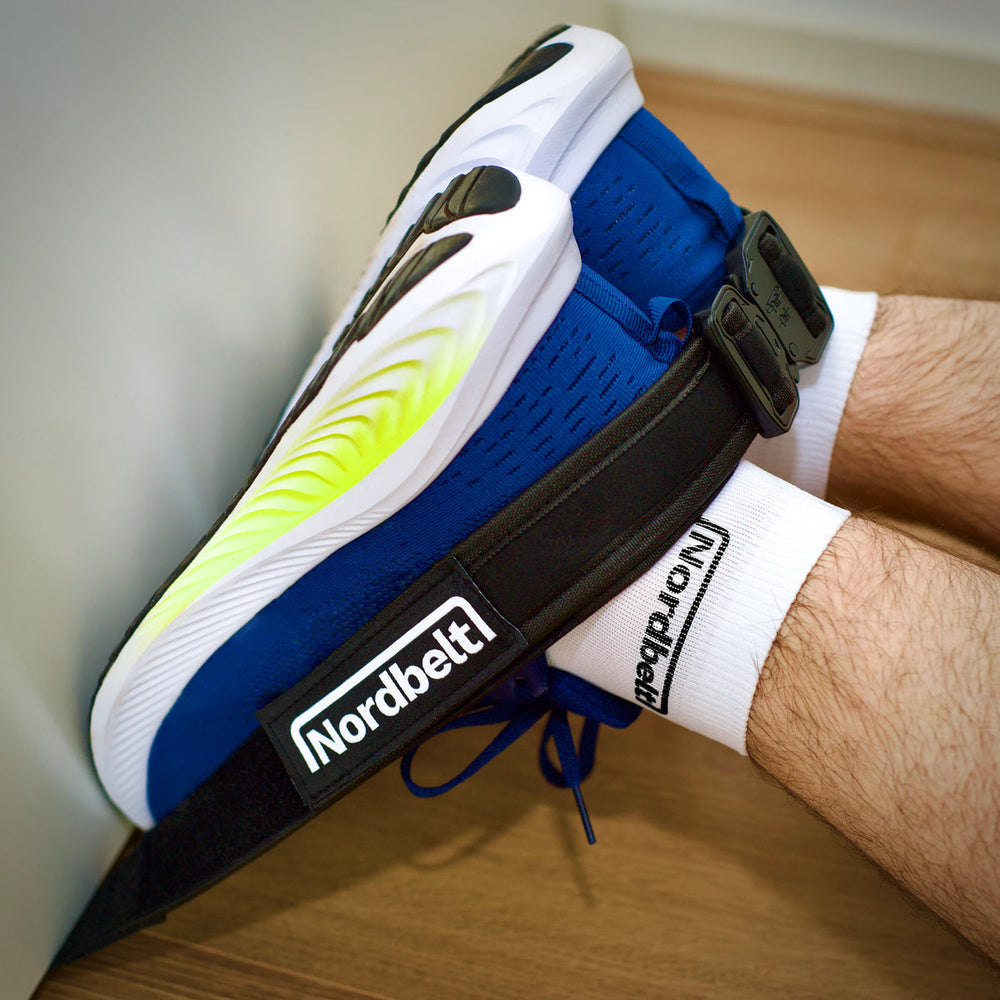
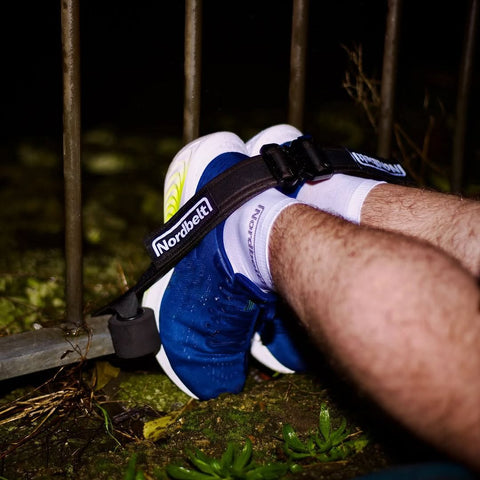
For the two-leg version, see how Nordbelt secures both ankles during Nordic curls. This gives you a fixed point to work against as you lower yourself at home. Before you start, check that the anchor is suitable, your knees are supported and there is enough room for your hands.
What changes when one leg does the work?
In a Nordic curl, you kneel with your ankles secured and slowly lower your torso and thighs forwards together. Your knees straighten as your hamstrings brake the movement. How far you can lower under control depends in part on your position, your support and any assistance you use.
With two legs, both sides can help brake the descent. When you work with one leg, that side has to control the chosen resistance on its own. You also need to keep yourself from twisting to one side. A lab setup with resistance adjusted for each version makes different demands from simply undoing one strap at home. Keep both ankles secured in your usual home setup and choose a separately adjustable exercise when you want to work one leg at a time.

What did the two lab studies find?
Hegyi et al., 2019 had thirteen young amateur football and rugby players perform single-leg and two-leg versions on an adjustable research device. They tested both versions with the hips in a neutral position and with the hips markedly flexed. The resistance for each version was adjusted to the maximum load each participant could control through the prescribed range and at the prescribed pace. Electrical activity in the two measured hamstring muscles did not differ significantly between one leg and two. With the hips neutral, knee flexion torque was higher in the two-leg version during part of the middle of the movement.
Soga et al., 2022 tested fourteen men on an inclined lower-leg platform. At the same incline, peak electrical activity in the long head of the biceps femoris, one of the hamstring muscles, was higher in the single-leg version. The researchers also tested a single-leg version on a steeper incline. They measured muscle activity during the exercise, using a different setup from Hegyi and colleagues.
Electrical activity tells you how active a measured muscle was during the test. Strength gains after weeks of practice and injury rates require a different kind of study. These two studies give you no reason to set your home equipment to a particular incline or use the load from your two-leg Nordic to calculate a load for one leg.
Make your two-leg setup repeatable
Before a set, check that both sides start in the same position. Kneel on a mat that will not slip and secure both ankles at the same height. Our guide to a stable Nordic curl setup at home helps you choose an attachment point. If you use a door, make sure the direction of pull keeps it shut and prevent anyone from opening it during the set. With a training bench or railing, choose a suitable solid anchor that stays in place under load. Check it under light tension first and follow the fitting instructions for your setup.

Close-up of the ankle straps at a training bench.
Start upright with your hands free in front of you. Move your shoulders and hips forwards together. Put your hands on the mat before you lose control of the descent, then use them to push yourself back to the start. If you can only control a short descent, practise that shorter movement first. The hand-assisted Nordic curl guide shows how to use that support consistently.
Take your Nordic curl from the first rep to week 10.
A concrete 7-page plan: build up week by week, without pushing too fast.
PDF7 pagesStraight to your inbox
- 01A clear week-by-week progression
- 02Technique and the mistakes to avoid
- 03A simple log you will actually use

Open the download page again or check the email we sent you.
Open the download page ↗≤ 51%
✓Backed by research
Van Dyk et al., 2019: meta-analysis of programmes with NHE. Not an effect test of Nordbelt or this protocol.
What can you do if you twist as you lower?
First check that you start evenly. Look for extra slack around one ankle, a knee shifting on the mat or one hand touching down much earlier than the other. Then repeat a short movement with the same setup and pace. Filming straight from the front can show which way you turn and when it begins. Put the phone outside the area where your hands land.
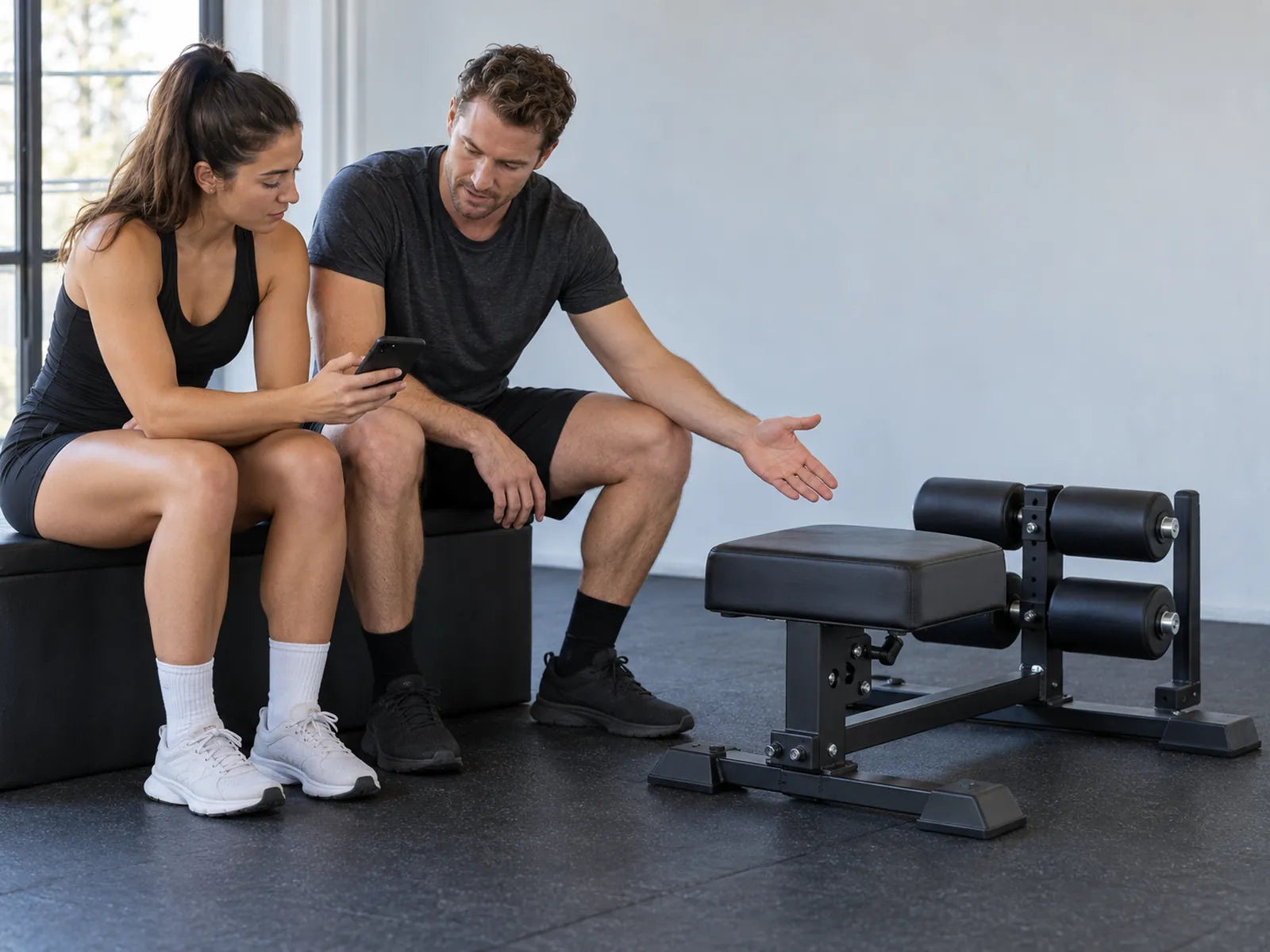
Illustration of reviewing your form on video.
Write down what you see. For example, your right knee may shift as you lower further. In your next set, try to stay within the range where your knees remain in place. The footage cannot tell you how much force each leg produced. Our guide to the break-point angle explains how to review when you lose control of the repetition as a whole.
When does it make sense to train one leg at a time?
If you want to record training load and progress for each leg, it helps to set the resistance separately. On a suitable seated leg curl machine, keep your torso support, seat position and range of motion consistent while working one leg at a time. Log the load you could control on each side. That gives you comparable conditions when you train the same side again.
If your priority is to improve your two-leg Nordic, keep practising that exercise and start by adjusting the range or the help you get from your hands. This lets you see whether you control more of the same movement. Stop if lowering hurts. If symptoms persist or you are returning after a hamstring injury, talk to your physiotherapist before making the exercise harder.
Frequently asked questions
Is a single-leg Nordic curl always harder?
If you work with one leg in the same setup, the other side cannot help brake the descent. The effort also depends on the resistance, the amount of help and how far you lower. There is no fixed relationship between the number of legs and the force or training load.
Can I use both legs if one side feels stronger?
Yes, if you can perform a two-leg Nordic under control and without pain. Keep your setup the same and choose a range you can lower through smoothly. If you want to train or track one side on purpose, choose an exercise with resistance you can set for each leg. A difference in how the Nordic feels gives you no force measurement.
Should I release one ankle at home to try it?
Keep both ankles secured in your home setup for two-leg Nordics. The single-leg versions in the studies used specific test equipment. To train one leg at a time on your own, use a machine designed for it and choose a resistance you can lower under control.
Is one-leg training proven to be better for your hamstrings?
The studies compared measurements made during the movement, including electrical muscle activity and torque around the knee. They did not follow a training programme to see which Nordic version builds more strength or leads to fewer injuries over time. Choose based on what you want to train and what you can control in your setup.