★ 4.6
Single-leg seated leg curl: perform and record each side

Working one leg at a time can make recording each side practical. Learn how to do it on a suitable machine and keep conclusions about differences in proportion.
FREE 10-WEEK TRAINING PROTOCOLSend my free protocol ↓A single-leg seated leg curl is practical when you want each side to work and be recorded separately on a suitable machine. Keep your torso supported, move with one leg and choose a load you can control without twisting. Start by finding a manageable load for this version; do not automatically halve your usual weight. Training one leg at a time does not itself prove better results or the correction of left–right differences.
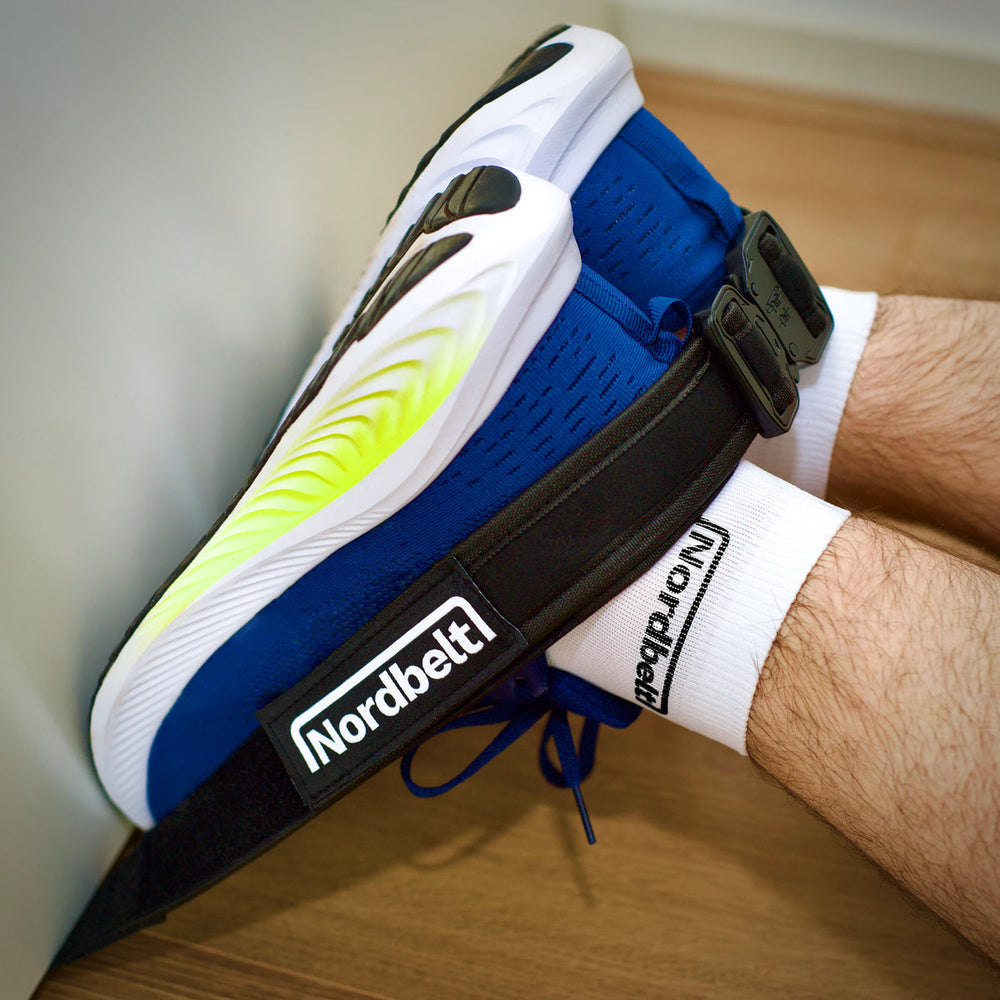
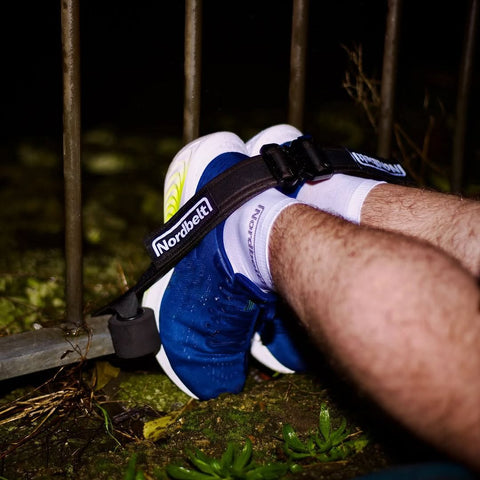
If you later also want to add bilateral Nordic curls at home, you can see how Nordbelt secures your ankles without a training partner. You still need a suitable, stable anchor. The tool does not replace a leg machine or decide whether single-leg training suits you. You do not need it for the machine exercise below.
When would you choose one leg at a time?
The clear reason is the task itself: you want to see what each leg does separately, without the other leg moving the same roller. You can record the chosen load, completed repetitions and observations for each side. That is useful training administration, not a test that identifies an injury or strength deficit.
Choose this version only if the manufacturer allows single-leg use and the setup fits you. A shared moving arm does not automatically make every machine suitable. Ask a gym staff member to show you the intended operation if unsure. Keep using two legs if your current programme requires it or you cannot stay stable with one leg.
This article covers a seated machine curl for healthy adults. With pain, a recent injury or a rehabilitation prescription, discuss exercise choice with your clinician. Do not use a difference between legs to decide that you have recovered or are ready to return to sport.

Keep the single-leg movement recognisable
First adjust the machine according to its instructions. The separate guide to adjusting a leg curl machine for your hamstrings covers the knee axis, roller and supports. The opening image shows an empty leg machine as context; it does not establish a suitable setting or single-leg function for your machine.
Use these practical points to guide execution. They are reminders, not an individual training programme:
- Sit with your back against the backrest and use the intended supports and handles. Position the working side as instructed.
- Keep the other leg clear of the moving roller, in the position the machine instructions permit. Do not use it to push an excessive load into motion.
- Bend the working knee and move the roller under control. Stay seated without rotating or lifting your pelvis.
- Return your lower leg steadily within the selected range. Do not let the weights drop back unexpectedly.
- Bring the machine to rest before changing sides. If you need to reach a lever or change your seated position, follow the intended release procedure.
Stop the attempt if your torso leaves the support, the roller shifts or you need the other leg to finish. Ask for help with adjustment or choose a different load. Do not continue simply to reach a planned repetition count.
Which weight should you use with one leg?
Do not turn your two-leg weight into a calculation. Start with a light familiarisation on this machine, following its rules, and check that you can perform the movement independently. The load is useful only if you can maintain the intended position and controlled return. There is no universal percentage or automatic half-weight rule here.
Do not change the seat, load and range together when comparing with an earlier attempt. If you cannot reproduce a setting, record that instead of attributing the difference to your leg. Changing machines also calls for familiarisation: matching numbers on two weight stacks do not create the same task.
Choosing one leg does not determine a fixed set or repetition count either. Fit the exercise into your existing programme and any coaching you receive. Working the other side is part of this version, not a reason to quietly add more exercises on top of your plan.
Take your Nordic curl from the first rep to week 10.
A concrete 7-page plan: build up week by week, without pushing too fast.
PDF7 pagesStraight to your inbox
- 01A clear week-by-week progression
- 02Technique and the mistakes to avoid
- 03A simple log you will actually use

Open the download page again or check the email we sent you.
Open the download page ↗≤ 51%
✓Backed by research
Van Dyk et al., 2019: meta-analysis of programmes with NHE. Not an effect test of Nordbelt or this protocol.
What does research show about one or two legs?
A study of 32 young, previously untrained women used unilateral leg extension, leg curl and leg press in a nine-week programme. It compared lower with higher training loads. Outcomes included fat- and bone-free leg mass and leg-extension strength. There was no group performing the same programme with both legs together, so the results do not establish an advantage of single-leg over two-leg curls (Franco et al., 2019).
In another study, twenty healthy adults trained one leg seated and the other lying for twelve weeks. That design compared hip positions in leg curls, rather than one leg against two. Its muscle-growth results therefore cannot make single-leg training the winner (Maeo et al., 2021). Hip-position choice is covered separately in seated or lying leg curls.
The practical conclusion is limited: single-leg execution can let each leg work separately. The studies above do not answer whether this choice corrects left–right differences or prevents injuries. An effect of a complete training programme is also not evidence for one isolated exercise or a piece of equipment.
Record each side without making a diagnosis
You could use the fields below. This is an original example for making a later session recognisable, not a validated strength measurement or asymmetry screen.
| What to record | Left leg | Right leg |
|---|---|---|
| Machine and settings | Same machine; note seat and roller positions | Record matching settings or a necessary difference |
| Chosen load | Setting actually used | Setting actually used |
| Completed repetitions | What you actually did | What you actually did |
| Execution and order | For example: first; torso stayed supported | For example: second; last attempt stopped on twisting |
| Next step | Keep the setting or ask for help | Keep the setting or ask for help |

Illustration of training notes; the pictured notebook contains no measurements or prescribed programme.
Write “stopped the last attempt when I twisted” rather than “my right hamstring is weak”. The first records what you observed. The second draws a conclusion without a separate diagnostic basis from this exercise. Also note which side you did first so that a relevant detail of execution does not disappear from your record.
What if you later want to do Nordic curls?
A Nordic curl uses a different setup. You kneel with both ankles secured and move your body forwards from the knees, with your hands ready to catch yourself. A single-leg machine curl is not an instruction to try a Nordic on one leg.
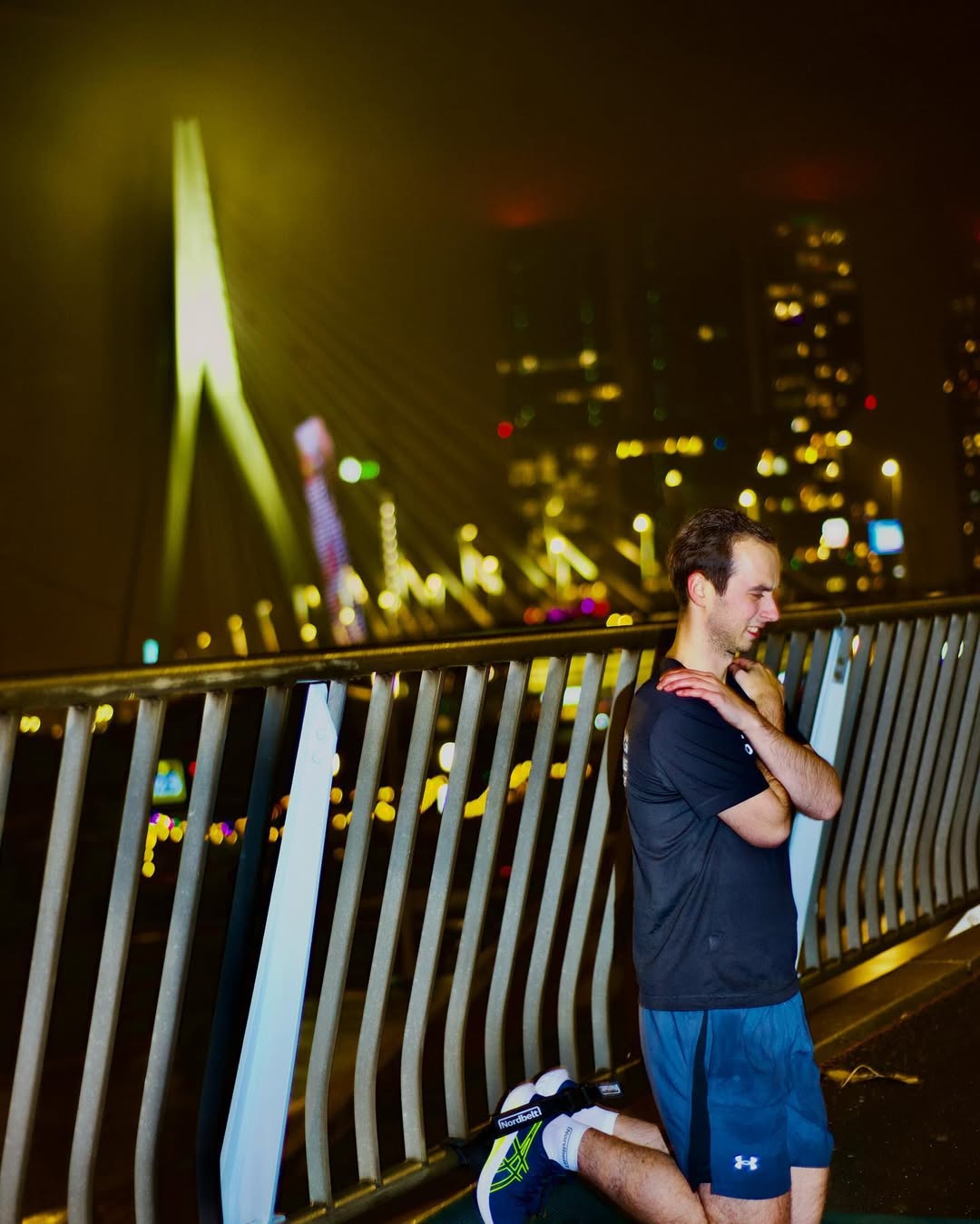
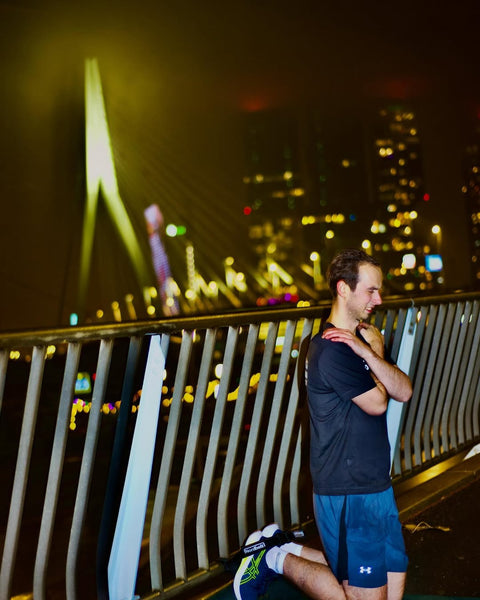
Upright kneeling starting position beside a railing; the photo shows no lowering repetition and does not establish that every railing is suitable.
A door, bench or fixed railing is an option only when its construction and attachment method suit the exercise. The anchor must not open, slide or tip; the material, strap and fasteners must be sound. Choose a movement you control and leave enough space to catch yourself. The existing guide to Nordic hamstring curls at home with a stable setup covers those checks. This is a separate training choice, not a substitute for adjusting a leg machine.
Frequently asked questions
Is a single-leg leg curl better than using two legs?
The studies discussed do not establish that. Choose one leg when you want to perform and record each side separately on a suitable machine. Two legs remains a useful choice when the equipment and your programme suit it. The version alone does not determine results.
Should I use exactly half my normal weight?
No. Treat the single-leg version as its own familiarisation on that machine. Choose a load that lets you stay supported and move and return the roller under control. Do not use the other leg to start an excessively heavy repetition.
Must both sides complete the same repetitions?
Do not make that a self-invented test threshold. Record what you actually perform with the agreed execution and why you stop. A difference alone is neither a diagnosis nor an automatic instruction to train the other side more. Discuss notable or persistent problems with appropriate support.
Can I use this during hamstring-injury recovery?
This article is not a rehabilitation protocol. After an injury, exercise, load and range depend on your situation and treatment plan. Do not use a single-leg curl to clear yourself for sport. Stop with pain and ask your doctor or physiotherapist which step is appropriate.