★ 4.6
Hard lump after a hamstring injury: what should you do?

A new or persistent firm lump needs assessment. Prepare a timeline for your appointment and keep the cause of the swelling separate from later training.
FREE 10-WEEK TRAINING PROTOCOLSend my free protocol ↓You cannot identify a hard lump after a hamstring injury as scar tissue or calcification simply by feeling it. Have a new, persistent or growing swelling assessed by a doctor, even if it causes little pain. Bone formation within muscle is one possible explanation, but other causes need consideration. An earlier sports injury does not automatically explain a lump; rapid growth or a deep swelling particularly warrants further assessment. (Achar et al., 2022)
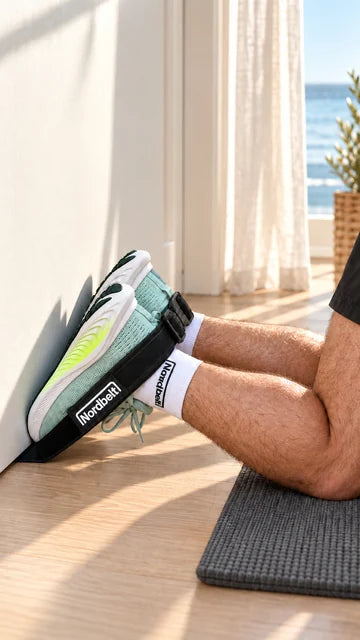
Any later strength progression is a separate step. If Nordic curls fit your plan after assessment, Nordbelt provides ankle fixation at home without a training partner or large machine. The Nordbelt homepage explains the setup. The tool neither diagnoses nor treats a lump or bone formation; do not use a demanding exercise to test what the swelling is.
What might a firm area after an injury mean?
When assessing swelling, a doctor considers its onset, location, progression and examination findings. A collection of blood, changes after tissue damage and other soft-tissue abnormalities do not all need the same approach. Pressing hard yourself cannot reliably distinguish them. A photograph of the skin cannot show what lies deeper either. (Achar et al., 2022)
One specific possibility is myositis ossificans: bone formation in soft tissue, often within a muscle. A retrospective series from a specialist orthopaedic centre described 68 cases at different sites, including four in the hamstring group. This establishes that the location is possible. It does not establish your probability after a hamstring injury: the series already consisted of people in whom the condition had been found. (Saad et al., 2021)
A case report also described a 47-year-old athlete with recurrent bone formation in both hamstrings after injury. One patient can illustrate a condition but cannot establish its usual course or best treatment. Bring the condition's name to your appointment as a question, not a self-diagnosis. (Miller et al., 2006)

Have the changes assessed, not just the pain
“It hardly hurts now” is useful information, but it does not explain the swelling. Also describe whether the area is getting larger, seems deep or restricts daily movement. A growing or unexplained lump deserves assessment without waiting to complete a training programme. Discuss a new change again even if the original injury was investigated previously. (Achar et al., 2022)
This does not mean every lump is serious. It means that firmness, pain and a connection with sport do not let you make the distinction yourself. An assessment such as “probably an old haematoma” should also come with a clear follow-up plan: when will it be checked again, and which change should you report sooner?
Prepare a timeline for your appointment
The notes below help organise your account. They are an editorial discussion aid, not a medical score. You need not provoke pain or squeeze the lump every day to collect information.
- The original event. Note when and how the injury began: a blow, sudden sporting movement or gradually developing symptoms. Record whether a diagnosis was made. If you cannot remember, stick to what you observed.
- When you first noticed the lump. Was it present immediately or did you notice it later? An approximate date is more useful than inventing a precise account afterwards. Mention any period when things seemed to improve.
- What has changed since. Describe visible growth, pain and difficulties with ordinary tasks such as sitting, walking or dressing. You need not classify the lump yourself as muscle, tendon, blood or bone.
- Previous investigations and treatments. Bring earlier reports and mention medicines, supplements and treatments. Include blood thinners if you take them. Let the doctor decide what is relevant.
For example: “Walking became easier after my injury. Later I felt a firm area at the back of my thigh that I had not noticed before. I do not know whether it is growing. Could you assess what it is and agree when I should return?” Information that is unknown then remains unknown.

Illustrative context image: note existing observations for your appointment; no medical examination is shown.
Take your Nordic curl from the first rep to week 10.
A concrete 7-page plan: build up week by week, without pushing too fast.
PDF7 pagesStraight to your inbox
- 01A clear week-by-week progression
- 02Technique and the mistakes to avoid
- 03A simple log you will actually use

Open the download page again or check the email we sent you.
Open the download page ↗≤ 51%
✓Backed by research
Van Dyk et al., 2019: meta-analysis of programmes with NHE. Not an effect test of Nordbelt or this protocol.
What can imaging add?
The question now concerns the nature and location of the lump, not just the extent of an old muscle tear. Ask which investigation the doctor considers appropriate and how the result would change the next step. Different investigations or follow-up assessment may sometimes be needed. The choice follows your history and examination together, rather than an online comparison of scans. (Achar et al., 2022)
In myositis ossificans, imaging appearances change as the condition develops. A radiology review describes how early findings can be difficult to distinguish from other abnormalities. The timing of the injury and earlier images therefore matters. An earlier scan is no reason to dismiss a lump that has since changed as harmless. (Lacout et al., 2012)
Before leaving, ask who will discuss the result, what remains uncertain and when follow-up is needed. For the broader muscle-injury question, read when to discuss ultrasound or MRI for a hamstring injury. The lump remains a separate reason for assessment.
Keep training and treatment separate
Do not try to “work away” an unexplained hard area with a massage device, hard pressure or forced stretching. First ask which daily movement and sport are appropriate for now. Do not add heavy hamstring exercises as a trial. Do not change prescribed medication or an existing treatment plan based on this explanation.
For general loading questions, see hamstring exercises when you have pain and recovery after a hamstring injury. That information does not establish the cause of the lump or a personal recovery timeline.
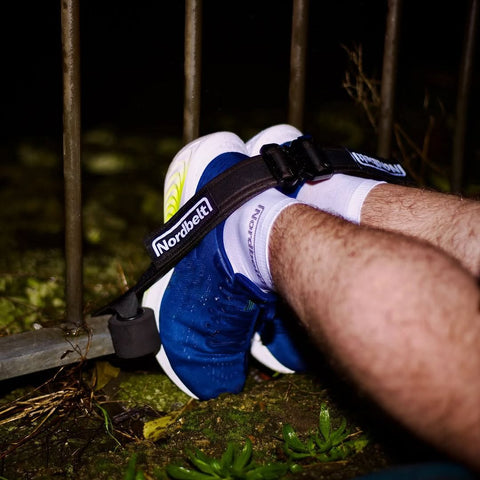
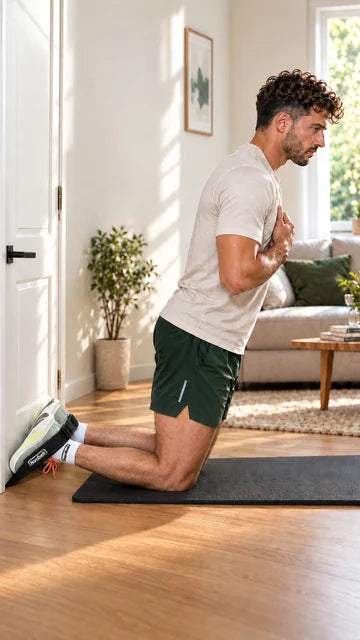
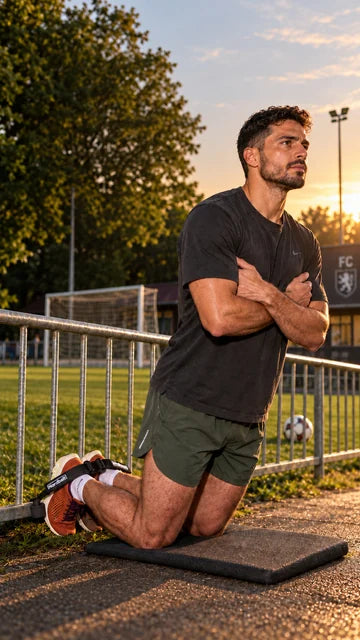
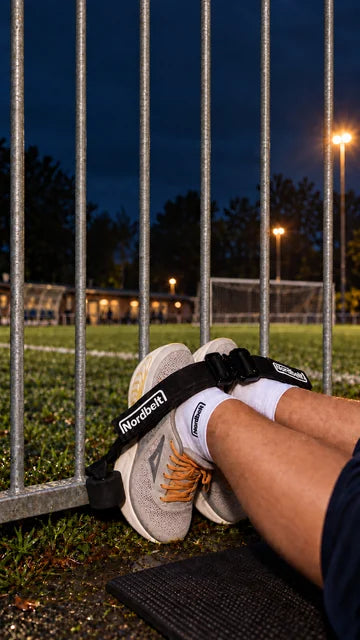
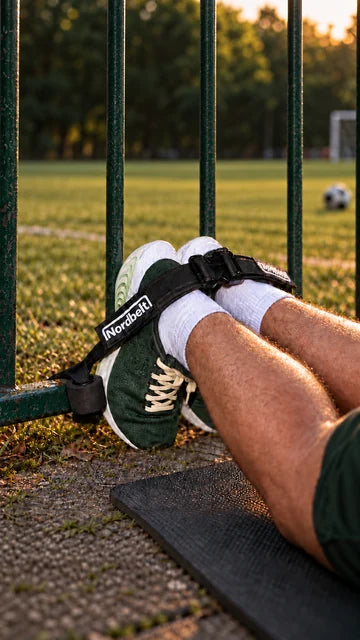
If Nordic curls become appropriate later, start kneeling with your knees supported and ankles secured. Control a forward movement from the knees and catch yourself with your hands in good time. Use only a suitable door, stable bench structure or sturdy fence according to the fitting instructions. Check the anchor, fastening, knee support and space for your hands. A reliable setup does not establish whether the exercise suits your leg right now.

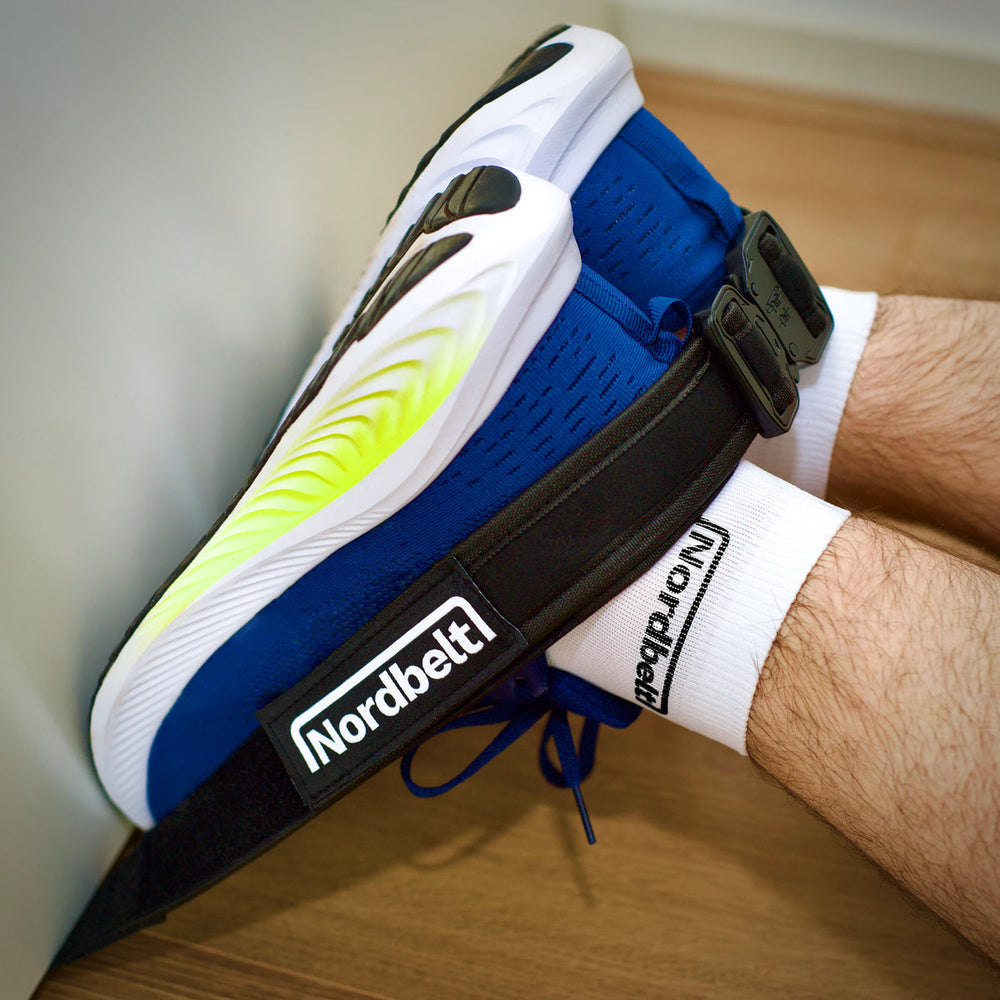
Ankle-fixation detail at a bench; this image shows neither treatment of swelling nor a performed exercise.
Frequently asked questions
Is a hard lump after a hamstring injury always calcification?
No. Firmness and an earlier injury do not establish the cause. Have a new, persistent or growing lump assessed. Myositis ossificans is one possibility, not a conclusion you can reach by touch.
Should I see a doctor if the lump barely hurts?
Yes, have an unexplained lump assessed even with little pain. In particular, report growth, changes and limitations. For an area already investigated, agree when it needs checking and which changes to report sooner.
Can I massage or exercise the hard area away?
Do not use massage, stretching or heavy training to remove an unexplained lump. First ask what is causing it and which loading is appropriate. Being able to complete an exercise does not prove the swelling is harmless.
Is an earlier normal scan enough reassurance?
A scan answers a particular question at a particular time. Report a lump noticed later or one that changes. The doctor assesses whether earlier information is sufficient and what follow-up is needed; do not arrange a fixed scan schedule yourself.