

Trail running hamstring exercises: climb, descend and brake stronger


Trail running hamstring exercises should match climbing, descending, technical paths and tired braking. General curls alone miss the sport context. A useful trail running hamstring plan combines hip strength, knee-flexion strength, single-leg control, eccentric braking strength and calm Nordic work that is not placed right before a long trail or hill session. Start with control and small volume, progress only when you can run normally the next day, and make the exercise harder before making the whole running week harder.
In short
Trail running asks a lot from the hamstrings because you constantly switch between climbs, descents, short steps, larger drops, braking on loose ground and pushing off again. That is why trail running hamstring exercises work best when strength and control are trained together: bridges, walkouts, single-leg hinges, sliders and later assisted Nordics. A systematic review of trail runners shows that injury and illness patterns are strongly linked with load, terrain and preparation. (Viljoen et al., 2021).
Use this article as the trail-specific companion to the broader guides on hamstring exercises and hamstring exercises for runners. The order is practical: position control first, then strength, then Nordic progression and weekly planning around trail training. hamstring exercises / hamstring exercises for runners.
Why trail running loads the hamstrings differently
Trail running is not just road running with a view. The surface changes, stride length changes and descending demands braking control. On climbs you often use shorter steps and more hip extension. On descents you need to slow down without the hip, knee and trunk drifting. The hamstrings help control the hip, slow the lower leg and keep tension when the foot lands somewhere unexpected.

In sprint-type hamstring injury mechanisms, eccentric load matters when the muscle has to brake while lengthening. Trail running is less straight-line than sprinting, but the practical lesson carries over: train braking control for descents, not only push-off strength for climbs. (Danielsson et al., 2020).
Which hamstring training for trail running comes first?
Choose exercises that make movement cleaner before choosing exercises that feel impressive. If a strength block makes descending stiff or makes the next hill session unusually heavy, the dose was probably too high or too close to a trail session.
- glute bridge with heel pressure
- hamstring walkout
- single-leg Romanian deadlift
- step-down with a slow braking phase
- hamstring slider curl
- reverse lunge with control
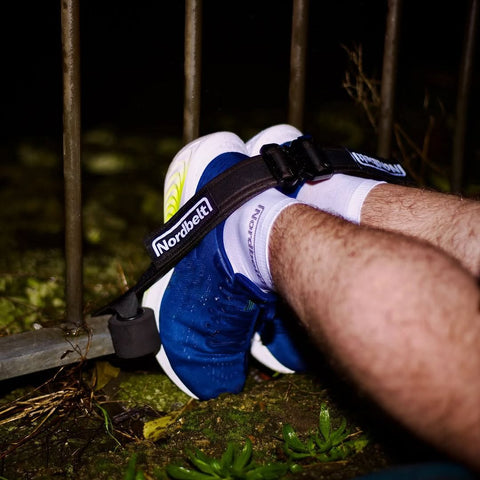
- assisted Nordic hamstring curl
- full Nordic hamstring curl
The 7 best trail running hamstring exercises
Do not run this list as one long circuit. Pick two or three exercises that fit your level, terrain and running week.
1. Glute bridge with heel pressure
Lie on your back, press the heels into the floor and lift the hips smoothly. Hold the top for two seconds. Feel hamstrings and glutes without arching the lower back.
2. Hamstring walkout
Start in a bridge and slowly walk the heels away from the body. Keep the hips high enough and return under control. This teaches tension while the lever becomes longer.
3. Single-leg Romanian deadlift
Stand on one leg and move the hip back while the trunk stays long. The goal is not maximum depth, but control of hip, knee and foot after uneven landings.
4. Step-down with braking control
Stand on a low step, lower one foot toward the ground and return smoothly. Start low. This looks more like descending than a normal squat because one leg controls the drop.
5. Hamstring slider curl
Pull the heels toward you from a bridge and slide back slowly. Start with both legs. Move to one leg only when the hips stay level. Use the slider guide for more progressions.
6. Reverse lunge with control
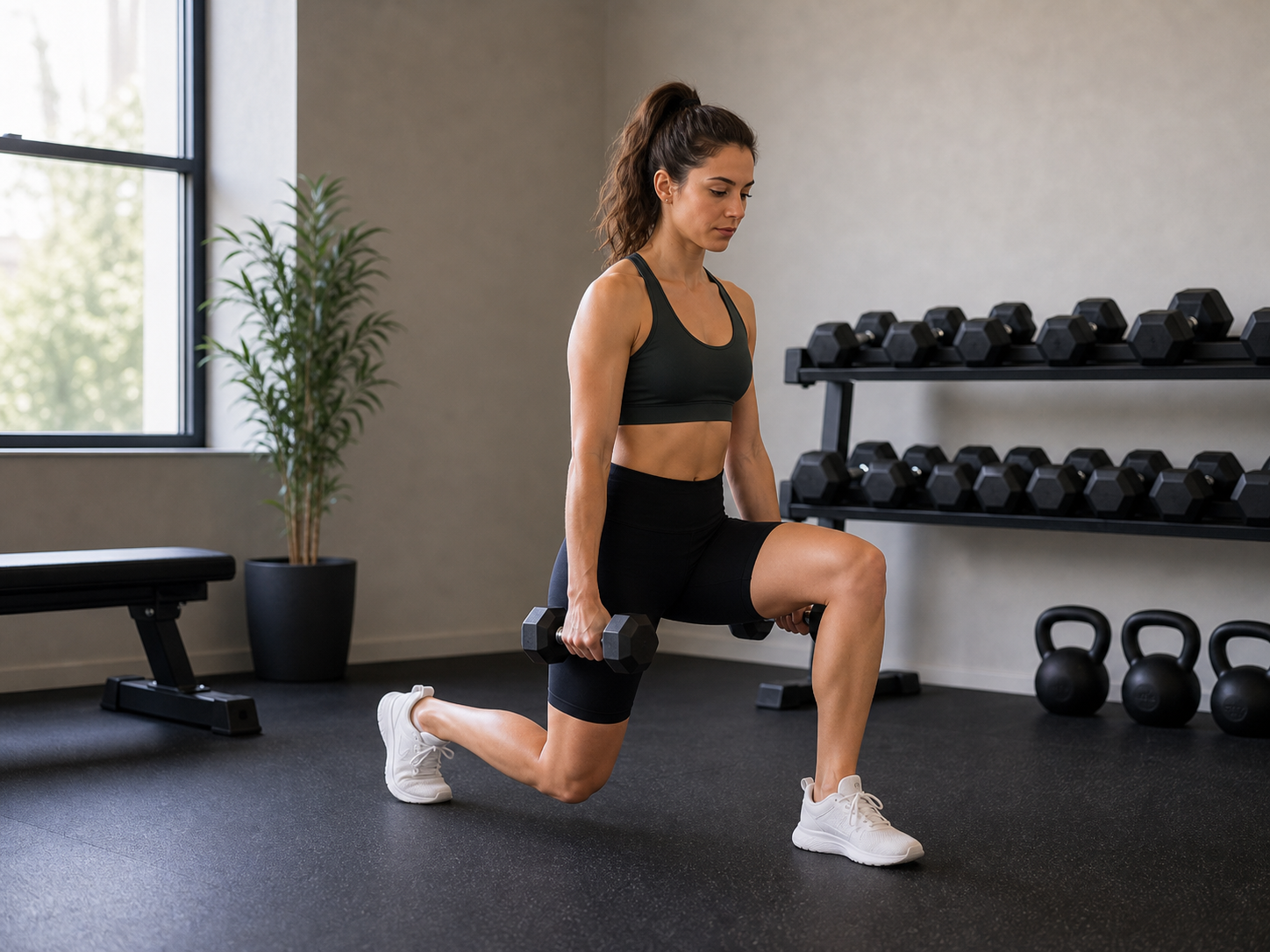
Step back calmly, lower under control and return to standing. Keep the step small enough to stay stable. This helps climbing, tired push-off and technical passages.
7. Assisted Nordic hamstring curl
Kneel on a soft surface, secure the ankles low and firmly, lower forward slowly, catch yourself with the hands and help yourself back. Start with short ranges and few reps.
Pull the heels toward you from a bridge and slide back slowly. Start with both legs. Move to one leg only when the hips stay level. Use the slider guide for more progressions. hamstring slider exercises.
Nordic hamstring for trail running: when and how heavy?
The Nordic hamstring curl can fit trail running well, but not as a daily test. Use it as a heavier eccentric strength input next to lighter control work. Reviews and meta-analyses connect Nordic programs with lower hamstring injury rates in sport, but the effect depends on sensible progression and adherence. (van Dyk et al., 2019; Rudisill et al., 2023).
The research findings apply to the programmes and participants studied. The exercise plan on this page has not itself been tested as an injury-prevention programme for this sport. Treat the suggested schedule as a practical example and adapt it to your training and recovery.
The Nordic hamstring curl can fit trail running well, but not as a daily test. Use it as a heavier eccentric strength input next to lighter control work. Reviews and meta-analyses connect Nordic programs with lower hamstring injury rates in sport, but the effect depends on sensible progression and adherence. (Medeiros et al., 2020).
how-to guide + Nordic hamstring curl.

Making hamstrings stronger in your trail week
A trail week becomes heavy quickly when strength work is stacked on top of vertical metres. With one trail run, use one light control session and one short heavier session. With two to three runs, use one focused hamstring session and one small maintenance input. Before a long trail, avoid a new heavy Nordic stimulus.
Reducing hamstring injury risk in trail running without false certainty
You cannot fully prevent hamstring injuries in trail running. Terrain, fatigue, weather, footwear, stride choice and recovery all matter. You can reduce risk by building distance, vertical metres and strength volume gradually, training single-leg control, using eccentric exercises with modest volume and planning recovery after long descents.
FAQ
Which trail running hamstring exercises matter most?
Start with bridges, walkouts, single-leg Romanian deadlifts and step-downs. Add slider curls, reverse lunges and assisted Nordics when control stays good.
Does the Nordic hamstring curl fit trail running?
Yes, if it is dosed calmly and not placed right before a hard descent or long trail. Use it as a heavier eccentric stimulus, not a daily test.
How often should I train hamstrings next to trail running?
Most trail runners do well with one or two short sessions per week. With many hills or technical sessions, one focused session is often enough.
Can trail running hamstring injuries be prevented?
Risk can be reduced, but not removed. Combine gradual trail load, single-leg control, recovery and careful progression.
What if the hamstring already feels sensitive after a trail run?
Do not immediately train harder. Use easy bridges, walking, gentle mobility and pain-free movement. Sharp pain, bruising, weakness or recurring symptoms deserve personal medical advice.