

Hamstring exercises for track and field: sprint, jump and land


Hamstring exercises for track and field should match sprinting, acceleration, braking, jumping and landing. For a sprinter, hurdler, jumper or combined-events athlete, that is more specific than general leg strength. A useful athletics hamstring plan combines hip strength, eccentric control, single-leg stability, careful Nordics and short sprint-preparation blocks with enough recovery time. Start light, progress in small weekly steps and let the 24 to 48 hour response decide whether the next session can be heavier.
Quick answer
Track and field loads the hamstrings when speed, stride length, hip extension and braking come together. During sprinting, the hamstrings are especially exposed in late swing, when the leg moves quickly forward and then prepares for ground contact (Chumanov et al., 2012). That is why track-and-field hamstring exercises should not be only heavy curls. Build control first: hip and trunk position, then eccentric strength, then sprint-specific dosage.
Use this article as a sport-specific addition to the broader guide to hamstring exercises. The order is simple: technique stays first, strength comes in short blocks, and hard Nordics fit only when the basic workload reacts well.

Why track and field loads the hamstrings differently
In athletics, hamstring load often happens at high speed. A football or hockey player also accelerates, brakes and turns, but sprint events, hurdles, long jump, triple jump and combined events place a sharper mix of maximum speed and technical repetition on the posterior chain. The hamstrings help extend the hip, control the knee and decelerate the lower leg before the foot hits the ground.
That does not mean every athlete needs the same programme. A 100 metre sprinter needs different emphasis than a high jumper or a recreational runner doing track sessions. Still, three qualities keep returning:
- hip strength to put force into the track without hanging in the lower back;
- eccentric control to tolerate speed and braking moments;
- single-leg stability for take-off, landing, curve running and hurdle rhythm.
A study in elite sprinters and jumpers shows that hamstring rehabilitation and return to sport in this group need sport-specific attention, not only generic strength work (Askling et al., 2014). For healthy training, the same lesson applies in a lighter way: make the exercise fit the task.
Which athletics hamstring training comes first?
Choose exercises you can repeat cleanly. If your pelvis rotates, your knee collapses inward or your hamstring feels sharp the next day, the step is too heavy. In athletics it is tempting to make everything fast and explosive. That is exactly why the strength block should be calm enough to protect the quality of the track session.
A practical sequence is:
- glute bridge with hamstring pressure;
- hamstring walkout;
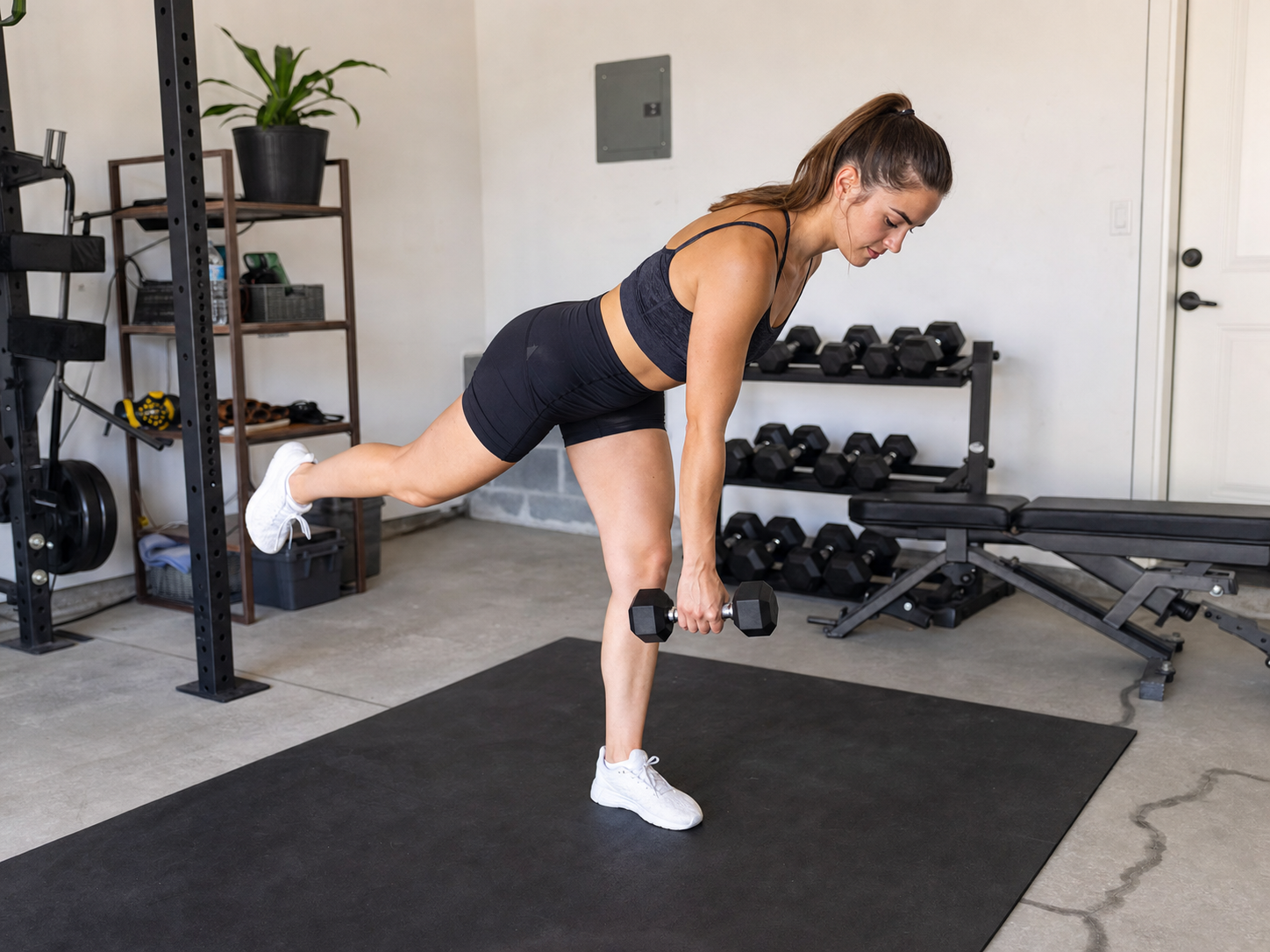
- single-leg Romanian deadlift;
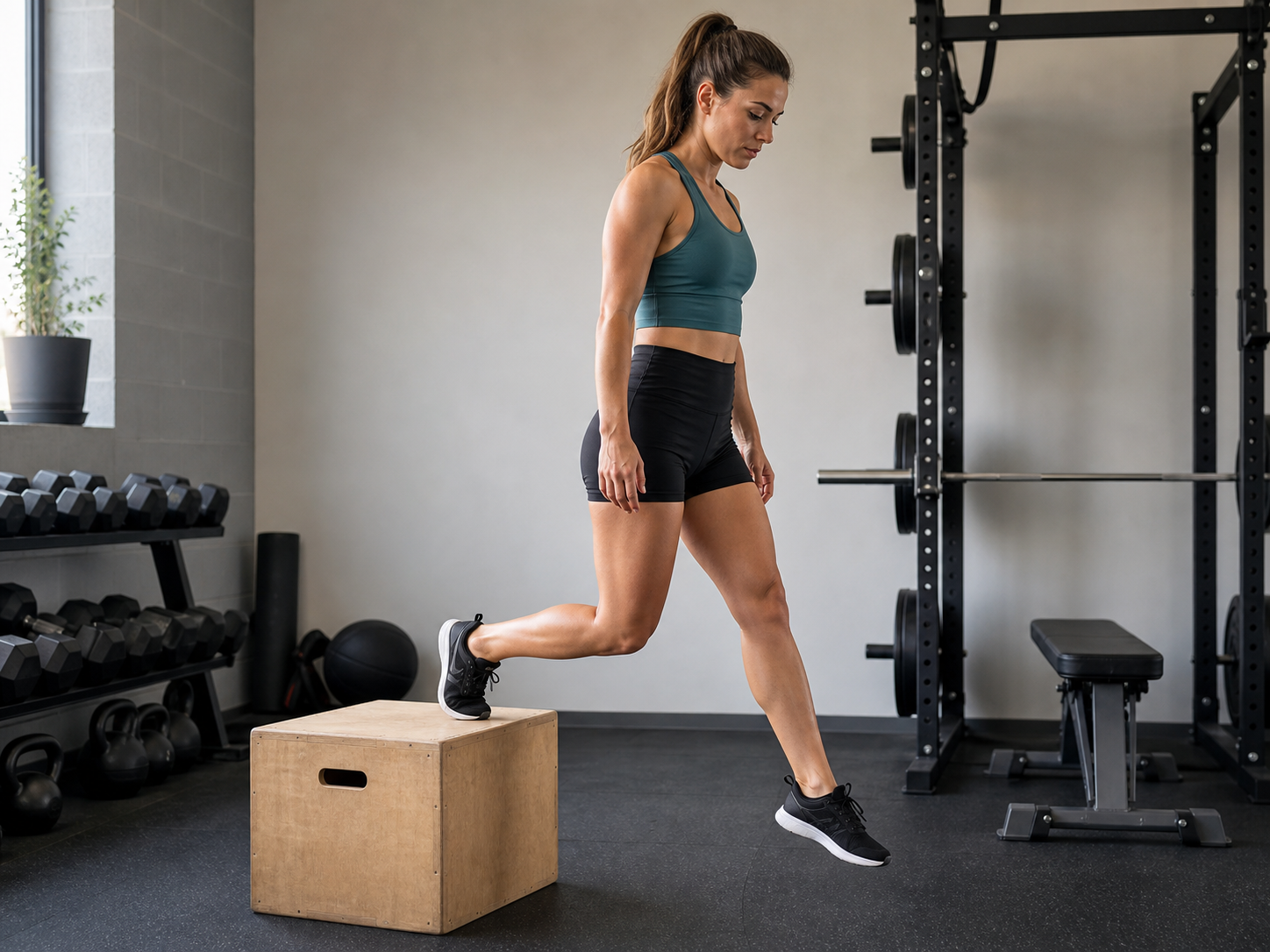
- split squat hold or rear-foot elevated split squat;
- sliding leg curl;
- pogo hops and landing control;
- assisted Nordic hamstring curl;
- short accelerations or wicket drills when the base reacts well.
This order helps you make the hamstrings stronger for athletics without turning every session into a soreness test. If you want to compare more exercise types, use the guide to eccentric hamstring exercises as a base.
Take your Nordic curl from the first rep to week 10.
A concrete 7-page plan: build up week by week, without pushing too fast.
- 01A clear week-by-week progression
- 02Technique and the mistakes to avoid
- 03A simple log you will actually use

≤ 51%
✓Backed by research
Van Dyk et al., 2019: meta-analysis of programmes with NHE. Not an effect test of Nordbelt or this protocol.
Open the download page again or check the email we sent you.
Open the download page ↗The 6 best hamstring exercises for track and field
Start with two or three exercises per session. More exercises are not automatically better. The best hamstring exercises for track and field are the ones that make you stronger without lowering sprint quality two days later.
1. Glute bridge with hamstring pressure
Lie on your back, place your heels slightly farther away from your hips and lift your hips. Pull the heels gently toward you without letting them slide. Hold for two seconds, then lower under control. This is a low-entry way to feel tension at the back of the thigh without high speed.
2. Hamstring walkout
Start in a bridge and walk your feet forward in small steps. Keep the pelvis level and stop before the lower back takes over. The farther the feet move away, the stronger the hamstring stimulus becomes. Use this as a bridge between activation and real eccentric control.
3. Single-leg Romanian deadlift
Hinge from the hip, keep the back long and let the free leg move calmly behind you. You do not need to go deep. The benefit is control: stable foot, soft knee and hips as square as possible. This fits sprinting and jumping because left-right control remains important.
4. Split squat hold
Lower into a split squat and hold the position for 20 to 30 seconds. Keep the trunk quiet and the knee in line with the foot. For athletes this is useful because you learn to produce force in a partly bent position without always standing fully up.
5. Sliding leg curl
Use sliders, socks on a smooth floor or a towel. Pull the heels toward you and slide slowly back out. Keep the hips high enough, but do not force a large range if control disappears. This is a strong step toward eccentric hamstring work without jumping straight to full Nordics.
6. Pogo hops and landing control
Make short, stiff ankle hops with a calm trunk. Then land from a small jump and stay still for two seconds. This is not hamstring isolation, but it is specific to track and field: it trains how foot, knee, hip and trunk work together when the body meets the ground.
Nordic hamstring curl for athletics: where it fits
The Nordic hamstring curl can fit athletics well, but it is not the first step for every athlete. Use it as a controlled strength stimulus, not as a test of how much soreness you can tolerate. Research on hamstring prevention supports eccentric hamstring training as an important building block, but dosage and programme design still decide whether it works in practice (Rudisill et al., 2023).
Start with an assisted Nordic:
- once per week;
- two sets of three to five slow repetitions;
- hands ready to catch the body;
- a short range if full repetitions are too heavy;
- at least 48 hours before the fastest sprint session or competition.
For athletics, control on the lowering phase matters more than reaching a deep full repetition quickly. If the exercise changes sprint mechanics or creates heavy soreness, reduce the range, lower the volume or move it farther away from speed work.
Planning hamstring training in a track week
Place hamstring work around the track sessions. The fastest sprint day should stay fresh. If heavy Nordics, sliders and deadlifts sit right before that day, you may train hard, but you make the technical sprint session worse.
A simple week can look like this:
- Monday: sprint quality and short accelerations, then one light hamstring strength exercise.
- Wednesday: strength block with Romanian deadlift, split squat and sliders.
- Friday: technique, submaximal speed or jump work.
- Saturday or Sunday: assisted Nordics or calm walkouts, depending on fatigue.
For coaches who already use fixed progressions, the Nordic hamstring curl programme gives a useful dosing example. The sport is different, but the lesson carries over: low volume, gradual loading and no heavy eccentric stimulus in the wrong place.
Managing hamstring injury risk without false certainty
No exercise list can fully prevent a hamstring injury in track and field. Speed, fatigue, previous injury, technique, training jumps, the competition calendar and recovery all matter. What you can do is prepare the hamstrings for high speed and large braking moments without forcing the system every week.
In football research, progressive Nordic programmes reduced acute hamstring injuries, but those results should not be presented as a literal guarantee for athletics (Petersen et al., 2011; van der Horst et al., 2015). Use Nordics as one strong building block inside a broader athletics programme, not as a standalone insurance policy.
Practical signs that progression is too fast:
- clear stiffness that lasts longer than 48 hours;
- a pulling feeling high in the hamstring during acceleration;
- a left-right difference that grows during the session;
- sprint technique feels worse after strength work;
- you compensate through the lower back or hip rotation.
If you have pain, a recent hamstring injury or recurring symptoms, this article is not a rehabilitation plan. First rebuild pain-free base load and speak with a physiotherapist if symptoms are sharp, return repeatedly or change your running mechanics.
Where Nordbelt fits
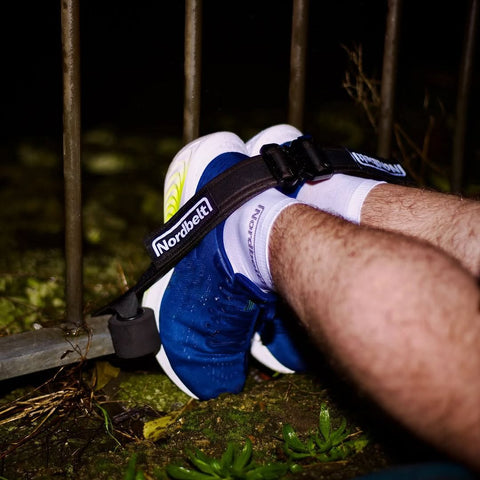
Nordbelt mainly fits the work away from the track: assisted Nordics, controlled Nordics and solo training where the ankles need to stay low and predictable. You do not need a product to do athletics. For consistent hamstring training, a stable anchor can still make the same exercise easier to repeat.
Always test the anchor first with your hands, begin with a short range and increase only when you keep control. View Nordbelt if you want a compact setup for home, a club room or a track fence, and use the how-to guide to check the fixation step by step.
FAQ
Which hamstring exercises matter most for track and field?
Start with bridges, walkouts, single-leg Romanian deadlifts, split-squat holds, sliding leg curls and calm landing control. That combination trains hip strength, eccentric control and stability before maximal Nordics.
Does the Nordic hamstring curl fit athletics?
Yes, if it is dosed calmly. The Nordic hamstring curl fits best as an added strength stimulus next to sprint and jump training. Start assisted, keep volume low and avoid placing it just before the fastest track session or a competition.
How often should athletes train hamstrings?
For many athletes, two short hamstring exposures per week are enough: one lighter exercise after sprint quality and one stronger block farther from competition. Let the response after 24 to 48 hours guide progression.
Can hamstring injury be prevented completely?
No. You can manage risk better by building sprint load gradually, taking fatigue seriously, keeping technique fresh and developing eccentric strength consistently. With pain or recent injury, personal advice is smarter than pushing harder.
Can I do these exercises at home?
Yes. Glute bridges, walkouts, single-leg Romanian deadlifts, sliders and assisted Nordics can be done at home or in a club room. Use a stable surface and a reliable anchor point for Nordics. Test that anchor before loading it with bodyweight.